From ‘Glorious Devon’ to Orthodox Estonia

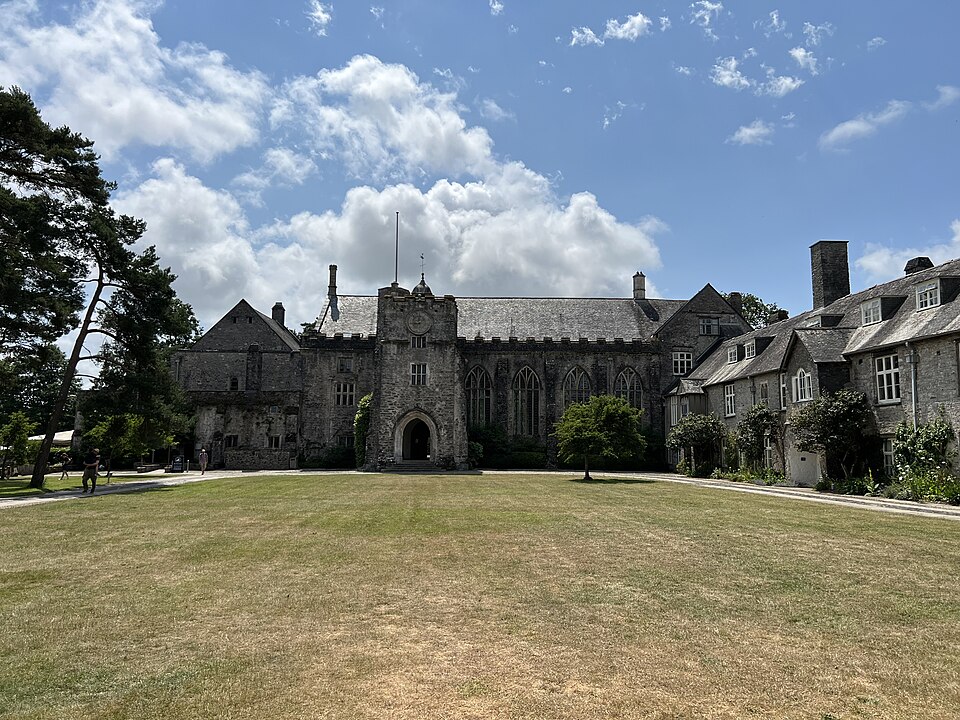
Dartington Hall. Image: Wikimedia Commons

With funding for the serious, civilised arts in short supply in modern Britain (no Arts Council of Wales money for Mid-Wales Opera; the City of Birmingham Symphony Orchestra, de-funded by Birmingham City Council) the English Music Festival – EMF – is an inspiration and hope in the face of general adversity. As one of the Festival’s regular conductors, Hilary Davan Wetton, pointed out, if this were France, the government there would be pouring hundreds of thousands of Euros into a French music festival – a contrast to our own political elite, with their freebies for Britney Spears gigs and obsessions with ‘diversity’. The nineteenth English Music gathering took place, escaping this year to that utopian, rural setting of Dartington Hall in Devon – a magnificent structure built by the first Duke of Exeter in the 14th century, and turned into a prototype agrarian and arts community in the 1920s by monied visionaries, Leonard and Dorothy Elmhirst. A College of Arts flourished here between 1961 and 2010, and traces of the Elmhirsts’ William Morris-type outlook still survive in this idyll of garden and performance spaces.

EMF Founder-Director, Em Marshall-Luck, welcomed for her late May Spring bank holiday extravaganza artists of the calibre of the London Mozart Players, the University of Exeter Chapel Choir and numerous soloists and chamber musicians, all performing in the impressive and resonant Dartington Great Hall.
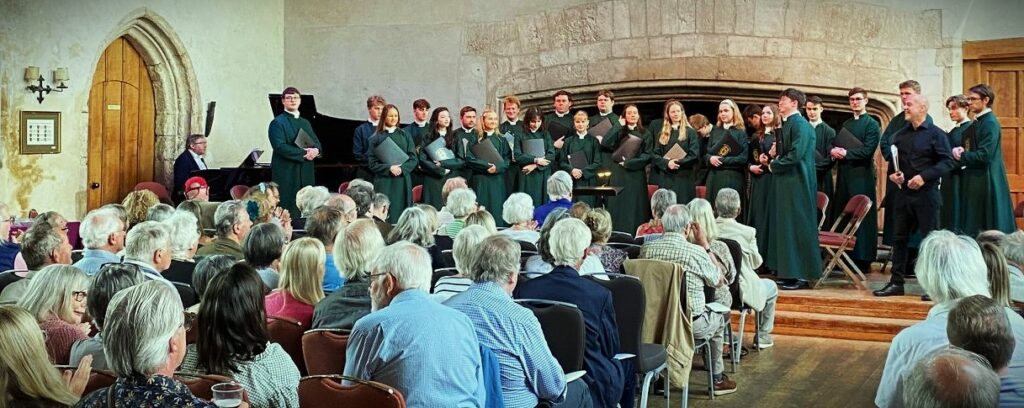
The University of Exeter Chapel Choir. Image: Stuart Millson

Saturday the 23rd May was a day of brilliant sunshine and intense heat, so Festivalgoers enjoyed the coolness of the old mediaeval building, filled as it was by the ethereal tones of the Exeter choristers in works from the 1920s and ‘30s – Vaughan Williams’s, Lord, Thou Hast Been Our Refuge (the choir used to grand antiphonal effect); Holst’s meditative The Evening Watch; Edgar Bainton’s To Thy Name Above Every Name (a testing work for the singers, and one which, perhaps, should have been conceived with orchestral accompaniment); and Dyson’s Lauds, from Three Songs of Praise. The concert ended with a dip back into the late 19th century, with Elgar’s whimsical choral postcards from old Germany – his Songs from the Bavarian Highlands, the sort of good tunes which you could almost sway along to with a brimming Stein. Elgar and his wife, Alice, clearly relished the countryside of Garmisch, and were inspired by lines such as “Quaff the bright brown ale my treasure, Hark! What joyous sounds!”

The next day, a complete change of mood, with the morning chamber recital – given by violinist, Rupert Marshall-Luck and South African pianist, Peter Cartwright – devoted to music by Bliss, Rawsthorne, Holst, Delius and Howells. Lancashire-born composer, Alan Rawsthorne, is probably best known for his film scores (including that for The Cruel Sea) and his Second Piano Concerto with its carnival-like final movement, but Rupert and Peter have rediscovered for us and curated the composer’s extensive works for violin and piano, giving at this festival the UK premiere of his Theme and Variations for Pianoforte and Violin.

Rawsthorne’s taut, concentrated, challenging writing proved to be an excellent foil to the more romantic sonata, from 1914, by Arthur Bliss – an early work, yet one which any listener, new to the piece, would consider a work of mastery and maturity. With its lovely whirlpool moments, its combination of sunlight, melancholy, nostalgia, the sonata was (for me) the outstanding work of the concert, especially the heartachingly beautiful piano opening, played with such gently paced and slow shaping by Peter Cartwright. Rupert Marshall-Luck more than embraced all the virtuoso moments of the piece, especially the exciting passage where the soloist has every opportunity to out-soar even Vaughan Williams’s famous ascending lark.

Now to recorded music: a new CDs from Chandos Records, of Shostakovich’s great Stalinist era monolith (yet with the composer confusing the totalitarians of his country with cryptic ideas and sardonic snarls) – his Symphony No. 5. Played with great tension and power by the Greater Manchester-based BBC Philharmonic – the old ‘BBC Northern Symphony Orchestra’ to we old Radio 3-ites – the recording dazzles at all levels, the players giving everything they have for the Finnish maestro, John Storgårds, a musician renowned for his readings of Sibelius and Nielsen. Here in the Shostakovich is a darkness that any Scandinavian or Russian would recognise, yet we are in the world, not of the Russian steppes or the cold Baltic coast, but the labyrinths of Moscow and the artist, enslaved but never truly at bay. For those who know their Shostakovich recordings, the new version is extraordinarily similar in temper and timbre to the early-1980s interpretation by that Russian patriot-dissident, cellist-turned-conductor, the great Rostropovich. Some may still remember the pent-up power and bare bones of the Fifth, as performed some 45 years ago by the USA Washington National Symphony Orchestra under that magisterial maestro.

Another famous conductor was Sir Thomas Beecham, founder of both the London and Royal Philharmonic orchestras. Beecham had a wide repertoire, and it is perhaps hard to pin him down: Wagner and Berlioz, and the lush, heavy tone-poems of Richard Strauss appealed to Sir Thomas; Delius, too, and Handel – and opera. But so did orchestral favourites, French ‘lollipops’, and Russian romanticism. New from Siva Oke and SOMM comes a full-blooded, orientally-shimmering account, recorded at a packed Royal Festival Hall in 1957 of Rimsky-Korsakov’s Scheherazade – an irreplaceable capturing of a style of playing which we often do not hear today; in which the orchestra heaves with turbulence and colour, and section leaders play like virtuoso soloists. Rimsky-Korsakov’s piece is a work steeped in the legends of an imagined Arabian world of magic – of a clever princess who outwits a despotic ruler, by beguiling him with stories which she tells, night after night. (One could almost see Shostakovich in a similar dilemma, using his musical powers to keep one step ahead of the hammer of doom.)
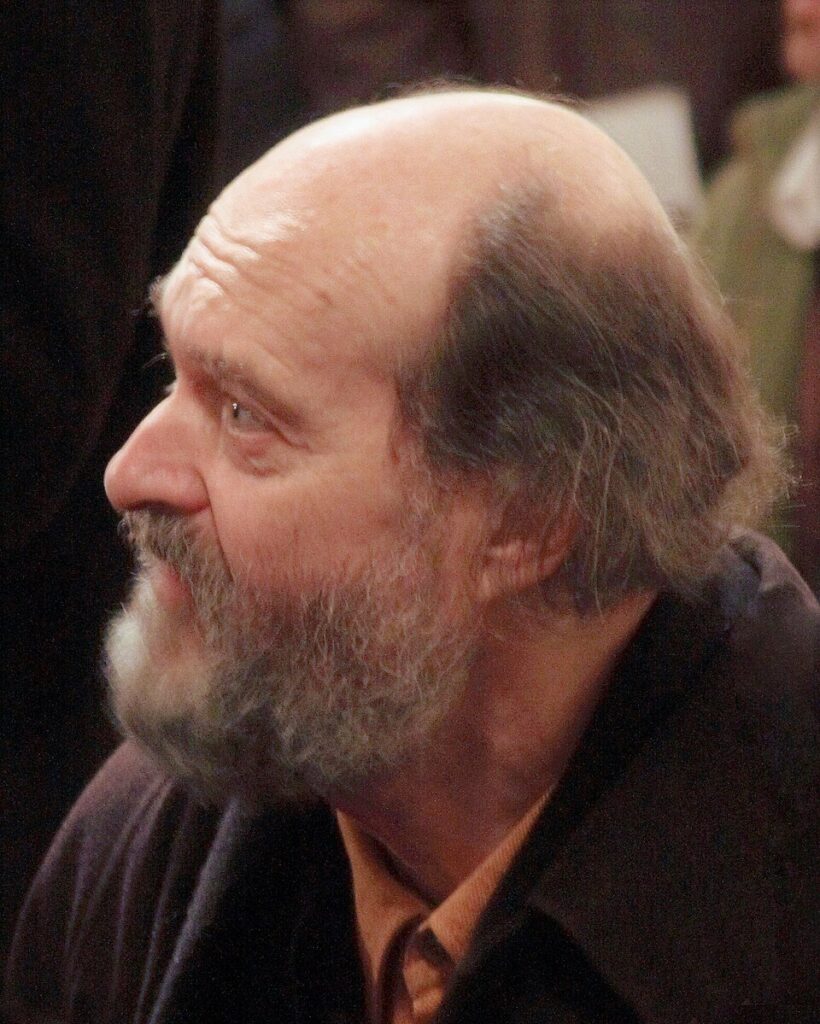
Arvo Part. Image: Woesinger, Wikimedia Commons

Finally, a return to Chandos Records and their new CD of Estonian musical magus, Arvo Pärt (born 1935) – the complete symphonies (1-4), performed by the Iceland Symphony Orchestra under Eva Ollikainen. “Worlds ahead for clarity” was a one-time sales slogan of Chandos, a choice of words which fully applies to this living-presence, revelation-of-detail recording made a year ago in Reykjavik; a presentation of a symphonic progression from the 1963 ‘Polyphonic’ – just over a quarter-of-an-hour in length, to the harp, timpani and percussion of the 2007-08 Fourth Symphony, subtitled Los Angeles – and dedicated to the Philharmonic Orchestra of that city. Essentially, Pärt’s music is concerned with the spiritual, with pure belief – orthodoxy, credo (‘Credo’ was a name of one piece from the late 1960s). In this collection, it is possible to find a rooted hope for music and for our world – every bit as reassuring as the mediaeval stonework and arches that we found earlier at Dartington Hall.

Recording details: Alan Rawsthorne, the complete works for violin and piano, and the Violin Sonata by Sir Arthur Bliss, available from EM Records, via em.marshall-luck@em-records.com; Shostakovich, Symphony No. 5 (with Second Symphony), CHSA 5378; Rimsky-Korsakov, Scheherazade, RPO, Beecham, SOMM-Beecham 34; Pärt, Complete Symphonies, CHSA 5372

From searing symphony to Paradise Garden

Friday 23 May 2025 marked the beginning of the eighteenth English Music Festival, a much-looked-forward-to annual event in the classical calendar and a testimony to the considerable organisational and fundraising skills of its founding director, Mrs. Em Marshall-Luck. Despite receiving no support from the Arts Council of England, no help from the ‘Department of Culture, Media and Sport’ and no visit or encouragement from Government ministers (either Labour or Conservative – save for one brief appearance by Boris Johnson in the early days), the Festival has managed to galvanise a loyal following of supporters, benefactors and artists – thus ensuring the continuation, not just of the main four-day event, but a host of other concerts, events and recording initiatives.  A lesson in self-reliance and self-belief, the EMF must be considered as one of the most remarkable events of its kind – not least because of its presentation of a forgotten part of our national musical heritage.

Usually when one thinks of an English music concert, works such as Elgar’s ‘Enigma Variations’ or Vaughan Williams’s The Lark Ascending come to mind, and many such prominent works are indeed to be found in the Festival’s programmes. But what distinguishes the EMF is its patient work – hours spent in archives and in tracking down lost scores – reconstructing a lost world of English music. Thanks to the musicological detective work of figures such as Martin Yates, the conductor of the opening-night’s concert, audiences are taken way beyond the usual boundaries.

Stanley Bate

This year, we were treated to the enigma and variations of Stanley Bate’s Second Symphony – Bate, a pupil of Vaughan Williams and the German composer, Hindemith, yet who has been practically forgotten by the musical establishment in this country. The presentation of his searing four-movement symphony from the late 1930s amounted to a posthumous world-premiere for a potentially great but tortured figure, who died tragically before his time. It also brought home to the audience (and performers) just how avant-garde English composers could be – resetting our idea of our native music, as something that could be as Shostakovichian as pastoral or romantic.

Bate’s work had some radiant moments within its taut structure, like an exhalation of breath amid the angst, but on the whole, some of the febrile nature (and phraseology) reminiscent of Vaughan Williams’s Fourth Symphony made it a muscular, physical, challenging – even shattering – musical experience. The beginning of the last movement brought to mind the stretched tonality and astringent string writing of Britten’s Variations on a Theme of Frank Bridge, making the piece very much the province (you would have thought) of BBC Symphony Orchestra repertoire, those specialists of 20th century music. But I doubt that any ensemble could have rivalled the faultless, totally-committed rendition given at Dorchester by the BBC Concert Orchestra – musicians who seem to have the gift of versatility, allowing them to roam from show music to popular classics, and the pinnacles of British music of the last century.

William Alwyn

Alongside the Stanley Bate, the BBC CO gave us an injection of springtime energy, in the form of William Alwyn’s The Innumerable DanceAn English Overture. This was a vision of sensuality and radiance, every bit as transcendental as a Wagnerian Tristan and Isolde. It was followed by Delius’s well-known The Walk to the Paradise Garden, although the setting is Switzerland rather than our own land. The rich, expansive acoustic of Dorchester Abbey, full of reverberation and ‘air’ was just right for the Delius, as it was indeed for the Heroic Elegy and Triumphal Epilogue, an early work (1901) by Vaughan Williams, the monumental conclusion of which included the magisterial tones of the Abbey’s organ, ringing out over and through the orchestra.

The Festival paid tribute to Sir Arthur Bliss, in this the 50th anniversary year of his death, with another exceptional interpretation, the Cello Concerto of 1970, a piece premiered at the Aldeburgh Festival under the baton of Benjamin Britten. Originally written for the Russian cellist Rostropovich, the Dorchester performance was given by one of the greats of our own era, Raphael Wallfisch, who brought this neglected, fine and fluent score to life. Having performed Finzi’s Cello Concerto at the Festival some ten years ago, Wallfisch has the full measure of English music – bringing a warmth, detail, spirit and true authority to another part of England’s music that has tended to languish in a backwater. Sitting as I was on the second row, I found myself admiring the chamber-like detail of the cello playing, the soloist given a full spotlight of sound, thanks to the sensitive accompaniment of Martin Yates and the BBC Concert Orchestra.

Rupert Marshall-Luck and Peter Cartwright
Image: Stuart Millson

The next day at the Festival’s Saturday morning recital, the official chamber players took centre-stage – violinist, Rupert Marshall-Luck and pianist, Peter Cartwright, a powerful partnership dedicated (again) to works and composers who have become distant to us. First was Norman O’Neill’s (1875-1934) Suite in B minor for Violin and Piano, and then Alan Rawsthorne’ s 1933-34 Violin Sonata. Rawsthorne attained fame as a film composer in the 1940s and ‘50s, but his Violin Sonata is little known. In fact, the recitalists were giving the first public performance of the work in the United Kingdom. Both violinist and pianist were as skilled in delivering the foot-tapping finale to the Rawsthorne, as they were in the gentler, dreamier lines of Delius’s Sonata in B major and the Cradle Song by Herbert Howells (the latter, another premiere, thanks to the determination of the EMF) – confirming them as two of our country’s very finest performers and advocates of English chamber music.

From The Cruel Sea to St. Trinian’s…

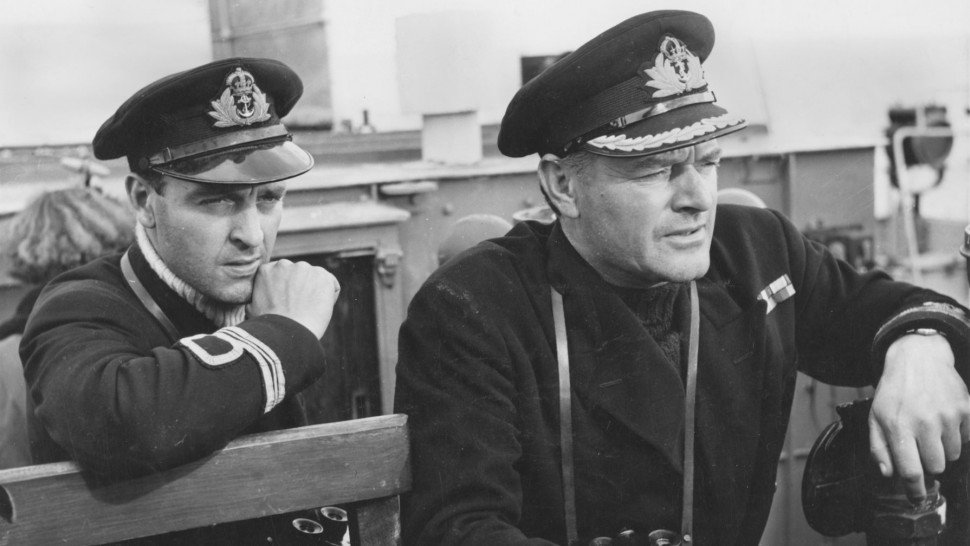
Still from ‘The Cruel Sea’ (1953)
STUART MILLSON revels in British film music at the Proms

It seems unthinkable that a Proms season in peacetime would have to be abandoned, but this is almost what happened last year at the height of the Covid pandemic. With much-reduced orchestras – their players spread widely across an extended Royal Albert Hall platform in order to preserve social distancing – the BBC resolutely produced a Proms 2020, but with the stalls, arena, gallery and boxes of the great Hall empty. The Prommers had to content themselves with listening to the skeleton season on Radio 3, or watching the proceedings on BBC Four television. But it was better than nothing.

This year, audiences returned, but on the basis that concertgoers showed evidence of a double Covid vaccination, or a negative test for the virus. And even then, the famous Proms queues, the pre-concert drinks, atmosphere and general buzz of the season – little of what we understand by this remarkable and long-established music festival existed.

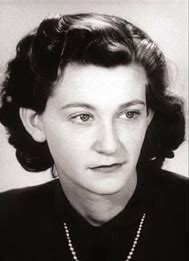
Doreen Carwithen (Mary Alwyn)

On the 2nd September your reviewer ventured into London to enjoy a Prom given by the 60-strong BBC Concert Orchestra, possibly the most versatile orchestra to be employed by the BBC – covering the classical repertoire (often lighter or more recondite works); show music and the songs of theatreland; and even touching upon jazz and pop. For my evening, the BBC CO conveyed its audience through the Odeon doors and into the world of British film music, beginning with Doreen Carwithen (real name, Mary Alwyn) and her overture to the 1954 film, The Men of Sherwood. What a good choice: asplendid curtain-raiser which immediately lifted the spirits of the 2,000 people present; the music immediately taking everyone away from their Covid concerns and back into a world of Lincoln green and derring-do. Carwithen’s overture was reminiscent of her better-known Suffolk Suite, an effective piece of scene painting – with rhapsodic evocations of the English landscape mixed with trumpets and brass, as men of valour meet in combat on battlements.

The programme notes for the evening tended to be a little sniffy about the quality of the film – underlining the point by reproducing the original theatrical poster from the time, and referring to “scrappily-drawn faux mediaeval title cards” and “an illuminated manuscript of the lowest wattage”. A trifle harsh, perhaps – given the general good intentions of the film-makers, who in those days at least tried to celebrate our English past. In fact, there is much reassurance in the mythical country evoked by the props and artwork on the 1950s. In our age of political correctness, it is encouraging that such images should have been dusted down and brought out before an audience.

Similar notions of the countryside and olde England were also found in one of the major items on the bill: Vaughan Williams’s Three Portraits from the England of Elizabeth, the result of the composer’s collaboration with nationalised British Railways. Just as the travel poster was used in the 1930s to inspire holidaymakers to head for the ‘Cornish Riviera’ or the breathtaking Lakeland, the 1950s embraced the technology of the in-house film unit – the perfect opportunity for composers to earn money quickly (instead of waiting for an orchestra to include their new work in a Festival Hall programme). And so, Vaughan Williams’s style – a gracious blend of Tudor-infused tone-painting, with the echo of the village green never far away – proved to be the ideal accompaniment to British Transport’s public information films. Yet played on their own in the concert hall (with the listener, perhaps not even aware of how they were commissioned or written), the ‘Three Portraits’ could very easily have been a short, long-lost folk symphony by Vaughan Williams.

Alan Rawsthorne, William Alwyn and Malcolm Arnold were also dominant figures in the film industry and it was fascinating to hear – live – Rawsthorne’s dark score to The Cruel Sea (1953) which starred Jack Hawkins and told the story of the Battle of the Atlantic. Rawsthorne is hardly ever played these days in his own native Britain, the Second Piano Concerto surfacing, perhaps, every 30 years at the Proms. It is high time for a re-evaluation of this masterful composer, capable of bringing a psychological sense of sea warfare and the limitless ocean into a conventional British war film.

Is there a tendency for film music to be bitty? Not so, in the case of William Alwyn’s truly large-scale symphonic contribution to the 1947 Carol Reed production, Odd Man Out – the tense, anguished story of an Irish nationalist (named Johnny McQueen) injured, and on the run through the mean streets of Belfast. Again, here is an example of music that could easily have been the first movement of a symphony: Alwyn conceiving large, heavily-woven expanses of ideas – with much complicated development, instead of simply relying on a simple, repetitive theme for the film-goer. A satisfying span of gripping, tragic proportions.

Peter Cushing in ‘The Skull’

The most avant garde work of the evening was the Elisabeth Lutyens score for the 1965 Peter Cushing film, The Skull, made in 1965. Not afraid to produce haunting sounds, by using modernist techniques, Lutyens could almost be described as an English (female) Bela Bartok. A strange, disjointed, disharmony at the edge of tonality brings to life the occult world of Peter Cushing’s obsessive character, Dr. Christopher Maitland – the Proms programme editor finding a marvellous still from the film: Cushing staring into the eye sockets of the Marquis de Sade’s skull.

Finally, a complete change in mood – the BBC Concert Orchestra bringing the house down with the skittish score by Malcolm Arnold for The Belles of St. Trinian’s: a dazzling, tongue-in-cheek, belly-laugh of an extravanganza, complete with shifty ‘Flash Harry’s’ furtive schemes (played to perfection by the great George Cole); and all the unleashed anarchy of the worst girls’ school in cinematic Britain (headed by the ever-so-slightly alarming Alistair Sim as ‘Miss Fritton’). Arnold had the rare ability to match the mood of so many productions, from war stories to comedies, but succeeding in everything he did because of his limitless, lyrical self-confidence, mastery of the orchestra, and refusal to see anything in conventional terms. It is possible to say that without Arnold’s dizzying, barrier-breaking sound-world – music that is the equivalent of a downing a treble gin and tonic in the company of the best British comedy actors of the ’50s – The Belles of St. Trinian’s might not have been the classic that it became.

The BBC Concert Orchestra marched us out of the Royal Albert Hall with a rousing film encore – again by Malcolm Arnold, the unforgettable Bridge on the River Kwai, with conductor, Bramwell Tovey, making sure that everyone clapped and whistled along to that famous evocation of parade-ground swagger and cheerful British heroism, ‘Colonel Bogey’.