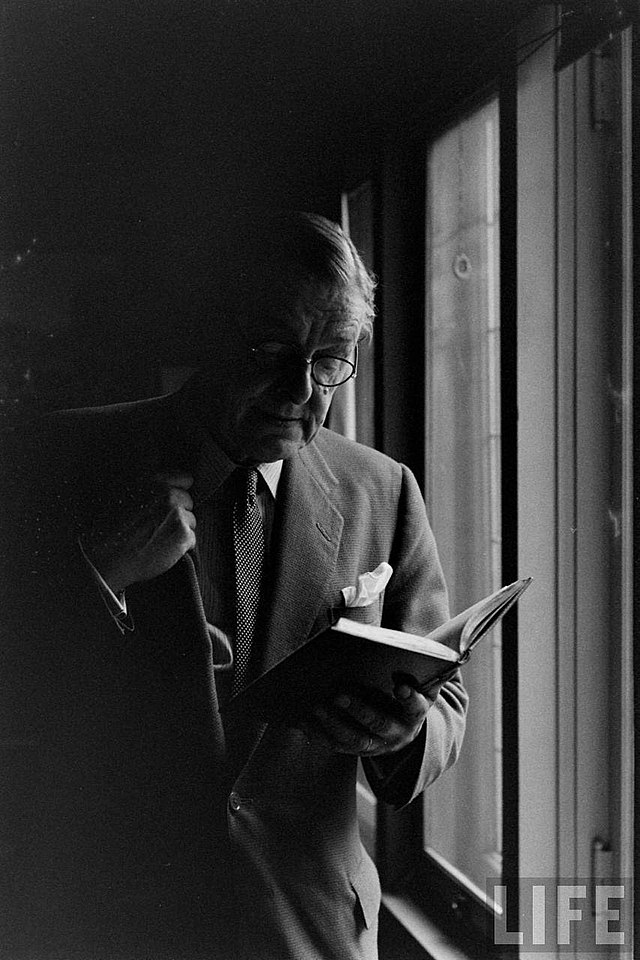
If X had written “I Will Survive”

Not much is known about MARCUS BALES, except that he lives and works in Cleveland, Ohio, USA, and his work has not appeared in Poetry or The New Yorker. His books are 51 Poems and most recently Baleful Biographica. Reviews and information at http://tinyurl.com/jo8ek3r and https://tinyurl.com/2sv22yna

If Shakespeare Had Written “I Will Survive”

Abandoned by you, first I was afraid;
The days were lonely and the nights were long,
But soon each day and night’s slow-winding braid
Revealed myself to me and made me strong.
I am no longer chained in love with you.
You broke me with goodbye, but I survived,
And now won’t do what you expect me to
Because I found you here when I arrived,
You, with that sad look upon your face.
I should have got your key or changed the lock,
But, mended stronger at the broken place,
I can’t be hurt again by your fine talk.
Get out. I am re-built from my debris,
And save my love for one who loves just me.

If TS Eliot Had Written “I Will Survive”

Because I did not hope to love again
Because you tried to hurt me with goodbye
I no longer strive to find out why
Because I learned that men are only men
Desiring this one’s sword or that one’s pen
Exchanging lie for lie and eye for eye
I taught myself to cry and not to cry
Because I did not hope to love again.
The unchanged lock admits the changeless key
And now you’re back, that sad look on your face,
But you’re not welcome here within my space
Where someone else is loving only me.
This is the way it ends. This is the day.
This is the way it ends. Now go away.

If Edmund Spenser Had Written “I Will Survive”

The weary year your race to leave had run
Reduced me to the sum of all my fears.
You tried to break me with goodbye, which, done,
You laughed and left me to my broken tears.
You could not but pursue your wild careers,
Always chasing those you do not know,
Your depth of spirit thin as a veneer’s,
And shiny to protect your status quo.
Yet here you are with nothing more to show
Than only that sad look upon your face
Which I could not resist so long ago,
Displaying once again its languid grace.
But no. My lock won’t open to your key.
I’m loving one who’s loving only me.

If Rudyard Kipling Had Written “I Will Survive”

You knew that I was chained in love with you while you remained
Whatever you would ask for I’d comply.
I guess you tired of me since you said you didn’t love me
Then even tried to hurt me with goodbye.
I was terrified and lonely, I was lost and loved you only,
And in the aftermath and after-shock
I did a little drinking, though I didn’t do much thinking,
And forgot to take your key or change the lock.
That’s a lesson. And I’m learning it the hard way. Your returning
With that same sad look upon your face
Is more than inconvenient and I’m not inclined toward lenient
Since you hurt me standing in that very place.
You’re a rotten human being and a new love’s loving me and
You had best get out before I use this Mace.

If Wendy Cope Had Written “I Will Survive”

You were quite good fun until you tried
To break me with goodbye. I couldn’t cry
And then I couldn’t stop. How long I cried.
I thought that dehydration’s how I’d die.
And then when I had finally caught my breath
I thought I’d drink up all the wine that you
Had left, and maybe drink myself to death,
Then found you took the bloody corkscrew, too.
My heart has changed its lock, though sine qua now
You’re back with that sad look upon your face,
Assuming that I’m free and I’ll allow
You into my not thinking of you space.
I’m loving one who’s loving only me,
And nothing here again will fit your key.

If Edgar A. Guest Had Written “I Will Survive”

It took a heap o’ wickedness to break me with goodbye
A heap o’ cheatin’ meanness that you topped off with a lie
Y’ left me there alone and cryin’, not knowin’ what t’ do
An’ petrified that I could never make it without you.
I bleated like a hungry kid at how you did me wrong,
But cryin’ ain’t the way to make the mind and body strong.
I shoulda thought to change that lock or else to gitcher key
And woulda if I’d thought that you’d come back to bother me.
And here ye are again with that sad look upon yer face,
An’ lookin’ like you like the way that I redone the place.
But that ain’t gonna work no more. I’m takin’ back my key
‘Cause I am lovin’ someone else who’s lovin’ only me.
An’ you kin jes’ git out, yer comin’ back ain’t got no class,
Go on, git out, don’t let my screen-door hitcha in the ass.

If Dylan Thomas Had Written “I Will Survive”

Now as I was young and simple under the disco ball
Casting its rainbow spell and happy as the bass was loud,
Nothing warned me in the white-suit days, that you would leave me
And I would wake to a silent bed a youless shroud.
Oh I was young and simple the lockbound door and key unchanged
Till like a wanderer prodigal of the fatted calf
You’re here again that same look still upon your face
Green and golden glowing like the holy spring.
But darkling time allows in all our sad-faced facings
No reliving just a moon that’s always rising
Newly new and full of yet some other light
Though oh you glow and shimmer manly more than moonly
But no. Out, out the open door and leave that key
For someone else is singing in my chains like the sea.

If Dorothy Parker Had Written “I Will Survive”

One perfect shit is what you’ve always been.
I see that same sad look upon your face
But don’t think I will fall for that again,
How dare you let yourself into my place
Because I didn’t change the stupid lock
Assuming when you came I’d be so free
You wouldn’t have to bother with a knock?
What if someone else were here with me?
One perfect narcissist is what you are.
You think of me as furniture, at best,
For you to use and then, well, au revoir.
Oh, what the hell. Come in and get undressed,
My husband will be out for quite a bit.
At least you’ll make me come, you perfect shit.

If Edgar Allan Poe had written “I Will Survive”

Once upon the cocktail hour, dispatching
Not my first I heard a scratching, scratching
At my lock, a key that entered lightly,
“Who’s there?” I asked. I asked “Who’s there?” too brightly.
Planless, I could not imagine who
Might have a key. And then I saw you. You,
Who, leaving, tried to break me with goodbye,
You, that look upon your face that I
Could not resist back when I was in chains
In love, oh, you assuming love remains,
Assuming that for you I would be free.
But now there’s someone loving only me.
No, not today and no, not like before —
And not tomorrow. Never. Nevermore.

If John Masefield Had Written “I Will Survive”

You must have thought that I’d seize at that sad look upon your face,
And all you ask is a small smile, and a memory of grace;
And the rising claim, the outward arch, and the inward shaking,
And a soft sound at the throat’s base at the spasm breaking.
You must have brought all your keys again to unlock the familiar door,
For the old lock, the unchanged lock, with the key that worked before;
And all you ask is remembered heights of appeals complying,
Not the quick dump, the harsh jilt, and desperate crying.
I can’t go back to my knees again, to servicing your demands,
To the this way and the that way of your plans and your glands and your hands,
All you ask is loot and plunder, treasure to get and spend,
Not quiet sleep and a sweet dream in the arms of a friend.
And all I ask is a love who’s loving me for only me.
And all I know is you are not the one it will be.

If Philip Larkin Had Written “I Will Survive”

You fucked me up when I was young
By leaving. I was horrified
How in a moment you had flung
My love so casually aside.
And now you think you can return,
With that sad look upon your face,
Too late because you’ll only learn
That someone better took your place.
You’ll walk away unfazed at all
That anyone denied your claim,
And hit on someone else who’ll fall,
As I did, for your toxic game.
I was a trophy on your shelf.
Not any more. Go fuck yourself.

If Thomas Grey Had Written “I Will Survive”

When Covid tolled the knell of public fun
And you decided you were leaving me
I thought there’d never be another one,
And did not change the lock, or get your key.
Now you are here back in my private space
As if you know what I will say and do,
And you can still, that look upon your face,
Assume I am still lost in love with you.
But time has passed, and I have found I know
That wounds will mend, and brokenness rebuild,
That out of desperate pain new peace can grow,
And now my voice fills what your voice once filled.
I missed remembered pain, and you, one day.
Another came. Now you can go away.

If RS Gwynn Had Written “I Will Survive”

Old Gladys in her polyester pants
Can blast the hearts of target silhouettes,
Her eye and hands as steady as her stance.
And after, as she chain-smokes cigarettes,
She mutters of her daughter’s taste in men —
Especially one of them out of her past
Who tried to break her with goodbye, and when
He turned up things would sure get ugly fast.
Besides, she’s got another fella there
Who treats her well enough he won’t incur
The wrath of this particular mama bear,
Who seems content with loving only her.
And at her age, compared to what she’d get
In satisfaction, life in jail’s no threat.

If Elizabeth Browning Had Written “I Will Survive”

How do I love you? Well, not any more —
I love you? Not even to bread slice height
That has been toasted, buttered, rye or white,
And dropped the wrong side down upon the floor.
I love you like a mildew or a spore
Or pestilential fungal blastocyte
That makes one’s breath itself a mortal fight
And living life seem like a choking chore.
I love you? The one who made the try
To break me with goodbye, yet kept that key
Because you thought that I’d lay down and die
If you returned, assuming I’d be free?
Oh no — I snarl and spit, deny your lie,
And save my love for one who’s loving me.

If Robert Frost Had Written “I Will Survive”

I have been one loved for myself alone.
I have walked out in sun — and back in sun.
I have outwalked the saddest cry and moan

I have felt the fear of what was done
Come back to haunt what I had thought estranged
By sending off the one who was the one.

I have left the key untaken, the lock unchanged,
And though not bound, two paths diverge, and I —
I am again arranged and re-arranged

By one who tried to break me with good-bye.
Can that sad look upon their face atone
For all those nights betrayal made me cry?

But now I’ve grown beyond what I have known.
I have been one loved for myself alone.

If Ogden Nash Had Written “I Will Survive”

One place where popular songs should change their ways
And raise themselves up more into the range of art is by eschewing all cliches.
Like once a million years ago some poet dressed in uncured hide
Wrote for the first time that someone did them wrong but they grew strong and learned how to get along after some Ug or Wug had left and left them so afraid that they were petrified,
And thought that that was pretty good — and maybe it was, for its time,
But now all it’s really good for is as a means to get to ‘by my side’ because the meter got you there to where you are and needs a rhyme.
And knowing how to love has got nothing whatsoever to do with knowing that you’ll stay alive,
And even though you have announced that because you have a life to live and love to give, what a low bar it is after all to claim that that means you’ll survive.
When you left me you didn’t break my heart.
I didn’t spend a single night feeling sorry for myself and though I may have cried a bit I certainly didn’t do anything as extreme as fall apart.
And something that this sonnet is somewhat better for
Is how completely I’ve avoided any reference or allusion to that provocative lock and key metaphor.
And furthermore how boring it would be
To think I wanted or needed someone so narrow in their interests and shallow in their humanity as to be able to love only me.

The epistolary Eliot

The Letters of T.S. Eliot. Volume 8: 1936-1938

T.S. Eliot, Valerie Eliot, John Haffenden (eds.), Faber & Faber, 2019, 1,100pp + li, illus., £50

The Letters of T.S. Eliot. Volume 9: 1939-1941

T.S. Eliot, Valerie Eliot, John Haffenden (eds.), Faber & Faber, 2021, 1,072pp + lxix, illus., £60

ALEXANDER ADAMS loses himself in a great litterateur’s letters

In the ongoing Faber & Faber publication of T.S. Eliot’s letters, the project has reached the late 1930s and the wartime years. These were years in which Eliot was involved in writing Four Quartets (1936-42), Old Possum’s Book of Practical Cats (1939) and The Family Reunion (1939); this was in addition to his work as a director of Faber & Faber. Devotion played an important part in Eliot’s life, never less than in the dark years when his wife was confined to an asylum. The confinement was something for which Vivienne’s family were responsible and with which Eliot acquiesced, and that weighed on Eliot’s conscience. The punishing routine of work between early-morning prayer and late-night fire-watching during the Blitz seem at least in part a form of penance. Eliot’s engagement with the place of Christianity in a secular society is frequently the prompt for letters and solicitations for book reviews.  

These letters cover Eliot’s private life, professional correspondence and publishing business. We get his letters to James Joyce, W.B. Yeats, Wyndham Lewis, Virginia Woolf, Henry Miller, Djuna Barnes, Louis MacNeice, Lawrence Durrell, Stephen Spender, W.H. Auden, Dylan Thomas, Herbert Read and John Betjeman. Most are cordial and unrevealing. His long-standing correspondent Ezra Pound is ever present, mainly writing about publication matters. Eliot approves of a critical review of a collection of Pound essays, anticipating Pound’s reaction: ‘a furious letter, which I shall have to suppress in his own interest.’[i] In these volumes, Eliot seems wearied by Pound’s relentless passion, quixotic changes and prickliness.

A more regular correspondent was John Hayward, the brilliant and difficult English-literature scholar and editor, who would play a significant part in Eliot’s life. Hayward would become a housemate of Eliot’s in the 1940s and 1950s, an arrangement that lasted until Eliot’s second marriage. Hayward was assiduous in collecting letters, books and other Eliot material, which he later bequeathed to King’s College, Cambridge. In that case, Eliot was aware that his playful badinage was being preserved and would be read by others. Hayward consulted Eliot about bibliographical rarities and letters that appeared in booksellers’ catalogues.

Among numerous letters tactfully declining volumes of poetry by obscure writers and evading explaining ‘The Waste Land’, there are some more weighty letters. He declines publishing Céline’s anti-Semitic Bagatelles, while appreciating the inventiveness of the prose. An internal memorandum from Eliot to fellow Faber director Geoffrey Faber puts the case for publishing Djuna Barnes’s Nightwood.

Lesbianism merely happens to be the variety of the dis-ease that Barnes knows the best, so it is through that form that she has to get at something universal (she has obviously a great deal of the male in her composition). […] And as for her style, it has what is for me the authentic evidence of power, in that I find myself having to struggle, directly after reading, not to ape it myself: and very few writers exercise that pull.[ii]

There are numerous letters displaying Eliot’s tireless support for poet George Barker. ‘[…] I believe in your genius, so far as one is ever justified in believing in genius except in retrospect, and I believe that it is genius if anything and not talent.’[iii]

There are flashes of wit and acerbic commentary. ‘[…] what horrifies me is that your young people should actually be set to study contemporary verse in qualification for the degree of B.A. They ought to be reading Aristophanes.’[iv] He includes general rules for poets. ‘Nobody ought to attempt free rhythms until he has served an apprenticeship in strict ones.’[v] Eliot states that poets must continually develop. Unlike a novelist, who can produce books that conform to a successful formula, a poet ought not to publish books too similar to previous ones, lest he bore his readership. His pragmatic business side took over when he recommended winding up the quarterly journal The Criterion, which he had edited for sixteen years. Facing a drop in subscriptions and the storm clouds of war, the journal was closed in 1939.

We get a few insights into Eliot’s verse writing during a period when he was moving to verse plays. He posted sections of Old Possum’s Book of Practical Cats to the children of the family he stayed with in the countryside. Eliot never had children, and these children – and the children of his fellow director Geoffrey Faber – became his surrogate offspring. Enclosed is a pre-publication report from one reader of the manuscript of Practical Cats, damning it as ‘Personally, I find them pretentious, and cannot recommend publication.’[vi] There are mentions of visits to Little Gidding, East Coker and Burnt Norton, but these are arrangements rather than reflections. Even if he enclosed verses and composed nonsense verse to amuse recipients, Eliot was not given to poetic flights in his letters.

By and large, politics and current events go undiscussed in Volume 8. The abdication is mentioned but the events in central Europe cause barely a ripple in the volume. During the war, Eliot lived a peripatetic lifestyle, staying with Geoffrey and Enid Faber and others. He often travelled by train and bus, laden down by manuscripts and reference books, as he worked on the last of the Four Quartets. He joined the A.R.P. as a fire warden, seeing relatively little action in his allotted sector. We encounter little description of the impact of the Blitz, outside of the ways in which it disconcerted people and disrupted daily life.

The introduction of Volume 9 approaches discussion of the poet’s anti-Semitism. While it is true that Eliot published poems with disagreeable portrayals of Jewish characters and wrote in 1934 ‘reasons of race and religion combine to make any large number of free-thinking Jews undesirable’, Eliot was solicitous of the safety of Jews he knew personally. The volumes contain many letters of recommendation supporting the candidacies of Jews (including refugees) for employment positions. He also was unable to allow Pound’s anti-Semitic screeds being included in Faber’s editions of the Cantos. Eliot preferred for Pound to rewrite the parts but Pound made a point of leaving the censorship apparent. The intensity of Jewish condemnation of Eliot seems to be due to the potency and prominence of his negative depictions of Jews. Eliot’s dislike of Jewish material success and cultural influence seemed a strong instinctive aversion rather than malevolence.   

We get a few retrospective glimpses of the poet in earlier years. Eliot wrote to his brother Henry of his early life in London:

I was of course too much engrossed in the horrors of my private life to notice much outside; and I was suffering from (1) a feeling of guilt in having married a woman I detested, and consequently a feeling that I must put up with anything (2) perpetually being told, in the most plausible way, that I was a clodhopper and a dunce. Gradually, through making friends, I came to find that English people of the sort that I found congenial were prepared to take me quite as an ordinary human being, and that I had merely married into a rather common suburban family with a streak of abnormality which in the case of my wife had reached the point of liking to give people pain.[viii]

He goes on to comment that the only blasphemous poem that he ever wrote was ‘The Hollow Men’. ‘[…] this is blasphemy because it is despair, it stands for the lowest point I ever reached in my sordid domestic affairs.’[ix]

The shadow of Vivienne’s instability looms large in Volume 8. Eliot apologises to Henry for her sending a Christmas card from her and her husband. He notes that (even though long separated) she has put his residence as hers, in the telephone directory.[x] Her letters are included here. She wrote to the Faber office about her husband’s health and offered herself as an illustrator for one of his poems. Her communications are odd and inappropriate, mainly. Sometimes there are glimpses of darker thoughts, such as when she announces to a Faber employee that she is being followed. 

Printed in full is a letter from Vivienne’s brother, dated 14 July 1938.

V. had apparently been wandering about for two nights, afraid to go anywhere. She is full of the most fantastic suspicions & ideas. She asked me if it was true that you had been beheaded. She says she has been in hiding from various mysterious people, & so on. It would be deplorable if she were again to be found wandering in the early hours & taken into custody.[xi]

As a result of a pattern of alarming behaviour, Vivienne was committed to a secure residential home, Northumberland House. Eliot did his best to punctiliously sort out her financial and legal affairs, as discretely as possible. Even though he did not visit her – such an encounter would have been too distressing and destabilising – Vivienne was never too far from Eliot’s conscience.

This review is written in the shadow of the impending publication of Eliot’s letters to Emily Hale (on 1 June 2023, by Faber & Faber), which seems set to be a publishing sensation. That collection of 1,131 letters was deposited by Hale at Princeton University and was only unsealed on 2 January 2020. That book promises to show the most intimate side of Eliot, that which was so carefully hidden by the poet. It was during the late 1930s, while Eliot was living in London and Hale was teaching in Massachusetts, that they corresponded most often. In a rather defensive statement of 1960, Eliot wrote of the difficulty of marriage for him as a poet. After explaining that his marriage to the unstable Vivienne would inevitably seem inexplicable, he conceded that the tensions of an unhappy marriage provided inspiration for poetry.

Emily Hale would have killed the poet in me; Viviennene nearly was the death of me, but she kept the poet alive. In retrospect, the nightmare agony of my seventeen years with Viviennene seems to me preferable to the dull misery of the mediocre teacher of philosophy which would have been the alternative.

He went on the state that Hale did not understand or love his poetry, even though it seems they discussed his poetry at length and that ‘Burnt Norton’ (1936) of Four Quartets was written as a coded love poem to her. It should be noted that when Eliot wrote this statement he was defending his decision to marry his second wife, Valerie, and aiming to downplay his commitment to Hale and hers to him. Hale does appear indirectly in the letters in Volume 8. She visited Eliot in England and there are comments from him about her arrival, departure and activities during her time with him. In his statement of 1960, Eliot affirmed that he had never had sexual relations with Hale.

The publication of this separate volume will be significant in its revelations about the life and ideas of a great poet, showing him at his most unguarded. The ethics of publishing such letters is redundant. As the letters were deposited at Princeton University and due to be the subject of study, it is the correct decision to publish them in full, annotated, rather than allowing salacious snippets from circulating out of context.

The preceding review does not do full justice to the pleasure of having to hand such first-hand testimony of such a major figure. Being presented with such a huge body of letters – not even all of them, apparently – is a sort of treasure store, one unavailable for most cultural figures. One is impressed at Eliot’s indefatigable diligence; writing to colleagues and strangers, editing, reading, publishing, serving his church, not to mention finding time for his own writing, Eliot’s work rate is formidable.

We get an understanding of Eliot the man – driven by a moral core of Christianity, passionate about culture (especially literature), a loving godfather, cautious in his romantic attachments. Being such a prominent figure – author, publisher, cultural commentator, public intellectual – Eliot knew that his most private and informal communications would be bought, sold and scrutinised. Although Eliot bore the burden relatively lightly, there remains the suspicion that Eliot was curbing his most cutting comments for the sake of his posthumous legacy.   

The editing is exemplary. I spotted only one error (in footnote numbering, on p. 626) in over 2,000 pages. There are notes on recipients, context provided and often extensive quotes. These quotes are of letters that Eliot was replying to or extracts of books and journals. The editors have dug through archives of journals and newspapers and long-forgotten books. Letter text not in English is translated and many passing references tracked down. The only failing is omitting to indicate the place of writing. That sort of information seems more pertinent than the location of the letter manuscript. Unfortunately, this seems Faber policy regarding letter publication, so there seems no hope of the publisher revising its practice. Great care has been taken in the printing and binding. This series provides an unparalleled view of multiple aspects of the greatest poet in the English language of the Modernist era and gives us a glimpse of history as it was being made.


[i] Vol. 8, p. 585

[ii] Vol. 8, pp. 151-2

[iii] Vol. 8, p. 665

[iv] Vol. 8, p. 83

[v] Vol. 8, p. 676

[vi] Vol. 8, p. 871

[vii] Vol. 9, pp. 517-8

[viii] Vol. 8, P. 10

[ix] Vol. 8, P. 11

[x] Vol. 8, P. 52

[xi] Vol. 8, p. 91