WADE SMITH revisits Decline of the West, and its critics
To paraphrase a famous Tory lexicographer, a death-sentence concentrates the mind wonderfully. People are born, flourish, weaken, and pass away, but so do nations and empires. Although the comparison is metaphorical, the phenomenon is real.
Surely the gradual crumbling of Great Britain from Lord Salisbury’s imperial zenith to Ed Miliband’s imbecile zero is undeniable. It fits into a general Euro-American deterioration, exacerbated by welfare-dependence, industrial unrest and defence-alliance disarray. Consequently, a revival of interest has occurred over questions of historical change, and in its successive commentators, from Plato and Polybius, through Ibn Khaldun and Giambattista Vico, to Paul Kennedy and Paul Cooper.
Overshadowing them all is Oswald Spengler, who died 89 years ago this May. His huge work on “Western decline” drew admirers. Nirad Chaudhuri called it “one of the greatest books of our time.” Henry Kissinger saw it as an “attempt at the resolution of the problems of existence,” while Fernand Braudel praised “its tone, the breadth of its views, its passion for understanding.” Christopher Dawson wrote that “Spengler wishes to make the present generation conscious of the crisis through which it is passing and of the true task that lies before it.”
However, the well-known historian Niall Ferguson, under the impression that Spengler had been influenced by Wagner (it was actually Goethe), once asserted that his “turgid” prose was nowadays seldom read [1]. But his giant Geist has rematerialized – to haunt the current geostrategic gloom of international trade turmoil and knife-edge security risks.
Many references to Spengler have lately appeared in print journalism, scholarly monographs, timely podcasts and specialist websites, from Professor David Engels [2] to Professor Stephen R. L. Clark [3]. His early historical studies and family photos have been publicised. The glib dismissal of his magisterial oeuvre as a ‘gargantuan horror-scope’ ceases to amuse in the world he so accurately predicted.
Recent books include the richly researched, indispensable Oswald Spengler & the Politics of Decline, by the Marxist scholar Dr Ben Lewis, on his principled “Prussian” activism and mutual incompatibility with Hitler, who (I discovered) specifically denounced him in a public address on May Day 1935. TheDecline& Fall of Civilisations is a considerable survey from the prolific and idiosyncratic writer Dr Kerry Bolton, who endorses Spengler’s suggestion of the next major Culture emerging from the Russian landscape. Especially important is his place among Dr Neema Parvini’s constructively analytical Prophets of Doom, alongsideGobineau, Carlyle, Brooks Adams, Glubb Pasha, Evola, Sorokin, Toynbee, Turchin and Tainter. Ulrik Rasmussen’s relevant Fall of Western Civilization: The Cycle of Supremacy also deserves close attention.
Spengler began life near the Harz mountains and his heart finally failed in Munich when only fifty-five. His masterwork on the downslide of Occidental civilisation was conceived before and partly written during the first world war. Its so-called “cyclic” theme, preceded by the Slavophile Nikolai Danilevsky’s Russia & Europe, and echoed, less substantially, by the Anglo-Saxons Flinders Petrie [4] and Correa Moylan Walsh [5], made a dramatic impact and engendered serious debate in his defeated Fatherland.
The sinking-sun imagery powerfully evoked by its “Teutonic Title” was attenuated as Decline of the West in an excellent translation for English-speakers, whose more subdued response, admirably documented by John Carter Wood [6], in some cases recalls a notorious lordly dismissal of Gibbon’s narrative about the fall of Rome as just another scribbled tome. A contemporary classicist, E. H. Goddard, nonetheless ably supported its fundamental cross-cultural alignments with corresponding pull-out civilisation timetables [7].
I first encountered this book in the library of my then 430-year-old former grammar-school in Walthamstow. Its thick black spine made a welcome contrast to its Left Book Club amber-cover shelf-companions; and its fascinating contents likewise. My adolescent appetite was promptly reinforced by seemingly corroborative material in Geoffrey Barraclough’s History in a Changing World, Eric Bentley’s Cult of the Superman, Amaury de Riencourt’s Coming Caesars and Gustave Le Bon’s The Crowd.
By an odd coincidence, the late Roger Scruton made a similar youthful discovery, but disappointment with Spengler’s “unscholarly inaccuracy” diminished this conservative intellectual’s approval of his “grim” prognosis. Given the arduous circumstances of its original composition, and the information then available for revision, however, occasional errors are forgivable; several disputed aspects have also since found defenders.
After initially greeting his magnum opus, the anti-Nazi novelist Thomas Mann afterwards recoiled as if handed a demonic grimoire. The Nazi ideologist Alfred Rosenberg complained that its “morphological view” of destiny denied “race and personality.” Irving Babbitt described the singularly erudite and earnest polymath as a “charlatan of genius.” Martin Heidegger and Wyndham Lewis attacked him much more thoughtfully, along with established historians. Aurel Kolnai ridiculed his “harsh Olympic coldness,” whereas Theodor Adorno granted the “destructive soothsayer” a nuanced appreciation.
Nevertheless, the book impressed poets like W. B. Yeats, David Jones and Robinson Jeffers, authors as different as D. H. Lawrence, Whittaker Chambers, Colin Wilson and Camille Paglia, the mythologist Joseph Campbell, the systems-theorist Ludwig von Bertalanffy, and surprisingly Ludwig Wittgenstein. And it left me personally with a lifelong interest in “philosophies of history.”
Spengler wrote with the eye of an artist and the pen of a poet, producing beautiful passages of keen sensibility, exemplified by his account of infant Christianity:
Tame and empty all the legends and holy adventures of Mithras, Attis and Osiris must have seemed [compared] to the still recent story of Jesus [whose utterances resembled] those of a child in the midst of an alien, aged, and sick world…. Like a quiet island of bliss was the life of these fishermen and craftsmen by the Lake of Gennesaret, while all around them glittered the Hellenistic towns with their theatres and temples, their refined western society, their Roman cohorts, their Greek philosophy…. The one religion in the history of the world in which the fate of a man of the immediate present has become the emblem and the central point of the whole creation.
This delicate passage appears within a mammoth text, whose martial attitude elsewhere was ironically condemned by communists [8] as brutal advocacy for the Junker aristocrats they sought to eradicate in the “violent overthrow” of existing society and “bloody struggle or extinction,” as Karl Marx expressed it. Even during Spengler’s short literary lifetime, millions perished in the USSR.
He depicted the West as one of eight self-contained Hochkulturen, in addition to the Babylonian, Egyptian, Mesoamerican, Indian, Chinese, Magian, and Classical. Each possesses a distinctive ethos characterised by its cosmology, symbolism and architecture, yet all pass through comparable stages, like the inevitable transition from spring to winter, though without recurrence. We need not discuss pertinent definitions of “civilisation”, as previously covered by Samuel Huntington, Pitirim Sorokin and Naohiko Tonomura, except that Arnold Toynbee responded to the challenge with over 20 “mortal” examples, historians Philip Bagby and Caroll Quigley choosing fewer, and Nicholas Hagger listing 25.
Setting aside Spengler’s own metaphysical “collective-soul determinism”, complex macro-societies often proceed through almost parallel patterns, such as solely waning average intelligence [9]. The empirical examination of the multiple causes of their growth, decay and collapse is a legitimate and rewarding pursuit.
Felipe Fernandez-Armesto’s “environmental features,” Claire & Bill Russell’s “population cycles,” Jim Penman’s “behaviour biodynamics,” David Hackett Fischer’s “price revolutions” and Heiner Rindermann’s “cognitive capital” are among numerous contributions towards a fresh and fruitful development in objective social science, aided by comprehensive data-led websites like Peter Turchin’s valuable Cliodynamica and Seshat.
Several terminal phases have been linked to urban sprawl and congestion, and failing competence and character among the rulers of a largely hedonistic populace. Cluttered with material and mental sewage, the “megalopolis” becomes vulnerable to farmland depletion, infections and addictions, depravity and disability, sectarian discord and organised crime, plus susceptibility to invasion. In 1927 the pacifist Aldous Huxley voiced the fear that industrialisation of numerically greater races could put us at their military mercy. By 1951 Shephard Clough’s economic analysis of the rise and descent of civilisations expected envious outsiders eventually to attack Europe.
The validity of Spengler’s century-old foresight is easily overlooked precisely because of its present familiarity. The literary critic Northrop Frye described at length, fifty years ago, how the “detail of Spengler’s vision is all around us… What [he] said would happen is happening, to a very considerable degree” [10]. Does not parliamentary democracy, for instance, operate by deception, bribery and “shameless flattery,” so that “election affairs” become “games staged as popular self-determination” to suit obscured wealthy interests? “People want to think only what they are supposed to think, and this they consider freedom.” Ideological convictions are dissolving into disposable fashions, except for an emergent “second religiousness,” possibly indicated by Gen Z revival of Bible study, and potentially focused on the Holy City of Jerusalem.
Entering the epoch of less heavenly inner-cities and global skyscraper competition, we find, exactly as he said, “primitive instincts” let loose in sexual relations, the “reappearance of the panem et circenses in the form of wage-disputes and football-grounds,” “incomprehension of tradition,” the “extinction of great art” and of “courtesy,” “betting and competitions” for excitement,“ alcohol and vegetarianism” as prominent issues, and crucially the “childlessness and ‘race suicide’ of the rootless strata, a phenomenon not peculiar to ourselves but already observed – and of course not remedied – in Imperial Rome and Imperial China.”
The 1939-45 titanic “war of contending states”, which bypassed Spengler’s ignored warning to Germanic nationalists against “biological antisemitism” and a “Napoleonic adventure in Russia,” shifted the “imperium” from Berlin to Washington, thereby fatally disarranging his anticipated sequence for conclusive contests between “blood” and “money.” Caesarism today is manifested not in fascist legions, but in the formlessness of American politics, despite ambiguity over machine-technics, financial-flux and armed-force deployment; Musk rather than Mussolini.
His phrase “the world as spoil” neatly applies to impending rare-earth search and supply-lane safety from the Arctic to the Black Sea, and beyond. The invention of “weapons yet unforeseen” has alarmingly accelerated, with continental territories “staked – India, China, Russia, Islam called out, new technics and tactics played and counter-played.” We can match his futurology against reflections by present-day writers like Thomas Frey, Bruno Macaes and Ian Morris, regarding particularly the tumultuous interactions of Putin, Trump, Xi and “great cosmopolitan foci of power.”
Shortly before his death, Spengler further envisaged a devastatingly concurrent underclass and colour conflict. It would make no difference, he explained, if Bolshevism “ceased to dictate”, for “the work goes forward of itself.” Did not this danger arrive, a mere three decades later, from the US New Left “race, gender, class revolution,” subsequently exported as “critical theory” for a “long march” or (more accurately) incremental infiltration, through Western institutions, targeting “white privilege,” “white patriarchy” and “embedded whiteness,” and culminating, for example, in both DEI regulations and BLM rioting?
Perhaps Paris 1968, Brixton 1981, Madrid 2004 and Munich 2025 are pointers. The Network Contagion Research Institute reports a surge in approval of political violence, mainly among left-wing networkers. Effective protection against foreign-community intrusions remains morally paralysed as uncharitable “racism,” despite unabated mass-exodus of the multi-million ‘wretched of the earth,’ aided by profiteering traffickers, in a “nomad century.”
Number-philosopher Philip J. Davis thought his fellow-mathematician from the Kaiserreich classrooms was correct to discern the advent of “theories of everything” in science, and possibly, in the outcome of mass-media and telecommunications, the control “like that of Faust” of human minds by a self-operating computer-system “wrapping the earth with an endless web of delicate forces, currents and tensions.”
Spengler’s refutation of universally inevitable linear “progress” has anyhow been largely vindicated, in my judgement, by the evils of vacuous postmodernism, compulsory multiculturalism and suicidal wokeism [11]. Was he too imaginatively attached, however, to ancient and classical models to follow through his unique insight into the heroic exploration, energetic curiosity and infinite endeavour that typify our exceptional “Faustian” ethos? Maybe our railways will lie ultimately forgotten “as dead as the Roman wall” and monuments “ruined like Memphis,” but the last prolonged turn of the western wheel must entail extensive fulfilment as well as senescent exhaustion.
“Only the future,” observed another academic admirer, Professor John Farrenkopf,
…and not Spengler’s innumerable detractors, is in a position to authoritatively answer the question if mankind is nearing in apocalyptic fashion, whether through nuclear Armageddon, the synergistic interaction of international economic collapse and the explosive North-South conflict, or the intensification of the global ecological crisis, the much-discussed end of history. [12]
Nevertheless, could Western science, which has split the atom and spliced the gene, reached the outer planets and penetrated the brain itself, under sagacious guidance, yet modify our caducity with robotics, ecological management and biological enhancement? “Made weak by time and fate, but strong in will, to strive, to seek, to find, and not to yield,” we should at least respect the venerable advice of der Weissager to face up to facts, with fortitude and fidelity to our noblest values.
NOTES
[1] War of the World (2007), p.645; cf. Doom (2022); The Great Degeneration (2014); Civilization (2012)
[2] Oswald Spengler: Introduction au ‘Declin de l’Occident (2024); Spengler: Pensando en el Futuro (2022),&c. The author presides over The Oswald Spengler Society
[3] “New Histories of the World: Spenglerian Optimism,” Philosophical Journal of Conflict & Violence (2022) online
[4] The Revolutions of Civilisation (1911)
[5] The Climax of Civilisation (1917)
[6] “’German foolishness’….Spengler & the Inter-war British Press,” www.academia.edu/3315175, online
[7] Civilisation or Civilisations [with P. A. Gibbons & F. C. S. Schiller] (1926)
[8] E.g. Nikolai Bukharin (1934); cf. Melvin Rader, No Compromise (1939)
[9] Elmer Pendell, Why Civilizations Self-Destruct (1977); Cf. Edward Dutton & Michael Woodley, At Our Wits’ End (2018); Robert Klark Graham, The Future of Man (1981); Raymond Cattell, A New Morality from Science (1972), pp.146-147; Donald Kagan (ed) Decline & Fall of the Roman Empire (1962)
[11] Cf. David Ashton, “Decline of the Best?” Council of European Canadians, February 12, 2024, online
[12] John Farrenkopf, “Spengler’s ‘Der Mensch und die Technik’,” German Studies Review (October 1991), p.548; Prophet of Decline (2001)
ADDENDUM
I have long thought and expressed the view that the exceptional “Faustian” character of our Western civilization would enable its successful prolongation. Since completing the above, I came across an interesting National Interest article online which covered some of the same ground, including a similar thought about that future possibility. This was a welcome coincidence, not plagiarism on my part. Here is that article, by Robert W. Merry, an adapted extract from his 2005 book Sands of Empire: Missionary Zeal, American Foreign Policy, and the Hazards of Global Ambition – Spengler’s Ominous Prophecy – The National Interest
BRENDAN MCNAMEE says that deconstruction is as old as its opposite
Eternity is in love with the productions of time
William Blake, The Marriage of Heaven and Hell.
Deconstruction is a modern cliché, but it is something much older and more substantive than a passing academic fad. Since it came to prominence in the sixties and seventies the word has been bandied about in general parlance, losing most of its meaning in the process.
It usually indicates a process of taking something apart and not much more than that, so you have films like Woody Allen’s Deconstructing Harry, which consists merely of a character’s evisceration, and restaurants serving desserts called deconstructed cheesecake, which consists of little more than components of cheesecake separated on a plate.
More seriously, it’s often seen as a destructive rejection of cherished beliefs and certainties. But that word ‘certainties’ is the hinge. Certainties have a way of subtly devolving from life-enhancing structures to stifling and destructive oppressions. An attractive form can hide a rotting interior. Many people instinctively recognise this. If cherished lines from widely beloved poets and musicians are an indication of this recognition then Leonard Cohen’s most oft-quoted line, ‘There is a crack in everything, that’s how the light gets in,’ from his song ‘Anthem’, indicates that deconstruction, as I will read it here, is already subconsciously understood and valued by many. Letting the light in on airless, out-dated structures and practices: that’s the essence of deconstruction.
In this essay, I shall look at deconstruction through a variety of literary quotations, ranging from Heraclitus to Heaney, which show that the practice has been around for as long as philosophy itself, and that it is, and always has been, an integral and vital part of both art and religion. I read it, in fact, as a modern secular form of mysticism, what the American academic John D. Caputo calls ‘religion without religion’ (The Prayers and Tears of Jacques Derrida: Religion Without Religion). Caputo and Jacques Derrida, the putative originator of deconstruction, will be my main (actually, my only) links to the practice of deconstruction as it is understood in academia. My focus will be on how it manifests in the world beyond. In the second part of the essay I will attempt to show how deconstruction can be seen at work in widely disparate instances of literature and film.
***
Without consciousness, there is, to all intents and purposes, no world. On that basis, it can be asserted that all time is contained in the present, the past as memory, the future as anticipation. The present consists of two elements, consciousness and nature, the world within and the world without, subject and object. The world without we call ‘actuality’, all the stuff that makes up the visible universe. We see it through this mirror called consciousness. The stuff changes all the time; the mirror remains the same (that is, the phenomenon of consciousness underlies the individual manifestations of that consciousness through sentient beings in time). Consciousness, then, is another word for eternity.
Wherever there is consciousness, it is always now. But because it only knows itself by its productions, the stuff of actuality, the productions themselves come to be considered paramount, come to be thought of as reality itself. And they are necessary. Crops must be planted, cities built, cultures and laws devised. Structure reigns. But with time these structures become stifling, burdensome, tedious – the weight of tradition, the boredom of habit. The mirror becomes fogged. Deconstruction is the wiping of the mirror. Deconstruction is eternity gasping for breath.
Vladimir Nabokov
When asked whether he believed in God, Vladimir Nabokov said, ‘I know more than I can express in words, and the little I can express would not have been expressed, had I not known more’ (Strong Opinions, p45).
Is this what lies at the heart of deconstruction? A sense that the world as it is described in language is missing some vital element, some element that cannot be captured in language, but the vague awareness of which is what largely drives that described world of language? As the theologian Paul Tillich puts it, ‘It is the riddle and the depth of all expression that it both reveals and hides at the same time’ (Art, Creativity, and the Sacred, p221). Derrida echoes that idea in these words: ‘We are dispossessed of the longed-for presence in the gesture of language by which we attempt to seize it’ (Acts of Literature, p78). Poetic language could be seen as both a lament at this dispossession and a desperate attempt to overcome it all in one.
You can extrapolate from Nabokov’s sentence to life itself: ‘I am more than I can express in words, and the little that I can express could not be expressed, were I not more.’ That ‘more’ is what divides the world between materialists and idealists. For materialists, the world we see around us is quite fascinating enough; for idealists there is something essential missing. For idealists (believers and non-believers alike), that indefinable ‘more’ is what keeps the ship afloat. Like a string on a well-tuned guitar it keeps life at a tension, a tension necessary to create the music of life itself. ‘The harmony past knowing sounds more deeply than the known,’ as Heraclitus has said (Fragments: The Collected Wisdom of Heraclitus, p31). Isn’t this why we make art? As Steve Toltz puts it, ‘We make art because being alive is a hostage situation in which our abductors are silent and we cannot even intuit their demands’ (Quicksand, p16).
Take Beckett’s Waiting for Godot. Where, or what, would Beckett’s tramps be without Godot to wait for? They wouldn’t be anywhere. They wouldn’t be. The essence of Godot is his non-arrival, just as – perhaps – the essence of God is his unknowability, his unattainability, and, almost certainly, his non-existence. By his non-existence I mean that God may simply be the idea of God. As Henri de Lubac put it, ‘We do not have desire for God; we are that desire. It is imprinted on our created nature’ (Mystery of the Supernatural pps176-77). Just as Godot is needed to keep the tramps on stage, so is the idea of God (or whatever unattainable ideal one substitutes for God) needed to keep us all trudging through the wastes of time. (Absence pervades presence, may indeed be the larger part of presence, much in the way that dark energy may be the larger part of the universe, even though it cannot be detected.)
More optimistically, the idea may be what’s needed to transform those wastes of time into something more like a garden. True religion, like true art, is alchemy. The effect of great art, regardless of what actual events are being portrayed, is exhilaration. In this sense, all great artists are mystics, and art is the most accessible form of mysticism we have, and one of the most effective ‘mirror-cleaners’ we have. Likewise, religion. Seen in this light, both art and religion are forms of deconstruction. Seen in another light, of course – when form overrides mystery, when significance declines into meaning – they are very much in need of deconstruction.
In his book, Deconstruction in a Nutshell, John D. Caputo calls deconstruction love. Love itself cannot be deconstructed because it is not a thing, it is not static. Love happens. How many stories there are that demonstrate this by showing love as a disruptive force: love across the race divide, the class divide, the cultural divide, always disrupting accepted ‘truths’ of life, which of course are not truths at all but merely comfort blankets masquerading as truths. Love underlies all social and cultural expressions of it, which are just that: expressions of an intangible reality, but not the thing itself (much like consciousness and the productions of time).
There’s a scene in a recent sitcom, called Hold the Sunset, which subtly illustrates this idea. John Cleese plays a crusty old codger with a reputation for sarcasm. One of his neighbours, often the butt of his jokes, is a dog lover. One day, the Cleese character encounters this neighbour out walking accompanied only by the dog’s leash. A brief conversation conveys the information that the dog has died, but the neighbour hasn’t quite got over it yet and it comforts him to walk with the leash. Cleese makes some sympathetic comment about this, which the man, knowing Cleese’s general outlook, takes to be mockery, but Cleese hastens to reassure him that it isn’t, that he understands fully the man’s actions, that love is love, whatever the nature or character of the recipient. Finally, the neighbour gets his point and says, ‘You mean, love can’t tell the difference.’
Love can’t tell the difference. In that sense, love doesn’t actually exist until it finds a recipient, just as deconstruction is not a ‘thing,’ and doesn’t actually exist until it has some established ‘truth’ to work on. Just as eternity doesn’t exist until it finds an expression through the productions of time. You can’t have a mirror without a dark back, and vice versa. Perhaps the same thing is meant when people say God is love. God doesn’t exist – or not for us, anyway – until he is manifested in the world. Manifested as the world?
There is an old Sufi legend about a certain Arab who died and left seventeen camels, which he bequeathed to his three sons in the following proportions: to the oldest a half; to the second a third; to the youngest a ninth. The three sons were disputing violently about the proper division of the camels when a stranger rode up to them from the desert and asked them the cause of their anger. When they had explained it to him he said: ‘But this is very simple. I shall give you my camel; so now you have eighteen instead of seventeen, and the sum is easily done. The eldest will take nine, the second six and the youngest two.’ When the three sons had each taken the camels allotted to him, they found that one was left over. ‘And therefore,’ said the stranger, ‘I can now take my own camel back again, and yet leave you with no further cause of dispute.’
This expresses the same idea as Blake’s aphorism, cited at the start. Time is where we live, the land of the tangible (camels and churches, governments, games, art, everything), but all of these productions, all these things, only make sense in light of an intangible force lying behind them. Deconstruction is the attempt to keep that mysterious force in play, to keep that crack open without which life would become stale and airless. In the absence of deconstruction, when there is too much order, too much rigidity, something snaps: ‘Tedium is the worst pain. The mind lays out the world in blocks and the hushed blood waits for revenge’ (Grendel, John Gardner, p109).
The mind lays out the world in blocks: this is a good definition of the world’s structures, whether cultural, social, literary, judicial or whatever. When they become set in their ways and fail to respond to changing circumstances or to the nuances of a situation’s contexts, as they invariably do due to human laziness and complacency, then boredom and discontent sets in. Eventually, something snaps. Modernism in its many forms – cultural, social, political – was perhaps the loudest snap of the twentieth century.
Norman Mailer
Norman Mailer once compiled an extensive list of opposing qualities, entities and concepts that he labelled hip/square, such as wild/practical, romantic/classic, instinct/logic, a question/an answer, self/society, associative/sequential and many more, all of which can be seen to be, in varying degrees, reflections of the chaos/order divide (Advertisements for Myself, pps346-48). The idea of deconstruction could be seen as the academic version of the corresponding societal movement that shook the sixties. Revolution was in the air. But it’s important not to forget the second member of the pairing. One of Mailer’s pairs of opposites, self/society, calls to mind a sentence from Machiavelli: ‘No stability without an institution; no progress without an individual.’You need some degree of stability or there would be no possibility of civilisation of any kind. So you need institutions (something Derrida was always at pains to stress). But you also need innovative individuals who insist on disrupting things when those institutions become stale or unworkable. And where would the innovative, deconstructing individuals be without institutions to work against? You can’t jump into the air without a ground to spring from.
Another, and perhaps more helpful, way of expressing the chaos/order divide is to call it a dynamic/static divide. In Lila: An Enquiry into Morals, Robert Pirsig proposed this as a more fundamental divide in life than the subject/object divide, which is the one that prevails in our current materialistic and common sense based world. And the deeper you delve into deconstruction, the more you find it corresponds to this division: the structures of the world, whether social, cultural, legal, literary, political, etc, all tend toward the static. Rules get laid down, they seem to work (they keep chaos at bay, they explain so much), so they are adopted with fervour and adhered to rigidly. Too rigidly. History is littered with the appalling results of this rigidity, this fundamentalism, mostly in the fields of politics and religion. Every effort to crack open such petrified structures is a form of deconstruction.
Theodore Adorno once described the relationship between empirical reality and works of art as a form of redemption: ‘Everything will be just as it is and yet wholly different’ (John Banville, Athena, p105). Everything will be as it is – that is, the structures of the world will not change in their essence, they will still be structures and continue to serve whatever purpose they were constructed to serve, but they will be wholly different because seen with different eyes, eyes that are open to potential, to nuance, to change. There will still be seventeen camels, but the brothers will have no cause for dispute because their eyes will be open to the possibility of an eighteenth camel, a possibility that, without having to exist in any material sense, redeems all that does so exist. Deconstruction then could be seen as a kind of open-ended, undefined faith.
John Banville
John Banville has written a radio play in which Isaac Newton, the inventor of the calculus (and also a devoted alchemist), says the following:
The calculus operates upon the premise of a closer and closer approach to infinity. Infinity, however, may not be approached. Infinity is, and there’s an end of it. Yet the calculus works . . .
Stardust
The same might be said for language and reality. Language operates upon the premise of a closer and closer approach to reality. Reality, however, may not be approached. Reality is, and there’s an end of it. Yet language works . . . Up to a point, anyway. There is still that tantalising mystery that keeps escaping, that no word seems equal to. But a word had to be found, nonetheless, so we came up with the word God. Yes, that’ll do. God is the name of and cause of everything that is. That settles the question, right?
No, very rightly wrong, as Beckett would say. There is no answer. ‘God’ is just another deferral. The word might have been fine had it not been taken for an answer. ‘He should have had a name that sounded like a question,’ as Cees Nooteboom puts it (Rituals, p42). That would have put deconstruction at the heart of all that is. In the Hindu mythology Prajapati, Lord of the Creatures, has a secret name, Ka, which in Sanskrit means, ‘who?’ ‘Prajapati is the god who has no identity, who is the origin of all insoluble paradoxes’ (Roberto Calasso, Ardor, p8).
***
Consider these two statements, the first from the Spanish writer, Javier Cercas, the second from Clarice Lispector, the Ukranian-born, Brazilian writer sometimes referred to as the Brazilian Kafka:
‘Literature is always anti-literary.’ (The Blind Spot, p36)
‘There’s one thing I understand: writing has nothing to do with literature.’ (The Paris Review, interview)
Both these statements are saying the same thing, though this is disguised by the fact that the word ‘literature’ is used in opposing senses by each writer. Cercas’s ‘literature’ is Lispector’s ‘writing’ and Lispector’s ‘literature’ is Cercas’s ‘literary.’ Both statements are intuitive expressions of deconstruction. This is best explained by recourse to Robert Pirsig’s division of life into what he calls dynamic quality and static quality. Applied to literature, this is the division between pure creativity as it happens, and the result of that creativity as it appears in the world, what Annie Dillard has called ‘the creative process frozen with its product in its arms’ (Living by Fiction, p164).
Cercas is using the word ‘literature’ to refer to the creative process, and by ‘literary’ in the term anti-literary, he means the ‘business’ of literature, the criticisms, the essays, the classification into genres and literary periods, the endless chatter about books, very little of which can claim close kinship with the creative process itself (though some of it can: those readers who, unaware of what they should or should not approve of according to the official tastemakers, are genuinely enraptured by some work or other. Such readers, it could be said, are partaking in that very creative process itself. As Borges has put it, the man who reads a line of Shakespeare becomes Shakespeare. Mind you, that would have to be a man with a very fresh eye). And Lispector is echoing this sentiment. Her ‘writing’ is Cercas’s ‘literature.’ Dillard’s image is a nice one. The frozen product is the hardened lava at the foot of a volcano. The volcano itself has little interest in poring over the remains of its effusions at the foot of the hill. This is why you will often hear writers and artists expressing little interest in past work, however lauded it might be by their audiences. It’s the process itself that truly enraptures them. It also explains the even more common expression from artists that they often feel themselves to be mere conduits for some mysterious force that uses them to reveal itself in the world.[1]
***
‘You are neither here nor there,
A hurry through which known and strange things pass.’
Seamus Heaney, ‘Postscript’
‘There is an absence, real as presence.’
John Montague, ‘A Flowering Absence’
Wittgenstein began his TractatusLogico-Philosophicus with the sentence, ‘The world is all that is the case,’ and ended it with this one, ‘Whereof we cannot speak, thereof we must be silent.’ Materialists have concentrated on the first sentence, and the detailed adumbrations that follow it; for idealists, on the other hand, the final sentence is the point where things begin to get interesting. What is it that we cannot speak of? And if we cannot speak of it, how are we aware of it in the first place? Could it be that this mysterious non-entity is what creates everything that is the case (everything that can be spoken of) to begin with? Could that be the reason for its eternal presence (as an absence) in our minds? This is an established religious idea: the world is God’s mirror, which God needs in order to see himself. In order to be? Two of Christianity’s most mystical theologians, the fourteenth century German Dominician, Meister Eckhart and the ninth century Irish philosopher, John Scotus Eriugena, would seem to think so:
This is why I pray to God to rid me of God, for my essential being is above God in so far as we comprehend God as the principle of creatures. . . And if I myself were not, God would not be either; that God is God, of this I am the cause. If I were not, God would not be God
Eckhart, quoted in Dermot Moran, The Irish Mind, p91
It follows that we ought not to understand God and the creature as two things distinct from one another, but as one and the same. For both the creature, by subsisting, is in God; and God, by manifesting Himself, in a marvellous and ineffable manner creates Himself in the creature
Eriugena, ibid. p91
This can be put in less religiously-charged language. This is Alex Dubilet:
The infinite names not a transcendence that ruptures the self-sufficiency of the subject, but an immanent and impersonal process that precedes and exceeds the very difference between self and other. [. . . a hurry through which known and strange things pass] . . . subjective life is always already a deformation, a life made to suffer by being forced into itself
academia.edu
Lawrence Durrell puts the same idea like this: ‘People are not separate individuals as they think, they are variations on themes outside themselves’ (Constance, p378). Love is perhaps the strongest of those ‘themes’ and might go some way toward explaining the ever-yearning nature of humans. We are like Philip Larkin’s young steers, ‘always seeking purer water, / Not here but anywhere’ (‘Wires’). Or, perhaps, anywhere but here, here being the ‘subjective life’ that is ‘always already a deformation’ because it knows intuitively that this sense of separation, of individuality, is unnatural, or incomplete.
***
‘Deconstruction arises in response to an imperative that has to do with the ‘mystery’ of the impossible, not merely the ‘problem’ of the possible’ (Caputo, lix). The idea of mystery lies at the heart of literature. Take Jorge Luis Borges’ definition: ‘Literature can be defined by the sense of the imminence of a revelation which does not in fact occur’ (Selected Non-Fictions, p346). To a certain mindset, this might seem thoroughly pointless. If the revelation does not in fact occur, haven’t you just wasted your time? This attitude, sadly, is very much the prevailing one today, and partly explains, I think, why literature is in decline. Definiteness reigns, and facts are king. But Borges is talking about living within an atmosphere of mystery wherein every aspect of the world is charged with a mysterious significance. He clarifies this in a re-statement of the idea:
Music, states of happiness, mythology, faces worn by time, certain twilights and certain places, all want to tell us something, or have told us something we shouldn’t have lost, or are about to tell us something; that imminence of a revelation as yet unproduced is, perhaps, the aesthetic fact (ibid. p346).
If we are attuned to those ‘known and strange things’ spoken of by Seamus Heaney in the lines above, then we are deconstructionists by default. Those lines continue, ‘As big soft buffetings come at the car sideways / And catch the heart off guard and blow it open’ (‘Postscript’). That, I would say, is a good definition of deconstruction’s purpose – catching the heart off guard, and blowing it open.
***
‘These things never happened, but are always,’wrote Sallust on myth (Roberto Calasso, The Marriage of Cadmus and Harmony, epigraph). Is myth itself a form of deconstruction? Myths are eternal truths underlying the more tangible realities of life, but they are unamenable to being captured in systems (unless mistaken as actual events). They are continually re-interpreted so that they continue to speak to peoples across a wide range of cultures. They never happened, so they can never take their assigned place in history; they inform all that does happen, giving it significance beyond the time in which actual events take place. ‘What has never anywhere come to pass, that alone never grows old,’ as Schiller has put it (Schopenhauer, p247). It’s been said about Shakespeare, for instance, that we don’t read Shakespeare, Shakespeare reads us. Shakespeare deconstructs us.
‘What has never anywhere come to pass, that alone never grows old.’ This is as good a definition of consciousness, or eternity, as one could ask for. The trouble with our normal understanding of consciousness is that, so thoroughly entwined is it with the stuff of life, we always think of it as consciousness of something. It is literally impossible to imagine consciousness alone (‘Consciousness-without-an-object’ is how one philosopher-mystic, Franklin Merrill-Wolff, describes the mystic state.) Try it and see. The nearest you can come is to imagine an empty space, but even this is ‘something.’ The problem appears to be that as long as you are consciously engaged in imagining, then you are imagining ‘something.’
Roberto Calasso
Hindu mythology can be helpful here. In Hinduism, brahman is ultimate reality. Roberto Calasso describes it thus:
But the brahman, whatever that might be, must necessarily be divided into two parts: the ‘unmanifest’ and the ‘manifest.’ The one is therefore always two. . . The brahman is the wild goose that ‘in rising from the water, it does not extract one foot. If it did, neither today nor tomorrow would exist.’ The water is the unmanifest brahman, the wild goose is the manifest brahman. (K, pps47-48)
The unmanifest brahman here would be consciousness alone, Merrill-Wolff’s consciousness-without-an-object; manifest brahman is the stuff of consciousness, the actual world we inhabit, the wild goose. But the wild goose, independent though it appears to be (and is, according to materialists), has one foot in the water, without which ‘neither today nor tomorrow would exist.’ Time itself, that is, arises from consciousness, the consciousness that is unmanifest, and can never be apprehended, because it is what is doing the apprehending, and what it apprehends is the wild goose, the actual world. So when Caputo talks about ‘the mystery of the impossible,’ this unmanifest aspect of reality is what I take him to mean. It stands apart from ‘the problem of the possible’ because the problem of the possible is the kind of problem that science and reason are equipped to deal with, the definable problems of the actual world. And, again as Caputo says, deconstruction (like art and religion) ‘arises in response to’ this mystery of the impossible. Derrida’s ‘trace,’ that mysterious intangible shadow he finds behind all language, is perhaps the wild goose’s dim awareness of the water from which it gains its life.
Deconstruction in film and literature
Purity is the malign inversion of innocence. Innocence is love of being, smiling acceptance of both celestial and earthly sustenance, ignorance of the infernal antithesis between purity and impurity. Satan has turned this spontaneous and as it were native saintliness into a caricature which resembles him and is the converse of its original. . . . Religious purification, political purges, preservation of racial purity – there are numerous variations on this atrocious theme, but all issue with monotonous regularity in countless crimes whose favourite instrument is fire, symbol of purity and symbol of hell.
Michel Tournier, The Erl-King, p. 70
If deconstruction is, as John D. Caputo has it, love, and, as Derrida says, ‘a response to a call,’ then the Bourne Trilogy can be seen as a subtle cinematic expression of deconstruction in action, and an instance of the power of love.
Jason Bourne is purity personified. He is a pure machine, trained to do one thing and not to let any extraneous factors, such as emotion or complexity, cloud that purpose. The purity derives from an idea. A noble idea. In this case, the idea of the American Way. Freedom. Democracy. It could just as easily be the idea of communism, or Aryan supremacy, or Islamic fundamentalism, or nationhood, anything, that is, with the power to capture people’s imaginations and inspire them to build an impregnable structure housing that idea. Nothing can be allowed to threaten or undermine this structure in any way. Soldiers must be trained to defend it. To be effective, such soldiers must never allow the muddle of human emotions to distract them from their purpose. Hence – ultimately – such soldiers as Jason Bourne. The shell protecting the purity of the purpose must be impenetrable.
But, thankfully, the shell is never impenetrable. There is a crack in everything. The pivotal moment of the Bourne Trilogy occurs towards the end of the first movie, The Bourne Identity, in a flashback scene wherein Bourne remembers the event that set him adrift on the ocean with two bullets in his back and a serious bout of amnesia. He is on a mission to execute an African leader on a ship. All prepared to pull the trigger on his sleeping victim, he suddenly finds himself looking into the clear innocent eyes of a five-year-old child – and the shell cracks. Something penetrates to the core, the core that perhaps attracted him to the purity of his cause in the first place. And this core is innocence in Tournier’s sense of the word, an instinctive recognition that life, in all its tumultuous variety and chaos, is the true value, and that to force this wondrous incorrigible plurality into a pre-conceived shape is the real sin. Trying to put order on the chaos of life is a natural and necessary human impulse, but it can go too far. When it does, life turns into death. In George Eliot’s words, ‘There is no general doctrine which is not capable of eating out our morality if unchecked by the deep-seated habit of direct fellow-feeling with individual fellow-men’ (Middlemarch).
In a word, Bourne is touched by love. And love is a force that will not be corralled into the neat paddock of ideology, whatever that ideology’s declared good intentions. This, I think, is what Caputo means when he calls deconstruction ‘love,’ and what Derrida means when he refers to it as ‘a response to a call’ (Dialogues with Contemporary Continental Thinkers: The Phenomenological Heritage, Richard Kearney , p118). Any idea can be deconstructed because ideas are essentially fictions to begin with, makeshift mental shacks erected to help us navigate the chaos of life. Love, by contrast, is not a construction (and if it is, it’s fake, self-delusion born of a deep need). Love is not a thing at all, but rather something that happens; a force with the power to disrupt all social, cultural and political structures, regardless of how reverently held they may be.
What happens to Bourne finds an echo in Samuel Taylor Coleridge’s poem, ‘The Rime of the Ancient Mariner.’ Like Bourne, the mariner is lost in darkness through an act of murder (the killing of an albatross), and, like Bourne, he too is blessed with an epiphany of sorts – in this case, the sighting of sea-snakes. He is struck by the beauty of the creatures, a beauty beyond the ability of any language to describe (‘No tongue / Their beauty might declare’), and thus beyond capture by any structure:
A spring of love gushed from my heart,
And I blessed them unaware:
Sure my kind saint took pity on me,
And I blessed them unaware
II. 282-87
‘Unaware’ is a key word in that quatrain (as Coleridge indicates by repeating it). It happens beneath the level of conscious thought, beneath the level at which mental structures are erected, and are thus immune from being deconstructed. Jason Bourne’s kind saint, the power of love itself, has stopped him in his tracks for just long enough to disrupt his planned assassination. The putative victim wakes up and takes a few shots at Bourne, who just manages to escape overboard, thus setting in motion a series of events that will in time become the flower of which this initial insight was the seed.
Over the course of three films, Bourne then spends his time getting to the root of the evil that has been done to him, and doing his best to put it right. The purity he fights is bluntly expressed by a CIA boss in a scene with Pamela Landy, a CIA controller trying to do the right thing by Bourne, in the third film. The boss has ordered that Nicki, the girl sent to talk to Bourne, be killed along with Bourne because he suspects she has gone over to the fugitive’s side. When Landy objects to this, saying, ‘If we start down this path, where does it end?,’ he snarls in reply, ‘It ends when we’ve won.’ The battle-cry of purists and fundamentalists the world over: It ends when we’ve won. When we’ve silenced or killed off all the opposition to our one pure way of life.
Pascal put the idea like this: ‘Man is neither angel nor beast, and unhappily whoever wants to act the angel, acts the beast’ (Pensées, p358). Deconstruction, seen in this light, is a way of guarding against the angel turning into the beast.
The ideal deconstructionist might be the character of Pamela Landy in the third Bourne film. She wants to take the risk of talking to Bourne though, for all she knows, he may well be the renegade assassin her superiors say he is. She certainly has no wish to destroy the institution of which she is a member, but she knows instinctively that it cannot function as a healthy body by simply following blind procedures without regard to other, and possibly dangerous, possibilities; without, in other words, being open to ‘the other.’ In a similar fashion, Derrida has no wish to destroy the philosophies which he deconstructs, but rather to let the fresh air of new thinking into them, in order to keep them alive. Deconstruction is a modern secular way of keeping the fresh air of the infinite blowing through the finite world.
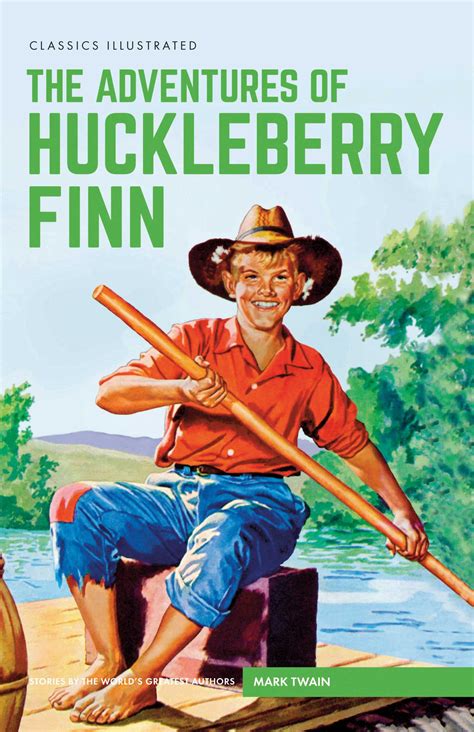
Huckleberry Finn
If deconstruction is spontaneity in action, the law of the heart triumphing over the law of the land, or over the law of whatever social mores or cultural rigidities are currently in vogue, then Huckleberry Finn provides a perfect example.
Huck’s essential being is itself a form of deconstruction of all the social and cultural structures that he’s surrounded and mostly oppressed by, all flying under the banner of ‘sivilisation,’ but the idea is most clearly and sharply focused in the story of the journey down the Mississippi with the escaped slave, Jim. Huck is no intellectual, he fully accepts his society’s view of slaves, which is that they are owned in their entire inferior being by the whites, who have been given this duty of care by God. Slavery, far from being an evil, is God’s law. Huck accepts this. But on the journey down the river, he comes to know and like Jim as an individual human being, one much like himself, and he is tortured by the thought of giving him up to the authorities, something his rational mind tells himis the correct thing to do. The law of the heart (or wherever the seat is of these fleeting, spontaneous impulses) comes up against the law of the head.
This is deconstruction in action. In allowing his heart the victory in this particular battle, Huck is deconstructing a fundamental fixed point of his society’s belief system. This is not at all the same thing as Huck thinking the problem out intellectually and deciding that slavery per se was a bad thing. This would simply be pitting one intellectual position against another. It’s important that Huck ends his inner conflict, not by suddenly becoming enlightened about the evils of slavery, but by obeying the deeper truth he hears within himself, the one that can’t be pinned down in any statute book. Derrida posits justice as the deconstructive element in law. There may be no justice in the world, but the law – fixed statutes and penalties – is fired and inspired by the idea of justice (but too often perverted by the actions of Tournier’s Law: ‘Purity is the malign inversion of innocence’). ‘You’ll get justice in the next world,’ goes the opening line of William Gaddis’s novel, A Frolic of His Own, ‘in this world we have the law.’ With Huck and Jim, justice is the event that has disrupted the rigidity of the law, that event being the un-deconstructible human connection between them. That is, love.
‘no help for that’
At heart, the human being is a lack (we’re all waiting for Godot), and deconstruction is the intuitive awareness of that lack, and of the necessity of keeping a weather eye on the dangers of anything that promises to be ‘the answer.’ I doubt if Charles Bukowski has ever been accused of being a deconstructionist, but he did write this:
no help for that
there is a place in the heart that
will never be filled
a space
and even during the
best moments
and
the greatest
times
we will know it
we will know it
more than
ever
there is a place in the heart that
will never be filled
and
we will wait
and
wait
in that
space.
What is this but Derrida’s longing for the impossible?
Three Colours: Blue
Julie, the protagonist of Krzysztof Kieslowski’s Three Colours: Blue loses her husband and child in a car accident and decides, as a way of alleviating the pain of this loss, to effectively shut down her life. She cuts all ties with friends and family, moves to a flat in the city and establishes a simple routine centred on the local cafe and the swimming baths. She puts her life on auto-pilot; safe, secure, swaddled in pain-free tedium. On a personal level, she echoes those fundamentalist religions and political systems that operate by strict rules and regulations and abhor all innovations and spontaneity.
But life will not have it. Slowly but surely she is drawn back into the flow. As the wife of a famous composer (and a composer herself) music had been her great love, and now, despite efforts to rid herself of this aspect of her past, it keeps stopping her in her tracks, pieces of a musical score suddenly banishing the mundanity around her. And people, too, will not be ignored. Her essential goodness and humanity (which will be made explicit towards the end of the film) is drawn out when she responds to the sounds of a man being attacked by thugs in the street outside her apartment. She doesn’t respond with enough vigour to do the poor man any good, but it’s a start – a start that creates a connection with a young woman living on the floor beneath. Then she refuses to sign a petition got up by the other residents who want to kick out this young woman whom they regard as a whore. As a result, the young woman becomes her friend. Bit by bit, she is drawn back into life – to the point where, finding out that her husband had been having an affair with a young lawyer, she goes to see the woman and, on hearing that she is pregnant, gives her a place to live – her old house (a beautiful chateau) which she had previously put up for sale. And she completes her husband’s final unfinished symphony in tandem with her husband’s assistant, with whom she embarks on an affair.
It’s a classic story arc in both literature and film: the stony heart, cut off from life through pain of one kind or another, gradually melted through contact with people, in effect, through the power of love. So what can it possibly have to do with deconstruction, or any of deconstruction’s extended family? As mentioned earlier, deconstruction is love, a response to a call. Love is the ultimate deconstructing power because it, alone, is not, and never can be, a construction of any kind. Rather, it is what infuses all other structures – families, institutions, philosophies – with their life. Julie has built herself a life which she believes will free her from pain, and love has deconstructed it, prevented it from degenerating into an empty shell. As if to underscore the point, the film ends with the famous words of St. Paul, set to the music she has composed: ‘If I have not love, I am become as hollow brass.’ An empty shell. Whether it’s a personal life, a religious organisation, a political system or a philosophy, without love at the heart of it, it’s worthless. St. Paul’s famous words, seen in this light, may well be western literature’s earliest deconstruction manifesto.
Pride and Prejudice
Possibly the most famous scene in Pride and Prejudice is the one where Darcy, fascinated despite himself by Elizabeth, dares to open a crack in his well-structured stuffy world in order to make her a proposal – and Elizabeth responds by blowing the walls down. She deconstructs his world in the best Derridean fashion: that is, she shatters his false, desiccated notions of propriety and decorum while leaving the solid structure supporting those notions intact (everything will be as it is yet wholly different). After all, she does want to live there.
Works Cited
Banville, John. Stardust. Radio monologues, BBC 3, 11/05/02.
Frye, Northrop. ‘Reconsidering Levels of Meaning,’ Christianity and Literature, 54.3 (Spring 2005), pp. 397-432.
Heaney, Seamus. Spirit Level. London: Faber and Faber, 1994.
Heraclitus. Fragments: The Collected Wisdom of Heraclitus. Trans. Brooks Haxton. New York: Viking Penguin, 2001.
Houellebecq, Michel. Public Enemies. London: Atlantic Books, 2011.
Imhof, Rudiger. ‘An Interview with John Banville: ‘My Readers, That Small Band, Deserve a Break.’’ Irish University Review 11.1 (1981): 5-12.
Kearney, Richard. Dialogues with Contemporary Continental Thinkers: The Phenomenological Heritage. Manchester: Manchester UP, 1984.
Larkin, Philip. Collected Poems. London: Faber and Faber, 1988.
Lispector, Clarice. The Paris Review. ‘Clarice Lispector: Madam of the Void,’ interview with Jose Castello, December 10, 2020. (theparisreview.org.)
Lubac, Henri de. Mystery of the Supernatural. London: Geoffrey Chapman, 1967.
Mailer, Norman. Advertisements for Myself. London: Granada, 1972.
Moran, Dermot. ‘Nature, Man and God in the Philosophy of John Scotus Eriugena’ in R. Kearney, ed. The Irish Mind. Dublin and New Jersey: Wolfhound Press and Humanities Press, 1985. pp. 91-106; pp. 324-332.
Nabokov, Vladimir. Strong Opinions. New York: Vintage International, 1990.
Pascal, Blaise. Pensees and Other Writings. Oxford: OUP, 2008.
Pirsig, Robert. Lila: An Enquiry Into Morals. London: Bantam Press, 1991.
Tillich, Paul. ‘Art and Ultimate Reality,’ in Diane Apostolos-Cappadona, ed. Art, Creativity, and the Sacred. New York: Crossroad, 1984. pp. 219-35.
Toltz, Steve. Quicksand. London: Sceptre, 2016.
Notes
[1] Some testimonies from artists on the subject: The French poet and novelist Michel Houellebecq has said: ‘It is as though – and I know this sounds irrational – it is as though the poem already existed, has existed for all eternity, and that all you have done is discover it’ (Public Enemies 247). John Banville had this to say on the creation of his novel, Kepler:
Always I begin with the shape. But let me make a distinction, a very important one. The form of say, Kepler, is in itself wholly synthetic, by which I mean that it is imposed from outside, yet by synthetic I do not mean false, or insincere. It is, this formal imposition, the means by which I attempt to show forth, in the Heideggerian sense, the intuitive shape of the particular work of art which is Kepler, and which was there, inviolate, before and after the book was written. (Imhof 6)
Keith Richards of the Rolling Stones has said this on the subject of song writing (I’m paraphrasing from a barely-remembered interview): ‘You don’t write songs, you sort of pluck them out of the ether. They’re there, all the time. You just have to find them.’ And speaking of such poets as Keats, Wordsworth and Eliot, Northrop Frye has claimed: ‘They’ve all said the same thing. The poet does not think of himself as making his poems. He thinks of himself as a place where poems happen. (Frye 408)
BRENDAN MCNAMEE is the author of books and articles on John Banville, Michel Houellebecq, Gerald Murnane, Robert Musil, Sean O’Casey, Flannery O’Connor, W B Yeats and others