A Man of Heart – the scribe’s story

LIAM GUILAR continues his epic of early Britain

The story so far. In the 5th century Vortigern’s attempt to hold the imperial province of Britannia together has been defeated, not by external enemies but by British rebels led by Vortimer, his eldest son. Vortimer is a devout Christian and has invited the Pope to send an embassy to restore the church and combat the Pelagian heresy. What follows is the first half of Chapter ten which loosely follows the fifth Century Life of Saint Germanus . You can find chapters 2-9 on the Brazen Head. The complete story has been published as A Man of Heart, by Shearsman UK (January 2023), available here

At the court of Vortimer the King

Above, bare wooden beams.

The hall is badly lit, too many

shadows confuse the walls.

The candle complicates the page.

There’s a broken wreckage of a man

beyond the table, out of sight,

but he knows he’s on his knees,

the shadows can’t disguise

how uncontrolled his sobbing has become.

Two armoured men are looking carefully

at the wall behind him.


‘For your skill with words,’

said his superior,

‘you will join the Papal mission.

You will travel to Britain.

You will record everything.’

Only now he understands

it was curse not compliment.

Here words slither and slop,

like the entrails of a corpse

he has to carry to its grave.


‘Who saw the King today?’

the officer enquires.

The scribe indicates he cannot hear the man’s reply.

The guards move, the man sobs.

‘The pagan woman, the Earl of Gloucester,

slaves, attendant lords…


hand poised, aware the sentence is unfinished.

The officer leans forward. ‘Who else?’

Like a secret heard by accident,

so soft, if a voice could hide, his does:

‘Your masters.’


The two armed men stare at the wall

The scribe puts down his stylus.


They have questioned slaves

who revealed nothing before they died.

There are several court officials

who saw the King in their daily duties

but each swears he saw nothing

and no one saw him without others present.

There were still many wished to see him.


Not like that.

Remembering the last time he saw Vortimer,

writhing, frothing at the mouth,

fouling himself, screaming.


Lupus of Troies enters. ‘The King is dead.’

He indicates the scribe should write the news.

The guards remove the witness,

as Germanus of Auxerre re-enters;

Bishop, on an embassy to combat heresy,

ex-governor, ex-general, proto-saint.[i]


The scribe has travelled with these two,

has become alert to the way they rarely say

that water’s wet. Their silence has

so many meanings but they navigate

the alternatives and rarely get them wrong.

He is aware the words he writes dress

one version of the truth and send it

marching off towards the future

while other possible interpretations

loiter round the edges of the page

like unwanted slaves at an auction.


Germanus:

‘Every Lord who heard his welcome speech

has to be a suspect.’


‘It was poison.’

‘Domestic or foreign?’

‘Impossible to tell unless the vial is found.’

‘And that’s impossible?’

The drama of silence. How can there be meaning

without interpretation in what’s unsaid?

The words he writes across the parchment

have no spaces, but here so much happens in the gaps.

Face blank, he moves the words across the page

and later, perhaps tonight, perhaps at the ugly hour,

staring into nothing, curled into himself

a long way from his home,

imagining all the ways a boy can die,

he will wonder if he hasn’t just recorded a confession

and signed his name to his own death warrant.

He knows what wasn’t written down.


Germanus rests his hand,

so very gently on his shoulder.

If he touched the hand, the ink might blot,

might suggest to an observant scrutineer,

‘Here something happened.’


‘We came to root out heresy.’


They have been arguing.

Germanus is troubled by the inquest.

‘Pope Siricius debarred from holy orders

all who after baptism held administrative posts

or served in the army, the civil service,

or had ever practised as barristers.’


Lupus searches for the appropriate quotation.

He knows this man is closer to his Christ

than anyone he’ll ever meet.

But his literal reading of the gospels

is a cliff on which every ship must wreck.

His Christ never ruled a kingdom;

or had to deal with heretics and raiders;

or arbitrate between contenders for a throne.


He finds the appropriate quote

in his well-trained lawyer’s memory:

‘These powers have been granted by God

and the sword has been permitted

for the punishment of the guilty-

those who wielded it were not blameworthy.’[ii]


‘My Christ,’ says Germanus, quietly,

‘came to save the poor and wretched.

He bought a message of hope and charity.

How can I love my neighbour

and send him to be tortured?

What kind of lover sends their friends

to the executioner?’


‘A disappointed, saddened one?’


The ruthless governor, the iron fisted general,

the lawyer who could kill with words,

flashes to reanimate the bag of bones

and Lupus, despite himself, steps back.


‘Faith does not deal in dialectics.’


The scribe watches, wonders why this,

why now, and why this pause?

He watches Lupus, waiting, saying nothing,

until Germanus shrugs and they both smile.


He can hear the wooden walls

settle. He can hear the fire.

He can hear, outside, voices

and lamentations. Someone repeating:

‘The King is dead. Vortimer the King is dead.’

A gesture indicates the scribe should write again.

‘Where is the woman?’

‘Fled from the court my lord.’

‘And Gloucester?’

if you listen, and ignore the shock,

it’s there, the faintest trace?

Amusement? In the voices.

‘Outside, trying not to pace.’

‘Better bring him in then.’

Somewhere in northern France, months earlier

A young man on his knees

in the cold austerity of his cell.

Rare visitors, three much older men:

one white haired, chicken necked,

dressed only in a tunic and a mantle

despite the time of year:

his holiness, Bishop Germanus of Auxerre.

The other tall, solid, well-fed:

Bishop Lupus of Troies.


‘They are sent by our Holy Father in Rome

to combat the Pelagian disease in Britain.

They need a scribe to record their victory.

You have been chosen,’ said his superior,

who seemed small beside the others,

‘for your skill with words,

your beautiful calligraphy.’


And the sin of pride was his.

Thinking, of course, I am the best

and it is just that I am recognised

after the years of being slighted

by the other scholars.

They will watch me leave.

They will see I have been chosen.


He had not been outside his community

since he entered as a child. He had not seen

beyond the familiar sky line,

the terrifying open space

stretching before, behind, above.


They plodded towards the coast.

It was the ash end of the winter,

cold lurked in the morning

and a wind that shrank skin against bone

blew over the flat dead fields.

Reports of bagaudae made them cautious.

Incongruous discrepancies:

‘An historic Papal mission to save Britannia’s soul’

sounded grand on parchment, but

two old men, a boy, some servants

and a bunch of bored and scruffy soldiers.


They had sheltered in a ruin,

the walls liquid stains

on a darkness with no boundaries,

full of furtive noises. 

Shivering at the edge of light

scattered by their feeble fire,

he knelt for the comfort of prayer,

startled by a strange mewling sound

he recognised as his own voice.


The darkness split. Imploded.

A voice in his head screamed silence

and a vague stain appeared

suggestive of a man in chains.

Stones rose, began to pelt the travellers

who scuttled for shelter, except for Germanus.

‘What ails you? Why do you harm us?’

The stone storm falters into sounds of stones falling.

Germanus strides towards the ruin, passing the boy.

‘Follow child.’ He pauses at a pile of rubble,

speaks quietly, knowing the soldiers had come.

‘Bring light, dig here.’


Two rotted bodies, still in chains.

‘Thieves,’ said Lupus, ‘condemned men.

Dumped like the rubbish that they were.’


Germanus was offended.

‘Images of the Almighty, made in his likeness

should not be so mistreated. Find something

we can use for shrouds, bury them properly.

We will pray for their souls. ‘


The two bishops square off against each other.

One strong, virile, the other bent and old.

Neither speaks until Lupus smiles and bows.


Next morning the boy had stumbled over Germanus,

who was grinding barley for his breakfast,

dressed only in his hair shirt.

Lupus had servants to make him comfortable.

Germanus slept on the cold ground,

a faded military cloak for blanket.


But the old man was friendly,

keen to know the boy better.


‘My father left me with those monks

when I was barely five years old.

He would have sold me off to pay a debt

but couldn’t find a buyer in our village.’


Germanus sees,

bewildered, frightened and alone

a timid child in a hard bare cell.


‘God sees through you.

You were terrified of being wrong

so you learnt to be correct.

The library was home, the classroom

and the daily rituals offered certainty.

Applause substituting for affection.

Approval and your teacher’s admiration

as compensation for your peer’s contempt.’


Skewered, the boy looks away,

remembering the casual nastiness of boys

who had agreed he was the victim.


‘But you fell in love with words,’

continues Germanus.

‘The way they could be marshalled

to march away from ambiguity

and took a sour delight

watching boys who bullied you

being bullied by their teachers

because they were slow, and stupid

and didn’t know one case from another.


It’s alright child. You’ve done no wrong.

There is no grammar of divinity.

Language like the evening fire

only illuminates so much.

God exists beyond the pale glow

of human reasoning. Only fools

believe they understand his ways.

He had a plan for you and here you are.’


The boy looks beaten.

And because Germanus

can manage a robust kindness:

‘Do you have any questions?’


‘What is this Pelagius? Child, he was a British fool

who thought a man might find his way to Grace

without the help of God. Much that he said…

Much that he said was good.’ The old man’s

mottled hand moved the mortar slowly,

the rough barley crackling between the stones.

The disturbing bustle of their camp

distanced by the creased and speckled hands.

‘Pelagius said: A man must try to live a sinless life,

and if he fails, it is his own fault.’

‘But…’

‘Child, where is God in this? For Pelagius,

a man stands or falls alone. He doesn’t need

God or the Church. Nor can priest absolve the man

or give him penance. One sin damns you to hell.

Where is Christ’s charity in that?’

What manner of man is this, that even the wind and sea obey him?[iii]

First sight of the sea; a sullen border

between dark land and empty sky.

His shot nerves torn ragged.

The smell and noise and restlessness

of the wharves had no grammar, and then

the pointless rage of heaving waves

pushing and crashing and trying to erase their tiny ship.

He had clung to the rail and prayed

as the world lurched, rolled and staggered,

until, opening his eyes, he saw

right at the bow, Germanus

drenched in the rise and fall

like the saviour rising from death

shedding the green water,

hands raised, arms outstretched

and he will swear on the holiest of relics

on his chance of salvation

and on his faith in the risen Lord

that Germanus of Auxerre

ordered the sea to be calm.


And the sea obeyed him.

Arrival

They watched the riders coming down the beach

and he was frightened by the powerful grey horses;

teeth, hooves and sweating muscle,

and their armoured riders, more beastly than their mounts.

He knew their type; animals who could not reason,

or be reasoned with. A casual indifference to other’s pain.

He remembered men like this, riding through his village,

their arrogance, their twisted humour,

the ease in which they warped from indolence to rage.

Burnished armour, banners scraps of sudden colour on the breeze

and when the herald had established their identities

the riders moved aside to allow a young man on foot.

Dressed in gold brocaded silk; the kind of man, he thought,

who looks at home in silk. Not much older than himself,

but confident and eager. ‘Where is the King?’

asked Lupus, affronted by this lack of protocol.


‘I am Vortimer, ruler of this kingdom.

Vortigern is my father, a failed King his subjects drove away.

He brought in heathen people. They broke our laws,

defiled our women, corrupted our good customs.

We have destroyed their army, driven them to their ships.


In this new land we worship the true God.

With your help we will rebuild His church.

Every worthy man shall have his place,

and every serf and slave will be set free.

Church lands I will entrust to you.

Every widow will be exempt the tax

upon her husband’s legacy.

We will help you root out heresy

and crush all heathen practice.

Hengist, who will rot in hell,

has lead my father into folly, corrupted him,

used his daughter to confuse him,

until he turned his back upon the church.

You are welcome fathers,

together we will rebuild this battered island.’[iv]


‘I thank the Lord who made this world

and put such holiness herein,’ said Lupus.


But as they stumbled up the stony beach, the scribe

overheard him ask Germanus,

‘Did you see the reaction? His retainers?’

Germanus struggling on the shingle,

stopped and muttered, ‘A holy fool.

Not long for this world.’

Gloucester describing the rebels to Lupus of Troies

Champions of the church?

Don’t make me laugh.

Gobshites and wide boys

chancers on the make

jumping at an opportunity.


A patrician elite

suddenly without the power,

influence and prestige

their fathers had inherited

following a strutting fool

who talked a good war.

Men who squirm at discipline,

who dislike Vortigern’s desire

to protect the weak,

his willingness to deal

ignoring faith and place of origin.

They did not remember his ferocity.

How he stacked the corpses,

devastated towns, left nothing,

not a dog nor rat alive. They think,

he has outlived his usefulness.

Theirs is this new world

and they forget who made them possible.

They cluster round Vortimer,

like rot on an open wound.

His father’s son, and little more.

He owes his status to his name

donated, unrequested but

without that gift, incompetent.

A fool no one would tolerate.

Nice enough to have around

but not one to be followed.

The great men of the kingdom

no longer deferential,

no longer asking his opinion

have left him to his bitterness

and this pretence of a court.’

Vortimer, talking with a British bishop

‘The heretics will meet. They will debate.’

Gloucester entering the room like he’s storming a redoubt,

shattering the conversation. ‘She’s coming here?

With an escort and safe conduct?’


‘She comes seeking instruction in the Christian faith.

She asked for my permission to remain here with my father,

and for my father’s sake, I have agreed.’


‘Kill her,’ says Gloucester.


The bishop is still framing his response 

when Vortimer, sounding

so much like his father;

‘And that would be her introduction to Christianity,

if you were her instructor?’


‘She will ride through an avenue of severed heads

to reach your gates, and some of them were relatives.

You placed a bounty on her head. Is that yours?’


The bishop skilled in diplomacy,

tired of their bickering:

‘Your objection was her faith?

She comes here to be baptised.’


‘My lord the King

rebelled against his father

because he favoured pagans.

If she is baptised,

why are we fighting Vortigern?’


Vortimer, offended by Gloucester’s tone,

speaking in his own voice:


‘We will treat her with respect.

She will be baptized.

You will not harm her.’

To be continued


[i] Germanus of Auxerre is the most ‘historical’ of all the characters in this story. He did exist and he did travel to Britain to combat heresy in 429. His miracles, recorded below, are in the Life of Saint Germanus, written down in the late 5th century. Typically for The Legendary History, the chronology is wayward. If Hengist landed in 449/450 he arrived twenty years after Germanus had left.

[ii] Lupus is quoting Pope Innocent 1’s reply to an enquiry on this matter.

[iii] The Gospel of Mark, 4:41

[iv] Vortimer’s speech here, which follows Laȝamon, is one of  Laȝamon’s most astonishing additions to his sources.

A wasted ‘life’ of The Waste Land

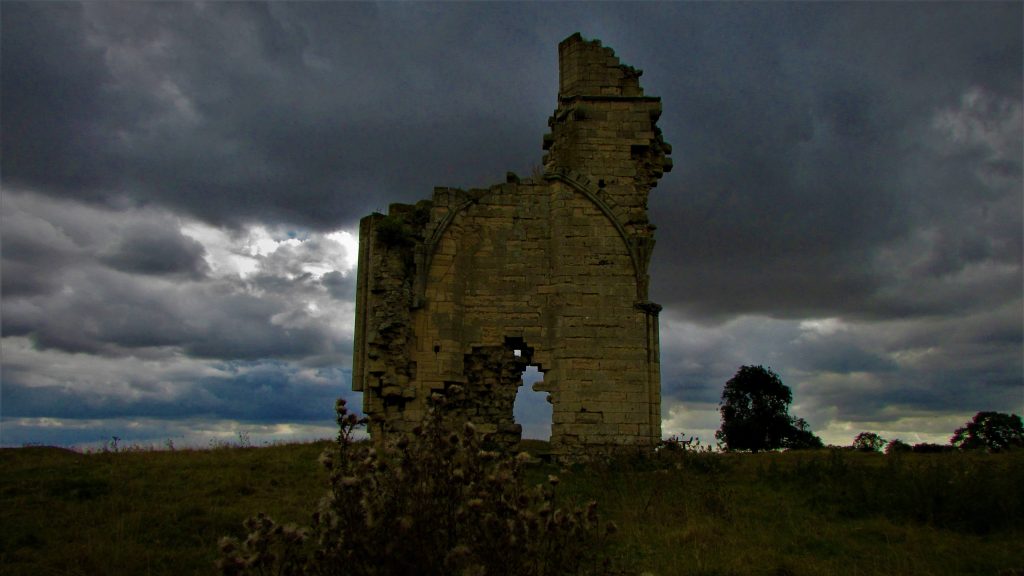
Image: Derek Turner

The Waste Land – A Biography of a Poem

Matthew Hollis, Faber & Faber, 2022, 524pps., £20
LIAM GUILAR is disappointed by a would-be biography of the landmark poem

If any twentieth century poem deserves a biography, it is T.S. Eliot’s The Waste Land. First published in 1922, it was, and is, an extraordinary poem. Stripped of all the accumulated analysis, commentary, criticism and fashionable condemnation of its poet, it remains as new and startling today as it was a hundred years ago.  

Its significance for many of the century’s literary developments cannot be underestimated. It has also been a fertile source and target for successive fashions of criticism and a starting place for an astonishing number of academic performances.

Matthew Hollis’s The Waste Land – a Biography of a Poem promises to be just that. It isn’t. Instead of telling the story of the poem’s life after it was published, he narrates the lives of the Eliots and Pound up to its publication, reducing the poem to an incident in their lives.

The story of the poem’s creation has been known for fifty years. In 1914, T. S. Eliot had come from America to Europe to study. Instead of working diligently in the philosophy department at Oxford, he had married in haste and abandoned his Harvard PhD. He was determined to become the leading literary critic and poet in London, at a time when London was the centre of the English literary world.

By 1920 he had a secure, well-paid job at Lloyds Bank, a growing reputation as a reviewer amongst the people who mattered, and a circle of the necessary acquaintances. He was also struggling with the knowledge that he had written nothing outstanding since ‘The Love Song of J. Alfred Prufrock’ in 1911. He was keen to write a long poem. Great poets wrote long poems and he wanted to be a great poet.

Lurching from one illness to another, unhappily married, and ‘overworked’, his doctors had recommended he take time off and the bank had obliged by giving him three months paid leave. He went first to Margate, and then Switzerland. Soon after returning, having discussed his poem with Ezra Pound, The Waste Land was published to critical acclaim, scorn and baffled incomprehension. It divided the readership then and continues to do so now.[i]

The story was qualified when the manuscript resurfaced and was published in facsimile in 1971. It was then possible to see that the poem was initially twice as long. An assemblage of parts called ‘He Do The Police In Different Voices’, it began, not with ‘April is the cruellest month’, but ‘First we had a couple of feelers down at Tom’s place’. There was a long section in rhyming couplets describing a woman, Fresca, getting out of bed, which reads like Swift doing Pope with all the disgust but none of the rage or energy. What would become the shortest section of the poem, ‘Death by Water’ was originally a long narrative about a sea voyage. It became obvious from the facsimile that Ezra Pound and Vivien Eliot had played a significant part in shaping the final poem. Pound had cut the draft by half.

T S Eliot. Image: Sneh Vatsa. WIkimedia Commons

By the late 1970s, one source put the total of published books and articles about Eliot, his poetry and criticism, at 4,319. A bibliography for the years 1987-2013 adds another 1,624 items. Neither figure includes unpublished dissertations, theses, book reviews and conference papers or lectures. Hollis’s own bibliography runs for over twenty pages. There are at least two biographies of Vivien Eliot and a recent three volume biography of Ezra Pound. T. S. Eliot has been the subject of several, the most recent biography being Robert Crawford’s justly acclaimed two volume life. With all this information available, what hasn’t already been said? 

Hollis tells the story of the poem by tracking Pound and the Eliots through the years leading up to its composition, starting in 1918 but moving chronologically backwards and forwards. He writes eloquently, keeping his story moving, bolstering it with details and anecdotes to bring it alive, as when Eliot’s car breaks down and he must walk home “passed only by a wagon of Boy Scouts and pursued by a line of three ducks” (p.87).

Here, in one place, is a very readable version of many well-known stories. Hollis can make typing sound exciting.

“Eliot’s typewriter had seen better days. […] as he sat before it in the winter of 1921, he centred the carriage and depressed the shift lock. The strikers swung up from the type basket, prompting the escapement forward, letter by letter: a title, concluded as were all titles, with a terminal point.

THE BURIAL OF THE DEAD.

He rolled the platen twice for a two-line drop, and began to type the poem’s opening. But it was not ‘April is the cruellest month’ the line that would become synonymous with the poem, but something altogether different.”

pps.227-8

The dating and sequence of the manuscript’s composition are revealed – which typewriter was used, where, and when. One can only admire the patience that went into the study of typewriter ribbons and paper to excavate this information, while wondering what it adds to an understanding or appreciation of the poem. Hollis also tracks Pound’s editing, Eliot’s dithering over the final shape of the work and the negotiations leading up to publication.

The poem is returned to the human context which produced it: the sometimes spiteful, claustrophobic world of literary London in the years immediately after the First World War. Hollis quotes William Gardner Hale’s famous critique of Pound’s ‘Homage to Sextus Propertius’ which ends: “If Mr. Pound were a professor of Latin, there would be nothing left for him but suicide”. It stands as a good example of period criticism that could border on libel and be viciously personal. Such treatment humanises the production of literature, as does Hollis’s suggestion that Eliot cut the first page of the manuscript, not because it was tedious, but because it described a visit to a brothel, and he didn’t want to offend his mother.

However, the claim that Eliot was ‘the greatest poet of the twentieth century’ rests to a considerable degree on the fact he wrote The Waste Land. The story of the writing of the poem, as told here, is not the story of an artist in control of his material. 

Neither Pound nor Eliot seemed to know what they had created. As late as March 1922, Pound was describing ‘The Waste Land’ as “a series of poems”. Having allowed Pound to hack the original in half, Eliot was worried the poem, as it then stood, was not long enough for stand alone publication. In January 1922 he was thinking of padding out the final poem and giving it this form: “(1) Sage Homme by E.P.-(2) Gerontion-(3) The Burial of the Dead-(4) A Game of Chess-(5) The Fire Sermon-(6) What the Thunder Said- (7-9 in order unknown) Song-Exequy-Dirge.” (p.361)

Eliot may have gone on to dominate the critical and literary landscape, but in the early 1920s he seems to have had difficulty evaluating his own work. He had tried to convince Wyndham Lewis to publish ‘The Triumph of Bullshit’, a rhyming obscenity which would not have been out of place sung in the communal bath of a 1970s Rugby Union club.

Robert Crawford records that in Margate, Eliot had been “practising scales on the mandolin”.[ii] Not picking out tunes, or singing songs and accompanying himself, but practising scales. It’s a telling image for Eliot the poet: a master of technique who at that time was struggling to find a use for it. The picture that emerges is of someone eager for fame and publication, but with no real idea of what he was doing other than trying to become famous and published.

For all Hollis’s entertaining eloquence, the book feels unbalanced and becomes frustrating as it progresses. The problem lies with the title. A biography which did not tell the life of the subject would not warrant the name. This is not the biography of a poem, which would have been an original contribution to celebrate the centenary.

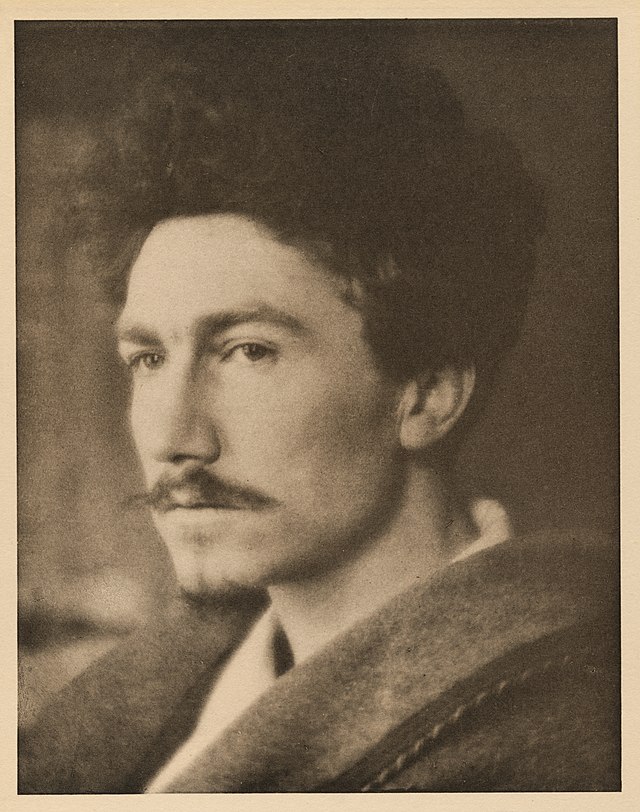
Ezra Pound. Image: Alvin Langdon Coburn, NPG. Wikimedia Commons

The book ends triumphantly, with Pound vindicated, and Eliot beaming. The last chapter, a coda of sorts, ‘London 1960’, focusses on Eliot’s attempts to challenge Pound’s growing sense of failure. In the rush to the end and the desire to reconcile the characters, the poem goes missing. Eliot’s public ambivalence about it is brushed aside, and the mixture of astonishment and derision which greeted its publication is reduced to two pages of decontextualised quotations. There’s very little discussion of the notes Eliot used to pad out the page count. He helped fuel an academic industry by claiming:

Not only the title but the plan and a good deal of the incidental symbolism of the poem were suggested by Miss. Jesse L. Weston’s book on the Grail Legend: From Ritual to Romance (Macmillan). Indeed, so deeply am I indebted, Miss Weston’s book will elucidate the difficulties of the poem much better than my notes do; and I recommend it (apart from the greater interest of the book itself) to any who think such elucidation of the poem worth the trouble.

Whether he’d read From Ritual to Romance is a moot question Hollis skips over.[iii] Given the obvious lack of ‘plan’ in the poem’s writing and the late addition of the title, the statement is at the very least an impressive piece of misdirection.

To tie the poem to the poet is to divert attention from the poem and go ferreting in the dusty scandals of our grandparents’ lives. Instead of asking what the printed poem does, or why it is was so successful or so useful to a fledging critical industry, one can speculate pointlessly about who was the “Man from Cologne” (p.352) or how often, when and where Vivien Eliot “slept” with Bertrand Russell.  

Narrating the lives leading up to the publication of the poem creates a problem of relevance the book ignores. The text runs for 386 pages. 217 pages detail Eliot and Pound’s movements before the poem is begun. When Eliot begins his rest cure in Margate, Hollis has discovered how many days he spent there, whether he had a hot bath, what he spent his daylight hours doing, who he phoned and how much the call cost. We get a potted history of Margate as a tourist resort. The other stories are well known and entertaining but why, for example, does the story of Eliot, Lewis, Joyce and the second-hand shoes have to be repeated? What did the floor plan of the Pounds’ apartment in Paris, or the fact Pound enjoyed boxing with Hemingway contribute to the poem?

The same seems true for the historical excursions. Because they exist at the level of generalised context, Hollis could have picked any distressing incident from 1900-1920.

The first chapter, ‘Armistice’, begins with the story of the death in combat of the last allied serviceman in the First World War. Like the excursions to the Irish wars in 1920, the burial of the Unknown Soldier, and to various international calamities, the link to the poem is never made explicit. Hollis’s Eliot is far too self-obsessed to be affected by what the Black and Tans were doing in Ireland, and there’s no attempt to prove that he knew about them, let alone that their behaviour affected his thinking or writing. A Poundian editor would have cut the first two hundred and sixteen pages: ‘Interesting/ enjoyable/ been done before/ irrelevant.’

Or perhaps there is a sly Eliotic irony at work, and Hollis is undercutting the usual ‘Poor Tom’ narrative. How depressing to have a steady job in the 1920s, earning 500 pounds a year, with an employer willing to give him three months paid leave. How oppressive to have to leave the rural weekend cottage to go to work to earn a living. Robert Graves was more blunt: “Who forced him, during the Battle of the Somme, to attend London tea-parties presided over by boring hostesses?”[iv]

There’s also an inconsistency in the treatment of the material. It is now compulsory for any writer on Eliot to excoriate him for his antisemitism. Hollis does so at every opportunity, but while Eliot deserves the criticism, it’s a modern, retrospective interpretation of the views of a man who was the product of his class and place and time. It draws attention to the things Hollis doesn’t criticise from a similar perspective.

Much of the narrative moves smoothly over the surface presenting the official version which tends to minimise the strangeness of the story. He quotes admiringly from Eliot’s early criticism, but a century has passed in which that criticism has been picked apart. While Hollis sees the relationship between the criticism and poetry as unproblematic, the much more interesting symbiotic relationship between The Sacred Wood (1920) and The Waste Land goes unexamined. In a book about the poem this wouldn’t matter; in a book focussed on the poet it seems like a major flaw.

Far from being objective statements of scientific truth, as some readers were willing to accept, Eliot’s early criticism is a brilliant game of smoke and mirrors, in which T.S. Eliot, Harvard-trained philosopher, wielding an intimidating erudition, justified the kind of poetry T.S. Eliot wrote or wanted to write, and rationalised his inability to produce poetry with the facility of a W.B. Yeats. Hollis quotes approvingly from a letter Eliot wrote in 1927; “The only criticism of poetry worth noting is that of poets” (p.211). The phrase is representative of so much of Eliot’s early writing about literature. It cannot be accurate without the absent qualification: ’Often’, ‘Sometimes’, ‘For my purposes’, ‘In terms of…’. Once the qualifications are added, the statement is revealed as little more than a personal preference.

Ezra Pound is the real hero of this book. Here too the retrospective critique is absent. It is obvious from all the available contemporary accounts that Pound was a tempestuous character, a tireless and passionate advocate for writers he admired. But his criticism and poetry from this period have not aged well.

Pound’s antisemitism is appropriately chastised, but otherwise Hollis takes him at his own evaluation. The reader is positioned to see criticism of Pound’s poetry as misguided, if not driven by malice and envy. To read Hollis you’d think poor Ezra was driven out of London by a conspiracy of jealous mediocrities who simply didn’t understand his genius. The fact that he was a self-appointed expert on a range of topics he knew little about is passed over, as is the fact that much of his criticism from this period consists of aggressive statements of personal preference masquerading as objective truths. The myth of Pound the brilliant editor is based on the idea that he was able to see The Waste Land in the draft and, in his own phrase, perform the caesarean operation to bring to light the poem Eliot wanted to write. 

Joyce’s comment about Pound’s attempts to edit Ulysses is telling on two counts.

I never listened to his objections to Ulysses as it was being sent him once I had made up my mind but dodged them as tactfully as I could. He understood certain aspects of the book very quickly and that was more than enough then. He makes brilliant discoveries and howling blunders[v]

Firstly, if critics have seen method and intention in the manuscript, Pound either didn’t understand them or didn’t care. With The Waste Land manuscript he slashed away at the level of word, line, and passage, regardless of the effect his deletions had on the whole. It was the action of a man with a cast iron sense of his own infallibility and a complete disregard for the writer whose work he was cutting. He noted his reasons in the margins: “Georgian”; “verse not interesting as verse to warrant so much of it”. He either had no interest in, nor understanding of, Eliot’s intentions, which allowed him to hack away knowing that nothing essential would be removed, because as far as he was concerned nothing was essential.

Critics tend to assume that Pound’s editing was entirely disinterested and for the greater good of ‘Poetry’ because that was Pound’s version. However, as Hollis writes, the cutting of the original ‘Death By Water’ is more difficult to justify as “powerful passages had been sacrificed” (p.64). Hollis takes the time to note the similarities between the sea voyages in the original ‘Death by Water’ and the Canto Pound was working on at the same time. He avoids describing this as plagiarism while providing enough evidence to support the accusation. He’s too kind to suggest Pound may have demolished ‘Death by Water’ so his sea voyage Canto had no competitor. Hollis also records that Pound didn’t show the Canto to Eliot when he wanted someone to help him to edit it. Hollis prefers to believe “Perhaps it was Pound’s sense of selflessness that left him unwilling to disturb Eliot” (p.352) rather than an unwillingness to offer up a poem for criticism to someone who might return the recent favour and demolish it on the same grounds – or who might be so crass as to point out the similarities.

Pound’s motives are lost. The truth about the writing of a poem, especially a hundred years after the event, is unknowable, and was perhaps only vaguely understood by the people involved. Hollis’ approach raises so many questions that it cannot answer, at the same time softening the strangeness of this poem’s creation.

Many writers solicit comments on their drafts, but Eliot was eagerly soliciting comments on fragments of an unfinished long poem. This is strange, but the real curiosity, obscured in retrospect, is why he was so willing to put himself under Pound’s direction.

Hollis claims of Eliot’s 1919 Hogarth Press selection of poems that “more than any gathering they would bear the fruits of his [Pound’s] management of Eliot’s work” (p.79). ‘Management’ is aptly chosen. Pound liked to manage his discoveries. But as Hollis also explains, these poems are unimpressive compared to Eliot’s best work: “caricatures wearily reappear; predatory males, wanton females, unscrupulous outsiders, untrustworthy Jews”. The poems exhibit a “claustrophobic formality buttoned up in iambic tetrameter” (p.82). The reviewer for The Times wrote that Eliot was “laboriously writing nothing” and “in danger of becoming silly”. Except for The Waste Land, little that Eliot wrote under ‘Pound’s Management’ advanced his reputation as a poet.

Hollis ends one section of the book with a summary of Eliot’s debt to Pound before the latter left London in 1920. The mystery is not why Eliot felt indebted to Pound for his genuine assistance in getting his work published, but why he was so willing to submit his poetry to Pound’s literary judgement. Was it really so infallible, or merely human as the Joyce comment suggests?

Were the Fresca couplets such a bad imitation of Pope? Pound told him “You cannot parody Pope unless you can write better verse than Pope-and you can’t.”[vi] Why did Eliot timidly accept this verdict? If he were following Joyce and using a range of historical styles, why didn’t he just shrug and follow Joyce in ignoring Pound’s dismissive comment?

The answer lies in the psychology of T. S. Eliot, and in his specific state of mind while he was writing the poem. Both are unknowable. What we do know is that he did not repeat the process and seems to have felt uncomfortable about the end product for the rest of his life.

If this really were the biography of the poem, then its life in the twentieth century should have been its focus[vii]. Eliot was born a year after the attempt to introduce an Honours school of English Literature at Oxford University was voted down. It was not until 1894 that resistance was overcome. If scholarship were replaced by criticism, how could the study of English Literature be more than “mere chatter about Shelley”?[viii]

The question haunted literary studies until they self-destructed in just over a hundred years. Poetry like Pound and Eliot’s, baffling to a contemporary reader bought up on Kipling, Yeats and the majority of poetry in the bookshops, supported the rise of the professional explainer and with it the cult of the ‘difficult poem’. If T.S. Eliot and The Waste Land did not exist, university English departments would have had to invent them to justify their existence.   

The Waste Land became an almost inexhaustible resource that could be quarried for allusions and biographical connections. It challenged established ideas about originality and plagiarism. Critics could announce that they had finally unearthed the poem’s meaning only to have their findings challenged by other critics. The notes provided starting points for careers. To be ‘The Greatest Living Eliot Scholar’ became a desirable title. With the inevitable reaction against Eliot’s perceived ideologies, the poem could be a target for every new fashion of criticism that could prove its own virtue by finding faults with the poem and the poet.

Yet despite all the critical attention, paradoxically, after The Waste Land, a single history of poetry in English becomes impossible to write. Despite Pound and Eliot’s insistence that their version was the only correct one, there are now many competing, sometimes mutually exclusive, assumptions about what a poem is and should be. The Renaissance or the Romantic Period mark definite shifts in the writing of poetry but the same cannot be said for the ‘Modernists’.[ix] Today, highly regarded poetry is being written which reads as though The Waste Land or the Cantos were never written. The temptation to naturalise all this could be resisted and a biography of the poem would have been a good place to start.

Despite all this chatter about Pound and the Eliots, despite the proof that the final version was an accident, The Waste Land remains: 433 brilliantly memorable lines. Whether Eliot knew what he was doing and whether Pound hacked away indiscriminately are questions that ultimately can’t be answered, and might not be worth asking.

Eliot’s undeniable ability to turn a memorable phrase and pack it with meaning – “I will show you fear in a handful of dust” – to create resonant images – “A woman drew her long black hair out tight/and fiddled whisper music on those strings” – and his superlative ability to manipulate sound and syntax (read the poem aloud for yourself) transformed what one admiring critic called “a cultural scrap heap” into a unique, never to be repeated or successfully imitated piece of writing. A hundred years after it was published, it still feels strange and new, still divides readers, and still rewards repeated re-reading. And its biography is yet to be written.


[i] On 29 December 2022 the New York Times published an article by a Mathew Walther entitled, ‘Poetry died 100 years ago this month’ with the line ‘I’m convinced. Eliot finished poetry off.’ https://www.nytimes.com/2022/12/29/opinion/eliot-waste-land-poetry.html

[ii]  P.389. Crawford, Young Eliot. From St. Louis to the Wasteland.  Farrar, Straus and Giroux, 2015

[iii] “Eliot’s first edition of Jesse Weston’s book is in the Houghton Library in Harvard with his inscription ‘This is the copy I had before writing The Waste Land’. It is virtually unannotated. Pages 137-40 and 141-4 remained uncut.”, Crawford, Young Eliot, p.352

[iv] ‘These be your Gods Oh Israel’ in Collected Writing on Poetry, Paul O’Prey (ed.), Carcanet, 1995

[v]  Letters of James Joyce Vol. 1 ed Stuart Gilbert, New York, Viking Press 1957 p.249

[vi] Qtd p.127 in T. S.Eliot. The Waste Land. A Facsimile And Transcript Of The Original Drafts Including The Annotations Of Ezra Pound, Harcourt Brace Jovanovich, Inc., New York, 1971 

[vii] There’s a good summary up to 1995 in John Harwood’s, excellent, iconoclastic, Eliot to Derrida. The Poverty of Interpretation, St. Martin’s Press, 1995

[viii] The remark is attributed to Edward Augustus Freeman, then Regius Professor of Modern History

[ix] It’s obviously possible to argue about when the Renaissance or the Romantic period began and ended, but it would be wilfully obtuse to argue that the majority of poetry written after 1650 is not markedly different to the poetry written before 1550. And the same would apply to 1750 and 1850

Zarathustra reconsidered

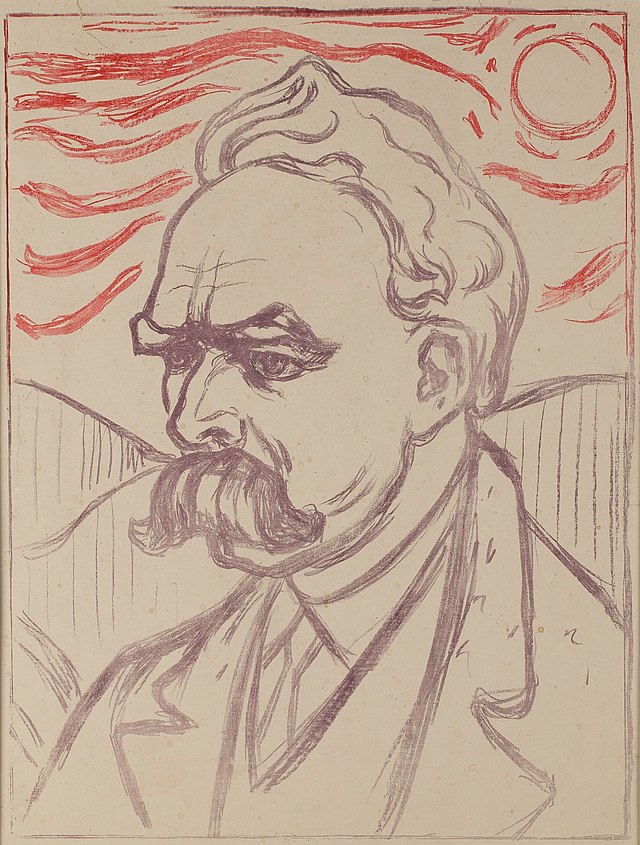
Nietzsche, by Edvard Munch

Thus Spake Zarathustra

Friedrich Nietzsche, Michael Hulse (trans.), Notting Hill Editions, 2022, pb., 312pps + xiv, £12.99

Unpublished Fragments from the Period of Thus Spoke Zarathustra

Friedrich Nietzsche, Paul S. Loeb, David F. Tinsley (eds., trans.), Stanford University Press, 2022, pb., 576pp + xii, US$30

Nietzsche’s “Thus Spoke Zarathustra”

Keith Ansell-Pearson, Paul S. Loeb (eds.),Cambridge University Press, 2022, hb., 277pps + xiv, £75
ALEXANDER ADAMS sees new sides of Nietzsche

Apparently, at one stage of World War I, every German soldier deployed was given a copy of Nietzsche’s Thus Spake Zarathustra, apparently to fortify their will. It is in some ways an odd choice. Nietzsche subtitled it “A book for all and none”, realising that many readers would be baffled by the messages. Although few would have been perplexed at the presentation of moral-philosophical issues in the form of fables – for what are fables, if not moral-philosophical issues rendered in colourful narrative form? – many would wonder what exactly those messages were. Initially, that was not a problem because there were so few readers. A long, fabulous narrative, featuring a protagonist barely known in modern Europe, split over multiple volumes, written by a little-known retired professor of philology had few takers at the time. It is hard not to think that while it might have been undervalued on first appearance, it was equally overvalued soon afterwards.

No philosopher had greater influence on the development of modern history and Modernism in the arts than Friedrich Nietzsche (1844-1900). Of his writings, Thus Spake Zarathustra (1883-5) is unique in that it is written from the perspective of a fictionalised character, Zarathustra (or Zoroaster), founder of the Zoroastrian religion. It became the book Nietzsche was most pleased with, even though it has been criticised as verbose and overwritten. His later, aphoristic style, written in the manner of Heraclitus, is easier to follow and considered more effective as prose; as rhetoric, Zarathustra maybe carries more impact. A new translation of this, perhaps Nietzsche’s most popular book, has just been published. It joins two other related books, one a critical analysis of the text and another being a previously unseen fragment written at the same time as Zarathustra not included in other publications. This review will discuss all three.

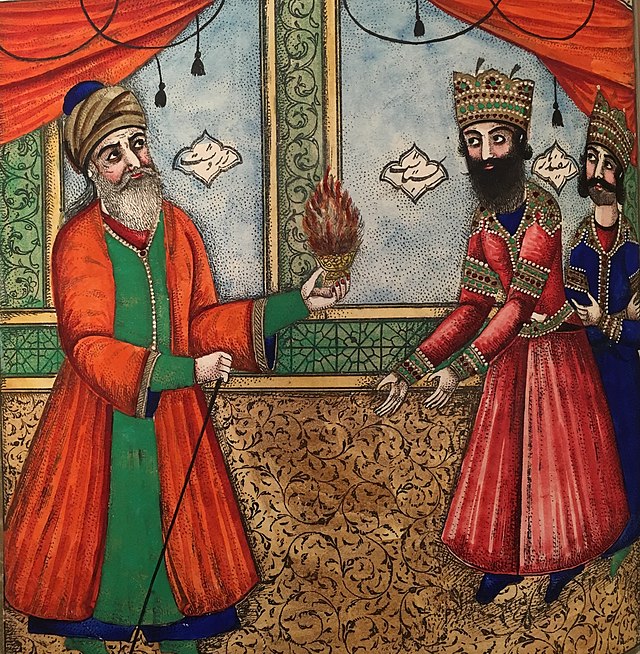
A mid-nineteenth century Indian depiction of Zoroaster/Zarathustra

Nietzsche presents his thoughts through the voice of Zarathustra, acting as religious-philosophical counter to the Gospel narrative of the teaching of Christ. He wanted to bypass scholars and reach readers directly, although he had no pretensions to populism or accessibility (remember – “A Book for All and None”). For those seeking the evidential arguments of The Birth of Tragedy or the late aphorisms written in Heraclitus’s style, Zarathustra will prove a trying book. Not that it is hard to read, but rather its indirectness and intrusive imagery prove an impediment to understanding Nietzsche’s reasoning, even if it is effective rhetoric.

A fifteenth-century Flemish depiction of Zoroaster/Zarathustra

Nietzsche’s book, originally published in four volumes, has been characterised as the resolution to a crisis reached in the preceding book The Gay Science, which included the dramatic passage in which a truth-saying madman declares that God is dead, killed by modern society, one in the throes of scientism and humanism. In Zarathustra Nietzsche explores a way out of this spiritual dead-end. He concluded that the Übermensch (German: superman), the man who embodies truth and will to power were the solution to the derangement of values and the death of trust in religion. The nihilism that consumes deracinated, scientific, rational man can only destroy and cannot produce – at least in the long-term, outside of art as “the sum of destructions” pace Picasso – and must be countered by a conscious transubstantiation of all (received) values. The Übermensch will master first himself and then the world, through the exertion of the will to power, which overcomes fear. Not every man will be capable of that; only the superior man will be capable. The normal man must be led by these self-actualised Übermenschen. This is clearly the part that was meant to stimulate German soldiers in the muddy trenches towards heroism.

Image: Talmoryair. Wikimedia Commons

Nietzsche is scathing of many movements and grand figures of his time. The most striking fable is of socialists (“preachers of equality”) as tarantulas:

Revenge sits within your soul; a black scab grows wherever you bite; your venom makes the soul giddy with revenge! […] ‘What we call justice shall be precisely this: the world shall be filled with the storms of our revenge’ – that is how they talk among themselves. ‘We shall practise revenge and abuse against any who are not as we are’ – that is what the tarantula-hearts pledge to each other. […] Vengefulness sounds from every one of their complaints, and all of their praise is hurtful; and to be judges seems a blessed thing to them.[i]

This is related to Nietzsche’s thoughts on ressentiment, the system of behaviour springing from recognition and reaction against a person’s weakness and inferiority and reacting by projecting anger upon others as a way of evading self-knowledge and self-correction. Self-overcoming is one of the main themes of the book. The mass adoption of mindful self-overcoming will see the rise of the Übermenschen on a civilisational (epochal) level. 

The figures who appear in part 4 are often seen as disguised responses to individuals and types. These have been seen as follows: the soothsayer is Schopenhauer, the conscientious man is the scientist (Darwin?), the sorcerer is Wagner, the ugliest man is the atheist, the shadow is the freethinker, the voluntary beggar is Buddha or Tolstoy. This interpretation is omitted from the new translation. Likewise omitted are textual notes on features of the original text, which includes some untranslatable puns and wordplay. The translation of the new edition is by Michael Hulse, former academic at Warwick University and translator of W.G. Sebald, Rilke and Elfriede Jelinek. He is also an acclaimed poet and therefore in an ideal position to capture the sweep and precision of Nietzsche’s mannered style in English – not least the passages of verse. Hulse has chosen to strike a middle path between directness of speech and the language of the King James’s Bible, eschewing the archaic but retaining something of the stiff rhetoric of the ancients. This is effective and never attempts to conceal the deliberately florid style Nietzsche adopted for this book. 

In terms of fluency and potency – accuracy is something that I cannot aver – Hulse’s version is excellent. The awkwardness one encounters is deliberate and reflects Nietzsche’s deliberate stylistic choices. Hulse’s version reminds us that Zarathustra is written in a portentous, high-spirited manner, while never favouring fluency over exactness. This translation is slightly less of an easy read than others because it forces you to notice and does not slip into a manner. So, although it might seem paradoxical, the granularity of the Hulse translation directs one’s attention to the meaning rather than (more passively) imbibing the prose style or becoming attached to the atmosphere.

Editors Keith Ansell-Pearson and Paul S. Loeb assert in their introduction  to Nietzsche’s “Thus Spake Zarathustra”: A Critical Guide:

…recent philosophical scholarship tends to marginalize TSZ and to downplay its significance in our engagement with Nietzsche’s thought. […] The aim of this volume is to remedy neglect of TSZ by highlighting its importance for a fuller understanding of Nietzsche’s contribution to philosophy…TSZ needs to assume a central role in any informed appreciation of his style of philosophical practice as well as of the fundamental content of his core ideas.[ii]  

Ansell-Pearson and Loeb observe that Nietzsche wished to detach himself from professionalised philosophy by taking up a persona and writing in fables:

Nietzsche knew that the philosophical texts he wrote in his own voice could be easily assimilated into this bloodless academic culture, so he deliberately designed a new kind of philosophical text that would resist any such assimilation. His fictional protagonist actually practices philosophy as a way of life and this is shown by the narrative of his transformative travels […][iii]

Nietzsche intended Zarathustra to be a return to the Greek model of lived philosophy.

Benedetta Zavatta discusses the controversy about the composition of the book. The first three parts were published in separate volumes and the author considered them complete. He then published a fourth part, which was part of an intended further three volumes. Whether this last part is a new book, or an extension, is an open question, made all the more pointed by the fact that the author later wanted volume IV retracted. Other essays by specialists consider Zarathustra as ecological warning, because of Nietzsche’s naturalism (contra Schopenhauer’s metaphysics), as well as the book’s treatment of moral philosophy, politics and transhumanism. Ansell-Pearson and Marta Faustino’s essay on the quest to embody philosophy in a text for living is particularly effective at unlocking Nietzsche’s intentions. Christopher Janaway refutes the common correlation between the soothsayer character in Zarathustra with Schopenhauer, going on to argue that Zarathustra’s teachings do indeed reject Schopenhauer’s urge to combat ubiquitous ceaseless will.

Zarathustra is sometimes partitioned from the main body of Nietzsche’s philosophy as fiction. Likewise, the Nachlass (German: estate) papers, currently being published in a critical edition (translations published by Stanford) are considered by some illegitimate, as working materials that were not deemed suitable for publication (or even preservation). As such, some writers will not consider them as part of Nietzsche’s oeuvre.

That is what makes so contentious the Unpublished Fragments from the Period of Thus Spake Zarathustra (Spring 1884-Winter 1884/5), the 15th volume in the series The Complete Works of Friedrich Nietzsche published by Stanford University. Each volume comes with extensive notes and commentary. Summaries guide our general understanding of themes, while translators’ comments on the most important terms allow non-German-speakers to gauge Nietzsche’s text, making us aware of linguistic subtleties, as well as adding extra thoughts regarding Nietzsche’s sources, influences and intentions. An index is included. It comes as a surprise to encounter Nietzsche writing so much on fine art, especially painting, about which he never published. Nietzsche’s view of history is both linear and cyclical, with cycles unable to repeat exactly due to linear characteristics of historical development. He is a pessimist – “The dumbing-down and homogenization of Europe on the rise, / Ever-increasing enmity of the progeny of the nobility toward l’homme supérieur. / […] The lack of any moral practices: feelings instead of principles.”[iv]

In response to the deterioration of Europe following the French Revolution, Nietzsche toys with the idea of selective breeding to counter racial decline.[v] However, once work starts in earnest on Zarathustra, he returns to the nature of morality and moral exemplars. He is insistent on the destruction of Christianity, as an impediment to development.

Most of the fragments are aphorisms only a sentence or two long. The drafts for Zarathustra are the only sections longer than a page. There is a section of verse – verse forms a significant part of Zarathustra – which has more merit as a distillation of thought than as poetry. The lists of images in the notes reach the level of Surrealist poetry inadvertently and top the verse. “– thistle-heads, scrupulous saps – hasty, like jumping spider monkeys – between coffins and sawdust – dizzy dogs and sickly breeds all around me – a cold bath […]”[vi] The Fragments are a terrific read – pithy, cutting, stark, playful, grand. It is like being in the company of the philosopher at his most expansive and garrulous. It is, of course, not the same as a considered conclusion or articulated argument, which is why anyone seeking enlightenment and information about Nietzsche’s philosophy must be extra wary of these seductive writings.


[i] Pp. 89-90, Hulse

[ii] P. 1, Cambridge

[iii] P. 10, Cambridge

[iv] p. 20, Fragments

[v] p. 59, Fragments

[vi] P. 356, Fragments

The Prince’s side

Spare

Prince Harry, Bantam, 2023, 416pps., £20
KEN BELL finds the Prince’s blockbuster book unexpectedly engaging

There can be few people in the English-speaking world who have not read a review of Spare, the memoir written by Prince Harry, and it is a pity that so many of those reviews seem to have been written by people who have not actually read the Prince’s book. A cynic might argue that the press is seeking revenge for what Prince Harry wrote about them in his book, or even that a section of the Royal Family really is out to get him. The press, certainly, come in for Harry’s ire, and if one of the motives for writing Spare was a desire to pay the press back with interest for their attacks on him, he has succeeded.

The most egregious example of dubious reviewing concerns Harry’s service in the most recent of Britain’s Afghan wars. Reviewers have told us that the Prince boasted about killing 25 enemy troops, when a simple reading of the text shows that he did no such thing. He was a helicopter weapons officer, charged with firing the missiles and guns at specific targets. Each operation had to be confirmed by men sitting in comfort far behind the lines, and afterwards the video of the action was played and replayed to make sure that the terms of engagement had been met. That was a judgement passed by men who also fought the war in comfort, far removed from what passed for the front lines in that country. What the Prince wrote in this section of his book reads like a fighting officer’s report of his engagements, rather than a former staff officer’s saloon bar boasting.

The first of the three parts which make up this volume is concerned with Harry’s childhood, the loss of his mother and his relationship with what is probably the most dysfunctional family in the world – all coupled with the most loathsome press who did seem to have it in for him. This section contains the supposed gloating at an alfresco sex bout in a field, which tuned out upon reading the book to be nothing of the sort. The whole matter is dealt with by the author in about 60 words, and is only referred to owing to an amusing mix-up between the Prince who thought that he was due to be hauled over the coals because of his sex romp, and a Buckingham Palace official who had been sent to confirm an unfounded tale that the Sun newspaper planned to run about drug taking.

Prince Harry did not manage to get the story killed, and his family declined even to try to defend him, so the evidence if fairly strong that memoir is in no small measure an act of revenge against the likes of the then editor of the Sun, who was, the Prince assures us, “an infected pustule on the arse of humanity, plus a shit excuse for a journalist.”

To be fair to the Prince, he does have good reason for his outrage. He went to a nightclub and chatted briefly to a pretty girl who turned out to be a topless model. The press got wind of this and began to run stories about how Harry was letting his family down by going out with such a girl, even though he wasn’t. His military service in Iraq was cut short because an Australian paper got hold of the details of his military deployment and he had to be quickly spirited out of the country before the enemy could mount an assault to capture or kill such a royal prize.

That said, the first section is in many ways the most moving part of the memoir and yet also the most unsatisfying. We are told so much about his childhood and how he came to terms with the death of his mother, and I defy anyone not to be moved by Prince Harry’s account of how he pretended that his mother had hidden herself away somewhere to avoid the attentions of the media and would return to him when the time was right.

Clearly, this was a boy who loved his mother, and was loved deeply by her. However, the area that may have been excised or at least toned down, concerns the author’s relationship with his father. For instance, we are told that Charles went to visit Diana soon after she had given birth to Harry and exclaimed: “Wonderful! Now you have given me and heir and a spare – my work is done.” He then strolled off “to meet his girlfriend”, which rather says it all about the man.

It is one thing for a Prince of Wales to have a harem of his own, as Prince Bertie, the heir to Queen Victoria had. When he was eventually crowned as King, a whole section of the Abbey had to be set aside for his mistresses. The man had three favourites and any number of others who came and went: he was truly a worshipper at the altar of Priapus. However, what he never did was personally humiliate his wife, Princess Alexandra of Denmark, in the way that Charles did Diana.

Both Bertie and Charlie made dynastic marriages with the aim of producing heirs and spares, but Bertie did seem to genuinely care for his wife and children. That did not stop him from bedding dozens of other women, but it did mean that the royal family was kept secure, and Queen Alexandra was contented enough with the situation to become friends with some of the senior mistresses.

Prince Charles seemed to have adopted a Mills & Boon attitude to life, with his wife cast as the villainess in the piece. This memoir could have provided Harry with a perfect opportunity to analyse his father’s incomprehensible behaviour and put it into some kind of context, but he missed that opportunity. So the mystery of why Charles could not maintain a decent front with Diana remains unresolved in this memoir. Instead, Harry contented himself by giving examples of Charles’ distant behaviour towards his sons which he unsatisfactorily summarises by saying that Charles had “always given an air of being not quite ready for parenthood… But single parenthood? Pa was never made for that.” This is thin analytical gruel, but it is the best that we get.

The third and final section of the memoir is mainly concerned with Meghan and his life with her. It is the gentlest and most hopeful section of the book, and it left this reader wishing the author well in his new life, as far away from the surrealism of his upbringing as it is possible to get.

Joyce’s sense of history

Jacques-Emile Blanche 1861-1942. Portrait of James Joyce
MICHAEL YOST explores Joyce’s life, work, and theory of art

Homer’s Odyssey begins thus: “ἄνδρα μοι ἔννεπε, μοῦσα, πολύτροπον…” or, in translation: “The man, to me, sing, O Muse, many-sided. . .”His word “polutropon” has been rendered as referring to a man “of twists and turns,” “of many devices” and, more recently and bathetically, “complicated.”  But in whichever translation one prefers, I could think of no better passage of literature with which to introduce James Augustine Aloysius Joyce.

Joyce himself interwove the warp of his artistic identity around the woof of several imaginary literary identities; most famously, Odysseus and Hamlet. Yet no matter whether we look through the world of Joyce’s creation through the eyes of Leopold Bloom, Joyce’s mock-heroic man of twists and turns, or watch Stephen Dedalus wrestle with his mother’s ghost, we are always looking through Joyce’s eyes. He never removes all of his masks. But neither does he ever seem to be wearing one. To read him is to be immersed in a delicate stream of emotional, physiological and mental observations that seems to belie the real intricacies of his craftsmanship. The intended effect is minutely historical; we are reading the collected and transfigured experiences of the author. Whenever we read Joyce, we are, in a sense, reading history. Or rather, we are reading personal historical experience that has been atomically restructured into story and myth.

It is no secret that Joyce was deeply interested in setting up a place for himself in the literary history of Europe, but he was also driven to arrange and rearrange his own history within it. If, as T. S. Eliot put it, Joyce makes use of a “mythological method,” he does so only to frame personal or individual history as myth, if we accept myth to be, very broadly, a story told about somebody that is really a story about everybody. For example, we see Joyce’s proclivity towards the grand, operatic gesture in the very titles of his works: Dubliners, A Portrait of the Artist as a Young Man, Ulysses, The Exiles, and last, and certainly least read, Finnegans Wake.

Just as Dubliners is not merely a collection of vignettes, but a series of symbolic miniatures that, taken either together or individually, make up Joyce’s obsessively rendered critique of Ireland’s capital, so Portrait is not merely an autobiographical künstlerroman, but a depiction of the journey every true artist must undergo, if we abide by Joyce’s definition of the term as “a priest of the eternal imagination” (which he obviously thought applied perfectly to himself. If, as Joyce said to Marie Jolas (wife and collaborator with Eugene Jolas of transition fame), “In Ireland Catholicism is black magic,” then the real hero of Stephen Hero was, by contrast, attempting to practice something like literary white magic. When we reach Ulysses, we see Joyce’s method a little more clearly. Here he emerges as an architectonic creator on par with the mythical Dedalus or the historical Dante. Joyce’s choice of names (Dedalus and Ulysses or Stephen and Finnegan) conjure up not only notion of sojourning, craft, deceit, and labyrinthine cunning, but also of heroism, martyrdom, and the possibility of resurrection and return. We know from the beginning that Joyce is attempting something on a grand scale; an epic, but also something in which the multifaceted and constantly changing specie of perception and imagination can subsist, like an illuminated text from the Book of Kells, of which Joyce said:

In all the places I have been to, Rome, Zurich, Trieste, I have taken it about with me, and have pored over its workmanship for hours. It is the most purely Irish thing we have, and some of the big initial letters which swing right across a page have the essential quality of a chapter of Ulysses. Indeed, you can compare much of my work to the intricate illuminations.[i]

This method of transposing history into a superstructure of myth, (or, as we shall see later, of aesthetic philosophy) is also evident when we consider Joyce’s practice as a craftsman.

We can discern a repeating pattern in Joyce’s compositional method. First he creates a text, or texts, in which he musters his characters. He develops this to a greater or lesser extent, then abandons it, having since (with his characters now in situ) re-conceived it. He then newly develops the re-imagined version, occasionally cannibalising the earlier texts in the process. Thus we have A Portrait of the Artist as a Young Man emerging from the fragments of Stephen Hero, Ulysses emerging from the fragments of a sequel to A Portrait, from Giacomo Joyce, and from a planned but unwritten Dubliners story (also called Ulysses).  His big books are, in a sense, a two-step process, a single step being too high a climb. The ur-works are like enzymes precipitating his creativity. [ii]

Such a statement ought to convince us of the sheer systematic effort with which Joyce crafted his work. We must also see on reading him, that one of his models, if not in style, yet in structure, is the Summa Theologica, insofar as the project of a systematic philosopher such as Aquinas is to create a whole out of parts, in which, to use a quotation from Schiller, “quietly and unceasingly he directs the greatest force upon the smallest point.” In such a system, the influence and weight of the whole is felt in each part, and the whole is itself a work of consummate artistry in which each part is ordered toward the achievement and weight of the whole. As Joyce himself wrote of Finnegan’s Wake: “every word can be justified.” But what, in the ultimate sense, is this justification? As I suggested earlier, it is nothing more or less than history itself.

In Dubliners, for example, the role of history is obvious. Joyce wished to bring Ireland to an examination of conscience. As he wrote to Grant Richards, a London publisher who would have the care of Dubliners, in 1906:

My intention was to write a chapter of the moral history of my country and I chose Dublin for the scene because that city seemed to me the centre of paralysis. I have tried to present it to the indifferent public under four of its aspects: childhood, adolescence, Maturity, and public life. The stories are arranged in this order.

They were, he said, written “in a style of scrupulous meanness” with a complete commitment to representing exactly what he had seen. . . The Irish, he declared, needed to look at themselves.” [iii] History, in this case, is directed towards a kind of national confession, in which the repressed, unrepresented, subterranean evils of the subject’s psyche are made known in all their filth-bespattered amplitude. However, we should not imagine that Joyce did not re-arrange his experiences with an eye towards his own artistic goals. Such a merely documentary ‘realism’ would be far from him, as his later works show. In any case, in Joyce’s infamous correspondence with his wife, we see a similar desire to simultaneously hide and to disclose what Joyce, prior to his apostasy, would have known as sin. This confessional turn, which Joyce uses to wallow in sensuous and often disgusting detail, is a paradoxical counterpart to the ‘matter-of-factness’ that is the basis of Joyce’s fantasia.

But this sense of degradation is also, clearly, a projection. It was not the only projection that Joyce would make of himself and his inner states upon an unsuspecting world. A single reading of Exiles serves to confirm for the reader Joyce’s irritating, pompous, hyper-romantic level of self-concern. The main character is a nearly un-veiled version of Joyce, as the other characters are thinly veiled versions of Nora Barnacle, his son Giorgio, and other associates. It is a failure in the same way that Portrait is a success: in a way, we never step beyond the realm of Joyce’s imagination. In the same way, Joyce incorporates and re-schematizes Dublin in Ulysses, famously claiming that he wanted to write the book so that it could be used to rebuild the city if need be. Christ said he would destroy the temple and rebuild it in three days; Joyce fragments, coalesces, warps and congeals Dublin in the space of one. Here, history is the substance, the prima materia of artistic creation. It was to be so always with Joyce.

Yet Joyce, even in his lyric poetry, reaches towards the impersonal control of a creative demiurge. But although in Portrait, one sees a picture of Joyce-as-Stephen, his tongue as sharp as a sword, and his mind full to the brim of syllogisms, distinctions, and all the rest of the furniture of his Jesuitical-Scholastic education; by the time he re-appears in Ulysses, he is embarking on a screaming bender with Buck Mulligan. Likewise, from the time after he proclaimed his emancipation from Ireland, Catholicism, and his family, Joyce’s life as an exile was in a continual state of shipwreck. Much like his father John Joyce, James was a drunk, a narcissist, a pervert, and a spendthrift, frequenting brothels and regularly eschewing the responsibilities of a husband, father, son, and brother. He was an arrogant dandy, iconoclastic, cynical, and boorish, who “loved obscene words, ‘savoring them like candy.’[iv]” He contracted venereal diseases that may have caused the deterioration of his eyesight. After his marriage to Nora, he worried (rightly) about his potential for abusive behaviour, the kind which we see again and again in the fathers and husbands of Dubliners. By this time, Joyce’s utterly sottish father had once attempted to strangle his long-suffering, highly religious mother, only to be wrestled ignominiously to the floor by John Stanislaus, Joyce’s younger brother, who would, at great personal cost, bear Joyce’s financial burdens for much of Joyce’s life. It takes very little effort to see to what degree Joyce’s obsessions, sins, and failings were bound up with those elements of himself that he believed to be most important: his vocation as an artist, his apostasy, his devotion to his own freedom, et al. He suffered much, at his own hands and at those of others. But whether it was self-inflicted or not, it was all, in a sense, a martyrdom.

Adolf Hoffmeister. James Joyce, 1966

On the theoretical side, this failure of The Exiles comes, in part, from an inability on the artist’s part to live up to his own aesthetic theory. An understanding of the course of Joyce’s career, taken alongside the aesthetic theory advanced in Portrait, shows us while Exiles was attempted, but also why it failed, and why Ulysses and Finnegans Wake followed.  In Portrait, Stephen holds forth on his advancement of Thomistic aesthetic statements with the perverse and bestial Lynch: “Aquinas says ad pulchritudinem tria requiruntur, integritas, consonantia, claritas. I translate it so: Three things are needed for beauty, wholeness, harmony, and radiance.”  These, according to Stephen, correspond to the order of knowing. In his terms, we apprehend something in its “wholeness” when we see it as a unity, as one thing which is distinct from others. We apprehend the “harmony” of a thing when we grasp the nature of its internal order in what Stephen terms “the rhythm of its structure.” We grasp that “it is a thing.” We “apprehend it as complex. . . made up of its parts, the result of its parts and their sum. . .” At the third step, we reach what Aquinas terms “claritas.”

Here, Stephen brings to our attention the fact that he has chosen to translate this word in a certain way:

It baffled me for a long time. It would lead you to believe that he had in mind. . . the supreme quality of beauty being a light from some other world, the idea of which the matter is but the shadow, the reality of which it is but the symbol. I thought he might mean that claritas is the artistic discovery and representation of the divine purpose in anything or a force of generalization which would make the esthetic image a universal one, make it outshine its proper conditions.[v]

In other words, a certain aesthetic philosophy threatens to become, for the newly fledged Stephen Dedalus, an aesthetic theology. It is a crucial moment for the “thoughtenchanted” boy. “But that,” he concludes, “is literary talk.” By this he means, with an echo of Ibsen trembling in the vibrations of his voice, that it is unreal. Rather, he returns, “You see that it is that thing which it is and no other thing. The radiance of which he speaks in the scholastic quidditas, the whatness of a thing. This supreme quality is felt by the artist when the esthetic image is first conceived in his imagination.[vi]” Rather than a transcendental, ‘Platonic’, theological aesthetic, Joyce, through Stephen, yokes his brand of Thomism to the wagon of materialist realism, rejecting outright the link between species and their genera, between universals and particulars, and between his art and God. In other words: non serviam. The affirmation of the term “quidditas,” usually referring to the formal qualities that a thing shares with others, should not fool anyone. Here, Stephen quite clearly uses the word to mean something closer to another scholastic term: “haecceitas,” which refers to the material, rather than the formal distinction between beings that might otherwise be members of one species. It is this obsession with a thing’s material particularity that plainly marks Joyce’s artistic concerns and style.

But Stephen quickly passes over into a consideration of the three genres of literature: lyric, epic, and dramatic insofar as they correspond to the three qualities of beauty:

…the lyrical form, the form wherein the artist presents his image in immediate relation to himself; the epical form, the form wherein he presents his image in mediate relation to himself and to others; the dramatic form, the form wherein he presents his image in immediate relation to others.

It is worthy of note that Joyce himself composed or attempted to compose in each of these three genres. Chamber Music, his first collection of poems, was published in 1907, but had been distilled and arranged from a mass of verse written while Joyce was still in Dublin. In that same year, Joyce began adapting Stephen Hero into Portrait,and was still trying, as he would until 1914, to find a publisher who would take Dubliners without major changes. The original title of his first novel, Stephen Hero, gives a suggestion of ambitions towards the epic, as per the English ballad Turpin Hero. If we accept the Joycean definition of “epical”, we see that Portrait does define Joyce’s relationship with himself relative to others within this work. That might be said, in fact, to be the burden of the novel. But of course, Portrait begins with the bedtime story being told to Stephen in the third person, and ends with fragments of Stephen’s diary, written in the first person. By the time we reach Finnegans Wake, Joyce has truly disappeared, “like the God of creation. . . within or behind or beyond or above his handiwork, invisible, refined out of existence, indifferent, paring his fingernails.[vii]” But the material is the same: Joyce’s impressions, his fragmentary sensations and observations, his literary tics and typical menagerie of references to Shakespeare, the Tridentine Mass, and the Irish mythos. But as Joyce himself claims: the more the artist approaches the “claritas” in which the “quiddity” of his art is known to his reader, the more he himself retreats, though his image remains. His fiat creates, transforms, the flux into a thing. Here is the ultimate use of history: not simply to rearrange the past, but to re-present it, and to draw our attention more closely to its reality, and to the quiddity of things; to define them, and to reveal them for what they are. To return for a moment to Stephen’s earlier interpretation of claritas as the radiance of quiddity: it should be clear now that for Joyce, words are imitative of language, not symbolic of them. Because things are nothing more or less than themselves, words must be nothing more than themselves, or at least, their imitative objects. Consider Stephen’s attention to the onomatopoeic qualities of the word “suck.”

Suck was a queer word. The fellow called Simon Moonan that name because Simon Moonan used to tie the prefect’s false sleeves behind his back and the prefect used to let on to be angry. But the sound was ugly. Once he had washed his hands in the lavatory of the Wicklow Hotel and his father pulled the stopper up by the chain after and the dirty water went down through the hole in the basin. And when it had all gone down slowly the hole in the basin had made a sound like that: suck. Only louder.

The word “suck” is not defined. It is felt. And herein lies an artistic challenge for Joyce. A word has no meaning beyond itself, as an object has no meaning beyond itself. There are no genera for Joyce, only species, and thus every object and experience become, ultimately, a thing unto themselves; the single member of a species of one, as St. Thomas says, for very different reasons, of the angels in paradise. Here we reach, perhaps, the place where Joyce’s aesthetic begins to devour itself in contradictions. Joyce has written works and passages of works that are truly unique in literature, and seem likely to remain so. He has created beauty. But he attempted to express things that were, perhaps, uncommunicable when he attempted to ground words almost utterly in the material, accidental eccentricities, of the ever-changing river of history, rather than on the formal, natural, essential qualities that are, in themselves, knowable. He may well have ended, not falling to the earth on burning wings, but rather trapped in a labyrinth of his own design.

 Bibliography

Joyce, James, Ulysses, Modern Library Edition, Random House Inc., New York, 1992

Joyce, James, The Portable James Joyce, Penguin Books, London, 1976

Joyce, James, Finn’s Hotel, Ithys Press, 2013

Bowker, Gordon, James Joyce: A New Biography, Farrar, Straus, & Giroux, New York, 2012

Ellmann, Richard, James Joyce, Oxford University Press, USA, 1983


[i] James Joyce to Arthur Power, Ellmann, Richard, James Joyce, Oxford University Press, USA, 1983, p.545

[ii] From Danis Rose’s preface to Finn’s Hotel (Ithys Press, 2013)

[iii] Ibid

[iv] Ibid, p. 234.

[v] Joyce, James, The Portable James Joyce, Penguin Books, London, 1976, pg. 480

[vi] Ibid, p. 480-481

[vii] Joyce, James, The Portable James Joyce, Penguin Books, London, 1976, p. 483

The Lure: A Prelude

DANIEL GUSTAFSSON has published volumes of poetry in both English and Swedish, most recently Fordings (Marble Poetry, 2020). New poems appear in Temenos Academy Review, Pennine Platform, in several anthologies by Black Bough Poetry, and in Sunken Island: An Anthology of British Poetry (Bournbrook Press, 2022). As an occasional scholar, with a PhD in Philosophy, Daniel has a special interest in William Blake and currently draws much inspiration from A. N. Whitehead. Daniel lives in York. Twitter: @PoetGustafsson   

The Lure: A Prelude

Waking as one, my world and I,
roused from slumber, the reeds shiver
in lapping light. The lake’s astir,
tongue teasingly tugging the shore
to coax me out: calling always,
lure and likeness of life within.
   
I’m soon vested: sandwiches made,
the rods arranged ready to go.
Eager angler, I’m out the door.
   
Grass glistening, globules threaded
on limber straws: lines and sinkers.
A spider-spun, spangled network,
its catch of dew caught in the light.
   
The boat lies wedged, banked and heavy
with last week’s rain. Leaves infuse it,
and dead insects dapple the brew.
Bent to my task, I bail it out,
labour gladly, lungs relishing
the tinctured air: tang of iron
and scent of birch, sweet yet bracing.
   
Lightened at last, I launch myself,
push the boat out through parting reeds
to wide-open weltering surf.
The lake expands, its long body
roiling in light, rippling silver:
a shade-shifting, shimmering form,
its dragon-scales drawing me out.
   
An ageing craft’s creaking oarlocks;
the wood weathered, worn to a sheen
where other hands have held their own;
planks though peeling plunging anew.
   
Facing backwards, I’m born forward
beyond myself: surface yielding
new perspectives, a narrow hull’s
widening wake. World-conjuring,
the more meeting the making eye
builds under me, bowls me over,
and wraps me round. I row gently,
my line trailing, trawling the light
for pike and perch, peace and wonder.
   
It hooked me once, heart in my mouth,
breath of my breath, this bright expanse.
   
Those far-reaching, first adventures
out on my own, the elements
drew me closer: the driving wind’s
grandfatherly grasp on my waist
keeping me true through coarse furrows;
wood and water weighing me up.
   
A featherweight, fledgling pilot
growing my wings, the grebe taught me.
That sleek diver slipped dauntlessly
into darkness, under currents,
to soar again: a sun-crested
anointed one, needling the deep’s
thick hinterlands, threading skylines:
a journeyman joiner of worlds.
   
The summer-long susurrations
din distantly, disembodied:
screeching bathers, screens chattering,
growl of tyres on gravel roads.
   
Always turning, tacking eastwards
now westering, the water’s course
flows where it feels. Far from certain,
familiar shores, I moved with it:
nearer something, nameless as yet.
   
Wheels within wheels, the whirling stuff
spins spiralling, spooling outwards.
   
Rowing the boat or being rowed,
I’m intimate with ultimates:
pulse and pattern, the pull onwards
out of mundane into mystic
entanglements. Taking it slow,
a two-handed hold on the twin
strands of the world, my strokes braiding
NOW and EVER, I know my way.
   
Birch on the shore, all bent with years
yet leaf-laden, leaning over
the glimmer-glass. Gliding along,
inching forward with oars lifted,
a fleeting span flexing its wings
holds a moment the heron’s gaze:
protean calm, a present tense
then loosening, launching futures.
   
A boy again, bending open
my can of worms: cold to the touch,
fingers fumble to fix metal
in squirming flesh; skin finally
barbed and bursting, bodies lowered
to sightlessness, I sit and wait –
my hope ebbing then high again
reading the signs, ripples nibbling –
with bated breath. The bobber goes
and I with it, out of my seat,
a young victim in yearning’s jaws,
wriggling rapture reeling me in.
   
Hours of this, hours of that,
basking simply in being here.
   
The lithe lilies, lotus-kindred,
climb from cloudy to clearer skies:
floating candles flame waterborne,
constellations of calyxes.
   
Remaining yet what youth made me,
loyal to worlds of leaping streams,
of tarns brooding bright and tarblack
on depths above, I dub myself
lover of lakes: these language-games
surfaces play, sounding heaven.
   
Where mouthing waves weave their music,
overlapping in interlace,
the weft calling, warp answering,
it’s antiphons all the way down.
   
I cast around, catching a few
damned slippery dazzling moments.
Galled by others that get away,
learn to take what time lends me.
As gusts gather, the golden plane
creased then cresting, I cross for home.
   
Swill at my feet, swirling remnants
of guts and blood, the gill-filtered
lees of the lake. Late suddenly,
this halcyon, heart-opening
day of dawnings dims to a close.
   
The un-ageing, ever-flowing
re-arranger revels in change:
a mottled sky’s moving image
shoulders blessings to shrug them off;
a hoard of hoards harbours the lost,
bears our bruises for beauty’s sake.
   
Altering still, it’s always there:
first of figures, fathering more,
mother of all our metaphors.
   
A leaden sun sinks in the lake.
Past perishing, I pull with me
the reef-ravaged wrecks of myself.
Now earth looms up, aspens lining
the darkened shore: deep presences
robed in silver, in rapt repose
watching the sky that watches them.
   
The moon making its milky way
from shore to shore, shedding comforts,
the blue hours blacken at last.
Jetty glimmers at journey’s end.
   
I moor the boat, making it fast
loosely enough to let it drift.
Close to home now, I climb the slope
heaving my bags, hung with buckets,
gear and tackle; my gifts, my take:
lucky burden, lifting my own
weight in wonder, wanting nothing.
   
Now scattered lights school overhead;
swooning treetops swim among them.
Flaton the sheets, I’m floating too.
Spent bodily, buoyed in spirit,
my restless dream rocks me to sleep.
   
This boundless night: a net bursting
with precious catch, a pregnant void
heavy with stars. I’m still hauling,
drawing droplets from dry valleys
and failing ponds, fishing for pearls.
   
I know it’s here, nursed in the deep,
that grit-cum-grace growing brighter
with hidden strength. The heart’s wellspring,
joy’s genesis, rejuvenates,
daring me now decades later
to re-affirm – rich in salvage,
lapped by other living waters –
the first poem’s first utterance:
this yearning world’s YES to its call.
   

Coster living

Beer-makers, Clapham Common, 1877. Wikimedia Commons

Street Food: Hawkers and the History of London

Charlie Taverner, Oxford University Press, 2023, 256pps, £30
KEN BELL remembers the street-traders who fed a burgeoning city

The image of London street food is a trendy one, with well-paid hipsters eating what they sweetly tell each other is authentic, usually ethnic, food that is purchased at a high price from a sleek metal catering caravan that has an expensive license to trade. However, for generations until the middle of the last century, as Charlie Taverner shows, street food was how the bulk of Londoners got their daily sustenance.

Many of them had no choice, because as London expanded, the established markets ever became further away from the new centres of population. A large number of people lived in rookeries, such as the monstrous one that existed quite near to today’s Regent Street, where they lived several to a room with little or no cooking facilities apart from, perhaps, a fireplace in the kitchen if they were lucky. So street hawkers enabled the urban poor to keep body and soul together.

Mrs. Hunt, selling at Covent Garden, 1923

The capital outlay needed to become a street hawker was very low, as a large wicker basket could be obtained for a small sum and the apples or other fruits needed to fill it being readily available at the Covent Garden market. Consider Mrs Hunt who was photographed in the 1920s with her wicker basket of apples (see above). One foreign visitor in the 1600s noted that Londoners did not eat much fruit at home, but were “always munching through the streets, like so many goats”, so we can imagine that women like Mrs Hunt were selling soft fruit to theatre audiences in Shakespeare’s day. Fast forward a few decades to the Restoration, and the legend of Nell Gwyn and her oranges is well-known even today.

Pretty much anything edible was sold on the street, with herring, shellfish and eels becoming as ubiquitous as the fruits. Milk was sold by milkmaids who purchased their supplies from the owners of herds of cows that were kept in London. In the days before milk was pasteurised or sterilised, an army of maids selling the fresh variety ensured that the supplies reached the consumers in a reasonable condition.

A step up in terms of capital outlay from the baskets was the wheelbarrow, which meant that more produce could be carried and sold, including hot food, and by the Victorian age, hawkers were selling hot pies and potatoes from an oven atop a wheelbarrow. Hawkers of hot coffee also used them with a brazier of hot coals, although quite why coffee was preferred by the street sellers and their customers to tea is anyone’s guess.

Finally, we have the hawkers who either owned or rented a cart which they pushed by hand or had pulled by a donkey. These were the famous London costermongers and although Taverner accepts them as a caste apart, he really does not give them credit for just how far apart they were even from the bulk of the street hawkers. A costermonger was noted for his dress, which was invariably topped off with a large handkerchief worn around his neck called a Kingsman. A costergirl would take one of her man’s handkerchiefs and wear it draped across her shoulders for probably the same reason that a girl today enjoys helping herself to one of her boyfriend’s shirts. Costers spoke a cant tongue to each other and were largely illiterate, mathematical geniuses. They could work out how much profit was to be made for a given wholesale price in their heads and then set to work in family groups to earn it.

They had to operate in a family unit as the work was labour-intensive. Children would be put to work intermixing live eels with dead ones in the hope that the customers did not notice and others would boil fading oranges to give them the illusion of vitality. When times were bad, costergirls were not adverse to a spot of whoring, usually with their boyfriends doubling as pimps and protectors. Much of this street colour is missing from Taverner’s work, which I think is a pity, but it probably owes a lot to the fact that it was first written as a university thesis.

That said, Street Food is an excellent overview of the earnings of street hawkers and a discussion of the casual nature of the work, with some hawkers shifting from street hustling on their own accounts to working for employers when such work became available. One such man who sold whelks is quoted as bemoaning that “seafood don’t pay more than a poor living,” so when times were really bad, “he left his wife with the barrow and took odd jobs such as beating carpets and cleaning windows”.

This casual economy reminds today’s reader of London’s latest innovation – the gig economy, with the delivery riders taking the place of the street hawkers of old. If we add to them the army of men who push the unlicensed hot dog carts around the West End of London, chased by the council jobsworths in much the same way as the costermongers were harried by officialdom in their day, a good case can be made for saying that everything has changed and much has remained the same.

Verses for a vanished town

Ravenser Odd

Michael Daniels, Poets House Pamphlets, 2022, 26 pps, £7
LIAM GUILAR admires an evocation of the eroding East Riding

This is Michael Daniels’ first collection – the traditional slim pamphlet.  The publisher, Poets House Pamphlets, of Oxford, has produced a fine object, printed on good paper, with understated, subtle artwork to enhance the text.

The story of Ravenser Odd deserves a poem. It was a settlement which lasted less than two hundred years at the mouth of the Humber on Britain’s eastern coast. A sand or gravel bank was created by storms at the mouth of the estuary in the early 13th century. By the 1230s, there is documentary evidence of people living and trading there and it was granted a royal charter in 1299. It became a very prosperous sandbank. At one point there was a chapel, warehouses, a jail and a windmill. There was a weekly market and two fairs a year. The town sent two MPs to Parliament.

The town suffered from a growing number of floods from the 1320s onwards, and the wealthier families began to move themselves and their money out. By the winter of 1356-57, Ravenser Odd had been abandoned. Then the land on which the town had stood was swept away in a final tempest in 1362. The storm, which inundated land on both sides of the North Sea, was so bad the Dutch gave it a name: the Grote Mandrenke[i].

It’s the stuff of folk tales, made better by the fact it’s true. An internet search reveals its continuing fascination. “Yorkshire’s ‘lost Atlantis nearly found’ after 650 years under water” reads one strange headline from 2022[ii]. As a story it can obviously be read in different ways: the contemporary enemies of the settlement might have seen its destruction as divine retribution. Today, it’s easy to see it as a symbol of nature’s indifference to human concerns, or a warning for those living along the same coast which in some places is being eroded at 30ft a year[iii].  Rather than pushing an interpretation, Daniels lets the story speak for itself.

The booklet is a sequence of linked poems that move chronologically through the history of the settlement. They are all written in terza rima. A note tells the reader this was chosen because “Dante’s development of terza rima was contemporaneous with Ravenser Odd’s highpoint”. If this seems an odd reason to choose a form, anyone who voluntarily writes in terza rima must be admired for making his own life difficult. The success of Daniels’ attempt is evident in the way the rhymes don’t intrude. The poems move smoothly, and there’s no sense that a rhyme has been forced or the lines padded to fit the form. The verse is spare, in keeping with the feel of medieval chronicle or folk tale.

From the start, the sequence announces that the specifics of the settlement’s history are also being used to contemplate the claims the dead have on the living. It begins:

What is it to be held in mind
by someone else, to dwell as ghost
or presence there? The drowned recline

in chambered mud, yet still we host
them in our heads, subdued and dim.
It isn’t us who need them most.

The link to The Divine Comedy inevitably evokes Dante’s concern with the dead, but it also illustrates an important difference. Dante’s dead are individuals with names and histories; Daniels are the nameless dead who remain undistinguished. “The dead know things we’ve never learned- / how hard it is to stay alive”.

The gardens they had tended went.

The cabbage rows were heaved and sloughed

as if the aching care they spent


to sow and plant was not enough,

as if the tilled and tidied beds

were cheap as salt and air. The rough


sea came and went all spring […]

Playing on the name, Ravenser Odd produces Odin’s ravens; thought and memory, who provide a bird’s eye perspective. They also appear as tiny pictures at the start of each poem.

The bird’s eye perspective means the poem deals with people, not individuals – the dead, not specific corpses. There is an unnamed feudal Lord; “…life was his to make the worse, / he was their breath, their bread, their meat”. Like most modern depictions of feudal lords, this one’s a sadist, but the strength of the writing means it’s unclear whether his story, and the story of the fishing vessel The Silver Pit which follows it, are retellings of chronicle events, or inventions of the poet.

The sea is the individuated character in the poem, and its restless power runs through the collection. When the end comes it ignores

such mortal dreams, but saved its breath

to asset strip the sinking town

of shattered timber, nail and lath-


The two ravens see the final calamity:


The people’s final prayer rose up,

petitioning their lonely god.

The ravens read their trembled lips


to scavenge scraps of uttered word,

then spat them back as raucous noise,

disemvowelling all they heard.

The pun in that last line is impressive, standing out in a collection where the diction is mostly conversational. The ruined voices of the dying and the dead are reduced to sounds the poet has been trying to hear, but which having been converted to noise, are lost. Even the final devastation of the land on which the town stood is a minor incident in a much larger tragedy. There is no conclusion, and if there is a moral to be drawn from the story Daniels thankfully leaves it up to the reader.

This is a small, impressive collection. The poet’s website (https://www.michaeldaniels.co.uk) contains files of him reading his work, with evocative visual images to accompany the readings.


[i] The death toll is placed around 25,000.  https://www.theguardian.com/news/2011/jan/20/weatherwatch-grote-mandrenke

[ii] https://www.independent.co.uk/news/science/archaeology/ravenser-odd-yorkshire-medieval-town-b2037441.html

[iii] ‘The Holderness coast, on which Spurn Point sits, is Europe’s most rapidly eroding coastline, with some areas disappearing by more than 30ft per year.’ https://www.express.co.uk/news/history/1593410/Yorkshire-Atlantis-Ravenser-Odd-Sir-Ernest-Shackleton-ship-Endurance  

Three ballades

MARYANN CORBETT is the author of five books, most recently In Code (Able Muse, 2020). Her work has appeared widely in journals on both sides of the Atlantic, including 32 Poems, Rattle, and the Los Angeles Review of Books in the US, and The Dark Horse and PN Review in the UK. Her poetry has won the Willis Barnstone Translation Prize and the Richard Wilbur Award, has been featured on Poetry Daily, Verse Daily, and the Poetry Foundation website, and was included in The Best American Poetry 2018. Her sixth book, The O in the Air, is forthcoming in 2024. New poems are forthcoming in Image and Beloit Poetry Journal

Christine de Pizan (1364—c. 1430) was the first woman in France, and possibly in Europe, known to have supported herself and her family by means of her writing. She took up the pen after the death of her husband and produced several collections of poems, although she is best known now for her prose works on the role of women, such as The City of Ladies. She was the initiator of the feminist side of two important literary discussions: the exchange known as the “debate (querelle) on the Romance of the Rose” and the four-hundred-year-long “debate on women (querelle des femmes).” She can be considered the West’s first protofeminist and the first woman humanist, in the Renaissance sense of that term.

Ballade I from Les Cent Ballades

from the Middle French of Christine de Pizan, translated by Maryann Corbett

Some ask me: Write a pretty verse or two

and send it. I’ve a gift for poetry,

or so they say. Begging their pardon, though,

I scarcely have the skill they claim for me

in pleasant lyrics or in probity.

Still, their good hearts have asked. At their behest,

I’ll try, no matter how unlearnedly,

to do the work they graciously request.


My feelings are not free to render true

lines fashioned out of pleasure or of joy.

My sadness passes what all others know,

wrenching my heart out of its well-worn way.

But from the great grief that has silenced me

I can speak words enough, abundant, blessed.

Therefore I have consented willingly

to do the work they graciously request.


And to whatever reader seeks to know

how sorrow blanched my happiness away:

Death did this, when it struck an unwarned blow

at him in whom all goodness lived for me.

Death seized and set me on despair’s highway.

I dare not hope for wholeness in my breast.

Out of that sorrow comes my poetry,

which is the work men graciously request.


Prince, I have not lived long with poetry.

Take it with grace if I should fail the test.

But others ask. For their sake, I agree

to do the work they graciously request.


Original:

Aucunes gens me prient que je face
Aucuns beaulz diz, et que je leur envoye,
Et de dittier dient que j’ay la grace;
Mais, sauve soit leur paix, je ne sçaroye
Faire beaulz diz ne bons; mès toutevoye,
Puis que prié m’en ont de leur bonté,
Peine y mettray, combien qu’ignorant soie,
Pour acomplir leur bonne voulenté.


Mais je n’ay pas sentement ne espace
De faire diz de soulas ne de joye ;
Car ma douleur, qui toutes autres passe,
Mon sentement joyeux du tout desvoye;

Mais du grant dueil qui me tient morne et coye
Puis bien parler assez et a plenté;
Si en diray : voulentiers plus feroye
Pour acomplir leur bonne voulenté.


Et qui vouldra savoir pour quoy efface
Dueil tout mon bien, de legier le diroye
Ce fist la mort qui fery sanz menace
Cellui de qui trestout mon bien avoye;
Laquelle mort m’a mis et met en voye
De desespoir; ne puis je n’oz santé;
De ce feray mes dis, puis qu’on m’en proie,
Pour accomplir leur bonne voulenté.


Princes, prenez en gré se je failloie ;
Car le ditter je n’ay mie henté,
Mais maint m’en ont prié, et je l’ottroye,
Pour accomplir leur bonne voulenté.

Ballade IX from Les Cent Ballades

from the Middle French of Christine de Pizan, translated by Maryann Corbett

Hard Death, you who have dispossessed me, you

who seize my earthly comforts, you who break

my cherished habits, who oppress me so

that my own home becomes the claim you stake—

What further damages can you exact?

I live too long because of this reprieve.

I want one thing, through all my spirit’s ache:

to have through you deliverance from my grief.


I have spent five whole years lamenting now—

often, often, with tears that scored my cheek.

Five years have run now, since the hour when woe

robbed me of joy and left me slavery’s mark.

That beautiful, good, wise one—when you took him,

you sentenced me: torment without relief,

so that my anger makes me sigh and shake

and long for your deliverance from my grief.


If at that moment I had been taken too,

it would have been a far more gentle act,

for since that hour I have been laid so low

by pain, received so many a scourge’s stroke—

and every day the torturer comes back—

that I want nothing. I want no more of life.

It’s forfeit to you, payment I will make

to buy a last deliverance from my grief.


Prince, in your pity hear the plea I make

to Death: Indict me in your fatal sheaf

of pages. Let me know the judgment quickly:

Say I will have deliverance from my grief.


Original:

O dure Mort, tu m’as desheritée,
Et tout osté mon doulz mondain usage ;
Tant m’as grevée et si au bas boutée,
Que mais prisier puis pou ton seignorage.
Plus ne me pues en riens porter domage,
Fors tant sanz plus de moy laissier trop vivre.
Car je desir de trestout mon corage
Que mes griefs maulx soyent par toy delivre.


Il a cinq ans que je t’ay regraittée
Souventes fois, a trés pleureux visage,
Depuis le jour que me fu joye ostée,
Et que je cheus de franchise en servage
Quant tu m’ostas le bel et bon et sage,
Laquelle mort a tel tourment me livre
Que moult souvent souhait, pleine de rage,
Que mes griefs maulx soyent par toy delivre.


Se trés adonc tu m’eusses emportée,
Trop m’eusses fait certes grant avantage,
Car depuis lors j’ay esté si hurtée
De grans anuis, et tant reçu d’oultrage,
Et tous les jours reçoy au feur l’emplage,
Que riens ne vueil, ne n’ay desir de suivre,
Fors seulement toy paier tel truage
Que mes griefs maulx soyent par toy delivre.


Princes, oyés en pitié mon language,
Et toy Mort, pri, escry moy en ton livre,
Et fay que tost je voye tel message,
Que mes griefs maulx soyent par toy delivre.

Upon the Problem of the Envoi in the Contemporary Ballade

            “The envoi of a ballade is typically addressed to a prince.”
                        —LitCharts web page, “Ballade”

Though slant and half will often squeak you by,
it’s tricky to persuade the thing to rhyme.
With three bare possibilities, you fry
your brains and end up scrambled half the time.
And then you face the silly pantomime
of long tradition: Who on earth will do?
The way the newsreels roll them all in slime,
what prince out there’s worth dedicating to?

The little European kings? Just try
admiring rigid stick figures who mime
in medalled chests and pricey pageantry
what’s lost now to equality’s long climb.
The Saudis, credibly accused of crime
too horrible for thought, a lurid brew
of evils? The idea’s too icky. I’m
perplexed: Whom could one dedicate this to?

Maybe a different sort of royalty
would solve this (yes, we’re turning on a dime).
Some country king of braid and gold lamé
like Elvis, fat and sequinned, past his prime?
Some prelate seated on the cherubim?
Some Koch or Musk or Bezos? Sacré bleu.
Some laureled poet with a Guggenheim?
Where is a prince to dedicate this to?

Forget it, sovereigns all-too-unsublime—
anointed, crowned, and human through and through.
I think I’m done with working overtime
to find a prince to dedicate this to.

My Offer, and five readings

JOHN BINGHAM has been writing poetry for nearly 20 years, from his first limerick, ‘Barry the Snail’, to his first competition win with ‘I miss you’. John believes poetry is an amazing tool to help with expressing feeling or aiding with mental health issues and hopes his poems can one day help others.

My Offer

I offered you the world and more and to the moon and back,

and would gladly give my life for you to keep our love on track.

There’s an infinity of areas I may not prove my worth,

But I offer you my happiness whilst we remain on earth.

I offer you the breath I take the place my feet may stand,

I offer you my soul as well, my heart, my head, my hand.

I offer you the life I’ve lived and the life I’ve yet to take,

I offer every choice to you that I may ever make.

I ask with humble hope that the hand I gives enough,

And ask that you stick by me when the choices all seem tough,

I ask for understanding when I’m wrong in what I say,

I’m very far from perfect but I’m trying every day.

I can never give you everything and will never promise to,

but everything I am or own, I offer it to you.

I ask you please to keep it safe my soul and heart’s on show,

and in return I promise you I’ll never let yours go.

JOHN BINGHAM reads five of his poems:
My Offer, by John Bingham
I Miss You, by John Bingham
The Cobbler, by John Bingham
A Bard, by John Bingham

Closing Down, by John Bingham