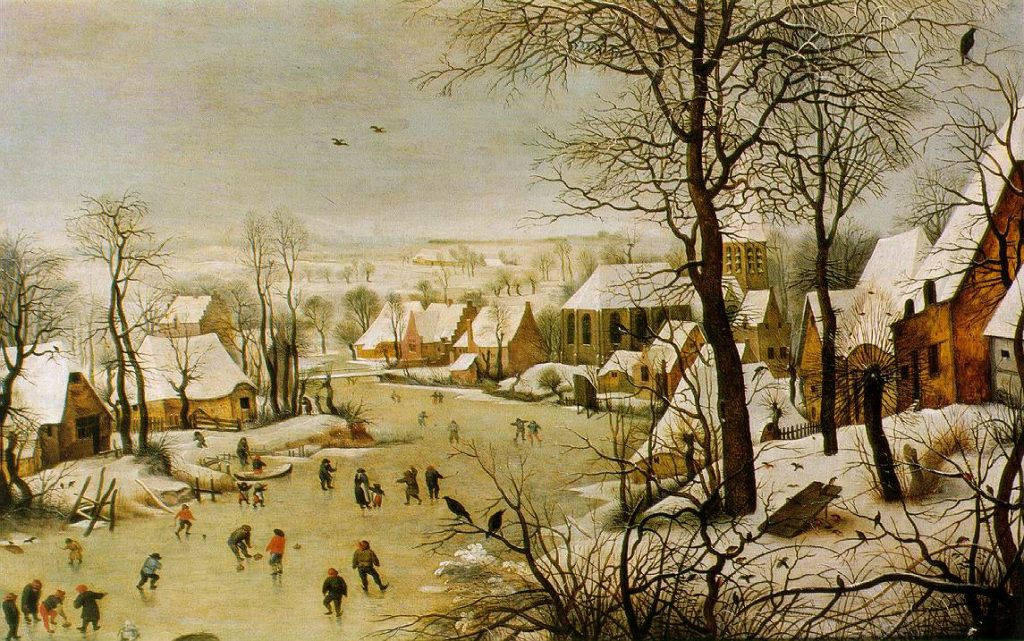
The hunt for Merlin

The story so far (Chapters 2-8 inclusive have all previously been published on this site, starting here). The complete poem has just been published as A Man of Heart, by Shearsman.

Mid 5th century Britain. After the legions have withdrawn, the island is facing civil war, a growing number of external enemies and a steady tide of pagan migrants looking for land.

Vortigern has been appointed to protect what’s left of Roman Britain. The precarious balance of power he had established has been destroyed by a British revolt, led by his son. He retreats towards the hills with his wife and the remainder of the Field army.

At this point, the late 12th century narrative I’m following slides into a different version of the past, and any connection with History as understood in the 21st century is lost.  

LIAM GUILAR‘s continues his epic of post-Roman Britain

The Hunt for Merlin

Vortigern, his wife and retinue

have retreated to the green hills

with the grey mountains at their back.

The wizards tell him where to build.

Each day the workmen sweat to raise a wall;

during the night the walls collapse.

(Seven times, not three as you’d expect).


The wise-men mumble together then announce

they need the blood of a fatherless boy.[i]

Find him, they thunder, sprinkle his blood

and your fortress will be impregnable.

Rowena, astonished by stone buildings,

seeing magic in the masons’ every move,

understands the fact of sorcery.

Vortigern, patient, muses:

four centuries of Roman stone

and now we cannot build a wall?

He sends men hunting down the hill

into the wooded valleys.


In the unmeasured space between

an end and a beginning, along a ridge,

scraped drop on either side, to the summit.

Looked down at broken clouds, across to distant,

unknown, crumpled peaks. The valley;

inept geometry of distant fields,

a path falling off the ridge towards the track

that followed the scrawl of infant river.


Companions wearing mail,

thick woollen cloaks, dark red,

held at the shoulder with an ornate brooch,

only their eyes visible in the helmet’s gilded face,

reading the boundaries, a line of trees,

a stream, a standing stone.

Saw the rustler’s pathway peeling off the ridge

to meet the hammered track

leading to the cluster of round huts,

pointed roofs and sagging thatch,

fenced space, the drift of smoke.

The perfectly ordinary settlement.


Entering the village, they walk into a silence

abrupt as the chill slap of a breaking wave.

No child is playing. No woman singing at her work.

Painted figures, fading on the grey wall of the cloud.

No one runs away, or screams, or sounds alarum.

No one is reaching for an axe. They stop.

They watch. They follow, herding the strangers towards


the largest hut, white walls blotched

beneath the inept cone of sagging thatch.

The chieftain waits to greet them,

wrapped in a bear skin, the skull as hood.

The messengers stop to admire the skin,

trying to frame a compliment.

The old man nodded. ‘Old ways.

My dad took me down into the trees.

Gave me a spear, said, good luck son.

Come back with a bear skin or don’t come back.’


They step into the hut.

‘You have come for the child.

He says you will take him to his woman.’


Behind the fire, in the gloom,

a dark stain, small and indistinct.

Something catching the light flicks,

golden. ‘Do not deny your mission.

He knows what happened, what will happen’

-The shape moved, seemed larger-

‘could happen.’


This man, who as a child

went after bear, alone,

armed only with a spear,

is terrified.


A girl came to the entrance.

The boy stood up and left with her.


‘I have sent word to his mother.

She will travel to the King.

We have sheltered the abomination

and in return, he has shown us what we are.

True, he has given us dominion

over the peoples of the valley.

He has kept our cattle healthy,

our crops abundant. Terrified,

our neighbours pay us tribute,

sacrifice their daughters to his lust,

give us gold and precious things

from places far beyond

the eastern limit of the Empire.

Glass bowls, jewelled cups,

silk filigreed with gold.

At first we gloated over our success,

and wallowed in the excess of desire.

But then we realised the price we paid.


We have done foul things at his bidding.

But we have seen him part the clouds,

make running water turn to ice in summer.

He has raised a hand and brought down hail,

fist sized, to smash our enemies

and ten feet from them not one of us was touched.

We have done too much to keep him happy.’


Outside someone was sobbing.

‘You are the King’s men.

That makes you loyal and brave.

You stayed when all the others ran.

Take the boy to Vortigern the King

He rarely speaks, he seldom asks…’

The old man’s voice was melting.

‘I would rather face a bear again,

with only these old hands,

than risk the anger of that child.

But warn your King, tell him: take care.

The child will give him anything he wants

but his price will be beyond imagining.


When news spreads that he is gone

our enemies will devastate this village,

take not one slave, touch not one woman.

They will kill everyone and then

erase this stinking cess pit from the landscape.

When they arrive, we shall not fight.

Death will bring a fine forgetting.’ 

2

The villagers gathered in the fog,

the women clutching their children,

like failed approximations of the living.

The men stranded in poses of dejection.

The chieftain led them along the path

towards the rising hills. As the ground

sloped steeply upwards he left them.

‘You will need a week to reach your King.

By then, if your mind is still intact,

you will believe everything I’ve said.’


On the first day,

they followed the track upstream to the ridge

in fog so thick they never saw the sun.

The boy did not speak.

He didn’t greet them in the morning,

nor wish them well at night.

On the second day they picked their way downstream,

the slopes of scree like broken shards of fog,

scattered in shining fields that clattered away downhill.


On the third day he said;

‘We will go no further in this valley.

My enemies are waiting. 

We must climb that ridge.

On the other side is a village,

where there are horses.

You will kill their owners,

then you will take me to my woman.’


Vortigern had trained them well.

Their plan was clear and simple.

Entering the settlement, first

they would ask for horses

in the King’s name. Then

they would offer to pay.

If this was refused, then,

and only then, the killing would begin.


The boy had other plans.

Eyes closed, swaying, lips mumble,

hands move, an unexpected squall

drives rain against the window

and blurs a clear view. Or on high ground

the clouds move in so fast the outlines disappear

and there’s only vagueness and sudden dark.


Swinging axe and stabbing spear,

cutting through to the surprise

of scattered bodies, bloodied edge.

They were saddling the horses.

‘Where is the boy?’

‘With the women.’
‘I thought we killed them all?’

‘We did.’


There was the rain

and somewhere was the night.

Each man huddled in his own cloak

and endured the darkness

until the boy made a pile of sticks.

A movement of his hands, a black flame,

tinged silver at the edges,

sprang upward like an army

leaping from its place of ambush.

They huddled closer. No light,

but their sodden cloaks began to steam,

their frozen hands unclenched.

The wood was not consumed.


The escort saw the landscape

as passage, difficult or easy;

shelter, safety, risk. The boy?

Scree was the outrider of his enemies,

the scattered boulders sentries for his army,

waiting for the signal to advance.

Only the water was patron and friend,

escorting him towards his woman.

In the woods their passage slowed.

He must greet every tree he passed,

laying his palms flat on each trunk,

lips moving to shape words no one recognized.

If no blossom sprang beneath his hands

that was worse than the making of fire.

3. Merlin’s Mother

Care has worn her face into perfected sorrow.

But even in the habit of a nun,[ii]

she is sensuality incarnate,

a delirious possibility of carnal bliss.


‘Tell me lady, who is the father of this child?’


‘I am a King’s daughter, Conan was his name,

before the Saxon’s came, before they killed him.

I do not know the father of this child.’


‘You were raped? No? So tell me, lady,

tell me, how did you get this child?’


Rowena wraps her cloak around the sobbing woman,

leads her away from the armoured men,

settles down to listen, seeing images.


…summer flies in clouds above the shattered brightness of the pool.

Girl children playing: armoured guards like dirty statues in the shade

along the rocky shore.

‘Beneath my father’s palace a stream snaked between the trees

and upstream of where it cut the path leading from the fort

our childish secret place, a spring running from a carved grey stone,

with swirling snakes coiling around an open mouth

and a broken headless statue.

(We blushed the first time that we saw it, erect, enormous.

Imagine that? And other silly chatter).

My slave girl trying to be important,

told us pagans worshipped this forest god, this half-man, half-goat,

and if a maiden, toying with herself, close to this place of power,

spoke his name three times, he would appear and pleasure her.

No one believed her rubbish.

We were children,

girls in their white shifts splashing in a pool,

drifting through the summer heat.


A long hot summer.

Maybe five years after we had found the stone.

The river shrivelled to a chain of stagnant ponds.

 Unmarried, un-promised

with maids to the river bank.

Tents in the shade of the trees.

Guards? Of course.


On the hottest night,

aware of sweat beading and running

like grazing insects,

aware of my own body,

humming its lust.

 Images of a future husband,

a constriction in the throat,

the heat became intense.

I murmured the god’s name,

opened my eyes to the golden man,

the carving of Priapus come to life.

His eyes blazed golden in the shade.

The frost burn of pleasure.

All night delirium, the rhythms of flesh,

exhausted, weeping with delight, I fell asleep.

In the morning, in the river, trails of blood,

signs of the night’s excesses

but no signs anyone had slipped into my tent.


That afternoon I dreamt

church doors were shut against me.

I saw the priest and congregations

stone a woman in the field

and knew that she was me.

But until the Golden Man returned,

my body crooned for him.

 My mind a swamp of images of what we’d done.


3 nights the Golden Man appeared and played with me.

3 nights of ecstasy I’ll never know again.

Then no more.

I prayed for him. I prayed to him, but the nights were a rack

and I despised the sunrise confirming that he had not come.

I sickened. After three days, my clothes were tight

and food was hateful to me.

In three weeks I gave birth:

 a child with golden eyes.

As they laid it on my breast,

he smiled at me and said:

‘Daddy sends you greetings

You will not meet again.’


And that lady is how I got my child.


Must I stay ‘til it arrives?’


‘You fear your own son?’


‘Speaking his crimes would rot my mouth.

Remembering them is penance enough.’


Rowena let her go.

Vortigern asks: ‘Is it believable?

She wouldn’t be the first maid

who snuck away to meet her lover

and then made up such a story

when she found out she was pregnant.’

‘No. Her fear is genuine.

Whatever he did is so foul she won’t speak it.’ 

4. A Fatherless Boy

The messengers, staggering, 

bring the boy before the King.


Like a dead bird on a wire

animated by the breeze,

a stain gaining definition

as it strikes, the boy,

brushing aside the soothsayers,

swooping towards Rowena.


‘Blessed is the well below the valley.’

He strokes her breast. She recoils,

hands tying invisible knots, speaking

words that no one present understands.

The boy stumbles, recovers, laughs,

brushing flies from his face.

Reluctantly, he turns to Vortigern.


An old man’s voice,

with rust at its edges

and rot at its core.


‘I have loosed the bands of Orion.

I can summon leviathan.

He will make a covenant with me.


I have gone down to hell

and freed the rider in the clouds.

When he’s enthroned upon his mountain

he will bow before me as my slave.

I can harness the unicorn to the plough.

I can make you Emperor.’


‘Of what?

The Empire’s gone.’


‘It can be rebuilt.

For you.

For a price.’


‘And you want my soul?’


‘I wouldn’t wipe my arse on it.

I want your wife.’


Vortigern hears Rowena hiss,

senses she has stepped back,

holding seax in a steady hand.


‘She doesn’t want you.’


‘Look fool!’ Vortigern sees his province,

refined to a detailed map.

To the south, the shrinking stain

of Vortimer’s rabble and across the Channel,

the scum filled puddle of The Boys’ growing horde.

The black plague of uncountable ships,

swarm the coast, or burrow up river

like maggots attacking a corpse.


‘Give me your wife.

I will annihilate your enemies.

I will be a tempest in a field of corn.

The plans that they have nurtured,

their dreams and ambitions, I will ruin

as they watch, like patient farmers

as hail destroys their crops,

announcing their starvation.

Give me your wife.’


‘Child, she is not mine to give.’


Time thickens like a river freezing.


There is only the voice;

a wind from nowhere,

and the images of burning homes,

pestilence, atrocities, famine.

Vortigern sees his kingdom.

The dead lie where they fell,

crops rotting in the fields,

the starving cattle wander free.

He could see misery,

surging over the land and drowning it.

‘I can put an end to this.

That’s what you want;

peace, order, stability.

Give me your wife.’


He sees himself in gold embroidered silk,

seated on a marble throne,

in a many columned hall.

The cities flourishing again,

merchants on the roads,

ships safe in the harbour. He hears

the grateful people speak his name.


No enemies, assassins

outrage or complaints?

This time, he laughs.


The ice breaks.

The river moves.


‘Child, this is not yours to give.

There will always be wars. Always

people who starve while others feast.’


‘You will die alone.

The sky will rain fire.

You will be vilified

for eternity unless

you give me your wife.

They will debate your name

and your existence.

Your life will be obscure,

your death will be unknown

unless you give me your wife.


She is blessed amongst women.

The fruit of her womb will be the Messiah:

a Warrior King to end the Saxon threat,

reconquer Rome and found a Reich

to last a thousand years.

His name will never be forgotten.

Nor will mine.’


‘Child, she is not mine to give.’

Vortigern dwarves the chubby boy;

a foul vagueness slithered from a cave,

shrivelling in the unaccustomed light.


‘Go your way.

Take this gold,

my thanks

for the lesson.’


‘We will not meet again,

Vortigern Dead King.

I could have saved you.’


‘No,’ he says,

with the conviction of a rock.

‘No, you could not.’

5. The end of the province of Britannia

Morning, and the mist filling the valley below,

clouds streaking the sky like smoke plumes

streaming from the distant peaks. The sun

cold, bright and ruthlessly indifferent.

His officers accumulate around the wagon.


A baffled Rowena stands beside him,

leaning into whatever happens next.


The remnants of Britannia’s last Field Army.

Faces he remembers from the day they left for Lincoln[iii].

He knows them all; their families, their stories,

which one can improvise, who imitates a wall,

who plays it safe, who takes a chance. 

‘Some of you are angry. Some feel betrayed.

You think you would have danced

to your crucifixion if a comrade could be saved.


We have all lost friends who gave their lives

so we could live. You think I’m selfish

because I wouldn’t trade this woman to a child

to save the province.’ He heaved a sack towards them.

‘There is all the coin that’s left.’ He threw a second,

two malignant lumps shifting as they settled.

‘And there’s the plunder; gold rings, armbands, torques…’

the list is endless and irrelevant, dismissively

he waves his hand towards the chests beside him.

‘The royal treasury. The province. Britannia.

That’s all that’s left of what we swore to serve.


But what we swore to serve

meant so much more than that.

I will not sacrifice another life

for two bags full of shiny trash.


Divide it now amongst yourselves.

See that no man feels aggrieved.

Those who wish to leave: go home.

Or you can take an oath to follow me.

I will not ask you to do anything

I have not asked before,

but I will make you rich,

and give you lands for your old age.’


The sound of swords being drawn,

the rustle of kneeling men.


Later she finds him, on a fallen trunk.

The twisted branches of the stubborn trees

behind him like a web the boy had spun

to trap a king.


‘You are a strange man, Vortigern Cyning.

Locrin locked a woman up and lost his kingdom.

You risked the loss of yours to set one free.

The two sacks are untouched in the grass

and not one man has left.’


‘We’ve clung to the old titles;

adepts of a failed dispensation,

whose rites and formulas

belong to history, repeating

an incantation that’s familiar,

habitual, comforting,

when it’s obvious the gods

have long since left the temple

and the words no longer work.


It’s a strange new world

we’re stepping into;

clean, cruel and honest.

At least until we discover

new reasons for hypocrisy.’


[i] Laȝamon describes this advice as ‘leasing’ (lies.)  The shift from bishops and priests to wise men and soothsayers is in his text.

[ii] Another one of Laȝamon’s anachronisms. The story of Merlin’s birth and conception follows his version.

[iii] See chapter 4

More information about Laȝamon’s world and work, as well as the two published volumes in this project can be found at www.liamguilar.com

Parnassus, and patria

Tumuli at Revesby in Lincolnshire

Sunken Island: An Anthology of British Poetry

Various authors, edited by Alexander Adams, foreword by William Clouston, London: Bournbrook Press, 2022, pb, 55pps, £12.50

Bournbrook Press is an offshoot of Bournbrook Magazine, founded in 2019 to offer a “primarily British audience with traditionalist, socially conservative argument and entertainment”. This venture’s newest publication is something unusual, and unlikely to be financially profitable – an anthology of original poetry put together specifically to appeal to small-c conservatives, a subset of the population not noted for their interest in new verse.

Poetry written for political purposes always runs a risk of being bathetic, just as other arts can easily become ‘artivism’ – a point amply understood by this collection’s editor-contributor, who has written an informative book on this subject. I have a 1900 anthology on my shelves, Heroic and Patriotic Verse, and while much of the verse is excellent (it includes Byron, Goldsmith, Gray and Shakespeare), some has dated less well, including ‘Of old sat Freedom’ (one of Tennyson’s windier effusions) and the frankly indigestible ‘The Roast Beef of Old England’. The verse in Sunken Island is similarly uneven, but when it is good, it is, as Social Democratic Party leader William Clouston notes in his Foreword, “both serious and enjoyable”.

Clouston also points out that this book’s eight contributors are not “blind to the country’s flaws”, and this gives this collection both muscle and a certain wryness of outlook notably absent from some patriotic poets, like Rupert Brooke or Henry Newbolt. There is no bombast to be found in Sunken Island, nor sentimentality, nor Patience Strong-style platitudes. The two prevailing emotions are love, plus loss – an odd echo of Hugh Kenner’s A Sinking Island (1988), which concluded that “there’s no longer an English literature”. 

Kenner’s gloom is to some extent gainsaid by the poets in here, who suggest that a kind of distinctively English literary sensibility may still be discoverable – or at least a British one, because one of the poets included (the pseudonymous ‘Columba’) is Scottish, while another (Rahul Gupta) is a noted exponent of traditional alliterative verse. This does not mean that the other six contributors are stodgily suburban, nor even a hundred percent English. Alexander Adams is a justly well-regarded artist whose work is in the V&A (several of his drawings are used in Sunken Island). Benjamin Afer calls himself an “authentic reactionary”, but authors futuristic novels. Daniel Gustafsson is a bi-lingual (Swedish) doctor of philosophy, as well as a highly-regarded poet. A. Robert Lee taught in America and Japan, and lives in Spain. Nicholas Murray is a biographer of Kafka and Chatwin, and a Fellow of the Welsh Academy. S. D. Wickett is an aficionado of Lovecraft and Phillip K. Dick, and affianced to digital media.

The poems vary greatly in style. Nicholas Murray’s six short contributions feature everyday vexations, from standing on a train station concourse to being bitten by someone else’s dog (for which he apologises, the most stereotypically ‘English’ moment in the book). He notices small things, and honours the 19th century clergyman-diarist Francis Kilvert, who did too – “…the man of God whose fine gift / for seeing things lights the day / As sunshine after sudden rain”. He looks into a painting of a Lancashire landscape, and remembers its departed artist. He is abashed by the force of nature, in the form of a night wind which blew away rooftiles, and “glib proposals”. He then eavesdrops on an imagined conversation between James Joyce and Percy Wyndham Lewis, as verbose Irishman and Vorticist Englishman consider quantity, and the urgent need to stir things up, to dissolve “the solid shell”. 

A Robert Lee’s contribution, ‘From…’, addresses Englishness, coherent but complicated, encapsulated by the “multi-there” and “multi-then” of his own odyssey from 1950s Manchester via London, America, and Japan to 2022’s Spain. “The initial from takes on lengthening distance…” while everything changes and he changes with it, but remains in some ways strangely the same. ‘From…’ is more impressionistic jottings than verse, yet it ably conveys diverse textures and odd connections – between Manchester, Lancashire and Manchester, New Hampshire – between London periods and London postcodes – between the Kents of Chaucer and supermarkets – between the island mentalities of Britain and Japan, and the “inside outsider” status of being a Spanish-speaking Englishman in Spain. In him, national nostalgia seems in permanent tension with what Germans call Fernweh – ‘farsickness’, a wish to see far-off places – and perhaps he needed to get away to understand where he had come from. As Kipling asked, “what should they know of England who only England know”? Lee at least has come “to relish the from and the to: England’s away-day, England’s away-life”.

Adams’ poem ‘Roadside Diner, Shropshire’ is less sanguine, a contrast between the heartbreaking hills of Housman, and the plastic-bottle spotted county Adams and companion view from a bleary café window, downing terrible food while “vital, indifferent” traffic dashes by, heading nowhere purposefully. This England is, he repines, “an absent people, a civilization surrendered”, and sometimes he feels like a “lone journalist remembrancing a defeated land”. Lack of legacy nags and nags at him, as he sees sunning girls arising and going “back to life, leaving nothing of themselves” – fewer traces than even the evanescent, underestimated flowers of May.

Daniel Gustafsson’s ‘Bulbs’ strikes a brighter botanical note, reminding us that even the gnarliest corm in the coldest ground pushes green spears upwards each spring, offering potential for beauty and self-realisation. His work is rhizomed in Yorkshire, a county whose notoriously crumbling Holderness coast offers plentiful metaphors for erosion of substance. “The guards have let us down”, Gustafsson warns, political leaders and opinion-formers mere “architects of entropy”, letting everything slide into the abyss out of sheer carelessness. “We’ve seen our footings fall / to sludge… have seen, through slurred decrees and sleights of hand, / a state of blank forgetfulness / usurp the patterned sand.” Spurn Point at the northern tip of the Humber could be nationally emblematic, a sandy spur soon to be an island, near where the great port of Ravenspur once saw kings land, and monks build monumentally. The East Riding’s erosion is symbolic to him of a country’s “great diminishing”, as a former “common ground” is washed across by shallow sloganeers, who impose their views on others like some postmodern Morality Police.   

Gustafsson’s lyrical wistfulness is given a more combative edge by Benjamin Afer, whose ‘Lines on an English Street’ express feelings of inner exile, the author feeling alienated from his ancestral domain by demographic changes as symbolized by ethnic restaurants – “a surfeit of whiffs”, from an alphabet soup of eateries in High Streets that have somehow become Grand Bazaars. “It’s a solitary walk the Englishman beats / In the swelling crowds of the English streets”, he insists bleakly, notwithstanding possible economic upsides: “The happy ringing of tills and drumming feet / Make a merchant at home on the English street.”

The collection closes on an unexpected crescendo, with four extracts from larger works by Rahul Gupta. The author, who holds a doctorate in alliterative verse, and is undertaking a major translation project from Old Norse, is alive with logophilic intensity, pouring torrents of words onto pages as if upending some wonderfully capacious cornucopia. Familiar words are deployed in unexpected ways, unfamiliar ones summoned from OE word-hoards where they have lain too long asleep, and new ones are smithed – and all are marshalled to striking mythopoeic purpose.

Gupta’s chief area of operations is the post-Roman, pre-English world, when Angles, Celts, Jutes, Saxons and Scandinavians moved across claimable spaces between downfallen towns, where horse-masters could be kings and stones sacred, and ravens battened on bodies at real battles whose locations we have lost, and which we barely now remember even as names. This is ‘Matter of Britain’-territory, Gog Magog-country, the Logres that lies under even the ugliest parts of everyday England, giving the least imaginative modern Englishman some vague sense that he belongs in some continuum. This epic subject – so liable to be conventionalised and sentimentalised – gains vastly in vitality at his hands.

‘A Norse Étude’ is a combat scene condensed from all the hyperboreal epics, from Heimskringla and Orkneyinga to Beowulf and the Battle of Maldon, imagining “horny-nebbed” hooded crows descending on men falling under a hail of “Flanged arrows as flinder- / fledges leapt from edges / over shields, bows shrilling, / when shank-deep was dankness / of gore”.  Poems were – and are – also weapons in these wars of all against all, as tribal minstrels interpret and invent legends, weaving words “from that web of swords”, trying to forge the future by capturing the past.

‘The Turn and Fall of Leaf’ could be a title from Tolkien (to whom Gupta has been likened), a lambent disquisition on autumn, its colours and significances, its glories and sadness, as the glowing greenwood goes glorious, then brown and blighted. Winds pick up and shiver the timbers, and their chlorophyll clothes weep to the far-below floor. Secret glades are shockingly made naked, and rides are mounded deep in dry detritus – “pathways choked, by parched masses: / crinkled chamoisy, crunched underfoot / as shuffling drifts. With shift and ruffle / They enswathe the sward”.

Time for ‘The Onset of Winter’, with clouds and winds as “sky-skirmishers, obscure armies / of ill omen”. The Wild Hunt passes, baying and foaming hounds headed by Herne, antler-masked “wood-warlock of the warrior-band”, in elemental pursuit of white harts from heraldry, while berserkers and whippers-in howl and scream and “chew the shieldedge” in frenzy. And then – the chase passes and the thrumming hoofbeats recede into infinity. Nature exhales, and all is suddenly motionless. Overhead, “Hunter and Hound are hovering still” in a sky diamonded with stars and a moon of mother-of-pearl.

At other times, winter deals harsh hail and sleet to punish the patient earth – “gravel-grain that grows no harvest”. Yet other days, snowfall hushes all noise, subdues all striving; a giant Cold Genius walks the whitening land with his finger to his lips, casting crystals of infinite variety indifferently over the quick and the dead, obliterating boundaries, ivorying all the colour-fields. “All wear his harness: / ironhardened earth” and “The ice tightens / Wonderfetters”.

But there is release at last, as even in winter there is the possibility of warmth. In ‘The Midwinter Sun’, the “all-tending orb” suddenly rides high and reaches down with effortless sensuality. He “…drives the spore: he inspires the bud, / as the twig whitens, to untwist her whorl: / he parts her petals; the pollen to smoulder / from flaunting catkins”. Blinking, yawning animals emerge from hibernation, hungry for the starting grass, conscious of urgent impulses that make the male hen harrier seek out multiple mates, send hares careering across champaigns, adders intertwine Gordianally, and unsettle cattle in crew yards. The poet tracks Phoebus lovingly through his golden ascents, then Wheel of Fortune downturns, as the “traitor-barons…eclipse the glory of his lion’s mane”, as so often before. The uncertain sun sinks into the sea, and troubled men set out in tiny boats, “travailing westward /… on benighted tides, / In search of the dawn.” Like all his others, this is a virtuosic performance, a welcome reminder that there is still blood in the tradition.

The contributors to this volume could all be seen like Gupta’s metaphorical sailors, navigators of unknown waters, seeking Sol-ace in a gathering dark, reaching for verse to reverse eclipse. If sometimes their reach falls short, at other times it does not, and always they are honourably-intentioned. This public-spirited Parnassian project can be judged a success if even a few of the many other anxious among the English are inspired to poetry in their turn.

“Once upon a time I was a poet”

Basil Bunting. Photo: National Portrait Gallery, Creative Commons licence
Letters of Basil Bunting
Selected and edited by Alex Niven, Oxford University Press, 2022, £35
LIAM GUILAR welcomes new insights into a little-studied modernist’s mind

Basil Bunting died in 1985. Despite having been praised as one of the twentieth century’s ‘greatest poets’ critical attention to his work has been rare. A reliable biography didn’t appear until the publication of Richard Burton’s A Strong Song Tows Us in2013; an annotated collected poems, edited by Don Share, not until 2016. Now, with the publication of Alex Niven’s much anticipated edition of Bunting’s correspondence, it’s possible to eavesdrop on one of the twentieth century’s most interesting conversations about poetry[i].

In his eighties, Bunting looked back on his life:

Once upon a time I was a poet; not a very industrious one, not at all an influential one; unread and almost unheard of, but good enough in a small way to interest my friends, whose names have become familiar: Pound and Zukofsky first, Carlos-Williams, Hugh MacDairmid, David Jones, few indeed, but enough to make me think my work was not wasted.[ii]

If you recognise the names of his friends, that ‘good enough in a small way’ is an excellent example of the English art of understatement. But it’s not a popular list and despite the excellence of his poems, Bunting remains a marginal figure. No one reviewing the letters of T. S. Eliot needs to explain who T. S. Eliot was, or why he is of interest. 

The life

Born in 1900, Bunting was imprisoned as a conscientious objector immediately after leaving his Quaker school in 1918. He studied economics before drifting to Paris where he met Ezra Pound and worked, alongside Ernest Hemingway, for Ford Madox Ford. Following Pound to Italy, he met W.B. Yeats and Louis Zukofsky in Rapallo and began a life-long and life altering affair with Persian literature.

His first published poem, Villon, is one of the finest long poems of the 1920s[iii], but by the end of the 1930s Bunting’s career as a poet had stalled: his first marriage had failed, he was out of work and separated from his children. The war rescued him. He discovered he had skills that others valued. He rose through the ranks to Squadron Leader, worked for British Intelligence, then after the war, returned to Persia, first as a diplomat, before resigning to marry a Persian and becoming the Persian correspondent for The Times.

Expelled from Persia and then unceremoniously dumped by The Times, he struggled to find work in post war Britain.

Despite the excellence of his poems, the story could have ended here, with Bunting as a footnote in histories of literary modernism, remembered as one of Pound’s ‘more savage disciples’[iv], but in his sixties, spurred on by his meeting with a young Tom Pickard, he wrote Briggflatts; at 700 lines a short long poem, praised as the ‘finest’, ‘greatest’ or ‘most important’ long poem either of the twentieth century or ‘since The Wasteland’. He enjoyed a brief period as ‘Britain’s greatest living poet’ before fading away in a series of university jobs and poetry readings.

Poetry

From such a long and varied, life Niven estimates only about 800 letters have survived, of which approximately 600 relate to Briggflatts and the period after its publication. He has selected almost two hundred and thankfully decided to print complete letters rather than extracts.

Divided into three sections, the bulk of the book is devoted to the 1960s and afterwards. For anyone interested in poetry, rather than Bunting’s biography, the core of the book may be the pre-1960s letters to Pound and Zukofsky.

Briggflatts was praised by critics of the stature of Hugh Kenner and Donald Davie and poets as diverse as Thom Gunn, Allen Ginsberg and George Oppen, but Bunting’s status in the critical hierarchy has never been secure.

Perhaps his version of poetry is too austere to be popular. In a letter to Poetry Chicago (not printed by Niven), he wrote:

We are experts on nothing but arrangements and patterns of vowels and consonants, and every time we shout about something else we increase the contempt the public has for us. We are entitled to the same voice as anybody else with the vote. To claim more is arrogant.[v]

Throughout these letters and in later interviews he repeatedly stated the belief that politics, philosophy and theory harm poetry. The poet’s job is to write good poems.

What I have tried to do is to make something that can stand by itself and last a little while without having to be propped by metaphysics or ideology or anything from outside itself, something that might give people pleasure without nagging them to pay their dues to the party or say their prayers, without implying the stifling deference so many people in this country still show to a Cambridge degree or a Kensington accent. [vi]

It’s possible to go through these letters and compile a list of quotations to show he had little time for academics or literary criticism. He was publicly dismissive of creative writing courses and poetry competitions, while working on the former and once, memorably, judging the latter. He didn’t think poems should be explained; if a poem requires footnotes it’s a failure and tying the poem to the poet is a fundamental mistake.

What characterised Bunting and his correspondents was the intense seriousness with which they applied themselves to writing. Poetry was a craft and writing it involved ‘sharp study and long toil’. The ‘study’ involved arguing into existence a standard of excellence selected from poems going back to Homer. Once tentatively established, they attempted to excel their models, supporting each other through stringent criticism.

Bunting’s criticism, shown here in his letters to Zukofsky, was not for the faint hearted, but it was driven by the belief that some poets, Pound and Zukofsky explicitly, were ‘entered without handicap against Dante and Lucretius, against Villon and Horace.’ In the same letter, he explains: ‘At least for my part, I’d rather have somebody who is thinking of Horace call my poems bloody bad than to hear them praised by somebody who is thinking of-who-Dylan Thomas?’ (p.194).

Two other reasons for Bunting’s odd position in the critical hierarchy stand out. In some quarters he is tainted by his association with Pound, especially where Pound is only known, vaguely, for his political and racial opinions. The other is the insistence that ‘All Roads lead to Briggflatts[vii] which condemns him to the role of a minor poet who pulled off one great poem and consistently ignores the quality of the rest of his work.   

The letters qualify the first of these, while Niven’s editing and commentary seem driven by the second. If there ever was a tribe of Ezra to match the tribe of Ben, with Rapallo replacing the London taverns, Bunting was always too obdurate an individual to be anyone’s acolyte. [viii].

The explosive end of the pre-war correspondence with Pound is well-known, though the full text of the letter hasn’t been available until now. What becomes obvious is that from the late 1920s and through the 1930s the letters show Bunting becoming increasingly resistant to Pound’s politics. Bunting’s repeated statements that poetry is hampered when it tangles itself in philosophy and politics became focussed in his insistence to Pound that banging on about ill-informed economic theory was a waste of Pound’s time and literary talent, although Bunting himself isn’t adverse to sharing his ‘theories’ with Pound.

Initially refusing to believe Ezra was writing for the British fascist movement, he finally reached the limits of his patience when he learnt that Pound was ‘spilling racist bile’ in his letters to Zukofsky. His angry letter to Pound ends:

I suppose if you devote yourself long enough to licking the arses of blackguards you stand a good chance of becoming a blackguard yourself. Anyway, it is hard to see how you are going to stop the rot of your mind and heart without a pretty thoroughgoing repudiation of what you have spent a lot of work on. You ought to have the courage for that; but I confess I don’t expect to see it. (p.136)[ix]

It says a lot about the robust nature of their friendship that despite this, Pound would continue attempting to promote Bunting’s poetry, and Bunting would continue to acknowledge his debts to Pound. After the war, when Pound was incarcerated in Saint Elizabeth’s hospital for the mentally ill, Bunting picked up the correspondence, encouraged by the news that a letter from Basil brightened up Ezra’s week. Pound’s letters to Bunting, by turns abusive and incoherent, didn’t put him off.

As he wrote to Zukofsky: ‘The difficulty is how to avoid being involved in the network of fallacies while profiting from his illuminate faculty for verse and enjoying his energy and kindness.’

The same problem faces everyone today: how to see beyond the politics and racism to profit from what any poet in the past had to say about poetry and learn from what he or she achieved as a poet. Bunting managed it with his two closest friends, one a communist, one a fascist. It seems an important precedent.

Anyone interested in Basil Bunting or twentieth century poetry owes Alex Niven a great debt for the time and work that must have gone into this project.

How different the picture would be if this were a complete edition of the letters, only he knows. When Jonathon Williams published a selection of his letters from Bunting, he wrote: “What a stern, serious, funny, extraordinary ‘literary’ (LETS HEAR IT FOR LITERARY) North of England person he was’ (Williams, p.252).[x]  The Bunting of those letters, watching the birds and wild life in his garden, is absent from Niven’s collection, as are the descriptions of Persia that suggested to Burton that Britain lost a major travel writer to the Official Secrets Act.

The book’s sense of its reader is uneven. Niven explicitly describes a model reader who knows the outline of Bunting’s life and is not put off by occasional difficulties (p.xxvii). This model reader has a positive effect on his annotations, but seems to have been forgotten when he came to write his commentaries.

Why Niven thinks such a reader needs to be told what to think about the letters and how to interpret them, is a mystery. You buy an edition of a poet’s letters, wanting to read the poet’s words, and find a portion of the book contains the editor’s personal opinions and interpretations which you will never reread.   

Based on his model reader, Niven’s annotations are usually deft and show a shrewd judgement of what this reader could be expected to know. He assumes that anyone reading these letters won’t need a gloss on Dante, Swift, Winston Churchill, or others. He is also unwilling to overload the letters with commentary, assuming, (rightly), that anyone who wants to follow Bunting’s detailed responses to Pound’s books; ABC of Reading, Guide to Kulchure, will have a copy.

In his letters, Bunting could be crudely dismissive of poets he didn’t like. It’s disappointing to see his editor join in: ‘Philip Larkin (1922-1985) hard right British poetaster and trad jazz critic.’ (n.277 p.384).

Sometimes the annotation strays a long way from objective facts: ‘It must be said that Briggflatts faintly resembles certain of [Dylan]Thomas’ work in form, subject and (marginal sense of) place’ (p.194). Briggflatts probably ‘faintly resembles’ a lot of things, but it also must be said it’s hard to imagine Bunting admiring Thomas enough to be influenced by him.

The introduction includes a clear and necessary discussion of editing methods. Whether an introduction to a selection of letters needs a dramatic retelling of the first reading of Briggflatts, or is an appropriate place for a summary and critique of existing criticism, depends on the individual reader. As I don’t agree with his evaluation of Don Share’s edition of the Collected Poems, unless ‘the book’s only major limitation’ is intended ironically, or his criticisms of Burton’s biography, and I think he misreads the Pound-Bunting disagreement over Bunting’s translations of the Shahnemeh, I’m suspicious of his statements about literary matters where he strays from simply providing factual biographical context.

He uses his introduction to stake out his version of Bunting’s life, at times in explicit opposition to other published versions. I’m not convinced this is the right place for it. His dissent from Burton’s views of the significance of Bunting’s Quakerism is pointed, but his dismissal of Burton’s biography as ‘relatively light on critical explication’ is baffling. Eager to point out that book’s ‘shortcomings’, he seems to be criticising Burton’s biography for being a biography while temporarily forgetting just how problematic and limited letters are as biographical evidence.

The trust in the reader, obvious in the annotations, is not evident in the editorial commentary running between the letters. I think there’s too much. Rather than let the letters speak for themselves, he interprets the evidence and intrudes his opinions, unnecessarily:  

For all that his language and actions often fell a long way short of today’s ethical standards, Bunting certainly thought of himself as a determined anti-racist-and this letter would seem to support that view. In the context of his historical moment, Bunting’s basic philosophical views about race were, to put it mildly, considerably more progressive than Pound’s. (p. 134-135)

Comments such as this one and less lengthy interventions like ‘even if the age difference of over thirty years was problematic in more ways than one (p.140)’ seem to miss the point that adult readers are capable of coming to their own conclusions.

Sometimes the comments have nothing to do with the content of the letters: ‘There is a pressing need to apply more and deeper scrutiny to Bunting’s colonial phase than has been evident in previous scholarly and biographical treatments. But whatever its unexamined moral and political complications’ […]. (p.139)

Superfluous in terms of contextualising a letter, this manages to suggest something sinister without being informative. Even for a reader who knows the biography it’s not clear what the unexamined ‘complications’ are, or how ‘scrutinising’ them would add to the enjoyment of the poems or why or to whom such a need is ‘pressing’.

Letters encourage the tendency to tether the poems to the poet. The results of failing to distinguish between the two is a depressing characteristic of contemporary discussions of poetry, obvious in attitudes towards writers as diverse as Ezra Pound, Phillip Larkin (see above) and most recently, Dorothy Hewett[xi].

As Bunting wrote to Zukofsky:

Letters are meant to be written to affect one bloke, not a public. What is true in the context of sender and recipient may be a bloody lie in the context of author and public…secondly: the bane of the bloody age is running after remnants and fragments and rubbish heaps to avoid having to face what a man has made with deliberation and all his skill for the public’. (June 1953 qtd in Burton, page 354 Ellipsis in Burton.)

There’s nothing anyone can do to prevent that, it’s still the bane of this age, but its sad inevitability is outweighed by the opportunity to eavesdrop on one of the century’s most interesting conversations about poetry. Hopefully, Niven‘s suggestion that a complete collection of the Pound Bunting correspondence should be published will be taken up sometime soon (preferably with the letters to Zukofsky). What they had to say about poetry transcends their time, politics and personalities.  

‘Long awaited’, ‘much anticipated’ and ‘ground-breaking’ are cliches of the blurb writer.  For once they can all be applied honestly and accurately to Niven’s work in making these letters available. The good news is that the long wait and the anticipation have been generously rewarded.   


[i] Page numbers are to Niven’s book. Richard Burton’s Biography, A Strong Song Tows Us is referred to throughout as Burton.

[ii] I transcribed this from Peter Bell’s film, Basil Bunting: An introduction to the work of a poet (1982). He seems to say something after ‘David Jones’ but I can’t understand it.

[iii] The poem was written sometime in the 1920s but first published in 1930. As Niven explains, the letters cast doubt on the standard dating and chronology of some of the poems.

[iv] The description belongs to W.B. Yeats. He surprised Bunting by reciting one of Bunting’s poems from memory when they met.

[v] Poetry, Vol. 120, No. 6 (Sep. 1972), pp. 361-365 http://www.jstor.org/stable/20595781

[vi] Another transcription, this time from a talk Bunting gave in London, in Keats’ house, in 1979.  From ‘The Recordings of Basil Bunting’ with thanks to the late Richard Swigg who looked after ‘The Bunting tapes’.

[vii] Julian Stannard. Basil Bunting Writers and their work.  p.88

[viii] Consigning Bunting to the role of ‘Pound’s disciple’ is to misrepresent him as badly as Tom Pickard is misrepresented when his own excellent poetic output is ignored and he’s remembered simply as the boy who midwifed Briggflatts.

[ix]  Zukofsky’s response to this letter and whatever Pound had written that offended Bunting so much, can be read in Pound/Zukofsky Selected letters of Ezra Pound and Louis Zukofsky ed Barry Ahearn.  

[x] Williams, Joanthan, ‘Some Jazz from the Bazz: The Bunting-Williams Letters’ in The Star you Steer By. Ed, McGonigal and Price.

[xi] For Hewett and a recent example of this problem of confusing poet and poem see the remarks in https://www.theguardian.com/books/2021/apr/04/the-whole-canon-is-being-reappraised-how-the-metoo-movement-upended-australian-poetry

Highwire poetry

Wildcat Dreams in the Death Light
Reagan M. Sova, First to Knock, 2022, 265 pages, US$17
LIAM GUILAR takes a ringside seat for a dazzling extravaganza

‘Wildcat Dreams in the Death Light is an incantatory work of narrative poetry. Infused with hobo melancholy, Jewish lore, bloodshed and hilarity…’.

It’s rare for a blurb to be so accurate. For the price of the book, Reagan M. Sova will perform as ring master, troubadour, high wire artist and magician to entertain and dazzle the awestruck crowd.

Set in the first decades of the twentieth century, the story is told by Mort Sloman, who leaves home at thirteen. He falls in with a circus, and in love with a Gypsy trapeze artist, discovers friendship across the barriers of race and difference, witnesses institutionalised racism, violent death and corruption, joins the Wobblies (Industrial Workers of the World, IWW) and unionizes his circus, travels through Europe during the First World War to Egypt, returns to America to help the union cause and finally performs the Festival of Light for his dead relatives.

A lot happens.

At the beginning, the narrator sets out on a quest, mounted on a mule rather than a white charger:

i/consecrated unto myself the sacred mission

the ceremony of light to honor Frank and Aunt J

i had the song in hand but i

could not do it without the right guitar

nor the Locksmith keys

not even the rabbis have them

While this quest gives the story a beginning and end, the ‘sacred mission’ fades into the background, replaced first by Sloman’s devoted pursuit of the gypsy acrobat, then by his experiences with the travelling circus, and his involvement in the IWW. Although set in a world anchored in the familiar by historical names – Ringling Brothers, Big Bill Hayward, Eugene V. Debs – and recognisable conditions and historical events, the story moves in a liminal space that shifts Sloman’s journey into the realm of legend.

The circus, which Sloman calls ‘The Kingdom’, is a ready-made symbol of America, with its outcast others, unusual characters labelled as freaks, and self-confident, exploitative hucksters and frauds. His is an American Dream where the poor boy escapes the bullies, finds love and wealth, and good guys find friendship and love, and win despite the odds stacked against them.

The poem exploits its own intertextuality in a cheerfully unembarrassed way. There are echoes of Whitman and the Ginsberg of Howl. But the influences are taken and adapted. A rambling man bound for glory with guitar on his back, writing songs and supporting the union, evokes Woody Guthrie, but the verbal inventiveness of Sloman’s songs is a world away from Woody’s. Like Sloman’s parade, which begins with himself and his friend and grows throughout the story, Wildcat Dreams in the Death Light is robust and generous enough to accommodate whatever resonance the individual reader brings.

The dominant stylistic presence, however, is Frank Stanford and The Battlefield Where the Moon Says I Love You. Of all Sova’s many magic tricks, the most impressive is the way he has managed to take Stanford’s instantly recognisable style, make it his own and adapt it to his own purposes.

By shortening Stanford’s line, leaving it unpunctuated and rarely end stopped, Sova has given the poem a rhythm which carries the reader through Sloman’s adventures. Stanford’s distinctive incantatory eruptions are present, but kept under control so they never take over the story the way they do in The Battlefield. They are a major factor in producing the slightly hallucinatory effect that keeps shifting the story from its factual, historical setting into the dream realm.  

When Alf, the circus master, asks the thirteen years-old Sloman what he could have seen ‘with so few years under your cap’, he replies:

i have seen the elderly monk gored by the falling icicle

i have seen the family of elk sleeping next to me in the moonlight

i have seen bob’s jar of brandy

i have seen the vial of goof dust I used to trick the trickster

i have seen the blood trickling

from my grandfather’s ear when he died roller-skating

i have seen good luck without grace invite darkness

i have seen the Gypsy’s vision of my death by the mountain

This early list is typical of the many that follow. They can include everything from the factual to the surreal, as Alf’s reply does. Sometimes it is not obvious how the items coalesce into coherence. Their exuberance often seems an enjoyable end in itself.

As well as contributing to the tone of the story, they serve another function. A long narrative poem needs variety in pace. A relentlessly onward rush becomes as boring as a story that goes nowhere. Part of Sova’s balancing act is to know when to allow the voice to narrate action without interruption, and know when to pause the narration and use the incantatory to add variety.

In the circus, the emperor’s armless great granddaughter plays the violin with her toes. As an image it’s simultaneously pitiful and ridiculous. Like the circus performers, the story risks absurdity. In the wrong hands, much of it would be silly. But the final magic trick, and perhaps the most subtle, is to make Sloman’s voice and story believable on its own terms and hold a reader’s attention for 250 pages. Stylistically assured, inventive, entertaining, Wildcat Dreams in the Death Light is that rare thing, a well-written narrative poem with a distinctive style creating an unforgettable story world.

Five poems by Colin James

COLIN JAMES has had a couple of chapbooks of poetry published – Dreams Of The Really Annoying (Writing Knights Press) and A Thoroughness Not Deprived of Absurdity (Piski’s Porch Press), and a book of poems, Resisting Probability (Sagging Meniscus Press).

A talent for legitimacy

Episodically craved by adolescents,

Prometheus displays his tats

behind The Dollar Store in Bonita.

The one with the plastic pillars.

Chained willingly to a picnic table,

he effuses in atmospheric cigarette smoke

shiftlessness his apparent esthetic.

Peers immersed in forsake-me-not hygiene

crouched in even more uncomfortable positions,

strain to catch a glimpse of his epithelial gland

visible through tiny filaments of foliage

like a conceptual umbrella or soluble shade tree.

Decadence owed

It rained during the night,

my accountant was unavailable.

His secretary referred me to

a descendant of that Hungarian actress

who played the werewolf’s mother

in all those old horror films.

I took the coastal highway

which was pleasantly diverting.

Her caravan stood adjacent to

an erosion affected cliff.

A horse was grazing in a shaded copse.

Colored streamers fluttered in the wind.

She was selling, the sign said.

Her psychological item deduction

had become a thing of legend.

There was a green carpet

on the wooden steps. Strings

of drying herbs, garlic and whatnot.

The claw marks on the door

attempts of an Oedipus fatalist

to check off the right box.

Confederation of knife-throwing sailors

The brass plaque has been damaged
from several attempts
at forceable removal.
Most of the lads are a-sea,
security less than languishing.
There is only old Pythias,
he of the steel braided hair, beard.
Stows his blades in there.
Hear that Tricuspid Regurgitation?
Fortunately the wind has died down a bit
improving his accuracy
pending verdigris.

Call off your goons and I will call off my undisciplined transgressives

For the Int in impotent,
one of those Soho basement flats
dedicated to surviving a wet spring.
There is an old iron rail
I could have tied my bumboat to,
having neglected to bring some oats
which I get on the cheap.
Soon to be renting with options,
a quite large town green.
Copulist, just like a control mechanism.
I have no pen or magic marker
to leave a not so concise note with.
Something nice and sticky
blood or starship cola.

Drake-gasm after Ficlet

Heating pads warm the lower
extremities, arms held straight up.
The UFO lecturer makes eye contact
after every “now this” click.
I see a frisbee
hovering over Mendocino.
Late arrivals bring their bustle
and throat clearing.
I wasted my life reading
about the politics of possibility,
elements like Kryptonite,
undiscovered deference.

A Queen in the Wilderness

LIAM GUILAR‘s epic of post-Roman Britain enters its eighth chapter

The Story So Far (Chapters 2-7 inclusive have all previously been published on this site, starting here). The complete poem will be published as A Man of Heart in 2023, by Shearsman.

Mid Fifth Century Britain. After the legions have withdrawn, the island is facing civil war, a growing number of external enemies and a steady tide of pagan migrants looking for land.

Vortigern has been appointed to protect what’s left of Roman Britain. Following standard imperial practice, he has employed Saxon mercenaries led by Hengist. Together they have defeated the immediate threat of an army of Picts and a Northern rebellion and stabilised the province. Vortigern has married Hengist’s daughter.

Part two begins with Vortigern leading the Field Army towards a meeting of the Northern Lords, hoping to convince them that a unified province is in their best interests. The precarious balance of power he has established is about to be destroyed.

1

Damp woollen clothes,

the itch and stink of them,

never dried, except when smoked

acrid by the heat of a fire.

Rain falls, drifts, batters,

the wind skins the rocks

or drags mist from the hollows

while the clouds smother the hill tops.


Ragged local guides thread

the mounted column

through unmapped valleys.

Occasionally the mountain wall

greyer than the clouds

curves the northern horizon.


Riders keeping below the ridge,

following the main party.

Like guilt, thought Vortigern,

not enough to stop his progress;

a persistent qualification

intent on being noticed.


Confrontation seemed inevitable.

He rode towards it.


The lead rider, Hengist’s latimer,

dismounted, knelt and greeted him.

The second removed the gilded helmet

shook out her hair and said:

‘Wæs hæilVortigern Cyning.’[ii]


The drab hillsides patched with torn cloud,

the finest of drizzle-intensified colours,

the brown horse, the green, rain darkened cape.

Her hair, like dull gold, shaking loose.


Hengist’s delighted chuckle.

A sound so rare,

he turned to see who was behind him.


Dull gold of her hair.

Finger tipping an impossible softness.

He claws for his mind but undressing

            a marvel

                        green eyes

            watch

like a diver

assessing the risk

before

committing herself to gravity.

Fingertipping, soft

            a marvel but

it’s cold here and the escort is waiting.

                        Green eyes

wide open, watching?

Lauerd king wæs hæil;

For þine kime ich æm uæin.


It’s cold here and the escort is waiting.


‘This is no place for a Queen.

I left you safe, with your uncle.

We ride towards a confrontation.

Go home.’


‘My home is with my husband.

I have come to see the lands you gave me.

You are riding I think to a council,

a gathering of the northern tribes.’


‘Go home, lady.

This is no fit place for a Queen.’


He turns back to the valley floor.

The riders follow,

keeping just below the ridge line.

Like guilt, he thinks.


The column camped beside dark water.

He approved the choice of ground,

checked there were skirmishers along the heights,

made sure the baggage train was safely in,

waited for the rear guard to arrive.

See him talking with his officers,

noticing their discipline

making time to hear their stories,

in the bustle of the camp,

where behaviour is defined

as clearly as the perimeter

he rides out to inspect,

ignoring the presence

dragging at his attention.


Tents pitched, guards posted,

before the light began to fade

he wandered through the lines,

through the susurration

of tired conversations

stopping to talk to weary riders

commending them on the care

they gave each other, their arms and horses.

His world, where he was most at home,

contaminated by their shadow,

stopped on higher ground,

erecting simple shelters.


She sits beside the latimer

watching the busy camp below.


‘I stopped counting things I’d never seen before.’


‘There were too many?’


‘Yes. The way

water spills from the cliff top and wavers as it falls.

Clouds and birds below us, in the valley.

My uncle hates mountains,

says they remind him of a heaving sea.

What is the best word to describe

how stray clouds drift across the hillside?’


‘Drift is good.’


‘They remind me of assassins.’


‘In daylight?’


‘Not all assassins wait for darkness.’


Small figures

scrambling towards them,

become Vortigern

and his guard

slithering in the scree.

Keredic removed himself.


A man can turn a hill into a mountain;

an evening stroll into an epic climb.

From the valley floor

he could see a band of rock,

her tethered horse cropping the grass,

the shadow of a cave.

Then the damp fog became the world.

Smooth stones skittering behind him,

stalled in a dreamlike lack of progress.


She was sitting inside the cave.

She did not rise or greet him.


‘Lady. This is not wise or safe.’


‘Not safe? Here?

In the green world, in the wind and rain.

There are no dangers here that can’t be faced.

But stranded in a hut, hedged

by brutal threats and body parts?

No reason to greet the day

or welcome the night?

This is not safety but burial,

alive, behind locked doors

until the stallion calls to rut. 

I am not ‘Hengist’s daughter’

live bait to trap a wary fox.

I am myself. And I chose you.’


When he had finished,

she waited for him to leave

but he lay beside her,

on one side of the causeway

looking to the mythic landfall

on the other side.


He had heard the stories

of the cottage in the woods.

A stand of body parts

and heads that shrieked

if anyone approached.


What had she recognised in him?

He had done nothing to earn

this devotion.

2.

The rain intensifies.

A man is speaking quietly,

someone laughs.

Keredic is singing.

His song sounds older than the rocks.


She is no longer Hengist’s daughter.

Or the wife of Vortigern the King.

She is like rock, tree or river,

as certain as the mountains

and as patient, waiting

for his act of recognition.


Half way across, and no more stones. 

He can go back, he’s always done before.

Rise, fumble for his clothes.

Or he can brave the distance to the other side.


If it’s a choice?


A man stands in the cathedral ruins

looking at the sky.

The bombed reality softened by a memory

of upright walls, unbroken roof.

Even if ghosts and stray dogs

scuffle in the garbage

he can remember people in the pews,

the drift of sacred music,

the certainties of ritual.

Easier to live here,

where the shattered past

still feels like home than leap into a world

that’s blank and waiting to be born?


No maps, no rules, no precedent.

When a Queen rides, armed, in the wilderness

this is an unimagined world.


‘Lady, may I stay with you tonight?

And tomorrow, would you ride with me?’

They say: her smile is like the sunrise;

the slow spread of light and promise

after the horrors of the night,

but she never smiled at ‘them’ like this.

And later, she says, ‘But tomorrow night

we find a bed with fewer stones?’

3

Teetering over the river

the complex was scattered,

across the flat hill top

like bad teeth in a jawbone; 

great hall like a strange squat wooden tent

with a scattering of huts

surrounded by a ditch and palisade.


A growth on the land,

like hanging smoke,

beside a barrow

where the ancestors slept.


A chaos of temporary shelters

festering down the slope;

banners and stacked spears,

horses, mules, carts.

Men clustered around small fires,

watching as they pass.


After days in the dripping quiet of the hills,

they were ambushed by noise and movement

crashing the private space she had begun to craft. 


The bellowing of slaughtered cattle.

Carpenters hammering and sawing

as huts went up to hold guests;

the smiths at work. Everyone

with a job to do and a place to be

swirling them into public routines.


She watched the Lords accumulate to greet him.

Then he was gone, as though the sea had surged

and dragged him off the beach into the rip

that sped him out towards the sky line

leaving her bereft and stranded.

Wives and daughters came to greet her,

took the bridle, set off in procession,

leading her towards an isolated hut.


Slaves brought silver bowls

with steaming water,

sweet smelling oils;

the women bobbed and fussed,

admired how beautiful she was,

then left and closed the door.


Next day, in the great hall,

Vortigern accepted homage,

dispensed gifts, discussed plans,

handed down judgements.


Alone in a hut that smelt

of smoke and fresh cut timber,

she was prowling from wall to wall.

Dressed in the finest silk

provided by their hosts,

hair dressed, jewels shining,

a predatory goddess

no slaughter could appease.


The silver dishes

scattered to the corners,

fine white towels thrown across the room,

the servants fled in terror.


She was waiting for the horns

that would summon her to the feast

when Keredic entered

to escort her to the hall.

Wall hangings flicking the firelight.

A tripod burning something fragrant.


No loom, no Mother Gothel.

I will hone my knife and hunt him down.


‘If I am Queen: this is my country?

Should I not be there when they discuss its future?’


Impossible to explain,

not one man in ten thousand

would have taken her to the gathering

and of that number, not one in a million

would have listened to a word she said.


‘Twenty four paces from hut to hall?

The door shut and guards all round.

Twenty four paces from where I should be.

I might as well be stranded on an island

staring at the cliffs and cut off by the tide,

locked here until he wants to fuck

his princess titznkuntnhair.’

4

If you were listening,

you could hear Dame Fortune

spin her wheel

and smile.


‘Chieftain,’ said his host,

‘God smiles on you.

Lords of the North,

retinues like honed blades

ready for war,

secure in their indifference

came here to talk.


Bishops and book-learned men

recording their agreements.

3 weeks, and not one death.

You have sold them an idea:

the priest safe with his flock,

the famer will go to his field,

the merchant to the market.

Ships bringing goods to our ports

and our roads busy with trade.


Chieftain, you are truly blest.

3 weeks we’ve feasted.

The bards of the north

have come to compete

for praise and honeyed mead.

Magnificent stories,

music to gladden the heart

and the last three nights

your wife as my companion at the table.

On God’s wide earth she has no match

for wit and wisdom. She knows

more stories than my poet.

Tells them better too.

No wonder men will follow you.’


Commotion at the gate.


First the messengers. Then the refugees.

Confusion, contradiction, disbelief.

Vortimer had slaughtered Hengist’s men.

Britons had crowned him King.

Horsa was dead. Vortimer this,

Vortimer that, massacre and murder.

Saxons hunted like wild pigs.

A bounty of ten silver coins for every Saxon head.

Its weight in gold for Hengist or his daughter’s.

            Slack mouthed the heads still speak:

            This will be our second child…on a stick;

            We were desperate, we were lucky…on a stick;

            He’d go off to work, and then come back…on a stick;

            If a man steers clear of strife, his children have a chance….on a stick.


Those considered loyal had died.

            You’re the best man for the job.

            The house smashed, the bodies…on a stick.


Pogroms and purges and a rising body count.


Vortigern thinking he had underestimated his son

until the name of Gloucester or his men

were noticed in every successful action.

But what was he doing? Vortimer, upright Christian boy,

exasperated by the heathens, wanting to protect his church,

deluded, predictable. But Gloucester

had both eyes open and could see

this was a war he couldn’t win.


The last messenger to arrive knelt before his King.

‘Speak up man, we do not punish the messenger for the message.’

But he muttered on, so Vortigern leant forward

and they all heard the oath,

saw the blade, saw him lunging for the King.

The host leapt between them.

Hengist’s seax stabbing the assassin’s throat.

Both men fell; Vortigern unhurt.

Rowena entering, breathless,

as the corpse was dragged away.

The assassin’s knife had skidded

off the King’s mail shirt

and pricked the host’s arm.

‘The knife is poisoned,’ said Rowena,

who knew about such things.

‘Lord,’ she said, ‘you have my gratitude

but find a priest and come to terms

with whatever God you worship.

You will be dead before the sun sets.’


Saxons preparing to ride, grim and resolute.

Experts in the rules that govern vengeance.

Rowena standing by her father, dressed to travel.

Despite the foul weather, there are ships beating north,

to risk the crossing and take them home.


As his world unravels.


Hengist making plans, seeing the scale of the disaster.

‘I will return with fifty ships of first rate fighters.

I will avenge my people and this insult to your rule.’


Vortigern walks the perimeter.

The short day is coming to an end.

His men are waiting his instructions.

The northern lords are waiting for instructions,

already wondering if they can be ignored.


There are no answers in the landscape.

It is as dull and littered as his mind.

As blank as the coin he’s turning in his hand.


All year watching Vortimer, Gloucester and their friends.

Sifting rumours of revolt, looking for sinew under insolence.

But the rebellion should have happened late in summer

or in the early spring next year. When the summer faded

they’d left Horsa on the coast, in striking distance

of any army mustering in the south. How could

he have been so wrong? He walks amongst the details,

picking over the pieces, asking why the building fell.


Since he was old enough to understand

he knew one day would find him:

Shipwrecked, broken and alone.


But that was not today.

This was another problem he could solve.

He had stumbled to the clarity beyond,

like the survivor of a shipwreck,

washed overboard,

surprised by solid ground,

looks back to see the surf that trashed him,

doesn’t break the skyline

and his tattered ship’s still floating in the bay.


He still had the field army.

They had no need of Hengist

to trash a mob of lordlings

and their reluctant, ill-armed tenants.


And he hadn’t been alone.

Trust someone because he can,

not because he has to?

In what language do those words make sense?


Dixit Dominus Deus

non est bonum

esse hominem solum

faciamus ei

adiutorium similem sui.[iii]


The sentry on the wall

will swear he heard the Thin One

repeat a Latin phrase

then laugh.


He lies of course, there was no laughter.

‘And I will make an help meet for him.’

It is easier to say ‘he laughed’

than accurately describe the small sound

a stranger made acknowledging

that understanding is redundant

when it’s delivered past its use by date.

5

Rowena sitting straight backed

staring at her fire.

We see her from behind.

Then her face in profile

as the sound she’s waiting for

breaks.

Vortigern straightens,

entering the room.

Stalled. Baffled. Wondering.

She rises. ‘Oh foolish man,’

she says, seeing his surprise,

‘when will you ever learn?’


The sound of a door being closed.

Perhaps he managed,

‘I watched you leave’

or, ‘I’m so sorry.’


An awkward blur of mouths,

hands, her hands, his hands, hard to tell.


Nose to nose,

he asks the golden lady,

‘What would you do?’


She had waited for this door to open.

But now the gate’s swung wide,

invited in, she pauses on the threshold;

‘I can taste winter; smell it on the wind.

Ice darkens the edges of puddles,

the thick mud hardens into rut and fold

and the wind tests the walls.

Outdoors everyone has begun to hurry.

The space from dwelling to hall becomes an ordeal.

Soon only the numbed sentry,

counting the cursed hours of his watch,

will stay squinting into the hazed light,

knowing no army moves in winter.’


‘Gloucester knows the northern winter.

He was trapped here on The Wall,

searching for his legion.

We’ve all heard his snowbound stories;

roads they had to swim across,

mud so deep men drowned in it.’


‘They were impatient,

their timing is inept.

Why are you smiling?’


‘Because incompetence is unpredictable.

They went too late or far too early.

The gods look down,

indifferent to our careful planning

and give their blessings to stupidity.’


‘I would go deep into the hills,

find a place we can defend

with half the men we have.

Then wait for Hengist to return.

And if I couldn’t find that place,

I’d build it, quickly.’


‘They‘ll expect us to go north.

We will go south and west and then

prey upon those who have betrayed us.’


‘We’ll plague the sleeping lords,

drunk by their cosy fires.

Burn their homes, steal their cattle,

kill their friends and families

and then come spring,

with Hengist’s help,

brush the remnants off the map.’


Vortigern called his officers together,

explained the friends and places lost,

named those who stood beside them.


‘You have been loyal. Now,

we travel to high country,

hard travelling, constant vigil.

From the mountains in the west,

we will fall upon the rebel lords,

we will reprimand their insolence.

They will learn the price of disobedience.’


The northern lords knelt before him.

‘Send for us when you are ready:

we will ride beside you.

Take our sons as hostages and guides.’


Local guides thread the column

through unmapped valleys.

The mountain wall

greyer than the clouds

leans forward to embrace them. 


[i] Old English Cwēn meant both ‘woman’ and ‘queen’.

[ii] Cyning, Old English for King, is pronounced ku-ning.

[iii] From The Vulgate. Genesis 2:18: ‘The Lord God said, It is not good that the man should be alone; I will make him an help meet for him’

The Deadlift & Towards the Pebbled Shore

MICHAEL YOST is an essayist and poet living in rural New Hampshire with his wife and children. His essays and poems can be read at Crisis Magazine, Dappled Things, the St. Austin Review and Hearth and Field, as well as at his website, poetryofmichaelyost.com.  

The Deadlift

The name rings hollow: pig-iron

In gravity’s deep wallow.

The unpoetic callus 

On each palm’s pad too hard 

To feel the microscopic knurl

Packed white with chalk, the burnished steel

Bar like some eel of river shining

Yet stippled still with the pock of rust. 

The body, braced against itself feels fear

For its own softness, singing for sweet rest. 

The plates all packed like brothers on the bar, 

Their edges sharp from the white hot lip of the mold. 

Then suddenly, the mind resolves itself to mass,

White pylons of tense bone, and round well fatted muscle, 

Presses itself in feet and shin through concrete ground

And grinning, pulls through gravity like broken glass. 

And there they hang, the bar and plate, all clattering in air, 

Yet shaking violently as if they cannot stay, like leaves

or bells quite badly made, to ring the chimes and iron hours

Of body’s powers, pains, and passing finally away. 

Towards the Pebbled Shore

My Papa took me out the day before

to sit outside the ancient red barn’s door, 

All painted black, and sliding back to shut. 

He told me I was helping him out, but 

I couldn’t help but feel he wanted me 

To witness something. I was there to see. 


The barn’s inside was dim, and cellar-cool. 

Its walls were lined with seed-bag, wire and tool;

The floorboards wide, unvarnished, roofbeams barked.

One long swift century had weathered, marked

It for its own. The sun outside showed all 

The colors of the world there were. The ball

I played with sat still in the north field’s green

Long blades, bright rubber blue. The sheen

Of light struck firmly off each branch and stone

And gave each thing a presence all its own, 

And lit the rock wall flaming low with moss,

As coals flame low and heavy in the loss

Of fire in evening. Papa loped out, took

The cockerel by his claws, and with a look

Of concentration laid him down upon 

A stump, quite still. A stroke: the head was gone. 


It fell down flat, heraldic, violently;

Beak parted, tongue out, crowing silently. 

One eye looked up; alone, to watch the sky, 

The other gazed at earth. The pool and dye 

Of blood, much brighter red than you would think

Dripped down the empty ruff, in squib and plink

Into the metal bucket, drops of jewels 

Upon a field. Invert, above these pools, 

The bag of muscles twitched just where it was. 

The dead bird’s gray pin feathers and gray fuzz

Soon littered all the lawn. The entrails out, 

The feet off, Papa turned the bird about

And carved at each distinct and white-pink joint. 

I stood and shuffled, looking at one point

At ground and sky, and back again as well,

Made nervous by the casual, wholesome smell

Of cockerel’s blood and feathers in the air. 


I grabbed a quill, and put it in my hair.

At that age, I could barely think or talk;

But still some thing as round and firm as rock,

And yet as broad and moving as the gust

Of wind that blew that day came as it must;

Yet everything retained its form and color

And multiplied its mass; no shade was duller.

I knew myself as something with a shore, 

Where water laps and freely spills. Before

I thought myself the world, some kind of all

Without circumference, gravity, or fall. 

The epistolary Eliot

The Letters of T.S. Eliot. Volume 8: 1936-1938

T.S. Eliot, Valerie Eliot, John Haffenden (eds.), Faber & Faber, 2019, 1,100pp + li, illus., £50

The Letters of T.S. Eliot. Volume 9: 1939-1941

T.S. Eliot, Valerie Eliot, John Haffenden (eds.), Faber & Faber, 2021, 1,072pp + lxix, illus., £60

ALEXANDER ADAMS loses himself in a great litterateur’s letters

In the ongoing Faber & Faber publication of T.S. Eliot’s letters, the project has reached the late 1930s and the wartime years. These were years in which Eliot was involved in writing Four Quartets (1936-42), Old Possum’s Book of Practical Cats (1939) and The Family Reunion (1939); this was in addition to his work as a director of Faber & Faber. Devotion played an important part in Eliot’s life, never less than in the dark years when his wife was confined to an asylum. The confinement was something for which Vivienne’s family were responsible and with which Eliot acquiesced, and that weighed on Eliot’s conscience. The punishing routine of work between early-morning prayer and late-night fire-watching during the Blitz seem at least in part a form of penance. Eliot’s engagement with the place of Christianity in a secular society is frequently the prompt for letters and solicitations for book reviews.  

These letters cover Eliot’s private life, professional correspondence and publishing business. We get his letters to James Joyce, W.B. Yeats, Wyndham Lewis, Virginia Woolf, Henry Miller, Djuna Barnes, Louis MacNeice, Lawrence Durrell, Stephen Spender, W.H. Auden, Dylan Thomas, Herbert Read and John Betjeman. Most are cordial and unrevealing. His long-standing correspondent Ezra Pound is ever present, mainly writing about publication matters. Eliot approves of a critical review of a collection of Pound essays, anticipating Pound’s reaction: ‘a furious letter, which I shall have to suppress in his own interest.’[i] In these volumes, Eliot seems wearied by Pound’s relentless passion, quixotic changes and prickliness.

A more regular correspondent was John Hayward, the brilliant and difficult English-literature scholar and editor, who would play a significant part in Eliot’s life. Hayward would become a housemate of Eliot’s in the 1940s and 1950s, an arrangement that lasted until Eliot’s second marriage. Hayward was assiduous in collecting letters, books and other Eliot material, which he later bequeathed to King’s College, Cambridge. In that case, Eliot was aware that his playful badinage was being preserved and would be read by others. Hayward consulted Eliot about bibliographical rarities and letters that appeared in booksellers’ catalogues.

Among numerous letters tactfully declining volumes of poetry by obscure writers and evading explaining ‘The Waste Land’, there are some more weighty letters. He declines publishing Céline’s anti-Semitic Bagatelles, while appreciating the inventiveness of the prose. An internal memorandum from Eliot to fellow Faber director Geoffrey Faber puts the case for publishing Djuna Barnes’s Nightwood.

Lesbianism merely happens to be the variety of the dis-ease that Barnes knows the best, so it is through that form that she has to get at something universal (she has obviously a great deal of the male in her composition). […] And as for her style, it has what is for me the authentic evidence of power, in that I find myself having to struggle, directly after reading, not to ape it myself: and very few writers exercise that pull.[ii]

There are numerous letters displaying Eliot’s tireless support for poet George Barker. ‘[…] I believe in your genius, so far as one is ever justified in believing in genius except in retrospect, and I believe that it is genius if anything and not talent.’[iii]

There are flashes of wit and acerbic commentary. ‘[…] what horrifies me is that your young people should actually be set to study contemporary verse in qualification for the degree of B.A. They ought to be reading Aristophanes.’[iv] He includes general rules for poets. ‘Nobody ought to attempt free rhythms until he has served an apprenticeship in strict ones.’[v] Eliot states that poets must continually develop. Unlike a novelist, who can produce books that conform to a successful formula, a poet ought not to publish books too similar to previous ones, lest he bore his readership. His pragmatic business side took over when he recommended winding up the quarterly journal The Criterion, which he had edited for sixteen years. Facing a drop in subscriptions and the storm clouds of war, the journal was closed in 1939.

We get a few insights into Eliot’s verse writing during a period when he was moving to verse plays. He posted sections of Old Possum’s Book of Practical Cats to the children of the family he stayed with in the countryside. Eliot never had children, and these children – and the children of his fellow director Geoffrey Faber – became his surrogate offspring. Enclosed is a pre-publication report from one reader of the manuscript of Practical Cats, damning it as ‘Personally, I find them pretentious, and cannot recommend publication.’[vi] There are mentions of visits to Little Gidding, East Coker and Burnt Norton, but these are arrangements rather than reflections. Even if he enclosed verses and composed nonsense verse to amuse recipients, Eliot was not given to poetic flights in his letters.

By and large, politics and current events go undiscussed in Volume 8. The abdication is mentioned but the events in central Europe cause barely a ripple in the volume. During the war, Eliot lived a peripatetic lifestyle, staying with Geoffrey and Enid Faber and others. He often travelled by train and bus, laden down by manuscripts and reference books, as he worked on the last of the Four Quartets. He joined the A.R.P. as a fire warden, seeing relatively little action in his allotted sector. We encounter little description of the impact of the Blitz, outside of the ways in which it disconcerted people and disrupted daily life.

The introduction of Volume 9 approaches discussion of the poet’s anti-Semitism. While it is true that Eliot published poems with disagreeable portrayals of Jewish characters and wrote in 1934 ‘reasons of race and religion combine to make any large number of free-thinking Jews undesirable’, Eliot was solicitous of the safety of Jews he knew personally. The volumes contain many letters of recommendation supporting the candidacies of Jews (including refugees) for employment positions. He also was unable to allow Pound’s anti-Semitic screeds being included in Faber’s editions of the Cantos. Eliot preferred for Pound to rewrite the parts but Pound made a point of leaving the censorship apparent. The intensity of Jewish condemnation of Eliot seems to be due to the potency and prominence of his negative depictions of Jews. Eliot’s dislike of Jewish material success and cultural influence seemed a strong instinctive aversion rather than malevolence.   

We get a few retrospective glimpses of the poet in earlier years. Eliot wrote to his brother Henry of his early life in London:

I was of course too much engrossed in the horrors of my private life to notice much outside; and I was suffering from (1) a feeling of guilt in having married a woman I detested, and consequently a feeling that I must put up with anything (2) perpetually being told, in the most plausible way, that I was a clodhopper and a dunce. Gradually, through making friends, I came to find that English people of the sort that I found congenial were prepared to take me quite as an ordinary human being, and that I had merely married into a rather common suburban family with a streak of abnormality which in the case of my wife had reached the point of liking to give people pain.[viii]

He goes on to comment that the only blasphemous poem that he ever wrote was ‘The Hollow Men’. ‘[…] this is blasphemy because it is despair, it stands for the lowest point I ever reached in my sordid domestic affairs.’[ix]

The shadow of Vivienne’s instability looms large in Volume 8. Eliot apologises to Henry for her sending a Christmas card from her and her husband. He notes that (even though long separated) she has put his residence as hers, in the telephone directory.[x] Her letters are included here. She wrote to the Faber office about her husband’s health and offered herself as an illustrator for one of his poems. Her communications are odd and inappropriate, mainly. Sometimes there are glimpses of darker thoughts, such as when she announces to a Faber employee that she is being followed. 

Printed in full is a letter from Vivienne’s brother, dated 14 July 1938.

V. had apparently been wandering about for two nights, afraid to go anywhere. She is full of the most fantastic suspicions & ideas. She asked me if it was true that you had been beheaded. She says she has been in hiding from various mysterious people, & so on. It would be deplorable if she were again to be found wandering in the early hours & taken into custody.[xi]

As a result of a pattern of alarming behaviour, Vivienne was committed to a secure residential home, Northumberland House. Eliot did his best to punctiliously sort out her financial and legal affairs, as discretely as possible. Even though he did not visit her – such an encounter would have been too distressing and destabilising – Vivienne was never too far from Eliot’s conscience.

This review is written in the shadow of the impending publication of Eliot’s letters to Emily Hale (on 1 June 2023, by Faber & Faber), which seems set to be a publishing sensation. That collection of 1,131 letters was deposited by Hale at Princeton University and was only unsealed on 2 January 2020. That book promises to show the most intimate side of Eliot, that which was so carefully hidden by the poet. It was during the late 1930s, while Eliot was living in London and Hale was teaching in Massachusetts, that they corresponded most often. In a rather defensive statement of 1960, Eliot wrote of the difficulty of marriage for him as a poet. After explaining that his marriage to the unstable Vivienne would inevitably seem inexplicable, he conceded that the tensions of an unhappy marriage provided inspiration for poetry.

Emily Hale would have killed the poet in me; Viviennene nearly was the death of me, but she kept the poet alive. In retrospect, the nightmare agony of my seventeen years with Viviennene seems to me preferable to the dull misery of the mediocre teacher of philosophy which would have been the alternative.

He went on the state that Hale did not understand or love his poetry, even though it seems they discussed his poetry at length and that ‘Burnt Norton’ (1936) of Four Quartets was written as a coded love poem to her. It should be noted that when Eliot wrote this statement he was defending his decision to marry his second wife, Valerie, and aiming to downplay his commitment to Hale and hers to him. Hale does appear indirectly in the letters in Volume 8. She visited Eliot in England and there are comments from him about her arrival, departure and activities during her time with him. In his statement of 1960, Eliot affirmed that he had never had sexual relations with Hale.

The publication of this separate volume will be significant in its revelations about the life and ideas of a great poet, showing him at his most unguarded. The ethics of publishing such letters is redundant. As the letters were deposited at Princeton University and due to be the subject of study, it is the correct decision to publish them in full, annotated, rather than allowing salacious snippets from circulating out of context.

The preceding review does not do full justice to the pleasure of having to hand such first-hand testimony of such a major figure. Being presented with such a huge body of letters – not even all of them, apparently – is a sort of treasure store, one unavailable for most cultural figures. One is impressed at Eliot’s indefatigable diligence; writing to colleagues and strangers, editing, reading, publishing, serving his church, not to mention finding time for his own writing, Eliot’s work rate is formidable.

We get an understanding of Eliot the man – driven by a moral core of Christianity, passionate about culture (especially literature), a loving godfather, cautious in his romantic attachments. Being such a prominent figure – author, publisher, cultural commentator, public intellectual – Eliot knew that his most private and informal communications would be bought, sold and scrutinised. Although Eliot bore the burden relatively lightly, there remains the suspicion that Eliot was curbing his most cutting comments for the sake of his posthumous legacy.   

The editing is exemplary. I spotted only one error (in footnote numbering, on p. 626) in over 2,000 pages. There are notes on recipients, context provided and often extensive quotes. These quotes are of letters that Eliot was replying to or extracts of books and journals. The editors have dug through archives of journals and newspapers and long-forgotten books. Letter text not in English is translated and many passing references tracked down. The only failing is omitting to indicate the place of writing. That sort of information seems more pertinent than the location of the letter manuscript. Unfortunately, this seems Faber policy regarding letter publication, so there seems no hope of the publisher revising its practice. Great care has been taken in the printing and binding. This series provides an unparalleled view of multiple aspects of the greatest poet in the English language of the Modernist era and gives us a glimpse of history as it was being made.


[i] Vol. 8, p. 585

[ii] Vol. 8, pp. 151-2

[iii] Vol. 8, p. 665

[iv] Vol. 8, p. 83

[v] Vol. 8, p. 676

[vi] Vol. 8, p. 871

[vii] Vol. 9, pp. 517-8

[viii] Vol. 8, P. 10

[ix] Vol. 8, P. 11

[x] Vol. 8, P. 52

[xi] Vol. 8, p. 91

The good old days?

This is chapter Seven of LIAM GUILAR’s almost completed epic of Britain. Chapter One was published in Long Poem Magazine #25 Spring 2021, and Chapters TwoThreeFour,  Five and Six in The Brazen Head. For more information about Hengist, Vortigern and the Legendary History, see www.liamguilar.com

The story so far. Mid Fifth Century Britain. After the legions have withdrawn, the island is facing civil war and a growing number of external enemies. It is also experiencing a steady tide of pagan, Germanic migrants looking for land.

Vortigern has been appointed to protect what’s left of Roman Britain. Following standard imperial practice, he has employed Saxon mercenaries led by Hengist. Together they have defeated the immediate threat of an army of Picts and a Northern rebellion and stabilised the province. Vortigern has married Hengist’s daughter.

A united province could withstand any invader, but Vortigern faces growing resistance from his own people, potential betrayal by his own officers, and a simmering threat to his leadership from the exiled sons of Constantine. Before travelling to a meeting with the Northern Lords, he has to ensure the South West is safe. He uses his travels to gather information about his province. 

This brief chapter ends part one of the book.

The Britons object

‘Now listen to us, our lord the King,

listen to the advice of your councillors,

Bishops and book learned men,

chieftains and their men at arms.

You have bought disaster and evil upon yourself.

You have favoured heathens, abandoned God’s laws,

and fornicated with a foreign, pagan woman.

We beg you, for the sake of peace,

and God’s favour to your people,

cast them off, drive them out.

If you will not do so, we will drive them from the land

and cut them down, or die in the attempt.’[i]

Vortigern took the speaker’s sleeve,

gently between his thumb and finger.

‘Such fine brocaded silk.

Boots of finest Cordovan.

I see your wealth: I see no scars.

How will you fight with Hengist and his people?

You could not stop the rabble

who plundered your homes,

stole your wives and daughters,

dragged your sons to slavery.

You ran away and hid,

then crawled back on your bellies,

sniveling round your huts

as though your tears could put the fires out.

How will you fight these people,

when you could not fight without them?

No raider dares come south.

The crops are in, the cattle fed.

Where there was famine we have brought relief.

The traders bring the wine you drink,

the silk you wear. Men go to sleep

expecting they will see the morning.

What else do you require?’

‘We want them gone. They are a plague

corrupting everything they touch,

a filth that should be scoured from our land. 

When they exhaust their pigs, they chase our women.

Their women whore themselves for pleasure,

leading our young men to perversion and damnation.

Their grunting language hurts our ears.

Their disgusting customs foul our country.’

Keredic helps Vortigern to collect stories

Wondering what atrocity I’d be forced to witness,

I followed the Thin Man at Hengist’s insistence.

A slave does not demand an explanation.

Nor does he ask what’s in the cart

that slows armed riders to a painful crawl.

A scattering of huts,

angular and box like,

not the usual beehives.

There was no ditch or palisade.

They did not run away.

A tall blonde man, an axe in hand

strode towards us; Wes Þu hal.

He hadn’t heard of Vortigern

or was a brave man who didn’t flinch.

The cart is brought forward.

Inside there’s the carcass of a pig

and jars of wine and mead.

‘Tell him, if he cooks this,

I will share it with him.’

The man is impressed.

‘What does he want?’

Vortigern replies: ‘Stories’.

The pregnant girl

This was my family’s land, but my brother went with Constantine.

We never heard from him again. Mam died soon after.

One day this old man and his two sons appeared.

Tad was glad to have some help about the place

even if we couldn’t understand a word they said.

The boys worked hard. The old man knew his stuff

where sheep and pigs and cattle were concerned.

When the coughing sickness took their father,

tad asked the boys to stay. When he was dying,

he left our land to them. This bump will be our second child.

Their cousins are arriving soon. More workers in the fields.

More arms when neighbors try to filch our cows. 

The wife

We were desperate.

First year we grew nothing.

The rain was late, the frost came early.

Scrabbling on marginal land

I’d have whored my starving bones

for the leavings from their table

to feed the children.

But the local big man gave us food,

suggested we move here.

Fed us through the winter.

We’ll repay him with a pig this year.

And when it comes to fighting

my man’s arm will pay our debt.

We were lucky.

My sister and her daughter went begging at another villa’s door.

They stripped them both and beat them to the boundary.

She died soon after, but not before

they burnt her house, enslaved her children,

killed her man then went down on their knees

to thank their loving god.[ii]

At first I couldn’t understand

I jumped at any sudden noise.

At night it was so quiet

I couldn’t sleep.

He’d go off to work

and he’d come back!

Days, then weeks and months,

when no one died.

Vortigern asks questions

Inside their well-built house,

Vortigern admires the skill

of the woman’s weaving;

the well-made cloth.

He touches the solid jointed wood,

admires the functional designs

sees that an age of wood

might have its own attractions.

Curiosity is an appetite he can’t appease,

like the golden lady,

asking questions about everything.

Nothing is beyond his interest.

‘What is his name?’

It is not a slave’s place to disobey,

but I do say If I ask him that

he will recite his genealogy all the way to Woden

and the pig will be burnt before he’s finished.

‘Call him hlāford, it is an honorary title.’

‘And the woman?’ ‘Hlǽfdige.’

‘Ask him why he came to Britain?’

‘He says, my children.’

But he knows that’s not enough.

‘There was only so much land;

bad for crops and worse for cattle.

We’d heard the ground is fertile here

and if a man stays clear of strife

his children have a future.’

We left them to their pigs and fields.

The Thin Man paused on the hill,

overlooking the farm. Now, I thought.

Now they all die. But he said,

to me, to the slave,

to the less than nothing;

‘You can teach a soldier to be brave.

Train him well, he’ll stand his ground

when his drinking partner from the night before,

is split open and his guts are tangling his feet.

But you can’t teach the heroism of parents

faced with a sick child or a failed crop,

or the courage of migrant families.

Why should these people be my enemies?’

The broken work of giants[iii]

Vortigern moves around the country,

listening, making others listen.

Heading west after the wedding,

with Hengist and Rowena,

to visit his estates.

Her reaction to his villa.

How easily she was lost indoors;

hesitation entering any room,

hand reaching for her knife.

The way she was confused by corridors.

He heads off track towards

the largest building he had ever seen.

But the portico, with its broken columns,

its neck-wrecking upward reach,

was an immediate affront.

He overheard her muttering with her father:

‘Wrætlic is þes wealstan’

‘Wyrde gebræcon’

‘Burgstede burston’

‘brosnað enta geweorc.’[iv]

Hengist had remained outside.

She crept into the building, dwarfed and daunted.

Her escort, Hengist’s hand-picked, finest killers,

like frightened dogs nosing into a bad place.

Where the walls had fallen,

they left the escort and went on alone

over rubble and shadows,

hearing the scrabbling echoes of startled beasts

in the rattling echoes of their footsteps

‘till they emerged into the great pool;

the vast chambered emptiness of it.

Steam rising from the dark grey waters,

ribboned silver where the sunlight,

streaming through the broken ceiling

fifty feet above their heads,

patterned the water’s surface, flicking the walls.

He heard her muttering ‘giants’ and ‘magic’.

Ignore the memory of her body,

and the knowledge she had used that knife

to carve more than her meals.

He saw that he had frightened her and was ashamed.

Sit on the steps that lead down to the water,

explain, the way your grandfather explained,

how Baldud King, doomed by the rotting of his flesh,

came here, and bathed, and was made beautiful and whole.

How Romans came and bult a temple to Minerva

and prayed to her then let their slaves

scrape, pummel and then massage them clean.

Take her hand, explain the building and its functions.

Evoke the voices and the rituals,

memories from your granddad’s childhood,

and learn your explanation is another fairytale

no more credible than her mutterings

of vanished giants and sorcery.

He wanted to take her in the pool,

watch her wide-eyed wonder at its warmth,

but there was no time for self-indulgence.

Stepping into daylight, Saxons standing upright,

shaking away the shadows,

Hengist’s hand-picked killers once again.

They parted ways, Rowena, for her safety,

returning to her uncle in the east,

while Vortigern and Hengist headed west

to meet the man who had united

Dumnoni and Durotriges

and was now acknowledged as their leader.

Enter Gorlois[v]

Clean upright walls, no tiles missing on the roof,

memory made real in the present,

the strangeness of it lost in its familiarity.

The floors had been repaired, the garden tended.

The water feature was still working.

The room he waited in was someone’s library.

His hands hovered near the scrolls

but he resisted the urge to take one out,

drift on the beauty of carefully chosen words.

God save all bookish men, thinks Vortigern,

perhaps their time will come again.

A time for Latin poetry and dinners,

evenings in the garden, making plans,

knowing talk of literary sinners.

Gwendolin mustered Cornwall,

trashed her husband and his army

then ruled Britannia with an iron fist

disguised as women’s hands.

Has he fallen for the story?

Is he looking to the west

for a saviour who will rise?

So enter Gorlois.

A neat man, a tidy man.

A pious, praying man.

Gloucester said he looks so young

he could be taken for the 12 year old

he’d married to secure his future. Now

the western tribes acknowledge him as leader.

But the western tribes are so much landfill

if Vortigern decides they need to be subdued.

Given small commands, he’s been methodical,

imaginative and ruthless. Trustworthy,

obvious, but vague around the edges.

Impatient with stupidity. Often tactless.

Ambitious. Capable. But Loyal? Possibly.

Gorlois waits, doing his version of inscrutability.

Impassive as a figure painted on a wall:

‘Loyal soldier waiting for his orders.’

‘You can read? Good.’

Vortigern hands him two sealed scrolls.

‘Not now. Later. That one first.’

‘We head towards a gathering of the northern lords.

I’m giving you the land south of the Severn’s Mouth.

All forces west of Tamar are under your command.

You are to fortify the land and keep the raiders out.

Make sure the trade routes to the continent

stay open.’ He stops. There’s nothing else to say.

If Gorlois is intelligent he knows what needs be done.

If not, then telling him just wastes the time.

But the wall painting doesn’t speak.

Vortigern can hear the small unhurried sounds,

the breathing of his guards,

knows he cannot laugh, not now.

God save me from these amateur theatricals.

Gorlois kneels. And he could say;

Screw you, the West’s already mine;

Thank you, I’m honoured;

I am too young. I am not worthy;

I will repay your trust. Instead, he says

‘I accept.’ As though he had a choice.

Gloucester to his messenger

Take this to The Boys.

You will find them in Gaul,

where rivers flow uphill, springs geyser blood,

the dead walk home from battle fields

and mad dogs gambol in their wake.

Take my message. Tell them: soon.

End of Part One


[i] This first section is a close version of Laȝamon’s lines. He doesn’t identify the speaker. Vortigern’s reply is not Laȝamon’s.

[ii] See ‘The Landowner’ in A Presentment of Englishry. 

[iii] The idea that Roman ruins were the work of Giants, ‘enta geweorc’, occurs in Old English poetry.

[iv] The first two lines of ‘The Ruin’. Literally: This stone work is wonderful/ fate broke it/the fortified place is broken open/ the work of giants, decaying. (A less literal translation would do justice to the music of the lines.)

[v] Gorlois’ story is told in part three of A Presentment of Englishry.

Images of Bacon

Francis Bacon, by Reginald Gray. Wikimedia Commons

After/Après Francis Bacon

Alexander Adams, Bristol: Golconda Fine Art Books, 2022, 60 pages, £10. English and French (French translation by Peggy Pancini)

LIAM GUILAR follows an influential artist’s flamboyant trajectory through verse

Some years ago, the Canadian critic, Hugh Kenner, in conversation with Charles Tomlinson, lamented the disappearance of the ‘documentary tradition’ in poetry. He was referring to poetry where the verse functions primarily as a carrier of information. He was not making the false distinction between form and content, but describing a type of poetry that could be read for information the way one would read a newspaper, text book or biography. In Kenner’s view, such poetry had all but disappeared by the mid-nineteenth century, to be replaced by the egocentric poetry of the Romantics, and the poetry emptied of significant content written by those who followed. Alexander Adams’ new book, his seventh, After/Après Francis Bacon, proves the book length documentary poem is still being produced, despite its unfashionable nature.

Adams, an artist as well as a poet, takes as his subject the life of Francis Bacon (1909-1992).  The poems follow the trajectory of Bacon’s life, from his early years in Ireland, via his time in Paris and London, to his death in Madrid. There is a facing page French translation by Peggy Pancini.

The book’s twenty-one numbered but untitled sections read like stills from a documentary film. The sequence begins in Ireland, appropriately with colours:

Surrounded by duns, olives, sages,

grey browns of trampled paddocks

the alcohol blue flame of asphyxia

burns with all the vignetting of unconscious

darkening and diffusing the periphery. (p.4)

Moving to London in the blitz:

Down from the ruin [Sic] ramparts

men grey with dust pass bundles

and expressionlessly scrape up

former people with their shovels. (p.14)

To Tangiers:

Sweet mint tea on the terrace,

hashish smoke wafts over.

Sea is flat as a strip of paper.

Endless warmth, dry air.

Paint dries fast but ideas come slow. (p. 34)

The writing evokes place and time, and like any biography contains snippets of social history: Paris after the Occupation; London rebuilding after the war, later a lost world of dilly boys, when homosexuality was still illegal, and where, in the saloon bar of The Grapes, ‘where men commune’:

The only woman is Marie,

behind the counter, beehive hairdo,

artificial nails, counting shillings,

menthol cigarette at the

corner of painted lips. (pp. 47/48)

The artist’s development is sketched into this trajectory. From his first excitement at seeing Picasso in Paris, which ‘broke you out of Edwardian airs/-dainty portraits, potted ferns-/and shaped you modern’ to an early exhibition where the punters, faced with ‘ostrich bodied, Buchenwald cadavers’, walked out in disgust ‘glad to be out of/their unwholesome presence’. To fame, drink, drugs, and finally death in Madrid.

The danger inherent in a poetry where information is the focus is that the writing can read like notes for a story that hasn’t been written. Details accumulate, but without context or effect and the possibilities of rhythm and sound are sacrificed. Section ten begins:

Men bending, lifting a heavy weight

Paralytic child crawling

Mastiff walking slow

Woman throwing a stick, three quarter view (p.28)

and continues like for this for the rest of the section’s mostly unpunctuated seventeen lines. It could be an exhibition catalogue, a summary of works produced, or it could be a young artist noticing the world around him, or all three. As information it is confusing; as poetry it’s flat.

Adams usually avoids this trap. His clipped declarative style keeps the story moving and creates deft images. The blank canvas is

-a mute mirror to perfect order

refuting the composite imagery

that grows so richly elsewhere.

At night,  the canvas stands unchanging

like a locked door without a handle. (p.48)

The overall experience of reading After/Après Francis Bacon, is very similar to walking through a gallery hung with large pictures. Moving through them in their numbered sequence suggests they are related. However, the connections between the pictures are left unstated, and at times continuity and coherence are suggested solely by the fact that one picture follows the next.

It’s obvious that the Model Reader of this book knows as much about Francis Bacon as Adams does, and for that reader little will be obscure. Leaving aside the question whether the poems offer such a reader any new insight on Bacon’s life, what about the reader who knows nothing about Francis Bacon the artist?

It’s possible to enjoy the poems as poems. Adams provides enough information to suggest a biography. Relationships are hinted at. Names occur: Eric, Peter, George. However, there are sections where a lack of background knowledge makes the writing obscure.

Next day, the apartment was wrecked,

plaster gouged by chair leg at head height,

wine bottle dashed upon the tiles,

a canvas is rent open in a frayed V

lying on its side, cockeyed. (p.36)

Are we witnesses to a raucous drunken night or domestic abuse?

In passages like these, Adams makes no attempt to cater to the visitor to his exhibition who has strolled in out of curiosity. In section XV, if you don’t know who George was, then the seventeen lines listing some of George’s actions are just a list and the writing doesn’t make the list interesting.

George climbing a set of steps.

George cycling, double exposure

George seated on a stool

George seated on a chair, legs crossed (p.38)

However, even if, like me, a reader knew nothing about Francis Bacon before reading After/Après Francis Bacon, there is enough of his life in the poem and enough life in the poems to sustain and reward the reader’s attention. The writing, which is mostly vividly impressionistic, is guaranteed to make you want to know more about Bacon and his art.