From The Cruel Sea to St. Trinian’s…

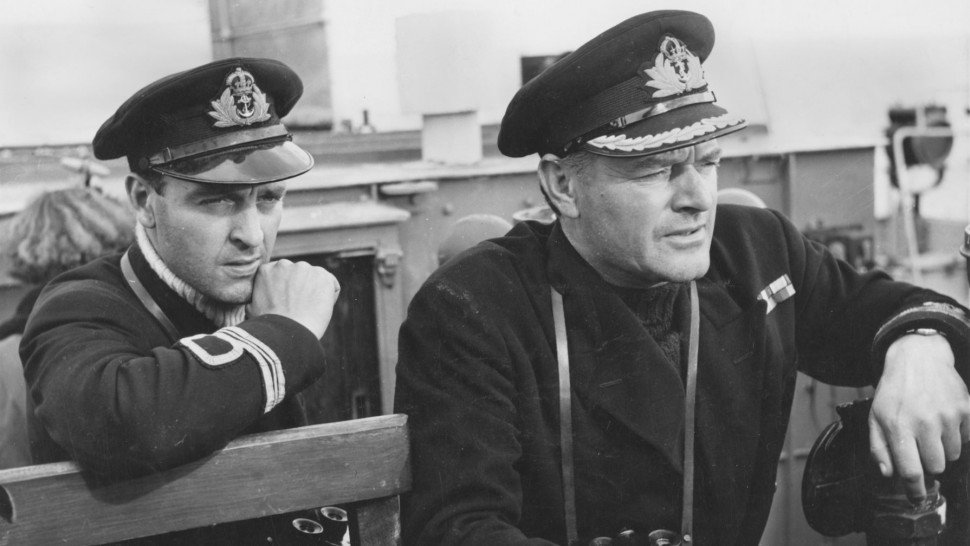
Still from ‘The Cruel Sea’ (1953)
STUART MILLSON revels in British film music at the Proms

It seems unthinkable that a Proms season in peacetime would have to be abandoned, but this is almost what happened last year at the height of the Covid pandemic. With much-reduced orchestras – their players spread widely across an extended Royal Albert Hall platform in order to preserve social distancing – the BBC resolutely produced a Proms 2020, but with the stalls, arena, gallery and boxes of the great Hall empty. The Prommers had to content themselves with listening to the skeleton season on Radio 3, or watching the proceedings on BBC Four television. But it was better than nothing.

This year, audiences returned, but on the basis that concertgoers showed evidence of a double Covid vaccination, or a negative test for the virus. And even then, the famous Proms queues, the pre-concert drinks, atmosphere and general buzz of the season – little of what we understand by this remarkable and long-established music festival existed.

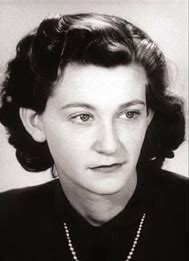
Doreen Carwithen (Mary Alwyn)

On the 2nd September your reviewer ventured into London to enjoy a Prom given by the 60-strong BBC Concert Orchestra, possibly the most versatile orchestra to be employed by the BBC – covering the classical repertoire (often lighter or more recondite works); show music and the songs of theatreland; and even touching upon jazz and pop. For my evening, the BBC CO conveyed its audience through the Odeon doors and into the world of British film music, beginning with Doreen Carwithen (real name, Mary Alwyn) and her overture to the 1954 film, The Men of Sherwood. What a good choice: asplendid curtain-raiser which immediately lifted the spirits of the 2,000 people present; the music immediately taking everyone away from their Covid concerns and back into a world of Lincoln green and derring-do. Carwithen’s overture was reminiscent of her better-known Suffolk Suite, an effective piece of scene painting – with rhapsodic evocations of the English landscape mixed with trumpets and brass, as men of valour meet in combat on battlements.

The programme notes for the evening tended to be a little sniffy about the quality of the film – underlining the point by reproducing the original theatrical poster from the time, and referring to “scrappily-drawn faux mediaeval title cards” and “an illuminated manuscript of the lowest wattage”. A trifle harsh, perhaps – given the general good intentions of the film-makers, who in those days at least tried to celebrate our English past. In fact, there is much reassurance in the mythical country evoked by the props and artwork on the 1950s. In our age of political correctness, it is encouraging that such images should have been dusted down and brought out before an audience.

Similar notions of the countryside and olde England were also found in one of the major items on the bill: Vaughan Williams’s Three Portraits from the England of Elizabeth, the result of the composer’s collaboration with nationalised British Railways. Just as the travel poster was used in the 1930s to inspire holidaymakers to head for the ‘Cornish Riviera’ or the breathtaking Lakeland, the 1950s embraced the technology of the in-house film unit – the perfect opportunity for composers to earn money quickly (instead of waiting for an orchestra to include their new work in a Festival Hall programme). And so, Vaughan Williams’s style – a gracious blend of Tudor-infused tone-painting, with the echo of the village green never far away – proved to be the ideal accompaniment to British Transport’s public information films. Yet played on their own in the concert hall (with the listener, perhaps not even aware of how they were commissioned or written), the ‘Three Portraits’ could very easily have been a short, long-lost folk symphony by Vaughan Williams.

Alan Rawsthorne, William Alwyn and Malcolm Arnold were also dominant figures in the film industry and it was fascinating to hear – live – Rawsthorne’s dark score to The Cruel Sea (1953) which starred Jack Hawkins and told the story of the Battle of the Atlantic. Rawsthorne is hardly ever played these days in his own native Britain, the Second Piano Concerto surfacing, perhaps, every 30 years at the Proms. It is high time for a re-evaluation of this masterful composer, capable of bringing a psychological sense of sea warfare and the limitless ocean into a conventional British war film.

Is there a tendency for film music to be bitty? Not so, in the case of William Alwyn’s truly large-scale symphonic contribution to the 1947 Carol Reed production, Odd Man Out – the tense, anguished story of an Irish nationalist (named Johnny McQueen) injured, and on the run through the mean streets of Belfast. Again, here is an example of music that could easily have been the first movement of a symphony: Alwyn conceiving large, heavily-woven expanses of ideas – with much complicated development, instead of simply relying on a simple, repetitive theme for the film-goer. A satisfying span of gripping, tragic proportions.

Peter Cushing in ‘The Skull’

The most avant garde work of the evening was the Elisabeth Lutyens score for the 1965 Peter Cushing film, The Skull, made in 1965. Not afraid to produce haunting sounds, by using modernist techniques, Lutyens could almost be described as an English (female) Bela Bartok. A strange, disjointed, disharmony at the edge of tonality brings to life the occult world of Peter Cushing’s obsessive character, Dr. Christopher Maitland – the Proms programme editor finding a marvellous still from the film: Cushing staring into the eye sockets of the Marquis de Sade’s skull.

Finally, a complete change in mood – the BBC Concert Orchestra bringing the house down with the skittish score by Malcolm Arnold for The Belles of St. Trinian’s: a dazzling, tongue-in-cheek, belly-laugh of an extravanganza, complete with shifty ‘Flash Harry’s’ furtive schemes (played to perfection by the great George Cole); and all the unleashed anarchy of the worst girls’ school in cinematic Britain (headed by the ever-so-slightly alarming Alistair Sim as ‘Miss Fritton’). Arnold had the rare ability to match the mood of so many productions, from war stories to comedies, but succeeding in everything he did because of his limitless, lyrical self-confidence, mastery of the orchestra, and refusal to see anything in conventional terms. It is possible to say that without Arnold’s dizzying, barrier-breaking sound-world – music that is the equivalent of a downing a treble gin and tonic in the company of the best British comedy actors of the ’50s – The Belles of St. Trinian’s might not have been the classic that it became.

The BBC Concert Orchestra marched us out of the Royal Albert Hall with a rousing film encore – again by Malcolm Arnold, the unforgettable Bridge on the River Kwai, with conductor, Bramwell Tovey, making sure that everyone clapped and whistled along to that famous evocation of parade-ground swagger and cheerful British heroism, ‘Colonel Bogey’.

England’s musical Shakespeare

Henry Purcell
STUART MILLSON gives a glimpse into the life of Henry Purcell

Henry Purcell (1659-95) is forever associated with the birth of opera (or masques) in England – works such as King Arthur and The Fairy Queen – the creation of semi-operatic scenic cantatas, like his music for The Tempest, and with expansive works for church and state, especially his odes for William and Mary and their ‘Glorious Revolution’ – and, later, funeral music of intense mourning for Queen Mary. Not all artists or musicians are celebrated in their lifetime, but Purcell was recognised as a great composer, ascending to the heights of achievement for his time – a reputation which enhanced the career of his younger brother, Daniel – also a composer. But it is in our own world that Purcell has truly come into his own: an unending stream of recordings, often in period-instrument form, from some of the greatest interpreters of baroque music, such as Sir John Eliot Gardiner and William Christie. For Denis Arnold, the renowned General Editor of The New Oxford Companion to Music, Purcell warranted not just a few paragraphs and a portrait, but three pages of musical description and discussion – another impressive measure of the man.

Jan van Kessel, ‘Personification of Music’

Purcell was the second of four brothers and followed an early career as a young chorister in the Chapel Royal of Charles II, enjoying the early Restoration flowering of art and music. By 1673, his angelic voice was no more, but his musical talents had made such an impression that he was appointed as the custodian of the King’s collection of instruments. He also became a composer-in-residence at Westminster Abbey, going on to succeed the great John Blow as organist.

Composers such as William Lawes wrote very much for the delight or diversion of the Stuart court; just half-a-century later, ‘serious’ music had emerged as a force to be reckoned with, especially in the theatre – as a form of art increasingly enjoyed by the wider society, with provocative political allegory never far from the surface. A perfect example is King Arthur (1691), with its libretto by John Dryden, which goes far beyond the boundaries of any conventional theatrical format – the story of the mythical warrior-king of the Britons, but with overtones of the contemporary struggle between the cause of James II (the rightful heir – but a Catholic) and the triumph of the Protestant succession, in the form of William of Orange. With its famous, ethereal patriotic air, ‘Fairest Isle’ – a slow, contemplative song sometimes extracted from the score and performed as a piece in its own right – Purcell emerges as a ‘composer-laureate’, long before the era of the national-composers of the late 19th and early 20th centuries, with their oratorios of ‘Blood and State’ (Parry) or ‘Banners of St. George’ (Elgar).

Purcell’s English mysticism is something we tend to associate with musicians of an epoch much closer to our own, such as Vaughan Williams with his Flos Campi or Five Mystical Songs, and Holst’s unchanging, unforgiving Wessex landscape of Egdon Heath. Purcell brings us into a markedly supernatural country, of charms and prophecies, and the extraordinary presence of a ghostly character, the ‘Cold Genius’ – a singing spirit of frost, ice and wasteland, brought to stuttering life by a shivering bass singer, accompanied in a curious pre-echo of 20th-century music by the icy, scratchy, toneless, guttural bowing of string instruments. Purcell was ahead of his time in other ways too –with the rumble of wind and thunder machines in The Tempest, and waves of scurrying strings suggesting a rushing tide about to break across the land – a scene straight from Benjamin Britten’s 1945 Suffolk opera, Peter Grimes (credited as the first great English opera since Purcell).

As a concertgoer or buyer of recordings, it is worth remembering your first experience of a particular work – and often more fun to replay that memory (or vinyl disc) and compare it to the many other versions which have proliferated in the intervening years. I first encountered Purcell’s Chaconne on a record-buying expedition in 1981, the work appearing on a Decca LP collection entitled ‘English Music for Strings’ – a 1968 recording made at Snape Maltings, with Benjamin Britten conducting the English Chamber Orchestra.

The Chaconne, or ‘Chacony’ as it is sometimes written, is an old dance-form, made up of variations (in Purcell’s piece, 18 in number) which flow effortlessly into one another, and founded upon what musicians know as a ground-bass theme (the deeper, more sonorous theme or tune that seems to underpin or “anchor” the whole work). Britten, a great admirer of Purcell, and of older English music generally, was immediately attracted to the gently-noble, faintly melancholic melody of the Chaconne, which had been preserved in a collection of Purcell manuscripts, stored in the British Museum.

Even with Britten’s modern string instrumentation and the rich reverberation it creates, we are transported in the first moments of the work to an England of 300 years ago – of lute- and viol-playing ‘people of quality’ at courts and country houses, of misty deer parks and an adjoining countryside of ancient steadings – and yet, despite the clear antiquity of the style, there is a universal essence to this music (very much like Bach) which somehow defies time. Readers may also enjoy the more authentic version of the Chaconne, performed by Canada’s Aradia Baroque Ensemble, which appears on the Naxos label, an interpretation that brings us the delicate, glassy, crystal feel of authentic baroque-era strings. The CD catalogues and Youtube brim with Purcell recordings.

This remarkable man, in charge of England’s musical formalities, was also fond of the occasional joke: listen, for example, to his Ode for the Birthday of Queen MaryCome Ye Sons of Art – to the section entitled, ‘Sound the trumpet’ and the line, “… the listening shores…” Something to do with all England listening for the word of its monarch, perhaps? Or a joke at the expense of trumpet-players, with the surname Shore – who had nothing to do in that particular section!

Pier Francesco Cittadini, ‘Vanitas – Stillleben’

Timelessness seems the very essence of Purcell, that shaper of national myth in music, a ghost who still comes back to life as the cold genius of our isle. It was the cold which brought about the composer’s untimely death in 1695: returning home late at night during a bitterly-cold November, so the story goes, it seems that he found himself locked out of his Marsham Street home by his wife of 14 years. And curiously, from then on, his country began to forget about him. The musicians and choristers of the Chapel Royal and Westminster Abbey honoured his passing in a great service of remembrance ; yet the decades and centuries that followed saw the virtual disappearance of his name. Perhaps it was only Britten’s rediscovery in the 1940s and ‘60s that brought Purcell back to life – a crusade assisted and added to by composer-conductor, Malcolm Arnold, conducting full-blown arrangements of the 17th-century composer’s works at a Proms concert in the late 1960s.1

What we can say with certainty is that the jibe made during the mid-19th century (principally by Germans), that England was “the land without music” was only partially true. We had simply forgotten about our own geniuses.

  1. Malcolm Arnold’s conducting of Purcell’s suite from Abdelazar is available via: https://www.amazon.com/Elgar-Concerto-Vaughan-Williams-Orchestra/dp/B000000TKX []

Cornysh, Campion, Dowland: England’s sweet songsmiths

STUART MILLSON dives into old English ‘ayrs’

There is a persistent idea that English music only really got going with Parry and Elgar, but four centuries earlier William Cornysh, Thomas Campion and John Dowland had possessed national and European reputations.

William Cornysh was one of England’s leading Tudor composers, gaining the attention and then patronage of that most difficult-to-please of monarchs, King Henry VIII. There is disagreement about the date of his birth, especially as he was christened with the same name as that of his father, also a musician, who, during the late 15th century was Master of Choristers at Westminster.

Cornysh (senior) was also a Gentleman of the Chapel Royal, to which institution his son gravitated and remained connected for nearly 15 years, from 1496. Choral scholars through the ages have marvelled at the treasures contained within the ancient manuscripts of sacred choral music, the Eton and Caius choirbooks, both containing important works by Cornysh; yet this is a composer who could also turn his hand to occasional and secular pieces.

Then, as now, music was considered an essential background to great events of state, and in 1520 Cornysh achieved a high-point of his career – embarking with his monarch upon a state mission across the English Channel, the famous meeting between Henry VIII and the King of France (François l) at the “Field of the Cloth of Gold”. Here, amid the ornate (but temporary) pavilions and awnings, Cornysh and his musicians of the Chapel Royal serenaded the monarchs and their entourages, whilst the latter engaged in their schemes, diplomacy, power-struggles and court gossip.

It is always remarked upon how that later 16th century composer, John Dowland, was the master of melancholia, yet in Cornysh’s Adieu, my Heartes Lust (a piece for four voices, typical of his style) we can find the essence of the yearning poet (in the English of the time), consumed for all his fretful, wintry waking hours in a state of emotional purgatory:

Adew, adew my hartis lust. / Adew, my joy and solace. / With dubyl sorrow, complain I must, / until I dye, I must, I must.

Campion’s England

Thomas Campion (1567-1620) achieved a great deal in his 53 years, despite an unpromising start: leaving Cambridge without taking a degree, and leaving Gray’s Inn without being called to the bar. However, in 1605, academic distinction eventually came, in the form of a medical degree from the University of Caen. He spent the rest of his professional life practising as a physician in London, and remaining a bachelor until his dying day.

Yet Campion remained drawn to the beating heart of his other passions, poetry and music. Writing in the shadow of the most famous poet of the time, Sir Philip Sidney, in 1602 Campion effectively produced a manifesto against “vulgarity” in poetry (Observations in the Art of English Poesie), decrying the act of “riming”. He also went on to publish a book of great interest to musicologists, a thesis on counterpoint – as well as many musical “ayrs”, masques and songs, and in 1613, to mark young Prince Henry’s death (King James I’s heir-apparent), the plangent Songs of Mourning. Campion’s work touched the spirit of the moment, in a country that was said to be distraught with tears and regret.

The beautiful part-song, Never WeatherBeaten Sail , with words by the composer, dates from the same year, and forms part of Campion’s First Book of Ayrs. For the man who decried “riming”, the piece has a beauty, simplicity – and rhyme – that makes it almost like (to our ears, today) a traditional hymn:

“Never Weather-Beaten-Sail, more willing bent to shore / Never tired pilgrim’s limbs affected slumber more…”

The two-and-a-half minutes of the song, as all good songs do, seems to reach out, in simple terms, to a lifetime’s experience and the need to grasp that last anchorage on our voyage: a vision of “Heaven’s high paradise…”, of the weary human being “with troubled breast” coming to that eternal shore, where the Lord will “take my soul to rest.” With music that never soars to too high a degree of emotion, Campion’s music nevertheless has much pathos, great beauty for its vocalists, and forms a benediction in miniature. It is a perfect moment for reflection on mortality, for all those who have set sail upon the mysterious voyage to one English composer’s safe harbour.

Dowland in Denmark

The Danish royal family of the late 16th century was a generous employer – John Dowland achieving the material gains which often eluded him in his native land. Yet despite his chagrin at later being excluded from England’s official high circles, due to his Roman Catholic beliefs, the composer’s life had been a full and productive one, with some time even spent in the service of Sir Henry Cobham, Ambassador to France.

With books of songs, psalms and lachrimae galore – some 20 pieces to each collection – Dowland can be viewed as one of the most prolific composers of his era. Perhaps, he can be een as one of the true founding-fathers, or presiding spirits of our music – an echo of which reached to the 20th century, when Benjamin Britten incorporated a theme by the composer in his Lachrymae for viola and orchestra.

To pick but one piece, Come again, sweet love doth now invite comes from his First Booke of Songs or Ayres, and can be performed either as a conventional lute-song, or expanded slightly into a piece for a small group of vocalists. Whether a melancholy discourse for one singer, the lute conjuring that sense of lonely winter twilight, or lifted into the realms of a madrigal (but still resonating regret and longing, sighing and soft tears), this short work is one of extreme delicacy. Yet as the work comes toward to its conclusion, Dowland repeats and re-emphasises the important lines from each of the (three) verses: “To see, to hear, to touch, to kiss, to die”. These are words that embody the soul of the composer, the essence of his age, and the character of the times to come in English music.

Orpheans of the fringes

STUART MILLSON celebrates Celtic composers

We tend to think of British music, and the landscape of the British repertoire, as belonging to English composers such as Elgar, Vaughan Williams and Britten. But it is not just bucolic, visionary southern English landscapes that have inspired great music.

The Welsh landscape is just as much a place of legend, poetry and long thoughts, and here another school of British music may be found and appreciated, of 20th-century romantics and romantic-modernists – Alun Hoddinott, William Mathias, Daniel Jones, Grace Williams, and Arwel Hughes. For Hoddinott, the Welsh landscape and Welsh lore provided huge sources of inspiration, although his work also included pieces that stood alone from ‘Welshness’ and demonstrated a pure, contemporary appeal, such as The Sun, the Great Luminary of the Universe. Mathias and Jones are known for their symphonies (Jones also achieving note as a prolific writer of string quartets), and Grace Williams for her Sea Sketches and Fantasia on Welsh Nursery Rhymes, but Arwel Hughes might be less familiar to music-lovers, certainly to an English audience. The time has now come to rediscover British music, to understand it through its Welsh, Scottish and Irish voices, beginning with the magnificent, and largely unknown, music of Arwel Hughes.

Arwel Hughes

Hughes was born in 1909, in the mining village of Rhosllannerchrugog, near Wrexham. Hughes’s background was shaped by family, by the kindness of a very musical elder brother, and by local nonconformist (Baptist) traditions. Yet self-containment need not be inward-looking, and it was clear that the young Arwel’s talents would propel him toward an academic musical career of the highest quality. His son, the conductor Owain Arwel Hughes, wrote of those early years:

My father was a highly-gifted keyboard player from a very young age, quite astonishing when one thinks of his upbringing as the tenth and youngest child of a mining family with no musical heritage whatsoever. He went to the Royal College of Music to study composition and organ, a courageous decision, not to say a huge financial burden considering his background

And what a step it proved to be for the young Welshman alone in London, as Owain Arwel explained:

My father studied composition under that musical giant Ralph Vaughan Williams, whose influence was profound not only as an inspiring teacher but also as a gentle, caring father figure…

Vaughan Williams was not the only luminary to influence Hughes; other tutors included Gordon Jacob (who arranged Vaughan Williams’s English Folk-Song Suite), and Gustav Holst. It was not long before the student from North Wales was absorbed into the English High Church musical tradition, as an organist and choirmaster at the Church of SS. Philip and James, Oxford. In 1935, the chance came to return to Wales in a role for the BBC, that of Studio Assistant at the Corporation’s offices in Cardiff – the prelude to a successful career that was to last until 1971, when Hughes retired from the post of Head of Music.

During that long span, Hughes devoted much time to championing his fellow Welsh composers, and this generosity of spirit may have interrupted his own progress as a writer of symphonic works. However, time was found in the evening to compose, and there is no doubting the natural inspiration and gift for momentum, mood and melody at the heart of Hughes’s wide output. It is also worth noting that this quiet and unassuming administrator (alongside his Welsh BBC colleague, the conductor, Mansel Thomas) gave us one of the country’s much-loved television institutions. Dechrau Canu, Dechrau Canmol was a Welsh programme devoted to community hymn-singing, and it was always Hughes’s desire to see music – religious, or otherwise – actively touch the hearts and daily lives of ordinary people. The formula was taken up by the English BBC and entitled Songs of Praise; it was fitting that the show should have been presented by that great Welshman, Sir Harry Secombe.

Possibly Hughes’s best-known piece is the highly-accessible oratorio, Dewi Sant (Saint David), commissioned as a Welsh contribution to the 1951 Festival of Britain. For soprano, tenor, baritone, chorus and large orchestra, the work begins with a flourish – “Praise the Lord for all of His saints/Praise the Lord for David our Patron…” Straightforward and a showpiece for a Welsh choir, the opening section then gives way to a meditative pastoralism, every bit as touching as the English masses and impressionism of Vaughan Williams or Howells:

Who’ll bring his sickle to the yellowing wheat and his scythe to the meadow at morn?
Who’ll come to burn the tares that choketh the rip’ning corn?

But there are also some blood-stirring lines for chapel-going Welsh patriots:

In Cymru’s vineyard the tree was planted; 
Fed were its roots with the blood of the martyrs, / Beneath its bloody branch is shelter, 
Find refuge and rest in the arms of the Saviour, 
For on this precious tree doth grow 
The leaves to heal the nation’s woe

The words for Dewi Sant were written by Hughes’s fellow countryman, the poet Aneurin Talfan Davies, and the work was first performed at that great shrine to Celtic Christendom, St. David’s Cathedral, Pembroke, in the July of that momentous Festival of Britain year.

Another well worked-out piece – finely-structured, again accessible yet with a deep saying – is the comparatively early Fantasia in A minor, for strings (1936). It is a piece of “absolute music” – music for music’s sake, although the Welshness is one of impressionism and shadow. The composition is immediately appealing: a quiet, slow introduction, and the gradual gathering of energy, to achieve the soaring, intense statement on strings to be found in Vaughan Williams’s Fantasia on a Theme by Thomas Tallis, in parts of Herbert Howell’s Elegy for Viola and Strings – or in the introspection of Britten’s Lachrymae for viola and strings.

More obviously Welsh themes appear in Hughes’s Owain Glyndwr (1979), Anatiomaros (“Great Soul”) (1943), his Prelude “To the Youth of Wales” from 1945, and an opera, inspired by folk legends, entitled Menna – a spirit in operatic writing, reminiscent of the English composer Rutland Boughton’s ancient Arthurian and mystical dramas, or of Delius’s Irmelin. Apart from the whole of Menna (which has received at least one studio performance by the BBC Concert Orchestra), all of the Hughes works mentioned in this article have been recorded under the baton of the composer’s son, conducting Camerata Wales and the Royal Philharmonic Orchestra, thanks to the innovative Swedish record label, BIS.

There is one stirring piece that has not, as yet, been recorded for posterity. Written especially for the Welsh Proms at St. David’s Hall, Cardiff (a concert series founded in 1986 by Owain Arwel Hughes), it is that national favourite – God Bless the Prince of Wales. A magnificent arrangement of a traditional hymn of praise to Wales and its Prince, Hughes conceived the work as a Welsh version of Jerusalem – something noble and heroic for a Celtic audience to sing at the end of their promenade concerts. With its evocations of “ancient mountains and lovely dales”, and the spirit of the people who dwell there, a nostalgia – or sense of hiraeth – fills the concert-hall. It is difficult to understand why the works of this pupil of Vaughan Williams and master in his own right should be so unfamiliar.

Alun Hoddinott

The inspiration for Wales’s other 20th century composers came from many different sources. For Alun Hoddinott (1929-2008), there was the lyricism of Welsh folk-music – idioms and archetypes incorporated into his sets of Welsh Dances (similar in spirit to Sir Malcolm Arnold’s English and Cornish Dances of the 1960s). He also set out to commemorate specific events in Welsh life, such as the Investiture of HRH The Prince of Wales in 1969. Three Investiture Dances were the result – a suite most definitely in the native style, but with a surprisingly dark-in-tone, slow central movement – which seems to take us into a strange, craggy region of mountains, Neolithic stones, and skies ruled by birds of prey.

Another composer from west of the Severn is Daniel Jones (1912-93), a remarkable man – friend of Dylan Thomas, wartime cryptographer, and the composer of 13 symphonies and eight string quartets. Jones did not self-consciously promote Welshness in his music, but rather produced his work as an artist who just happened to be born in Wales. An orchestral item of his was performed at the 1982 Proms, his Dance Fantasy, and I was able to obtain the composer’s autograph on the concert programme – Jones standing by the artists’ entrance, quite informally, at the end of the evening, genial, friendly and quite ‘everyday’ in his manner. Jones’s string quartets belong to the same sound-world as the chamber music of Britten or Tippett. They are brilliantly well-crafted, and yet seem to evoke mind’s-eye images of sea or landscapes in Pembrokeshire and west Wales.

Sir Edward German

One piece of music that is self-consciously Cambrian is Welsh Rhapsody by Sir Edward German, a composer born in England – but with Welsh blood in his veins – and originally known as Edward German Jones. He is, perhaps, best known for his lyrical light opera, Merrie England, but also gained considerable acclaim in his lifetime with music for many other plays; for coronation music for George V, and symphonies (one subtitled, The Norwich).

Now to the wild domains of Scotland, and Victorian and Edwardian high-romanticism. It fell to a Scottish composer, Hamish MacCunn (1868-1916), to create a musical world of drama and legend – MacCunn being, perhaps, the Sir Walter Scott of orchestral works and opera. MacCunn was one of the first students at the new Royal College of Music, which was founded by the future Edward VII, and opened in 1882, and his best-known work is The Land of the Mountain and the Flood, a piece of great melody, atmosphere and power. Just like Mendelssohn’s Fingal’s Cave, MacCunn’s scene-painting has an immediate fresh-air, open-air quality; with the drama and overwhelming presence of majestic natural forces flowing through his rich score. Scottish moorland, mountains, rivers, and shifting weather conditions are all felt in the overture, with a sense of Scottish clans, border raids, blood feuds and ancient folklore never far away.

Cecil Coles

Then there was Cecil Coles, who entered the Royal College of Music in 1907. Coles was influenced by Highland themes and landscape, and a number of years ago at the Proms, the National Youth Orchestra of Scotland performed his bright, energetic The Comedy of Errors. Coles served in the Great War, and actually became bandmaster of his regiment, but, like his English contemporaries George Butterworth and Ernest Farrar, he was killed, in his case whilst helping retrieve injured comrades by dragging them back to the British lines. Who knows where British music might have gone, and what works might have been created, had not the war cut down such talents?

Sir Hamilton Harty

Similar inspirations – landscape, longing, memory, history – but this time in the landscape of the island of Ireland, can be enjoyed in the Irish Symphony and tone-poems, With the Wild Geese and The Children of Lir by Sir Hamilton Harty, a charismatic conductor and composer, born in County Down in 1879. Again, the name – Hamilton Harty – is unfamiliar to modern concert audiences, although recordings by the National Symphony Orchestra of Ireland, and the Ulster Orchestra, have at least maintained his presence on CD. The muscular, immediately impressive styles of Berlioz or Tchaikovsky come to mind in the Irish composer’s assertive, call-to-arms, yet occasionally dreamy music. With the Wild Geese is especially intriguing, Harty’s wild spirits being the Irish soldiers who fought with the French at the Battle of Fontenoy in 1745, but whose spirits returned to the skies and lands of Ireland in the form of a flock of birds.

The great wealth of music and musical inspiration from across the British Isles is to be treasured and cherished, and yet it seems that apart from a few specialist music festivals, BBC Radio 3 and the occasional outing for one or two of the works mentioned, our composers and their works are largely unknown. Modern society’s obsessions with dissolving the past, living only for the moment, and our general, gradual journey into a malaise of self-doubt are all taking us away from the bedrock of our culture. Now, more than ever, we need to find again our national voices in art and music – to re-anchor and rediscover the music of the isles.

Classical Kent

Peter Warlock
STUART MILLSON searches for unjustly overlooked Kent composers

A recent release on an innovative recording label – with the somewhat obscure title, Heracleitus – brings a mysterious figure from 20th century music in this country into view. The CD from the recording arm of the English Music Festival, an organisation dedicated to the rediscovery of the musical traditions of this island, owes its name to an almost forgotten song by Peter Warlock, which receives its world-premiere recording in the disc (Heracleitus – songs by Warlock, Gurney and Butterworth, EMR CD036).

Peter Warlock (1894-1930) was perhaps one of the first English minimalists – or at least, a composer able to concentrate profound sensitivity and emotion into sparse and sparing spans of music.

Warlock is best known for his Suite, Capriol – based upon 16th-century airs and dances – and the slanting light of desolate marshland in the melancholic song-cycle, The Curlew; but in the song, Heracleitus, the listener encounters a timeless whisper from classical antiquity, set in an English mist, and reverently delivered by tenor, Charles Daniels:

‘They told me, Heracleitus, they told 
Me you were dead; 
They brought me bitter news to hear 
And bitter tears to shed; 
I wept, as I remembered, how often you and I 
Had tired the sun with talking and sent him down the sky.’
(W J Cory, 1823-92, after Callimachus (3rd century BC)

Warlock lived for a time in the north Kent village of Eynsford, which even today (despite traffic) is a reassuringly old-fashioned place, standing beside and fording the clear stream of the River Darent, overlooked by downland and willows. By a stroke of good luck, the M25 – which planners wanted to build through the Shoreham and Eynsford valley – went elsewhere, saving an idyllic landscape from noise and destruction.

E J Moeran, Warlock’s fellow composer and boon-companion

A blue plaque at the Eynsford High Street cottage which he shared between 1925 and 1928 with fellow composer, E.J. Moeran commemorates his time there – and by all accounts (“with the kitchen swimming in beer”) it was a jolly, bohemian existence, or perhaps too dissolute to sustain. Moeran – a man who seemed as Irish as he was English – even earned the name, “Jolly Jack”, and when not composing his Violin Concerto or landscape-inspired rhapsodies, shared his composer-friend’s propensity for ale-drinking. Legends abound of the Eynsford sojourn: a naked Peter Warlock, no doubt under the influence of the local brew, even rode a motorcycle back and forth through the village – to the amusement of fellow bohemians, no doubt, but probably to the consternation of the natives. When returning from London on the train, the Eynsford station-master was always ready to bang on the window of the carriage in which Warlock was travelling – thus waking the slumbering composer from his stupor.

Another of the composer’s north Kent circle was the curious figure of one Hal Collins. As Michael Trend noted in his 1985 book, The Music MakersThe English Musical Renaissance from Elgar to Britten:

… Hal Collins – also known as Te Akau – a part-Maori, who boasted a cannibal grandmother. Collins was an interesting man in his own right: he was an effective artist, as his woodcuts show, and also, it seems, a self-taught musician who once played a whole act of an opera from Tristram Shandy which he had in his head.

Yet a purity is found in Warlock’s music, at odds with the excesses – and darkness of his character (a darkness, emphasised by his strange, untimely, lonely death in a Chelsea flat in 1930): wistful phrases, beautiful and touching, yet slipping away into a feeling that the composer is longing for something unattainable. (Warlock wasn’t the musician’s real name – the composer abandoning his familial name, Heseltine, for a persona far more tantalising and provocative.) It was, perhaps, a natural thing for Warlock to have come to this Kentish valley. Neighbouring Shoreham was the home of the early 19th-century mystical and pastoral painter, Samuel Palmer. He and his followers loved the countryside and described themselves as “the Ancients”, often dressing in the mediaeval costume. The paintings – oddly modern, in their style – or at least, not entirely what one would expect of the early half of the 19th century – depict a mediaeval world of corn, twilights, harvest, rural-dwellers. A photograph exists of smiling Peter Warlock, tankard in hand, standing alongside members of the Shoreham Dramatic Society – the members in their rustic Robin Hood costumes.

English music is so often associated with scenes of rural Britain. As the inter-war Prime Minister, Stanley Baldwin, said: “England is the country, and the country is England.” Vaughan Williams wrote a Pastoral Symphony, in part, a response to the Great War; and a composer called Ernest Farrar (who was born in Lewisham in 1885 – some 10 miles from Eynsford) which in those days was a rural village by the River Ravensbourne) composed a suite of English Pastoral Impressions, the first movement of which suggests bells chiming in the distance, and a gentle dance on the village green – the music then subsiding into a dream sequence, as distant, watchful horn-calls evoke longing and memory. Farrar served in The Great War, his life ending on the Western Front in the last year of the conflict.

In the search for Warlock, other forgotten figures have emerged from the north-west Kent… Who, for example, has heard of John Veale (1922-2006)?  Veale was born in the suburb of Shortlands (famous for its 19th-century ragstone-constructed water pumping station, built in the style of a chateau) and a part of Bromley – once a Kent market town, but now known as the London Borough of Bromley. He composed symphonic works, and his Violin Concerto (which is reminiscent of William Walton) has been recorded by the Chandos label. Yet, just like the Cornishman, George Lloyd, Veale sank into complete obscurity during the time of the Second Viennese School takeover at the BBC during the 1960s and ‘70s; and was quite surprised in the early 1980s to have received a telephone call: “Is that the composer, John Veale?”

Just a couple of miles away in equally built-up Beckenham (although there are still village almshouses by St. George’s church), emerged another composer: Carey Blyton (a relative of the famous children’s author). Many will be surprised to know that Blyton wrote much of the early incidental music to the classic television sci-fi series, Dr. Who – haunting, abstract minimalist pieces, including a brief march-like interlude for the character of Brigadier Lethbridge-Stewart, an accomplice of the Doctor. In complete contrast is the composer’s Song of the Goldfish – a strange evocation of the fish’s existence in a living room bowl – and an adventure-tale Overture, The Hobbit (recorded on a British Light Overtures series by the Royal Ballet Sinfonia).

Villages just beyond the M25 – suburbs which were once villages themselves. Look carefully through the neat hedges and fragments of still-wild woodland that has managed to cling to life in our congested age: a legacy of music created by some of England’s most unusual artistic personalities remains… 

A gallop through English myth

John Gardner, 1917-2011

The Ballad of the White Horse by John Gardner. Hilary Davan Wetton conducting the BBC Concert Orchestra, City of London Choir and Paulina Voices, with Ashley Riches, baritone. EMR CD057

STUART MILLSON relishes a forgotten folkish treat

In the late 1950s, the English composer, John Gardner (1917-2011) – one of many forgotten or neglected figures of 20th-century English music – was introduced to G.K. Chesterton’s epic-verse, The Ballad of the White Horse. The poem tells the story of the Bronze Age chalk symbol etched into the Wessex downland at Uffington; and in folklore, forever associated with King Alfred, his Danish adversaries, and the fate or permanence of England itself. Disaster, if ever the horse should fade and disappear over the seasons and centuries into the grass and weeds of the hills…

Gardner’s English legend (first performed in Bournemouth) was completed in 1959 – the same year in which Britten’s St. Edmundsbury Fanfare was performed at a Magna Carta pageant in the county town of Suffolk. Clearly in post-war England – a land of municipal planning, still affected by the austerity of the war years, not to mention the national crisis in self-confidence following the Suez debacle – composers were subconsciously, perhaps, drawn to ancient tales of heroism and mystery. John Gardner was, indeed, attracted to an alternative vision of society: a ruralist circle, based in Dorset, presided over by a rustic magus – Rolf Gardiner, who proclaimed his belief that England could only revive through a pure, ancestral way of living “from the herb to the hymn”. His group, the Springhead Ring, had drawn together an array of people, determined to return to archaic agricultural methods and to restore the folk-traditions, the very music of England – and Gardner, for a time, assumed the role of composer-in-chief.

The White Horse at Uffington

At that time (almost like a mediaeval association), a Dorset Guild of Singers had come into being, uniting many different local choral groups, from the Isle of Purbeck to Corfe Mullen; and they seemed to provide a bridge between the communal retreat of Springhead and the wider cultural world – the Guild performing alongside the nationally-renowned Bournemouth Symphony Orchestra, whose conductor in those days was Charles (later, Sir Charles) Groves, a much-loved recording artist for EMI through the 1960s and ‘70s. John Gardner, therefore, had a ready-made choral and orchestral institution at his disposal, and he wasted no time in writing his Chestertonian ballad – ensuring that the choral writing would be ‘simple’ enough for non-professional choirs to rehearse and perform, but deep enough to appeal to a musical audience.

Charles Groves and his musicians liked the work and it was performed to some acclaim, but official tastes were changing in Britain’s arts and music establishment (particularly at the BBC). Continental modernism was in the ascendant – dancing on the village green was out. So it was a remarkable find, when the English Music Festival’s recording arm, EM Records, re-excavated John Gardner’s White Horse from the weeds and from obscurity – setting down a fine and thoughtful performance on CD, with the City of London Choir and the BBC Concert Orchestra under the baton of English music specialist, Hilary Davan Wetton.

Mr. Davan Wetton has already proved himself as a rescuer of lost scores, taking rare ballads by Gustav Holst to the Hyperion record label, with the Philharmonia Orchestra – and there is some stylistic similarity between the Holst pieces and Gardner’s ballad. And yet the latter composer’s work seems to escape definite comparisons with the work of others – the Dorset revivalist eschewing the tankard-in-hand style of a typical throaty ballad and taking the listener, instead, to a lost world of downland mists: of harp and wind instruments setting a long-ago atmosphere – of brass summoning men to arms at Ethandune – and at the end – after the defeat and baptism of the Dane, Guthrum – an uncertain, dark prophecy for England. In the low registers and fading of the music, there is a feeling of dark clouds gathering, far, far away over the ridges and trackways – but gathering, nonetheless.

The performers on this superb EM Records issue cannot be faulted: the BBC Concert Orchestra, clearly relishing the progress of Alfred and his men, and enjoying the many interesting harmonies, dramas and shadows in this surprising score. There is a plain beauty, too, especially in the fifth section, entitled, The Harp of Alfred – the sort of touching, nostalgic tune in which English composers, led by Elgar and Vaughan Williams, excel. The City of London Choir (and Paulina Voices, from the St. Paul’s School, where Holst once taught) – and baritone, Ashley Riches – sing superbly well throughout this epic work, which runs just short of 50 minutes.

The CD also gives us a wider insight into John Gardner’s work, with the inclusion of his English Ballad of 1969 – a work which, in its concluding climax, romps and roars along; gaining extra acceleration from the unexpected leaping-in of an electric guitar player. Just like fellow-composer, Malcolm Arnold – who in 1969 championed the uniting of classical music and rock in Jon Lord’s Concerto for Group and Orchestra – Gardner showed an equal commitment to music in which different genres and worlds could mingle.