Classical Kent

Peter Warlock
STUART MILLSON searches for unjustly overlooked Kent composers

A recent release on an innovative recording label – with the somewhat obscure title, Heracleitus – brings a mysterious figure from 20th century music in this country into view. The CD from the recording arm of the English Music Festival, an organisation dedicated to the rediscovery of the musical traditions of this island, owes its name to an almost forgotten song by Peter Warlock, which receives its world-premiere recording in the disc (Heracleitus – songs by Warlock, Gurney and Butterworth, EMR CD036).

Peter Warlock (1894-1930) was perhaps one of the first English minimalists – or at least, a composer able to concentrate profound sensitivity and emotion into sparse and sparing spans of music.

Warlock is best known for his Suite, Capriol – based upon 16th-century airs and dances – and the slanting light of desolate marshland in the melancholic song-cycle, The Curlew; but in the song, Heracleitus, the listener encounters a timeless whisper from classical antiquity, set in an English mist, and reverently delivered by tenor, Charles Daniels:

‘They told me, Heracleitus, they told 
Me you were dead; 
They brought me bitter news to hear 
And bitter tears to shed; 
I wept, as I remembered, how often you and I 
Had tired the sun with talking and sent him down the sky.’
(W J Cory, 1823-92, after Callimachus (3rd century BC)

Warlock lived for a time in the north Kent village of Eynsford, which even today (despite traffic) is a reassuringly old-fashioned place, standing beside and fording the clear stream of the River Darent, overlooked by downland and willows. By a stroke of good luck, the M25 – which planners wanted to build through the Shoreham and Eynsford valley – went elsewhere, saving an idyllic landscape from noise and destruction.

E J Moeran, Warlock’s fellow composer and boon-companion

A blue plaque at the Eynsford High Street cottage which he shared between 1925 and 1928 with fellow composer, E.J. Moeran commemorates his time there – and by all accounts (“with the kitchen swimming in beer”) it was a jolly, bohemian existence, or perhaps too dissolute to sustain. Moeran – a man who seemed as Irish as he was English – even earned the name, “Jolly Jack”, and when not composing his Violin Concerto or landscape-inspired rhapsodies, shared his composer-friend’s propensity for ale-drinking. Legends abound of the Eynsford sojourn: a naked Peter Warlock, no doubt under the influence of the local brew, even rode a motorcycle back and forth through the village – to the amusement of fellow bohemians, no doubt, but probably to the consternation of the natives. When returning from London on the train, the Eynsford station-master was always ready to bang on the window of the carriage in which Warlock was travelling – thus waking the slumbering composer from his stupor.

Another of the composer’s north Kent circle was the curious figure of one Hal Collins. As Michael Trend noted in his 1985 book, The Music MakersThe English Musical Renaissance from Elgar to Britten:

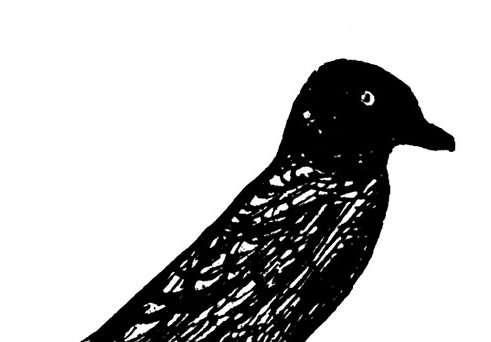
… Hal Collins – also known as Te Akau – a part-Maori, who boasted a cannibal grandmother. Collins was an interesting man in his own right: he was an effective artist, as his woodcuts show, and also, it seems, a self-taught musician who once played a whole act of an opera from Tristram Shandy which he had in his head.

Yet a purity is found in Warlock’s music, at odds with the excesses – and darkness of his character (a darkness, emphasised by his strange, untimely, lonely death in a Chelsea flat in 1930): wistful phrases, beautiful and touching, yet slipping away into a feeling that the composer is longing for something unattainable. (Warlock wasn’t the musician’s real name – the composer abandoning his familial name, Heseltine, for a persona far more tantalising and provocative.) It was, perhaps, a natural thing for Warlock to have come to this Kentish valley. Neighbouring Shoreham was the home of the early 19th-century mystical and pastoral painter, Samuel Palmer. He and his followers loved the countryside and described themselves as “the Ancients”, often dressing in the mediaeval costume. The paintings – oddly modern, in their style – or at least, not entirely what one would expect of the early half of the 19th century – depict a mediaeval world of corn, twilights, harvest, rural-dwellers. A photograph exists of smiling Peter Warlock, tankard in hand, standing alongside members of the Shoreham Dramatic Society – the members in their rustic Robin Hood costumes.

English music is so often associated with scenes of rural Britain. As the inter-war Prime Minister, Stanley Baldwin, said: “England is the country, and the country is England.” Vaughan Williams wrote a Pastoral Symphony, in part, a response to the Great War; and a composer called Ernest Farrar (who was born in Lewisham in 1885 – some 10 miles from Eynsford) which in those days was a rural village by the River Ravensbourne) composed a suite of English Pastoral Impressions, the first movement of which suggests bells chiming in the distance, and a gentle dance on the village green – the music then subsiding into a dream sequence, as distant, watchful horn-calls evoke longing and memory. Farrar served in The Great War, his life ending on the Western Front in the last year of the conflict.

In the search for Warlock, other forgotten figures have emerged from the north-west Kent… Who, for example, has heard of John Veale (1922-2006)?  Veale was born in the suburb of Shortlands (famous for its 19th-century ragstone-constructed water pumping station, built in the style of a chateau) and a part of Bromley – once a Kent market town, but now known as the London Borough of Bromley. He composed symphonic works, and his Violin Concerto (which is reminiscent of William Walton) has been recorded by the Chandos label. Yet, just like the Cornishman, George Lloyd, Veale sank into complete obscurity during the time of the Second Viennese School takeover at the BBC during the 1960s and ‘70s; and was quite surprised in the early 1980s to have received a telephone call: “Is that the composer, John Veale?”

Just a couple of miles away in equally built-up Beckenham (although there are still village almshouses by St. George’s church), emerged another composer: Carey Blyton (a relative of the famous children’s author). Many will be surprised to know that Blyton wrote much of the early incidental music to the classic television sci-fi series, Dr. Who – haunting, abstract minimalist pieces, including a brief march-like interlude for the character of Brigadier Lethbridge-Stewart, an accomplice of the Doctor. In complete contrast is the composer’s Song of the Goldfish – a strange evocation of the fish’s existence in a living room bowl – and an adventure-tale Overture, The Hobbit (recorded on a British Light Overtures series by the Royal Ballet Sinfonia).

Villages just beyond the M25 – suburbs which were once villages themselves. Look carefully through the neat hedges and fragments of still-wild woodland that has managed to cling to life in our congested age: a legacy of music created by some of England’s most unusual artistic personalities remains… 

Home learning

PETER KING says that houses are not machines, but ‘organisms’ animated by us

I was lying in bed one morning, with no plans other than to roll over. It was too early to get out of bed, and I had nothing to get up early for. As planned, at 7.00am the heating system clicked into life with its distinctive rumble and low hum. Usually, this is a comforting noise, suggesting that things are working as they should. Except that they did not continue to work as they should on this particular morning. The low hum was replaced by a clang as if someone had dropped their tools on the landing, and then a loud bang. There was still a humming but louder and more insistent and with an ominous edge to it. There was also a smell of burning. The heating pump had burnt out after more than 20 years of consistent use. We turned the system off and arranged for an engineer to call to replace the pump, which duly happened the following morning. The repair was straightforward and took barely an hour. However, what had become clear to me was that there were things in our house that we could not control and could not maintain ourselves. There are any number of complex machines in our house that we rely on, that we expect to work reliably and constantly.

Le Corbusier, theorist of the house as machine

Naturally when one considers the idea of machines in this context one’s mind goes to Le Corbusier’s statement that ‘A house is a machine for living in’. This is a notion that I have always found abhorrent, with its emphasis on both uniformity and conformity.

Quite simply, we just do not see our house like that. When we consider the nature of the specific place where we live what stands out is its distinction. It is definitively different from those around it, even if the external appearance is very nearly indistinguishable. We never mistake our neighbour’s house for our own regardless of how similar it might look. A dwelling is always particular to those using it. Its use is always specific and not interchangeable. Our dwelling is not there simply to sustain us – although it must do that – but it acts too as a repository for our life experience and as a store of memory. While on a utilitarian level, any dwelling of a certain level of amenity would suffice, in practice we want something specific and we make it so.

Our dwelling is then a place that contains machines, but it is not a machine itself. We might see it as an assembly of machines, but again it is not merely this. We have to add to this assembly our memories, relationships (past and current), habits, eccentricities, and so on. These are the things that we use our dwelling for. They are the essence of what dwelling is and what the machines are there to serve.

A machine is something that can transmit force. It is powered in some way. But in what way is our house ‘powered’? There is no obvious power source (as opposed to what powers the machines within it). Our house does not move. It appears to be in stasis and as such it might be the very opposite of a machine.

But I want to suggest that dwelling does have a motive power. But it is not a quantifiable one. We can explore this by positing an alternative metaphor, namely that of the organism. We can define an organism in a number of ways. We can see it as a living being, as a distinct thing. But we can also see an organism as a system consisting of interdependent parts. As a living being an organism is contiguous and complete. But it is made up of a number of interdependent elements all with their prescribed function. This makes it sound like a machine, but there is an important difference. Unlike a machine, an organism is something whose motive force comes from within and not without. It is animated from the inside and does not depend on an external power source. So an organism, like a machine, can be seen as a complex or network of things. It too has a material structure with defined parts. But what animates the organism comes from within and is already part of us.

Like the machines in our house some parts of us must be in continuous use. We cannot turn them off and remain a viable being. We can appear to be largely idle, when we are at rest or asleep, but some of our core functions, such as digestion, respiration, heart function, must continue on. These are involuntary, automatic and outside of our conscious control. They operate without our direct involvement. The same applies to our unconscious mind. We cannot control our dreams. We cannot stop them from bursting into our heads, confusing and confounding us, perhaps even in frightening us. There are, so to speak, programs always running in the background, which we cannot control and which we would struggle to inhibit.

It is in this way that we can see our house as an organism, as having a number of systems that appear to work independently and outside of our direct control. It might be argued that we should only take this metaphor so far. Unlike our breathing, we can turn the systems in our house off. We can turn up the heating if we are cold or increase the shower temperature. This is certainly true, and we should be careful in not overusing our metaphors. But we also need to add that, while we can turn machines off or alter their use, we still need them. There is a cost in turning them off and it may be fatal, just as if some of our core bodily functions cease to work. A metaphor need not be exact to be helpful to us.

Where the metaphor is helpful is with relation to the issue of power. What is it that powers an organism? As I have suggested, it is this that differentiates an organism from a machine, and it is this facet that makes the organism a better metaphor for dwelling that the machine.

One way of looking at this issue, is the idea of animation. While a dead body of a loved one looks familiar, it is clear that there is something really significant missing: it is familiar, but it is not the same as the person we knew and loved. In some way the body appears to be empty. There is then something that appears to animate us. This can be seen as a life force that turns us from simple matter to a living being. We might be able to measure this life force, in indirect ways through pulse, brain wave patterns, respiration and so on, but this is not the force itself. It is not what gives us life, what gives us a mind. This is what distinguishes us most from a machine. It is also what distinguishes dwelling from the machine. A dwelling comes alive become it is inhabited by something that appears to give it volition and purpose.

An inanimate object can only do as it is bid. It can either work in the prescribed manner or not at all. It always does the best it can. It can do no other. It has no will and nor is it prone to mood swings and tantrums. It may appear temperamental, but this will be perfectly explicable in mechanical terms. A machine will work until it is turned off or breaks. The inanimate is implacable and cannot be reasoned with. There is no contingency, no variety or diversity in its operation. An object is functionally transparent.

Martin Heidegger, who believed we ‘humanised’ objects by using them

As Martin Heidegger has suggested, what animates the object – what gives it its spirit – is our use of it. In his book, Being and Time, Heidegger refers to the idea of objects as equipment. We turn it from an object to a tool, into something that is not only ours but, for as long as we use it well, part of us. In his famous example Heidegger talks about a carpenter using a hammer. This is an old and now familiar tool, and the carpenter is undertaking an action – hammering in a nail – that he had done countless times with this tool. Heidegger states that the hammer becomes transparent to the carpenter’s consciousness. It, as it were, becomes part of him, an extension of his will. It is, to use Heidegger’s jargon, ready to hand. But were the hammer to break it would become unready to hand and appear to the carpenter as present to hand. In other words, it becomes visible as an entity distinct in itself.

The jargon here may be clumsy – at least in English translation – but what Heidegger points to is that we use objects as extensions of ourselves incorporating them into our motives and aspirations, such that we literally do not notice them. And this is indeed how we act with all those things we use every day. We find we have driven home from the office without really noticing the route we’ve taken, because we do it every day. We don’t focus on the chair we are sitting on while we are eating, and we do not notice the machines working away in the background keeping us warm and providing us with hot water and light.

Indeed, our lives would not be recognisable if we had to focus specifically on every object we were using rather than on our objectives. Much of what we have around us are means – things for us to use – rather than ends. They are present to do a job for us, but in such as manner as not to be noticed. Many of the machines in our house have been devised precisely so we do not have to engage directly with them. They are made to work instead of us, and often to work in a way that is hidden from us. They are programmed to turn on and off and are placed away from us, so we do not have direct and regular contact with them.

In this sense, it might appear that these objects lack meaning in that we do not directly animate them, and certainly it is the case that we relate to them differently. They remain, as it were, strangers to us. However, these machines are in constant use and they perform crucially important tasks such as heating, light and supplying constant hot water (which is why they are preprogramed and automatic). Their meaning is necessarily implicit. They are the necessary background or framework on which our conscious lives depend. When these machines break, like the central heating pump, we are brought up short and made to think about the complexity of dwelling. The object is unready and most definitely present to us.

We can no longer ignore all those things hidden behind doors, walls and kept in inaccessible parts of the dwelling. But just as the heart and lungs are integral to us, so are these machines to our house. That we do not have to think about them is precisely the point. We are dependent on them, but this dependency does not have to made explicit. They remain tools just as much as those objects we active pick up. We use them and this use makes them opaque.

A machine can only be animated by our use of it. This is not to give it life as such, but to share our life with it, to make it part of it for as long as we need it, and it works as we wish it to. We take the machine and use it – and only this gives it meaning.

Work with Joy – Rawnsley, Ruskin and the Keswick School of Industrial Arts

Hardwicke Drummond Rawnsley at Crosthwaite
ROSALIND RAWNSLEY pays tribute to a great idealist and reformer

Hardwicke Drummond Rawnsley is usually thought of today, a century after his death, as one of the three founders of the National Trust, or, in Lakeland in particular, as the Defender of the Lakes. The National Trust, it is true, remains his most tangible memorial, but his active involvement in a multiplicity of other fields, made of Canon Rawnsley a household name during his lifetime, not just in the field of conservation – but also in education as an early advocate of co-education and equal opportunities for girls, and in the encouragement of music, nature study and the arts; in public health, local government (he became one of the first County Councillors for Cumberland and towards the end of his life was co-opted onto the Education Committee for Westmorland) and literature, to name but a few of his wide-ranging concerns. Rawnsley was what today would be called an ‘activist’ – to any of the many and varied causes which captured his interest, he would devote his wholehearted attention, leading from the front wherever possible and whenever his ecclesiastical duties permitted.1

Born at Shiplake-on-Thames into an ecclesiastical family with its roots in Lincolnshire, Hardwicke, in spite of uncertain health throughout his life, was an indefatigable man of phenomenal energy and stamina. He would think nothing of tramping several miles across the fells during the night to see the sun rise over Helvellyn, catching a train to London after breakfast the next morning to attend a meeting, and returning home in the evening to deal with his correspondence or to prepare a sermon. No theologian, but a devout man of simple faith, he was much sought after as a preacher. He was blessed with a melodious voice, which he used to advantage not only in church but as a lecturer on a wide range of topics which interested him, ranging from the history, customs and archaeology of his beloved Lakeland, the influence of the Vikings, the German miners of Keswick in the time of Elizabeth I, to the archaeology of Palestine and ancient Egypt and the paintings of J.M.W. Turner, or the life and work of the Venerable Bede, and of course the application of John Ruskin’s philosophy of labour. He did however sometimes allow his vivid imagination to run away with him, and was not above reinventing history to suit his purpose. 

Rawnsley never stood on his dignity, getting on famously not only with the great-and-good, whose deep pockets could be relied upon as a source of funds for his various causes, but also with the Lake District shepherds and dalesmen. He made a study of the Lakeland native breed of Herdwick sheep, an interest he shared with his good friend and protegée Beatrix Potter, who herself in later life became a famous breeder of Herdwicks, and in more than one of his books about Lakeland he wrote knowledgeably about the upbringing and particularities of the breed. Somewhat choleric at home and in Committee, he could be rash and impatient with those who disagreed with him and his impetuosity not infrequently got him into trouble, but he was never afraid to apologise when proved to be in the wrong. To any cause capturing his interest he would not just lend his name, but would invariably be an active participant, always leading from the front. 

John Ruskin

Hardwicke Rawnsley was educated at Uppingham under the enlightened rule of his godfather Edward Thring, who introduced him to the Lake District and to the poetry of William Wordsworth, who was to become his poetic muse. From Uppingham he went up to Balliol, where he became an enthusiastic and life-long disciple of John Ruskin, whose ideas of social justice he wholeheartedly embraced and endeavoured to put into practice throughout his life.  

After university he volunteered as a lay chaplain to a mission to the poor in Soho, during which time he became acquainted with Octavia Hill, the social reformer, who was herself a disciple of John Ruskin. They remained friends thereafter and some 20 years later, in company with Sir Robert Hunter, would together become co-founders of the National Trust for Places of Historic Interest or Natural Beauty, since abbreviated to The National Trust.  At Balliol, having neglected his studies in favour of athletics and the river, both areas in which he excelled, Rawnsley, achieved only a respectable Third in Natural Science. He made up his mind to follow his father and grandfather into the Church, was ordained deacon in 1875 and was appointed Curate to the newly-formed Clifton College Mission in Bristol. 

A prolific writer, Rawnsley published innumerable ‘occasional’ sonnets, having been introduced to what became, under the guidance of Charles Tennyson Turner, a family connection, his favoured verse form. Unfortunately for his reputation as a poet, he did have a fatal facility for sonnet-writing, which proved to be his undoing in this field at least, since he would dash off a sonnet at a moment’s notice on whatever topic occupied his attention at any given time. As a result, the poetic quality was, to say the least, variable. However, it has recently been realised that in the absence of any surviving diaries, Rawnsley’s sonnets – especially his first published book of verse, Bristol Sonnets – prove to be an invaluable primary source of information about his life and personal feelings.2

His literary output over the next 40-odd years, published on both sides of the Atlantic, extended far beyond verse, encompassing biography, pamphlets, magazine articles, papers for learned journals, innumerable letters to the press including at least 160 to The Times, memoirs, lectures, sermons, and ten books devoted to the Lake District, its scenery, history, literary associations and customs. The lyrical writing in these volumes, to a certain extent intended as early ‘guide-books’ to Lakeland, has seldom if ever been equalled, and never surpassed.

Marrying into a wealthy mine-owning family, Rawnsley became financially independent of his ecclesiastical stipend, as Vicar first of the tiny parish of Wray-on-Windermere, in the gift of his cousin who had inherited Wray Castle, and thereafter of Crosthwaite in Keswick. (He was later appointed a Canon of Carlisle Cathedral and an honorary Chaplain to King George V.)   

At Wray, Hardwicke and his wife Edith, herself a talented artist and craftswoman, recognised the precariousness of the lives of many of their parishioners, seasonal farm labourers, laid off during the winter months.  For these men, idleness led not only to poverty but also to boredom, to relieve which they would all too often resort to the pub, as Rawnsley had also found to be the case among the poor of Bristol. In the spirit of Ruskin, the Rawnsleys decided to offer lessons in woodcarving, a Lake District traditional craft in danger of dying out. These classes could not only provide an occupation to keep the beneficiaries at home, but also give them a new skill by which they could earn a competence during the winter months. When the Rawnsleys left Wray to take up the living of St. Kentigern, Crosthwaite and moved to Keswick in 1883, the classes in Wray were discontinued, but the seed had been sown. 

The Rawnsleys, as convinced Ruskinians, and in accordance with Ruskin’s teaching that, “Art is the expression of man’s delight in the works of God”, wanted to put into practice what they understood to be Ruskin’s philosophy of labour. In his influential work The Stones of Venice, Ruskin, through a close study of the architecture of that city, made it clear that, to him, the secret of its incomparable beauty lay in the hand-work which lovingly created it – the balconies, in which each element, taking inspiration from nature, was individually wrought by a master craftsman, using as his materials the hand-cut stones and hand-made bricks which comprise materials used for the buildings and palaces. No two are identical, but all bear what Ruskin described as a “family likeness”. He pointed out that objects, when hand-made, fit for purpose, and without any superfluous embellishment, have an intrinsic charm and attraction of their own which no mass-produced item, however well-made, could ever emulate.3

Rawnsley at Balliol, 1872
Edith Rawnsley in 1874

All Ruskin’s thoughts and reflections on this subject were distilled and synthesised in the eight volumes of Fors Clavigera. This series of open letters addressed “to the Workmen and Labourers of Great Britain”, appearing almost monthly from 1871 to 1884, taken together afforded Ruskin with a device for a philosophical exploration of various aspects of work and its conditions in England. Labour was a topic close to Ruskin’s heart – when Rawnsley had come under his influence at Oxford, soon after Ruskin had been appointed to the chair of Fine Arts at the University, ‘The Professor’ had recruited a team of undergraduates, of whom Rawnsley was one, to build a new road for the people of the village of Hinksey, an exercise which Ruskin deemed would provide a suitable antidote to their usual diet of athletics and beer, and teach them the value of manual labour. The ‘Hinksey Diggers’, immortalised in an early photograph, and much ridiculed in the contemporary press, represented an early exercise in ‘public relations’ long before the term was invented. Ridiculed or not, the lesson was not wasted, on Rawnsley at any rate who, as a sensitive and impressionable young man, was later to put Ruskin’s philosophy to effective practical use in the Keswick School of Industrial Arts.

The Hinksey Diggers, 1874 – Hardwicke Drummond Rawnsley is leaning on the spade

Returning to Fors, as Clive Wilmer in his commentary on the work remarked, while the letters are indeed concerned with labour, their subject is work viewed through the lens of human destiny, the Fors or ’Fortune’ of the title, being she who holds the key to the future of mankind. (Perhaps in the midst of the current pandemic, through which Gaia seems to be at last wreaking vengeance on mankind for destroying the planet, ‘Gaia’ should have usurped the title!)4

All forms of labour are seen as rooted in nature and having a common purpose – that of promoting the wealth that is life, rather than simple existence from day to day, from hand to mouth. “There is no wealth but life”, as Ruskin proclaimed in Ad Valorem, the fourth of his essays on Political Economy in Unto This Last, the title being a reference of course to Christ’s parable of the workers in the vineyard.

Happiness, in Ruskin’s model, a model incidentally shared by his good friend Thomas Carlyle, does not depend upon making as much money as possible in as short a time as possible. Money, per se, should not be an end-in-itself, but only a means to a higher end, and payment should be geared to need, rather than to desert.

As Ruskin’s biographer, John Batchelor, makes clear, in an ideal world there would be no place for competition – no market forces – no laws of supply-and-demand – no industrial capitalism. This idealistic philosophy was diametrically opposed to the ideas of Adam Smith and John Stuart Mill (Ruskin’s particular bête noir), for whom the sole purpose of labour was the generation of wealth, which in turn, it was to be assumed, would increase the overall happiness of nations.5

England in the third quarter of the 19th century, through the efforts of the newly-enriched and powerful entrepreneurs, had become the wealthiest and most powerful nation on earth and the first to become an urban rather than an agrarian society. Yet at the same time, for much of the population the norm continued to be a life of grinding poverty, starvation and injustice. This paradox was not wasted on Ruskin. He laid the responsibility for this state of affairs squarely at the door of the industrial revolution. Men were no longer in touch with the land and with nature; they no longer gained inner satisfaction from working with their hands to create beautiful or functional objects, from the conception to the finished product. Instead the majority had become mere cogs in the wheels of industry – mechanical ‘hands’ on a production line. They had ceased to be individuals, happy in the joy of creation.

In his writings, Ruskin urged the socially conscious middle-classes to put the clock back by restoring to nature the urban wastelands which they themselves had created. Perhaps the new-rich individual with a social conscience would be in a position to put into practice Ruskin’s exhortations, but for the urban man-in-the-street this must have seemed a vain hope and an idealistic philosophy, impossible actually to put into practice. Those who do not have enough to eat do not have the time, leisure or inclination to engage in philosophical reflection.

Rawnsley in 1885

It was in reaction to this state of affairs, and drawing on Hardwicke’s experiences in Mission work in Soho and Bristol, that the Rawnsleys, building upon the work they had already carried out at Wray with the woodcarving classes, decided during the winter of 1884 that the time had come to put into practice some of Ruskin’s ideas about the dignity of labour. Ruskin had taught that for work to be enjoyable the worker must not only learn new skills, but he must at the same time have some autonomy and control over the task in hand – a notion completely at odds with the modern and more cost-effective factory system, where each man was employed to carry out one single repetitive task on a production line.

No doubt actively encouraged by Ruskin, who now lived conveniently close at hand at Brantwood on the shores of Coniston Water, the Rawnsleys wasted no time in setting up classes in woodcarving and metalwork. These classes were financed by local ladies, who paid to attend classes in the Parish Room in the afternoons, so that the classes for working men could be held in the evenings, free of charge. Woodcarving was taught by a local artist and designer, and Edith Rawnsley, who had taught herself to do metal repoussé, took charge of the metalwork classes. In this she was aided by a talented jeweller from the vicinity, she herself providing many of the designs. And so, the Keswick School of Industrial Arts (KSIA) was born. It was an immediate success, owing, as Ian Bruce observed in his magisterial history of the KSIA, to “the careful selection of instructional material and tuition”, and grew rapidly in size and scope. After two years, some 30 students were attending full time, rising to 67 after four years, with many more attending the evening classes. Every finished article remained the property of the school, with the student who had created it receiving part of the proceeds when it was sold.6

After only a few years of activity the School outgrew its makeshift temporary premises; better workshops and a showroom were essential. Accordingly, by the late 1880s, fund-raising for the erection of purpose-built premises had already begun. The money was raised with astonishing rapidity; in 1891 land was acquired on the banks of the River Greta in the centre of Keswick, and the first turf was cut in May 1893. The attractive building, in Arts and Crafts style, reflecting Westmorland vernacular architecture and featuring the round stone chimneys on square pedestals which Wordsworth had so appreciated, with a traditional ‘spinning gallery’ providing access to the showroom on the first floor, was largely built of various types of native slate-stone. The new School, with workshops adorned with improving quotations from Ruskin and others, was opened in April 1894 with considerable ceremony, though Ruskin himself was not well enough to attend. Ruskin’s philosophy of labour was encapsulated in the couplet, inscribed underneath the spinning gallery, and undoubtedly composed by Hardwicke himself:  The Loving Eye and Skilful Hand shall Work with Joy and Bless the Land.

The Carlisle Journal on 6th April 1894 reported that a particular feature of the new building was a collection of art objects and models, designed to constitute a museum of reference for art workers. A library well-stocked with reference works, displayed gifts from artists including William Morris, who presented specimens of printing by the Kelmscott Press, self-portraits by Holman Hunt and G.F. Watts, later to be joined by others promised by William Morris and Walter Crane. Since observation from nature was a key element of the teaching at the School, the grounds were planted with trees, shrubs and flowers. As Ian Bruce recognised, the school “embodied the ideas and philosophies which underpinned the idealised communities envisioned by the proponents of the Arts & Crafts movement.”

From its earliest years, even before the opening of the new building, the School flourished, making a wide range of products in silver, copper, and wood, such as trays, candle sconces, bowls and vases. In the woodcarving department, tables, screens, corner cupboards and clock-cases were produced. All were individually hand-worked and finished, to point up the contrast between these lovingly created objects and the soulless factory-made, die-cast products then flooding the market. Good design was of course vital, and this became even more important as the School, with its growing reputation, began to attract special commissions, often for church furnishings such as altar crosses, chalices, alms dishes, candlesticks, and so forth. One of the School’s most important commissions was for a new reredos for Rawnsley’s own Crosthwaite Church, designed by Edith and worked by her with craftsmen from the School.  She also designed elegant copper electroliers for the church and for the new Keswick Museum building, all of which were made at the KSIA and are still in use today.

The reredos at St. Kentigern’s church at Crosthwaite, designed and worked by Edith Rawnsley

In addition to metalwork and woodcarving, another local craft which had almost died out was the hand-spinning and weaving of linen. This had first been revived by Albert Fleming, another disciple of Ruskin, who with Marion Twelves, had set up the Langdale Linen Industry. Miss Twelves and her team of ‘spinsters’ had eventually moved ‘over the Raise’ (a reference to Dunmail Raise, now the A591, a mountain pass that connects the southern and northern sides of the Lake District, the main route through the centre of the Lakes) and became for some years amalgamated with the KSIA before differences of opinion between Miss Twelves and Edith Rawnsley resulted in the amicable separation of the two enterprises. Miss Twelves, yet another follower of Ruskin, then set up her own linen manufactory, which with his permission she named the Ruskin Linen Industry. Apart from beautifully worked items in what she called ‘Ruskin Lace’, a form of embroidered lacework incorporating different types of stitching and cutwork, two of the most publicised of the items produced by Marion Twelves and her team were the unbleached handwoven and embroidered linen palls, designed by Edith Rawnsley, for the funerals of Tennyson, the Poet Laureate, in 1892 at Westminster Abbey, and for John Ruskin eight years later. Ruskin’s pall is still on display in the Ruskin Museum at Coniston.

Many thousands of items were produced by the Keswick School of Industrial Arts during its century of existence, and are now much sought-after, commanding high prices. Unfortunately, however, in the end the KSIA became the victim of its own success. Increasing demand meant that orders could not be fulfilled without resort to the introduction of some mechanised processes. The range of goods was simplified; products in stainless steel which could not be entirely made by hand, were introduced and proved very popular, and in spite of the best efforts of the Trustees and management committees, changing tastes and the effects of two World Wars finally caused the School to close a few weeks short of the hundredth anniversary of its foundation. The fatal flaw of Ruskin’s philosophy of labour was embedded within it from  the start – as long as the enterprise remained small, with only a limited production, hand work from the drawing board to the finished product by a single craftsman as an ideal could not be faulted, but in practice, as the organisation grew, it simply was not commercially viable, and Ruskin’s principles had to a certain extent to be jettisoned, for the business to survive.

Today, in spite of various vicissitudes including serious flooding on more than one occasion, the attractive KSIA Arts and Crafts building, now a restaurant, still stands – a monument to the vision of the School’s founders, Hardwicke and Edith Rawnsley, and to John Ruskin, who inspired them.

Rawnsley, photographed by Herbert Bell (Courtesy of Armitt Centre)

Ruskin, in Ad Valorem, wrote:

There is no wealth but life. Life, including all its powers of love, of joy, of admiration. That man is the richest who, having perfected the functions of his own life to the utmost; has also the widest helpful influence, both personal, and by means of his possessions; over the lives of others

If Ruskin’s dictum is accepted, Hardwicke Drummond Rawnsley was a rich man indeed.7

  1. Rawnsley, E.F. – Canon Rawnsley []
  2. Rawnsley, H.D. – A Book of Bristol Sonnets. Ruskin & The English Lakes []
  3. Ruskin, J. – The Stones of Venice, Unto This Last, Fors Clavigera []
  4. Wilmer, Clive – John Ruskin: Unto This Last and other writings []
  5. Batchelor, John, John Ruskin: A Life []
  6. Bruce, I. – The Loving Eye and Skilful Hand – The Keswick School of Industrial Arts []
  7. Carlisle Journal 6th April 1894 []

Deep mapping the imagination

DAVID UPTON looks to the future of psychogeography

Artists, academics, eccentrics, the flippant, the deadly serious, those with a plan and those without one, cluster around psychogeography like politicians round a fake news story, anxious to use it for their own objectives, or just to have a good time. It was largely with the last option in mind that I set up a psychogeographical group, the Strand Strollers, in 2017. (I was doing an MA at King’s College in the Strand at the time, hence the name.)

Psychogeography is a term coined in the 1950s, probably by the Situationist International, a group of artists originating in France, or by the Letterists, a similar group. (Several people, such as Guy Debord, were members of both groups at different times.) Much has been written about what the word meant then and means, or should mean, now. In my view, the originality of the first psychogeographers was simple. They walked, and they invented a series of techniques for choosing and directing their own attention. These have been concisely described (1) as:

the dérive (a free urban exploration on foot, in which the practitioner allows herself to be guided by the city’s ambiances), the détournement (a kind of culture jamming avant la lettre, in which cultural products are subverted and weaponized as a means of ideological sabotage), and the construction of situations – temporary site-specific ‘performances’ that aimed to unify art and everyday life

The broad purpose of these techniques has been much discussed, but it seems to be to help yourself to see things with new eyes, to discover unseen patterns and inter-relationships.

Ever since then, small but significant numbers of people have been using these techniques, most often the dérive. They have been used by writers such as Iain Sinclair or Will Self, by occultists such as Julian Vayne, by Marxists and other political groups, by local groups campaigning for a specific purpose, by oral historians, by artists, and by people who just wanted to have an interesting walk with good company.

Close to the path of every psychogeographer as they walk lies the rabbit-hole of Theory, down which many fall. PhDs abound. Debord himself seems to have talked far more than he walked. Neologisms are coined, similarities exposed and rejected, philosophical and political positions staked out. There’s a relative mountain of literature, in the byways of the internet, on social media, and the web sites of individuals. As Tina Richardson, herself one of the leading and most interesting British theorists says, “the objectives for walking are over-determined”. (2)

The idea of the Strand Strollers was to walk, not to theorise. It became necessary after I attended the 4th World Conference of Psychogeography (4WCOP) in 2017 in Huddersfield. [3] We heard some talks and went on some fascinating walks, and I was hooked. I could find nothing comparable ‘down south’. So, shortly after starting at King’s, I put up a few ‘Strand Strollers’ flyers on college notice boards, spoke to people in the geography department and elsewhere, opened a Facebook group, and sat back to wait. About 40 people joined the Facebook group, quite quickly: they came from all over, with only a few from King’s. I had messages of support from other groups.

Planning our first dérive was a matter of choosing between many options. King’s is in one of the oldest parts of London, rich in associations past and present, busy, a mass of contradictions, and it was just – well, there. People temporarily not at home pay huge prices for theatre tickets, whilst people with no homes sleep in the Embankment Gardens or on the night buses. Nearby is one of the few surviving cabmen’s shelters in London, and an 18th century fake Roman Bath; underneath the Philosophy Faculty is an abandoned Tube station, where George Formby performed during the Blitz to raise morale. Students now come to King’s from countries all over the world, especially from those with a high Gini coefficient. It has a massively decorated Victorian chapel on stilts. It’s fashionable, there are some clever people there, and there are lots of authentically middle-class cafes.

We walked using some old maps of the area – dating from 1578, 1677, and the 19th century. A settled world was torn apart during the 19th century: Waterloo Bridge and its new approach roads were opened in 1817, completely changing traffic patterns on the river bank. By 1860, the second upheaval: the Victoria Embankment was built. The banks of the Thames once sloped down gently to the river, amidst a growing amount of raw sewage. So bad was the ‘Great Stink’ of 1858 that Parliament considered moving to Oxford, but instead built the Embankment, with a sewerage system and an underground railway below it, and a new road and some pleasant public gardens on top. For the first time the Thames had a wall, and became a place to promenade rather than to avoid.

As a result, the maps changed a lot. Some of the street shapes have survived. The road in front of the LSE is still there: but where the LSE stands now, politically unaware sheep once bleated. There are mysterious survivals: a long narrow flight of steps that no longer go down to the water’s edge, a traffic island with a huge church perched uncomfortably on it, its windows looking as though they have not been cleaned for a century or more. Walking, we found the remains of a lonely party; a man dreaming on a bus; people living their lives below pavement levels. Size of group: me plus one other. Not bad for a first attempt.

Our second dérive was very different. Commuting through Waterloo station, it occurred to me that everyone there was either rushing through (to reach a particular place as quickly as possible) or standing still (waiting to find out where to rush.) Could we use psychogeographic techniques to influence time? If we walked very slowly indeed (neither rushing nor standing still), would our perceptions alter?

Preliminary photographic reconnaissance convinced me they would. If you photograph people walking using a time exposure, they look very different. Feet stay briefly in one place, then move quickly to another for another brief stay. The feet show whilst the rest is a blur. Slow the exposure down even more, and faster walkers disappear altogether. It’s as though the speed with which the camera perceives alters what it perceives. Does this happen to humans also? If so, can we control what we experience by controlling our speed of seeing?

We billed this as ‘the world’s shortest dérive’. It was short in distance only, since a typical distance was about 70 yards, walked in 45 minutes. This translates to one short step every 30 seconds. Two other Strollers, both Italian, turned up at Waterloo station at the height of rush hour. We chose our short routes carefully, to avoid crossing major flows of human traffic, and set out on our journey into time.

However stupid you may feel at first, no-one else notices. Your rhythm is too slow for them to see you. They are all rushing to be somewhere by a deadline, or else they are standing still waiting for something to happen. The important thing is to keep walking, however slowly: then you are setting your own time, and not following anyone else’s.

You quickly begin to feel happy at the slow speed. Time ceases to be important. Boredom does not set in. On the contrary, you start to notice how the girders that support the station roof have not been painted for a long time, how a deflated Christmas balloon is still hanging from one of them. Waterloo is full of clocks, so timing your short steps is easy, just demanding enough to keep your mind from rambling.

People who are standing on the path you are trying to follow, move out of your way a long time before you reach them. You stop worrying about collision avoidance. Travellers on the concourse below trace out strange patterns, flowing off the concourse like water down a drain. Each of them is an individual consciousness with their own thoughts and experiences. The station is crackling with brainpower on the move. Someone down there has had the best day of their lives; someone else is depressed and fearful for the future. Most are thinking of where they want to be in an hour’s time. There is a constant flow, almost all in one direction, until the rush hour starts to weaken. You, however, are out of this, in your own time and space. It does not seem like 45 minutes have elapsed when you decide to stop.

My next experience was not with any Strand Strollers, though I did my muggle best to persuade someone else to come with me. Treadwells, a London esoteric bookshop, advertised a workshop on occult psychogeography, to teach “the art of transforming one’s experience of everyday world into something rich and strange”, promising “several occult methods for encountering the spirits of place, and a range of techniques for re-enchanting your own landscape”. I felt it my duty to go, albeit with some trepidation.

There were 15 of us, initially in the basement of Treadwells, some more nervous than others. Three of us were quasi-academics schooled in the Situationist/‘materialist’ strand (me included, I suppose) and at least three people seemed to have had no encounter with either psychogeography or occultism before. Two were training to be London Tour Guides. To my relief I found no wild-eyed sorcerers. I think there were a few sorcerers, but they were not wild-eyed. For the record, I should add that there were only passing references to psychedelic drugs, and none to Crowley, and no goats were sacrificed.

What struck me most of all was the similarities between what the occultist, Julian Vayne, was doing and what the Strand Strollers did. True, before our walk, we all lay on the floor for a short guided meditation. Then we held hands and performed a ritual invocation (if that’s the correct term – but this was just four synchronised breaths and what seemed very like saying grace before a meal.) As we started we were ‘smudged’ with incense. Then off we went for a walk round Russell Square and a few other places. Julian had a repertoire of techniques for distracting your vision: look for simulacra, or reflections, or edges; follow a particular colour. Walk in a physically different way, or carry an object, or make a noise as you walk.

Some of his more interesting techniques were designed to expand our sense of agency, of contributing to the place, rather than just being a passive spectator. For example, say hello to things, find ‘points of intervention’. We made a few slightly self-conscious gestures, like holding hands in a circle in a public park. Julian pointed out that making small changes can have a greater effect than you imagine, and emphasised that we should actively work on ourselves and our own perceptions:

be amazed at the magic of everyday. Pay enough attention that when the miraculous happens, you notice it

My worst mistake was to call a Strand Strollers’ dérive in February. Dutch psychogeographer Witold van Ratingen gave an inspiring talk to 4WCOP about a ‘smell walk’ – where you are led as much by your nose as anything else. Covent Garden, with its colonnades and arcades and its restaurants and shops, seemed to offer as many smells as anywhere else near to the Strand, so I picked a date and wrote it up on the Facebook group. After all, one of the few documented Situationist dérives was in les Halles, and Covent Garden, which also used to be a working wholesale market, is perhaps the London equivalent.

Despite this illustrious precedent, it turned out that I had picked the coldest night of the year, with a particularly heavy snow fall. No-one else was stupid enough to turn out. Secondly, I had not realised that smells do not seem to transmit through very cold air. Even if they did, no-one eats outside and restaurant doors are closed.

I turned the dérive into a solitary photographic expedition – that is, I took a few pictures and went home feeling foolish. Shortly thereafter, I got my MA from King’s and started further studies at Goldsmiths College, in New Cross. Partly because the second course was much more like hard work, and also because the New Cross area has few authentic middle-class cafes, I have not organised any dérives through the Strand Strollers since. However, once the position on COVID is clearer, I intend to start again.

Two issues have arisen over the last five to ten years, with associated technical developments, which may profoundly affect the practice of psychogeography in the future. First, psychogeography is all about going somewhere unexpected: but what do you do when you get there? Do you make ‘interventions’ as you walk? Do you expand your sense of agency?

Guy Debord envisaged creating ‘situations’ in places, but does not seem to have done so very often. As psychogeographers, we are more concerned to avoid polluting the environment, whether with plastic bottles or extraneous influences. We go there, we look, we absorb, and some of us go away and write about our experiences. As already discussed, Julian Vayne uses occult techniques to contribute to places (prayer, gestures, invocations). But trying to leave your mark, on the place or yourself, is a fringe activity in mainstream psychogeographic practice. You could argue that psychogeography is a technique for having a fresh, open encounter with life: whereas creating ‘situations’ involves at least one person imposing their will or preconceptions on others. If you use Google Maps to see what is nearby, for example, you will see local restaurants advertising. Ethically, it is perhaps wrong to alter places. Banksy’s art involves some great détournements, but what if I paint something crude on a beautiful building? People have very different ideas of what constitutes an improvement.

Julian Vayne invited us to form pairs, and then, in turn, for one person to blindfold the other and lead him carefully for a few steps before removing the blindfold. If you could find a different environment within a few paces (e.g. go from a green space to an enclosed court), you could achieve a real sense of surprise in your partner. This seems a more acceptable intervention: you do not alter the environment, and, although you work on your partner’s perceptions, you only do so using what is available.

Perhaps it was in this spirit that oral historian Simon Bradley gave some performances during dérives at the 4WCOP. Bradley is not primarily a psychogeographer: he is interested in the process as an adjunct to oral history. However, his PhD thesis [4] contains some interesting techniques and links for what he calls “displacement activities”.

Defining ‘deep mapping’ as “anything imaginable that can be associated with a place”, Bradley defines (4) displacement activities as

performances of deep mapping that operate through ‘juxtapositions and inter-weavings of the historical and the contemporary, the political and the poetic, the factual and the fictional, the academic and aesthetic depth’ […] One-dimensional understandings of locality are détourned by combinations of oral history, sound art and theatrical intervention. A prime methodological directive of displacement activities is to unearth every possible level where displacements may be operating, finding and exploiting fissures occurring in monistic, fixed, representationalist, or metahistorical characterisations of place. Displacement activities are a form of opportunistic bricolage designed to extend co-presence and elicit response in an ongoing exchange within and between people, voices and sites

Bradley studied and enacted translocational mappings between two distant sites that refer to each other. The “Giotto tower” built in 1899 as a dust extraction chimney for a mill in Holbeck, Leeds, proved to be based on the original campanile in Florence, built in 1334-1359, partly by Giotto. Bradley conceptualised these related towers as a “wormhole” between the two sites, notionally allowing sounds or directions from the one to interact as part of a dérive in the other. (There’s an interesting piece of software, MAPfrappe, at http://mapfrappe.com/about.html; this allows you to view two maps, and will automatically overlay a route drawn on one map on to the other, in the same scale. So you could walk “around the Palazzo del Duomo” in Holbeck, or “around Globe Road Hunslet” in Florence.)

Locative technology allows you to “embed” sounds or words in the landscape: your smartphone can then play them when you are at a given GPS location. Bradley used this to embed one of his own sound pieces into the landscape. Embedding using GPS does not involve actually leaving anything there: it could be done by using a ‘pointer’ on Google Earth, as many businesses now do, or by writing code to respond to the coordinates. Augmented reality applications can be set to identify and respond to any distinctive shape. A well-publicised use of embedding is Pokémon Go, a game in which players find virtual characters at a real GPS location; these can be viewed on a screen and offer limited interaction as if they were really there. According to Wikipedia, by early 2019, the game had over a billion global downloads and grossed more than $4 billion in revenue.

I tried out Echoes (https://echoes.xyz/echoes-creative-apps), a partly free app which allows anyone to select areas bounded by GPS points, and link each area to a sound file. The ‘walk’ I tried simply played a sound file of ducks when I stood in a certain area.  This was a very limited ‘walk’, but it’s clear that some sound artists are building geolocative practices around this app (for example Giovanna Iorio – https://explore.echoes.xyz/profiles/giovanna-iorio). There may be great possibilities here one day, as the technology improves and creators start to use it imaginatively.

Geomap is another piece of software which allows you to create tags on a Google Map, which you can click to take you to commentary, sound files, images or information. See, for example, A Different Lens by psychogeographer Sonia Overall and others. (https://cgeomap.eu/adifferentlens/) This enables you to walk around Margate calling up commentaries and thoughts.

A simpler and more temporary version is simply to use a QR code, say in the form of a sticker which is temporarily placed at a location. Using a barcode reader on your phone calls up a website. (see my own ‘artistic intervention’ on a memorial to the poet Blake, at https://www.codedwalls.com/wblake). The sticker is carefully placed not to cause damage, and will soon wash away.

I have reservations about many uses of geolocative technology: it is used by museums who want to guide me patronisingly through their collections, scripting a ‘high-quality’ standardised tourist experience that still leaves me enough time to visit the gift shop. This is known as “the experience economy” (5).  Psychogeography should be about seeing new things for yourself, rather than seeing what an invisible organising voice wants you to see. But this technology is now available, and it’s up to us to use it in creative and improving ways.

A second set of technical developments involves communication between walkers. These technologies have been around for some time, but the COVID 2019 outbreak has brought them to psychogeography. The 2020 4WCOP, looking ahead to a summer of lockdown, looked for methods to conduct multi-person dérives remotely, linking people who were distant from each other.

I was able to try four of these over the conference weekend. In each case the participants walked alone, in different places, but were linked by social media. Most people were in the UK, but some took part from places as far apart as the US or India. 

These dérives are a two-way flow of information. The organiser provides basic directions or ‘prompts’. These may be a direction to follow (e.g. ‘right’, ‘down’). They may be something to look for, or a general theme (“visions and dreams and imagining the future that we want”). It may also include other targets (“can you see evidence of extra-terrestrial influence? What can they teach us?”) or general guidance (“look for […] where beckons you in, or keeps you out”) In one case no guidance was offered; the premise of the walks was that you would go with a dog and let the dog lead you, comparing notes over social media (your account, not the dog’s.) The participants then post comments, images, thoughts, or sound recordings, just as they would chat during a physical walk.

Systems used vary. One was conducted on Twitter using a hashtag and the @name of the organiser. One was conducted on Whatsapp, though it also posted instructions to a blog and encouraged participants to share their thoughts on a Facebook group, and/or on Twitter with a tag and an @name for the group, as well as Whatsapp. One was solely on a Facebook group. The fourth involved signing up through EventBrite, which then provided basic instructions, and encouraged users to post photos on Flickr.

Once in and connected, I found it difficult to follow the conversations. Twitter cases, for instance, were conducted partly by replies to existing tweets and partly by new tweets. These are presented separately, and it is not easy to follow the exchanges chronologically or to see a discussion as a unit. The Whatsapp group was better, since everything is in chronological order on the same screen. However, this group, which is well-established and meets regularly, generated over 450 postings in a couple of hours. New to it, I found myself scrolling back and forward to find the prompts amidst the chatter, to see what I had to do next.

A group on Facebook was much smaller: it had 22 members, not all of whom seem to have taken part, and there were 20 postings, plus about a dozen comments made on individual postings.

The group that started on Eventbrite and ended up on Flickr produced about 200 images in an hour (eight of them my own). The images did not seem to be organised in any way, eg chronologically, and there were few comments. It would be possible to transform all of these sets of comments into a coherent narrative after the event, but this does not emerge obviously from the raw data.

I am still not sure to what extent participants who do not already know each other are united by these groups.  I knew perhaps 5% of the other participants in these virtual dérives, even if only through speaking to them on the telephone or in virtual conferences. Some coherent conversations emerged, e.g. about the weather. (During one dérive, it was raining heavily in some parts of the UK, but not in others.) One feature I photographed and commented on attracted four comments, others were ‘liked’. However, I was far too busy to like or comment on what other people had done.

It took a while to get used to the etiquette of posting. The exchanges are polite and supportive, although largely solipsistic: this is what I saw, what I felt, what it made me think of. There is also, I think, an element of self-presentation in most of them. I was conscious in my own postings

  • of a need to conform with the ‘rules’, or at least to respond to the ‘prompts’ rather than be seen to have missed the point
  • to show photographs that presented my environment in certain ways, and make comments that seemed ‘interesting’.

As Bame and Boyd pointed out [6], in

our social media productions people actively construct identities, over time, influenced by the media, the broader contexts within which they use them, and their personal proclivities. People are strategic … and can be very aware of how they use these media

However, virtual or semi-virtual dérives will become more commonplace and the technology will improve, to offer some intriguing possibilities. This is something else the Strand Strollers may try out. One possibility may be to have a less intense dérive that lasts two or three days.

Thanks to geolocative and communications technologies, we may be facing a Copernican revolution in psychogeography, the biggest changes since that first evening Debord, Bernstein and Vaneigem may have spent in a wine bar near Les Halles, realising they had got something, but not at all clear what it was.

The Strand Strollers will be back on the streets shortly, with some new ideas and maybe new technology, but with a strong emphasis on walking rather than writing theory.  We will haunt nice middle-class cafes and interesting London pubs, once they reopen. Feel free to join us on   https://www.facebook.com/groups/1918925755026459

Author’s Notes

  1. Van Ratingen, Witold, 2017: The New School for Social Research, Department of Liberal Studies, MA Thesis. Accessed on http://particulations.blogspot.com/2020/10/conclusion-of-walking-inside-out.html, November 2020
  2. Richardson, Tina: October 2020, “Conclusion of Walking Inside Out”, blog post, accessed  on http://particulations.blogspot.com/2020/10/conclusion-of-walking-inside-out.html in October 2020
  3. The 4th World Congress of Psychogeography, known to its friends as 4WCOP: see https://www.4wcop.org. I attended the 4WCOP in 2017, 2018, 2019 and 2020. It is always the 4th Conference: next year’s will never be the 5th
  4.   Bradley, Simon, “Archaeology of the Voice: Exploring Oral History, Locative Media, Audio Walks, and Sound Art as Site-Specific Displacement Activities”, Doctoral Thesis, University of Huddersfield, Music, Humanities and Media.  Available on https://www.academia.edu/24778938/Archaeology_of_the_Voice_Exploring_Oral_History_Locative_Media_Audio_Walks_and_Sound_Art_as_Site_Specific_Displacement_Activities, accessed November 2020
  5.   A thorough account of how the word ‘experience’ is used in a marketing context, and elsewhere, is at Caru, A and Cova, B, 2003: “Revisiting consumption experience:A more humble but complete view of the concept”, in Marketing Theory, volume 3(2), available (behind a paywall) from https://journals.sagepub.com/doi/abs/10.1177/14705931030032004 , accessed November 2020
  6.   Nancy K. Baym & Danah boyd (2012) “Socially Mediated Publicness: An Introduction”, Journal of Broadcasting & Electronic Media, 56:3, 320-329, DOI: 10.1080/08838151.2012.705200: To link to this article: https://doi.org/10.1080/08838151.2012.705200 . Accessed November 2020

From cold winds to white heat – the Britain that was

Winds of Change: Britain in the Early Sixties, Peter Hennessy, Allen Lane, 2019, 603pp

STEPHEN GARNETT is reminded of a time when Britain faced challenges with hope

It was on 3rd February 1960 that UK Prime Minister Harold Macmillan spoke to the South African parliament in Cape Town, famously warning them that “The wind of change is blowing through this continent”. Having led the Conservative Party to election victory in 1957 following the resignation of Anthony Eden over the Suez crisis, Macmillan – 1st Earl of Stockton and a veteran of the Somme – had been victorious again in October 1959, increasing the government’s majority to 100 seats. The party had campaigned under the slogan “Life’s better under the Conservatives”, citing a strong economy, low unemployment and a rising standard of living.

However, even as he made that speech, just a few months after the country had voted for him, the popularity of Macmillan and his government was already on the wane, with an increasing number of people in the country questioning whether a 66-year-old, tweed-suited Edwardian who packed his Cabinet with fellow Old Etonians was the right man to lead Britain into the 1960s. At the same time, developments in the UK, Europe and the USA were setting daunting challenges that would force Macmillan to brace himself against winds of change much closer to home. Many of these would be storm-force, rattling venerable national institutions, uprooting many of the old certainties of post-war Britain, and blowing and tossing the ship of state in directions that he was powerless to control.

Tony Benn inspects ‘the white heat of technology’

In this third part of his trilogy, which follows Never Again: Britain 1945-51 (1992) and Having it so Good: Britain in the Fifties (2006), Peter Hennessy paints a vivid picture of the country, its government and people at a time of great social change. At the centre of it all is Harold Macmillan and his attempts, through what he called his ‘Grand Design’, to reposition the country so it could prosper economically and continue to play an important part in world affairs. In terms of GNP Britain lagged far behind Germany, Italy, France and the Netherlands, and Macmillan’s top priority was to take the country into the EEC (then comprising six member states) with all the benefits for trade that joining the increasingly influential bloc offered. He also viewed a strong EEC – with Britain a key player – as an essential bulwark against the expansion of communism, then regarded as a threat both economically and militarily. The author allows us to eavesdrop on the Cabinet meetings, and subsequent Parliamentary debate, in which Macmillan put his case for opening negotiations, with much discussion about the effect membership would have on British agriculture, on our relations with the Commonwealth and on national sovereignty.

Of course, it wasn’t only the Cabinet, Conservative Party, Opposition and, ultimately, 50 million Britons that Macmillan had to convince: the great barrier to UK membership was the resident of the Elysée Palace. French president Charles de Gaulle opposed British membership for a variety of reasons. Our history as a maritime nation with strong trading links to the Commonwealth and our very different agricultural sector made us incompatible and a potentially destabilising and divisive influence. He did not want to risk France losing her dominant position in the bloc. He was suspicious of the effect our close relationship with the United States would have on our commitment to the European ‘project’ – and he felt some personal resentment at what he perceived as France’s exclusion from the Anglo-American nuclear partnership. The accounts of their meetings and the verbal duelling that took place at the Chateau de Rambouillet, the President’s summer residence in the le-de-France, and at Birch Grove, the Macmillan family home in Sussex, are fascinating.

As expected, de Gaulle vetoed the UK’s application for membership, in January 1963, but the shift towards Europe and away from the Empire had been set in train and was an historic moment. The speed and scope of the retreat was also astonishing, with 26 countries achieving independence, within the Commonwealth, in just ten years.

London’s Post Office Tower, opened 1964

When it came to domestic policy, Macmillan spelt out what needed to be done: increase productivity, eliminate restrictive practices, take advantage of new technology and bring Britain up to date in almost every sphere of life. Macmillan was a believer in a planned economy, a philosophy which towards the end of his life brought him into conflict with Margaret Thatcher, and in September 1961 he launched the National Economic Development Council (NEDC) to bring together management, trades union and government. This attempt at co-operation was the idea of the Chancellor of the Exchequer, Selwyn Lloyd. Unfortunately, so too was the deeply unpopular ‘pay pause’, which restricted wage increases to between 2% and 2.5% and was an important cause of the shock defeat suffered by the Conservatives at the Orpington by-election on 14th March 1962. A swing of 30% saw the Liberal Party take the formerly safe Tory seat by a majority of more than 7,000. Four months later, in what became known as the ‘Night of the Long Knives’, Macmillan sacked a third of his Cabinet, with Reginald Maudling replacing Lloyd at the Treasury.

This undercurrent of discontent was reflected in the satire boom, with writers, actors and comedians using humour to poke fun at those in authority. On television, That Was The Week That Was, presented by David Frost, produced by Ned Sherrin and first broadcast in November 1962, broke new ground by making fun of political figures. It had great appeal for the increasing number of educated, idealistic young people in Britain who had benefited from the opportunities offered by the Education Act of 1944. Four bright Oxbridge graduates (Peter Cook, Jonathan Miller, Alan Bennett and Dudley Moore) were also creating a stir on stage, first in Edinburgh then in London with their satirical revue Beyond the Fringe. This included Peter Cook’s brilliant parody of Macmillan, considered quite shocking at the time. The ageing Macmillan was often compared unfavourably with JFK, whom he met for the first time in March 1961.

In the opening chapter of the book, Peter Hennessy describes his teenage years in the Cotswold village of Nympsfield. Although in many ways life in the rural community had not changed much from how it was before the war, even people living in a remote settlement such as that (during the winter of 1962-63 the village was cut off for two weeks under eight feet of snow) could not escape the ever-present threat posed by a more permanent chill: the Cold War. The 350 souls who called Nympsfield home would have been astonished to learn that just 25 miles away, near Corsham in Wiltshire, was a top-secret bunker that was to be used by the government and up to 4,000 officials in the event of a Third World War. Codenamed ‘Stockwell’, it was 90 feet underground and in 60 miles of tunnels comprised 800 offices, dormitories, kitchens, signals areas, sick bays etc.

For those who didn’t live through the period it must be difficult to understand how the threat of nuclear war was always there in the background, its likelihood rising and falling and rising again in tune with events. It certainly exercised the minds of those in government, as the preparation of that huge nuclear bunker demonstrates. But if the existence of that 240-acre site would have shocked and alarmed the British people, the way in which the Prime Minister was to be informed of a likely nuclear attack if at that moment he were travelling in his car would probably have provoked derision – or disbelief. The plan was to use the AA radio link to inform the PM’s driver, who would then take Macmillan to a phone box so that he could call Downing Street. This led to some concern about what would happen if the Prime Minister or his driver didn’t have the four pennies needed to make such a call, and whether it would be sensible to take out AA membership as drivers would then be given keys and access to AA boxes across the country.

The ability of the Prime Minister’s driver to locate a phone box was never put to the test, but there were numerous flashpoints between East and West in the early Sixties: the ongoing crisis in Berlin (the wall was erected in August 1961), the unmasking of spies on both sides of the Iron Curtain, the belligerence of Khrushchev in Moscow and the fear of a Soviet pre-emptive strike or sudden military advance into Western Europe. But it was the Cuban missile crisis in October 1962, made even more dangerous by the shooting down of a US spy plane flying over the island, that brought the world to the brink of nuclear war. As tensions rose, the author, then a schoolboy, set off with some friends for a walk in the Black Mountains, “thinking that if the world was going to end, this was as beautiful a spot as any in which to finish one’s part in it”.

So much happened during 1963 it is unsurprising that the author devotes a whole chapter to those 12 months, and many of the events and people involved continue to colour our view of the early part of the decade. The year began badly, with De Gaulle vetoing the UK’s application for EEC membership, causing Macmillan to write in his diary: “All our policies at home and abroad are in ruins”. A few days later, Hugh Gaitskell, leader of the Labour Party, died suddenly; following a ballot he was replaced by Harold Wilson. In March, the Beeching Report, The Reshaping of British Railways, was published. One of the great delights of this book is the way that the author, as well as given us facts and background information, occasionally inserts personal anecdotes. Steam railway enthusiasts will enjoy his memory of an encounter he had at Tebay station in the Lake District in August 1961.

The biggest story of the year was what became known as the “Profumo affair”, and Peter Hennessy expertly – and often humorously – analyses all the ins and outs, taking us back to that unforgettable summer when, stoked by hostility to the government, the national newspapers made household names of figures such as Stephen Ward, Christine Keeler and Mandy Rice-Davies. The public couldn’t get enough of what the author describes as a “heady cocktail of sex, secrecy and scandal” and rumours swirled about other Establishment figures being up to no good. When Lord Denning’s eagerly anticipated report was published in September people queued to purchase copies, and although it wasn’t overly critical of Macmillan, the whole business, as well as his poor health, weakened him, precipitating his resignation a month later. Amidst all the scandal in high places, what was possibly Macmillan’s greatest achievement was overlooked: the vital contribution he made to a Partial Test Ban Treaty which prohibited future atmospheric testing by the nuclear powers.

The author gazes far and wide – the Great Train Robbery, domestic nuclear power, Maudling’s “dash for growth” – and is especially entertaining in dealing with the political intrigue that eventually led to the appointment of Sir Alec Douglas-Home as Macmillan’s successor. It is good to be reminded of some of the key political figures of the time: Lord Hailsham, Rab Butler, Iain Macleod, Enoch Powell and others. It is easy to see why Harold Wilson’ famous “white heat” of technology vision, linking science and socialism, had such wide appeal, resulting in a Labour victory in the General Election of October 1964. To read the account of the lively campaign that preceded the vote is to realise what a powerful speaker Wilson was (“We are living in the jet-age but we are governed by an Edwardian establishment mentality”).

The Beatles, package holidays, Telstar, CND, Doctor Who… it was a lively, colourful, exciting period on so many levels. Those of us who lived through it should be grateful to Peter Hennessy for reminding us how lucky we were.

Nature cure

HELEN C. NEAVE recalls how she swapped scalpels for spades

Ten years ago, I put down my scalpel and took off my scrubs, hat and mask for the last time. After eight years as a consultant surgeon I was turning a corner I hadn’t really seen coming. Now at work, I’m more likely to be dressed in wellies and waterproofs and clutching a spade.

My surgical training was arduous and longer for me than for many colleagues, as I had completed it part time to allow me to look after my three children. I had also studied for a Masters in Postgraduate Education, and it was into the realms of quality management of postgraduate education that my first ‘redirection’ took me. My career took me to a senior leadership role in the NHS, overseeing education and training at a time when all parts of the NHS were undergoing restructure after restructure. After four years, it became impossible for me to do my job to the standard I wished to do it, so I took a deep breath, and left.

At around the time I saw my last patient, my husband and I had been getting increasingly concerned about the destruction we were witnessing in the natural world. So we decided to take action! We bought 26 acres of rough grazing land in Yorkshire with the intention of giving it back to Nature. Bounded on three sides by the river Nidd, it was prone to flooding, so wasn’t attractive to the arable farming neighbours – but it was perfect for us.

We left our land for a year or so to get to know it a little better – but in honesty, it was not much more than grass. So we planted 20,000 trees, with support from the Woodland Trust- and the trees brought magic! As soon as the trees had their first flowers, fruits and seeds, they attracted insects and birds, and then mammals and birds of prey arrived. We suddenly had a full ecosystem. When the young woodland reached six or seven years old, we were so thrilled that we decided to do it again, but bigger.

We decided to buy some more land, and continue giving space back to nature, but this time make it a business. When we saw Bank Woods, near Summerbridge in the Nidderdale Area of Outstanding Natural Beauty, we knew we had found the perfect piece of land. It is 110 acres, with ancient woodland, unimproved upland, swift-flowing brooks and hay meadows. Once again, the first job was to get to know the land better, and we discovered that the land had been ‘benignly’ farmed. Seen on Google maps, it was much yellower than the chemically-induced bright green of neighbouring farms. This was ideal for our intentions. The ancient woodlands were wonderful, but with signs of over-browsing by deer, and fragmented into four blocks separated by fields. They contained an amazing abundance of wild flowers, including many ancient woodland indicator species. 

We thought carefully, and sought advice about the best way to manage the land for biodiversity.  We knew we wanted to plant more trees – but where should they go? We discovered that ‘red-listed’ ground nesting birds, lapwing and curlew were nesting in our upland grassy areas. We knew they would leave if there were too many trees from which predators could swoop on their eggs and chicks. We also appreciated that linking the ancient woodlands back together would provide more cover for the many woodland birds, foxes and hares we had seen. So, we created a much bigger continuous area for woodland wildlife. We had to invest in a deer fence to keep those cute but destructive animals out of our new woodland planting, and the ancient woodlands. The upper parts of the land, about 50 acres, we have left for (relatively small-scale) rewilding. We have a small herd of Belted Galloway cattle, and a recent addition of six Exmoor ponies – who, all together, are our conservation grazing team. Their style of grazing and disturbance of the soil has already allowed the return of many wildflowers not seen on that area while it was heavily grazed by sheep. Earlier this year, much to our delight, Bank Woods was designated as a Site of Importance for Nature Conservation.

We are painfully aware that not only is our planet facing a climate crisis, caused by human action, but we are also living through the sixth mass extinction, with 60% of wildlife lost since 1970. We therefore see it as a moral imperative to do everything in our power to address these two linked and devastating planetary emergencies. We have taken many smaller actions to create habitat and increase biodiversity. We have dug ponds, made leaky dams, put up bird boxes, and restored wildflower hay meadows.

All these actions cost money, and so we have established various income streams, all deeply connected to nature. We have an eco-friendly holiday cottage within our nature reserve, and allow guests exclusive access to our woodlands and meadows. We sell eco-friendly, plastic-free products. We offer tree dedications, and dedications of ponds and wildflower meadows. We also offer carbon offsetting through tree planting for individuals and businesses, including a popular subscription schemes. We have many business partners for whom we plant trees, and this has proved a wonderful way for them to attract new business, by sharing their ‘green’ credentials. Recently, we have formed a partnership with a company which has developed a method to combine the ashes from a cremation with growing compost, in which a tree can be planted. (Cremation ashes can otherwise be toxic.) The memorial tree can then be planted in our new memorial woodland.

In parallel to this rewilding of the land, I have experienced a personal rewilding! As a surgeon, my world was one of precision, urgent timescales, accurate planning, and predictable, managed outcomes. I gave one patient at a time my undivided attention. As a senior NHS clinical manager, I discovered that managing whole departments was much less precise than dealing with one patient at a time; timescales were slower, and outcomes more difficult to define. I now often have wind-swept hair with twigs in it, unlike the theatre cap or neat haircut demanded by my previous two careers. My work attire is wellies and waterproofs, instead of heels and a neat suit.

I have become accustomed to very long timescales. During my career as a surgeon, we sometimes had to rush a patient to theatre within minutes; in complete contrast, the timescales for my work now might be measured in years. If for some reason we don’t manage to visit one of our new woodlands for a few weeks, we know that no harm will come to it; nature will just get on with doing its thing; no theatre list, spread sheets or project plans required. We have had to let go of the feeling of needing to be in control; ultimately, Nature is in charge. The most obvious signs of this come with the weather – storms can easily fell the mature trees within our ancient woodlands, and this is something we embrace! A little bit of chaos and destruction brings about new life – a fallen tree will become a new home for countless invertebrates, and light newly let through to the woodland floor will encourage wildflowers.  

I have never lost the urge to help people, and I know our ancient woodlands and meadows can do wonders for wellbeing. I have completed training to become a ‘Natural Mindfulness Guide’, and we will soon be starting a programme of workshops in which people come together in a group facilitated by a mental health counsellor to learn conservation and rural craft activities, for the benefit of their mental health.

The trajectory of my career reveals a steady growth in spheres of influence. As a consultant surgeon, I could obviously operate on only one patient at a time. As a senior NHS manager, my influence was much greater – by improving the training across my region I could improve the quality of care for thousands of patients. And now my work has an even bigger aim – trying to save the planet! I feel hugely fortunate to be able to help nature in this way. It feels like a homecoming – and the most important operation I have ever done.

Something about Stonehenge

DEREK TURNER wanders in the West Country

“Quite something, isn’t it?” the American woman asked, nodding towards Stonehenge. “However many pictures you see, it’s something to see it for real!” I didn’t disagree. As over-exposed as the Mona Lisa, emblazoned on a billion brochures, co-opted into countless works of counter-culture, and passed by an often tail-backed road – still, there’s something about Stonehenge.

It was my third time to see it for real. The first as a boy, perhaps six, glimpsed from a hot car’s window (where were we going?) to see the much-smaller than expected stones sticking up from sheep-shorn grass. The second time, 20 or so years ago, a blurred stop-off during an idiotically over-ambitious idea for a road trip – to condense half of H. V. Morton’s In Search of England itinerary into a two week holiday. And now, again, once upon a time, this summer…

Stonehenge stands on a plateau of dreams, simultaneously preternaturally solid and seeming to exist somewhere beyond time. Clouds chase, clench and dissipate constantly over, sometimes emphasising the stones’ bulk, sometimes making them seem insignificant, sometimes like a baldachino over a high altar, sometimes piling up fantastical vapour-realms of their own before clearing them away again. Even in a scorching August, the fields around blond with wheat, there is constant movement in the air, and you remember Constable’s menacing skies surmounting what the 1836 Royal Academy Summer Exhibition catalogue called breathlessly

the mysterious monument of Stonehenge, standing remote on a bare and boundless heath

Constable’s empyrean emphasis suits this “sky-directed open temple…a product peculiarly British” (1). The stones may be immemorial, but they are also unsettling – because they are immemorial, Before Present, beyond comprehension. Stereotypically seen as symbols of England, they antedate not just any idea of England, but the concept of Britain. Even sarsen, a word much-heard here, is exotically un-English, a Wiltshire dialect corruption of Saracen:

The country people called them Saracens because they felt that these harsh, angular blocks were alien to the yielding curves of the chalk on which they lay (2)

The great stones support the sky – are world-axes, around which the cosmos spins at staggering speed.

Lesser circles have been made into bathetic moral lessons – the villagers who danced on a Sunday, the men chasing the virtuous maid, arrows hurled unavailingly by the Old Adversary. But Stonehenge occupies an imaginative space of its own, cynosure of a country, the uprights like gnomons of a sundial shadowing the seasons, and the seconds of spans. We should not let our preoccupation with time colour our views of past practices (3), but the stones display some awareness of lunar and solar cycles, and such knowledge would have been important in ways inconceivable to us.

When the first wooden pillars were erected circa 2800 BC, the area had probably been sacred for five centuries – perhaps even longer, because nearby Amesbury is Britain’s oldest continuously inhabited settlement. When the wooden uprights were superseded with stones 600 years later, it may have marked the onset of a darker age, as suggested by all the arrowheads found with the Amesbury Archer, or “King of Stonehenge”, unearthed in 2002, one of several warlike contemporaneous burials in the vicinity.

Stonehenge is not just inert rocks erected with infinite labour, for obscure and quaintly irrelevant purposes. It is also illimitable horizons, gentled grave-mounds like the breasts of sleeping women, the stirring of wind in grass when you lie down to listen, tiny downland flowers bent over with bumble-bees, the cries of stalking rooks, the Bronze Age tang of sheep.

Like Tolkien’s Barrow Downs, close to the complacent Shire, Stonehenge evokes ancient dead, tangled genealogies, forgotten wars, grassed-over kingdoms, buried beakers and bladeless swords, epics returned to earth. Those who come to see it bring their own ghosts, ideas and memories at once achingly personal, and parts of huger stories. The unspeaking stones send signals to some – symbologists say monoliths have “lithophanic” qualities (4), and many visitors have claimed they can feel them vibrating – and of course within their own timeframe even the solidest stones are frozen movements. The old British name for Stonehenge was the Giants’ Dance, and that old imputation of restlessness revives itself for imaginative individuals in every age, like Peter Ackroyd:

At the time of their erection, these great stones seemed magnificent and immoveable in the earth; now, from a distance of 4,000 years, they dance in a pattern before us (5)

There is a theory that the Romans damaged the stones deliberately, and if true this may attest to uneasiness about the monument’s importance to the subjugated natives, but also the Empire’s inability to erase it. After the Romans themselves had been grassed-over, the Anglo-Saxons stared at these gallows-like “hanging stones” left by the tribes they were driving to the hilltops and further west. Their Stan-heng stood as they became English, and Wessex one of Europe’s powers. Wessex’s Edgar styled himself “King of England and Ruler of the Islands and of the Sea Kings”, just two generations before his House too went under turf.

14th century illustration of Merlin instructing giants erecting Stonehenge

Henry of Huntingdon’s Historia Anglorum (published c. 1129) judged Stonehenge one of the “marvels” of Britain, and said they seemed to float. Geoffrey of Monmouth turned the stuff of Britain into its Matter by claiming in Historia Regum Britanniae (1135-1139) that the circle had been ordered by one Aurelius Ambrosianus as a memorial to 460 British lords slain treacherously by Saxons. The stones, Geoffrey fantasized, had been taken from Ireland with the aid of the wizard Merlin, and Aurelius and his son Uther Pendragon (father of King Arthur) interred at their feet.

The Norman-French Wace augmented this Arthurian association, and cemented the stones in Christian and kingly culture, in his Roman de Brut (c. 1155), describing the magical healing powers of the “Giant’s Carol”, here describing the ceremonies after the Britons had “eased the Irish of the stones”:

The king rode to Ambresbury [Amesbury] to keep the Feast of Pentecost. Bishops, abbots, and barons, he had bidden them all to observe the Feast. A great company of folk, both rich and poor, gathered themselves together, and at this fair festival the king set the crown upon his head. Three days they observed the rite, and made merry, On the fourth, because of his exceeding reverence he gave pastoral crosses to two prelates…At the same time Merlin ranged the stones in due order, building them side by side (6)

Stonehenge was depicted in the anonymous 1440s history Scala Mundi, and mentioned in John Hardyng’s Chronicle of c. 1457,

Whiche now so hight the Stonehengles fulle sure  
Bycause thay henge and somwhat bowand ere. 
In wondre wyse men mervelle how thay bere

The answer to early speculation about how Stonehenge came to be built was usually – giants. Giant myths were ubiquitous in England, as everywhere, their existence attested in Genesis 6:4, Chronicles 5:4, Numbers 13:33, Ezekiel 38-39, and Revelations 20:7-10. The Ezekiel giant, Gog of the land of Magog, in particular became associated with England; the archaeologist T. C. Lethbridge claimed the Gogmagog Hills near Cambridge harboured a lost giant turf-carving, and wooden statues of Gog and Magog (now somehow become two giants) peer down from the walls of London’s Guildhall (7). The name Albion itself was sometimes applied to an evil giant who had come to Britain before The Flood; Geoffrey of Monmouth and others spun epics about confrontations between giants and refugee Trojans in the days before England. Giants were not always Biblical monsters; they could also be heroic – hugely impressive ancestors, a demonstration of the degeneracy of modern men.

Dorset’s Cerne – “a demonstration of the degeneracy of modern men”

Dorset’s celebrated Cerne figure, not that far from Stonehenge, shows a regional sense of giants’ onetime reality. The giant is undoubtedly imposing – each of his fingers is seven feet (2.1m) long, and the club in his hand 40 yards (36.5m) – but no-one knows how old he is. The earliest written record is from 1694, when the figure was being recut. The effigy has been imaginatively ‘identified’ as an unknown fertility God, the Celtic huntsman Herne, and the Roman Emperor Commodus (8). He has often been simply an embarrassment to local or passing prudes. A 19th century priest ended the annual scouring of the giant because the event too often ended in couples having sex on the most obvious part of the figure. In the Dorset volume of The King’s England series (1939), Arthur Mee says prissily,

 All we know is that he is very old and very ugly, and we are glad that he is now the property of the National Trust which will look after him forever on his hillside throne

before passing on with palpable relief to the “pretty windows and doorways” of the village.

The Renaissance and Reformation gradually brought new perspectives – more classical, more realistic, yet also more cabalistic and Hermetic. In 1542, Henry VIII’s peripatetic chaplain John Leland mentioned Avebury in his Itinerary. In 1562, Swiss student Herman Folkerzheimer was brought to Stonehenge by the Bishop of Salisbury, and wrote amazedly to a friend that if he had not seen it for himself, he would never have believed it. In 1568-9, the exiled Dutch artist Lucas de Heere drew Stonehenge in suitably English watercolour, with a spurring horseman to show scale. Holinshed nodded to “Druiydes” in his Chronicles, and Michael Drayton’s long patriotic poem Poly-Olbion (1598-1622) featured “fearlesse British priests” under “aged Oakes” sacrificing white bulls, and cutting mistletoe with golden axes.

Writers on these subjects were inspired by numerous, newly-available Roman accounts – including Caesar, Cicero, Strabo and Tacitus – of the Druids of the barbarian west as fey combination of story-tellers, tribal leaders, and powerful necromancers. There was growing interest in this wild west of Englishness, where ancient warlike spirits of Albion were thought to reside – avatars for the England of Elizabeth, a romantic warrior-queen like Boudicca had been, and resister of invaders.

Tudor chivalric patriotism bled into Stuart-era antiquarianism. Dilettante-scholars combined classicism with an interest in ancient mysteries, astrology with astronomy, geomancy with geometry, mysticism with mathematics, and romance with something like science. In 1620, James I dispatched Inigo Jones to study the stones; the Rome-revering Jones wrote in Stone-Heng (1655) that they could not possibly have been erected by his own ancestors, but by the Romans as a temple, and to show the locals the principles of Vitruvian architecture. This was a rational response to the giants-and-magic farrago of the Matter of Britain, although Jones had to alter the monument’s ground plan to suit his theory. Jones went on to demonstrate these Vitruvian principles personally by redesigning Wilton House near Salisbury (the county name derives from Wilton, which means ‘settlement on the River Wylye’), and his innovative Double Cube Room has become an exemplar of that time’s tastes (9).

John Aubrey

Jones was employed by Charles I as a man of many arts – architect, costume designer, historian and image-maker. His son would indulge Wiltshire-born John Aubrey, a clever, clubbable proto-ethnographer, as a means of understanding the arc of English history. Aubrey came upon Avebury by chance in 1649, while coursing in the “thin, blew country” of the Plain. He was “wonderfully surprised at the sight of those vast stones of which I had never heard before”. It may seem strange that someone of his tastes, who lived not far away, had never heard of the monument before; perhaps that was because, as Jennifer Westwood and Jacqueline Simpson observed, there is “astonishingly little folklore attached to this site” (10). Aubrey returned, and went on to Stonehenge, to marvel and measure holes (11), incorporating the monuments into a county-wide collection of folklore.

Avebury

Aubrey was an inveterate collector of folk-traditions, so much so that he got an unfair reputation for being credulous. But without his writings, a great deal of county colour might have been forever lost, and England’s identity impoverished. England owes Aubrey and a few others, like Joseph Glanvill (12), a huge debt for preserving such lore as the large white birds seen whenever a Bishop of Salisbury was dying – the melancholy boy-bishop tickled to death by his fellow choristers – St Aldhelm, who was conceived while his mother was walking by a churchyard cross, and later flew to Rome on a tamed demonic horse – the unwanted child burned in an aristocrat’s bedroom – fairy dances on Hackpen Hill – and the grains of wheat that fell in hailstones in 1681. In 1663, he induced Charles II to come and view these western wonders for himself, and this descent loaned the stones fashionableness as well as enchantment. John Evelyn came in 1654, Samuel Pepys in 1668.

The King’s stately progress en route to Somerset was in startling contrast to his 1651 visit to Stonehenge, when he had been a fugitive with a reward of £1,000 offered by those who had beheaded his father. He had been hiding at nearby Heale House, while plans were made to smuggle him to France, and at the suggestion of his hostess had gone out for a ride for a few hours in order to come back secretly while the servants were out. Even in such circumstances, he retained his famously enquiring mind (13) and whilst killing time disproved an old superstition, as his sole companion, steadfast Colonel Robert Philips, later told an amanuensis: 

Ye King and Coll: Phelipps rid about ye downes and viewed Stonnage and found yt ye Kings Arithmetick gaue ye lye to yt fabulous tale yt those stones cannot be told alike twice together (14)

A few nights later, Charles made a 3am departure from Heale, the hostile night made still more fraught by the breaking of his horse’s harness, necessitating hasty running repairs in the darkness. Those must have been intense memories for the proud 21 year-old; he would later say his six weeks on the run had been the best time of his life (15).

Aubrey and others made valiant efforts to square Biblical, classical and folk beliefs with a growing number of field finds; mammoths’ bones were thought to be those of giants, while flint arrowheads were “elf-bolts”. As Richard Morris has noted, “As well as being a humanity-science, archaeology is also a branch of Gothic romance” (16).

Aubrey’s suggestion that Druids were Stonehenge’s architects was backed up by the pioneering Celtic scholar Edward Lhuyd in his Archaeologica Britannica (1707). William Stukeley took up their errors enthusiastically and added to them in his 1740 Stonehenge, a Temple restored to the British Druids, and 1743’s Abury, A Temple of the British Druids. The first accurate survey of the stones was carried out in 1740 by John Wood, architect of Georgian Bath. All this informed Blake, who wrote of “the Druid’s golden knife / Rioted in human gore”, and depicted druids worshipping snakes, and Gray’s The Bard, “rob’d in the sable gab of woe, / With haggard eyes the poet stood”. (17) Even now, British identity cannot easily be separated from Druidry, as evidenced at every Eisteddfod.

Surviving and reinstated stones at Avebury

Where remains were inconsistent with ‘revelation’, or just seen as impediments to agriculture, they could be targeted for destruction by the ignorant. In the early 14th century, there had been a rash of stone-breaking at Avebury – a corpse found there, dating from the 1320s, may be the body of a barber-surgeon killed whilst trying to topple the stones. In 1719, Stukeley was infuriated to see the religiously-enthused (and building material-seeking) villagers of Avebury – one of whom he immortalised as “Stone-Killer” Robinson – engaged in systematic destruction and toppling of

this stupendous fabric, which for some thousands of years, had brav’d the continual assaults of weather, and by the nature of it, when left to itself, like the pyramids of Egypt, would have lasted as long as the globe (18)

Wordsworth wrote On Salisbury Plain in 1793, and reworked and republished it under several titles between then and 1842:

Much of the wonders of that boundless heath
He spoke, and of a swain who far astray
Reached unawares a height and saw beneath
Gigantic beings ranged in dread array.
Such beings thwarting oft the traveller's way
With shield and stone-ax stride across the wold.
Or, throned on that dread circle's summit gray
Of mountains hung in air, their state unfold,
And like a thousand Gods mysterious council hold. (19)
Grand Conventional Festival of the Britons, by Robert Havell, 1815

The Romantic era had arrived, a time for national and personal expression, and crises of confidence. From the 1830s on, there was growing awareness of the idea of prehistory, a concept previously seen as unnecessary or even evil, by those who felt history’s trajectory had been set out in the Bible. The fossils of Lyme Regis had proven the almost inconceivable ancientness of the earth – the very chalk made up of centillions of individually insignificant creatures like the fairy shrimps that lie dormant in the dried-up puddles of the Plain, awaiting rain to spark off a frenzy of mating, dying and laying down more chalk. Ancient Britons and their real or supposed sites became common themes in the arts, the visual representations of Constable, Turner, Girtin, and the Havells strengthened by the verbal tributes of such as Wordsworth and Keats, whose Hyperion evoked a

…dismal cirque 
Of Druid stones, upon a forlorn moor 
When the chill rain begins at shut of eve,  
In dull November

The more conservative-minded Constable went on from Stonehenge to paint Salisbury Cathedral as beautiful but embattled edifice, haloed by rainbows in yet more unsettled skies, a symbol of the soul of England menaced by agrarian unrest and the Reform Bill that would sweep away rotten boroughs, like Old Sarum up the road – home of the venerable Sarum Rite (20), and pocket borough of the Pitts, preservers of English liberties. Constable, Roy Strong observes,

…paints his landscapes as Georgic images of Britain, visions of thriving husbandry and industry, a microcosm of the nation (21)

Constable would probably not have recognised the traces of ancient agriculture – the terraces of old lynchet strips, the false-oat grass that nodded where real oats once waved – but he was conscious of the terrible grandeur of time. Probably he too was struck by the Cathedral’s faceless clock, claimed to be the world’s oldest working timepiece, which is estimated to have ticked 4.4 billion times between 1386 and 1884 and 1956-2013 (unhappily, it was allowed to stop between 1884 and 1956).

Time ticked on across the heedless Plain, and the wool industry dwindled, making Wiltshire one of the poorest counties in England (it may be suggestive that the folk-song Salisbury Plain is about highway robbery). That poverty itself lent lustre to supposed ancestral vigour, and artists continued to stream westwards, drawn by nostalgic, romantic and post-religious impulses. They were joined by amateur geologists and tourists-cum-vandals – when Thomas Carlyle took Ralph Waldo Emerson to Stonehenge in 1848, they noted the “marks of the mineralogist’s hammer and chisel on almost every stone”.

The 19th century’s greats were joined in the 20th century by artists including Paul Nash, John Piper, Henry Moore and Eric Ravilious. As part of the 1960s and 1970s craze for anything folk-horror and ‘unexplained’, Derek Jarman took abstract photos of the monuments, and made an atmospheric short silent film, Journey to Avebury. Avebury and Stonehenge featured in the children’s TV series, Children of the Stones, and a TV mini-series of Quatermass. (Quatermass creator Nigel Kneale had earlier made The Stone Tape, a 1972 TV play about old stonework ‘recording’ ancient horrors.) Artistic interest is not letting up, as evinced by Jeremy Deller’s playful-serious 2018 life-size bouncy castle Stonehenge. The stones appeal, as Deller reflects, because

It’s a symbol of the nation and you project whatever your feelings are about the country on to it…It’s weirdly democratic in terms of ideas. It represents us but we don’t know what it is. It is a place we can turn to in moments of stress and anxiety to try to ask it for some sort of meaning, to give our lives some structure, to connect us to the past

World-wonders though they are, Stonehenge and Avebury are only elements of a greater geography, a ceremonial country of alignments, avenues, barrows, cursus monuments, ditches, enclosures, forts, hills, and trackways, that was only ever half-Christianised. In 2014, traces shown at Stonehenge after a spell of dry weather impelled a major subterranean survey which showed the stones as survivors of something even more substantial, and emotionally charged. What is visible at Avebury is also part of an even wider plan.

Silbury Hill

Wiltshire also holds Silbury Hill, the largest prehistoric man-made mound in Europe (40 metres/130 feet high). Silbury is a flat-topped, turf-covered cone, around which legends long clustered. Aubrey (who else?) recorded the Hill was thought the resting place of “King Zel”, that mythical monarch’s name conveying the pleasant Z-sound and burr of the local accent across the centuries. Others asserted the Hill held a life-size horse and rider made of solid gold. A lust for this trinket, or for insight into ancientness, has impelled several excavations, although little has ever been found – except the tiny remains of winged ants, suggesting that Silbury was begun in some August of around 2600 BC. Ants identical to those still alight on the Plain’s swards, its endangered juniper, squinancy-wort and bastard toadflax, and the backs of great bustards – Wiltshire’s emblematic bird, the crest on its coat-of-arms, reintroduced in 2003 after far too long an absence. It seems oddly relevant to note that Alfred Watkins, of “ley lines” fame (22), noted the proportion in size between a man and Silbury was the same as that of an ant and an anthill – Wiltshire’s anthills, inevitably for that author, falling “into certain patterns and alignments”.

Zooming out yet further, Wiltshire is part of an even wider west that is both older than archaic and bound up intimately with all kinds of ideas of ourselves. Some of these have firm foundations – the fossils of the Jurassic Coast, Portland’s and Purbeck’s nation-building stone, the quoits, rings and megaliths of Cornwall and Dartmoor, the graded, rounded pebbles of Chesil Beach.

Chalkland flora

Others are a combination of historical, national and personal – Dorchester’s Maiden Castle (to Thomas Hardy, “an enormous many-limbed organism of an antediluvian time”), Portland Castle, part of Henry VIII’s “Device” for national protection, the swannery at Abbotsbury, Eliot’s East Coker (“In my end is my beginning”), and the sheer loveliness of chalk downs, with their recherché orchids and resurgent red kites.

Still others are eccentric, albeit engaging, and bound up in bizarre ‘Britishness’ – Stonehenge being built by refugees from Atlantis, Joseph of Arimathea planting his thorn at Glastonbury, Arthur’s Tintagel, the “Beast of Bodmin”, landscape Zodiacs, crop-circles, geodetics, dowsing, magnetic, orgone and telluric energies, megalithic measurements and numerological schemes uniting Stonehenge with the Great Pyramid. Unreason adapts itself to new realities, just as the advent of air photography led to people suddenly ‘seeing’ landscape zodiacs. The West Country is big enough to carry all kinds of contradictory connotations – simultaneously locale of lands of youth, and the land of the setting sun. We can “go west” to find adventure, or the Holy Grail, or to die – or all of those at once.

It was not until the 20th century that serious attempts would be made to explore Avebury and Stonehenge systematically, protect what was left, and restore whatever could be restored. Stonehenge has long been blighted by mass tourism – the stones were fenced off in 1901, and since then have been protected, first by private landowners, then by the National Trust and English Heritage. Avebury was saved largely by the efforts of Alexander Keiller, who ploughed his inheritance from the family’s marmalade business into buying up as much of Avebury as he could, personally delving into the haunted earth in search of magic and truth. Even the starriest-eyed romantics can bring refuse in their wake; the 700 earnest Edwardian white robed druids who descended on Stonehenge for the Midsummer dawn of 1905 had become a litter-strewing free-for-all by the 1960s, the acolytes of the ‘New Age’ incapable not just of seriousness, but even of protecting the earth they affected to love.

In 1951, Jacquetta Hawkes repined –

It will never again be possible to see [Stonehenge] as Constable did when he made his studies, a place of mystery against a background of storms and flying showers; it is doubtful if it could ever again have the deep impact on any man that it once had on Wordsworth; it seems no longer a setting fit for one of Hardy’s gigantic stereoscopic scenes (23)

It is easy to agree with such assessments when considering the present plan to build a tunnel at Stonehenge (24), but even if the tunnel goes ahead, people don’t change just because roads move. There have always been people like “Stone-Killer” Robinson, and their numbers may even be growing. But there have also always been others, from the nameless Megalithic engineer-visionaries via medieval saints and chroniclers, Aubrey, Stukeley, Constable, Lewis Spence (25), Alfred Watkins, John Michell (26), musician-turned-antiquarian Julian Cope, and many more – all very different, yet unified in seeking what Michell called “poetic rather than scientific truth” in this otherworldly west. This is not to mention the Prince of Wales, whose “New Urban” Poundbury development near Dorchester is a slightly surreal attempt to overlay an ideal of an organic and harmonious England onto an uglier actuality.

Perhaps ironically, the chief guarantor of the Plain’s remaining beauty is the long-standing military presence. This has often been a land of war, as all those grave mounds show, but the War Office began buying up parcels of the Plain systematically in 1898. In 1943, the army annexed the village of Imber (it took Dorset’s more famous Tyneham the same year) and never gave it back. Now, roughly half the Plain is given over to the army, with large-scale exercises, artillery training at Larkhill, and secret research at Porton Down. The town of Wootton Bassett in the north of the county was granted “Royal” status in 2011, because of the movingly respectful response of townspeople to the sad stream of bodies of British soldiers being repatriated through the town’s RAF base after falling in the pointless Middle Eastern battles of the Blair years – an echo, in a way, of crusaders brought back centuries ago after falling in some sweaty Levantine skirmish, to await the day of judgment in less heated English earth.

Royal Corps of Signals emblem in the chalk at Fovant

Olive-drab lorries full of squaddies are frequently seen, live shells are fired by night, and roads have designated tank crossings. These lumbering behemoths are figurative and organisational heirs to cavalry traditions graven on folk-memory and in some places literally incised into the land, with outsize white horses cut into the chalk at Alton Barnes, Broad Town, Cherhill, Devizes, Hackpen, Pewsey and Westbury, giant steeds for giant riders.

Other martial memories are engraved on slopes near Amesbury and Fovant in the shape of huge regimental badges – the Wiltshire Regiment and Wiltshire Yeomanry, but also Empire-answering Anzacs, the Royal Corps of Signals (whose Mercury evokes the giants of myth), and even the Post Office Rifles. All those who carved all these are long under the earth, but still the chalk communicates – white abstract lines alive with meaning, signalling past glories and griefs to the present, and the poets of a future as unimaginable to us as we would have been to the builders of the petrified past.

Author’s Notes

  1. Grahame Clark and Stuart Piggott, Prehistoric Societies, 1965
  2. Jacquetta Hawkes, A Land, 1951. Confusingly, the word sarsen is actually applied to the local sandstone, rather than the igneous ‘bluestone’ brought from Pembrokeshire
  3. See John North, The Story of Time, various authors, including Umberto Eco and E. H. Gombrich, Royal Maritime Museum, 2000. Insofar as substantive astronomical or calendrical knowledge is demonstrated at Stonehenge (and elsewhere in Europe), the conventional idea that it must have emanated from the Near East was challenged by Harvard archaeologist Alexander Marshack in 1972, who suggested that the seemingly random notches and lines scratched on Paleolithic plaques were actually lunar calendars and numbering sequences. A useful discussion of this may be found in Richard Rudgley’s Lost Civilisations of The Stone Age (Century, 1998)
  4. See J. E. Cirlot, in his 1958 classic Diccionario de símbolos (A Dictionary of Symbols, my edition, Dover House, 2002, translated by Jack Sage)
  5. Peter Ackroyd, The History of England, Volume 1: Foundation, Macmillan, 2011
  6. Translated by Eugene Mason, and published as Arthurian Chronicles represented by Wace and Layamon, Everyman’s Library, 1912 (my edition 1928)
  7. T. C. Lethbridge, Gogmagog: The Buried Gods, 1957; his theory has never been generally accepted, perhaps partly because of his generic interest in what he called “the odd” – ghosts, dowsing, etc. The Gog and Magog effigies in London’s Guildhall are 1953 copies of 1708 originals which were incinerated in the Blitz
  8. Commodus sought to revive the Greek cult of Herakles, and was sometimes represented carrying a Herakles-style club
  9. The Double Cube Room may be glimpsed in famous films, including Stanley Kubrick’s Barry Lyndon and Nicholas Hytner’s The Madness of King George.
  10. Jennifer Westwood & Jacqueline Simpson, The Lore of the Land, Penguin, 2005
  11. The holes (probably ritual pits) noted by Aubrey at Stonehenge are still called the Aubrey Holes
  12. Another influential intellectual was Joseph Glanvill, whose investigation of the poltergeist “Drummer of Tedworth” (now Tidworth), published as Saducismus Triumphatus in 1681, helped put Wiltshire on the unearthly map
  13. Charles was so interested in mechanics that he is said to have kept seven clocks in his bedroom, all set to different times
  14. Mr. Robert Phelipp’s Narrative of the Occurrences between September 25 and October 15, 1651, reproduced in The Royal Miracle, A. M. Broadbent, 1912. It might be more accurate to say that Charles attempted to disprove an old superstition, because many experienced difficulty counting the stones (the fear was that anyone who succeeded in tallying them correctly would die). In 1654, Aubrey made a total of 95; in 1690, Celia Fiennes found 91; in 1724, Daniel Defoe was certain there were 72; in 1740, William Stukeley insisted on 140
  15. The King may have dwelled rather too often on his adventures – “The moment that [Charles’] restoration removed the shadow of reprisals, he began to discourse on the subject and, in the view of some his courtiers, was all too ready to revert to it throughout the twenty-five years of his reign” The Image of the King: Charles I and Charles II, Richard Ollard, Phoenix Press, 1979
  16. Richard Morris, Time’s Anvil: England, Geography and the Imagination, Weidenfeld & Nicolson, 2013
  17. The Druid Source Book, edited by John Matthews (Blandford, 1996) offers an interesting survey of old and new writings on the subject
  18. Abury, A Temple of the British Druids
  19. There is a discussion of the poem’s evolution, and links to the different texts, here
  20. The musicologist Nicholas Sandon feels “Sarum chant cannot claim any great originality…the variants are insufficiently large, systematic or stable to constitute a recognizable dialect”. Quoted in Music in the West Country, Stephen Banfield, Boydell & Brewer, 2018. However, Banfield does cite an anonymous 13th century Paris-based (although possibly English) music theorist who discerned a noticeable (highly technical) difference between “westcuntre” plainchant and that heard elsewhere
  21. See The Spirit of Britain: A Narrative History of the Arts, Roy Strong, 2000
  22. See The Old Straight Track, 1925
  23. A Land, ibid.
  24. A government decision on this scheme is expected in November 2020, although it may be deferred again, over concerns about both costs and potential damage to the wider prehistoric landscape. This is the Highways Agency plan – and this the website of the anti-tunnel Stonehenge Alliance
  25. Author of The Mysteries of Britain: Secret Rites and Traditions of Ancient Britain Restored, 1905
  26. Author of The View Over Atlantis, 1970

All the world’s an empire

The plumb-pudding in danger, or, State Epicures taking un Petit Souper, by James Gillray, 1805

STUART MILLSON says imperialism is intrinsic

Down from the gardens of Asia descending radiating, 
Adam and Eve appear, then their myriad progeny after them, Wandering, yearning, curious, with restless explorations... 
Walt Whitman (The Leaves of Grass)

In the heart of the unforgiving terrain of the Congolese countryside lies the town of Dolisie. The local people – now citizens of the Republic of the Congo – are French speakers, and their town is named after the French colonial official, Albert Dolisie (a Gallic version, perhaps, of imperial Britain’s Cecil Rhodes) who administered the country in the 19th century. (As yet, no campaign has been started by the outraged Congolese to tear down the station signs and rename the town.)

Dolisie is connected to the rest of the country and the outside world by a railway which was completed in the 1920s by French engineers – using the manpower of local labour, who endured, it has to be said, harsh conditions. Some 25 large diesel locomotives of possibly 40 years’ vintage, operate along the Republic’s line, hauling passenger services which, due to the rugged nature of the track-bed and the problem of conducting engineering work through jungle and rock, sometimes encounter long delays. One prestigious service – the Republic’s very own ‘Pullman’ – also runs regularly, the carriages imported from South Korea, one of our world’s thriving new economic empires. It is, perhaps, surprising that China – a power so interested in acquiring the sovereign wealth of Africa and with a large economic presence in the east of the continent – has not yet come to Congo’s ‘assistance’ with infrastructural projects or ‘goodwill’ visits by rolling-stock salesmen.

Most of the line across country is single-track, and so to proceed along its length, safely and without running into a train from the opposite direction, requires a manual system of control, which in the case of Dolisie means the driver of each service obtaining from the station, a ‘token’, which is a large, cumbersome metal loop. This is handed over in an operation which requires attentive staff, with some physical stamina – as the token is passed on as the train is (slowly) moving. This example of rail arcana (now obsolete in most of the world) can only be of interest to enthusiasts of the iron road, but what might catch the eye of the general observer is the fact that the system was manufactured by engineers in Guildford, Surrey, at the height of the steam era and of railway expansion across the globe.

However, the story of the Congo Railway and its charming points of interest which unite imperial France and the craftsmen of the English Home Counties, might offer us a small, but valuable history lesson – no longer an easy exercise, in metropolitan countries, such as Britain, consumed as they are by a toxic, febrile fear and loathing of any trace of the increasingly forbidden imperial past. This example of an African country, the way life is there – and the factors and forces that have made it – all point to a wider truth, which is that all the world is an empire; a story which stretches back to ancient hominids moving across trackless lands; of tribes turning undifferentiated terrains into regions – Mayan, Aztec, Mongol, Persian, Islamic, Greek, Chinese and Roman, Viking, Saxon – all seeking expansion, empires and memorials to their empires upon which their suns would never set.

Without the restless exploration and conquests of man – without the dispersal and chance settlement of people from one place to another – without empires – languages, geography, government, tastes and technology as we know it, this world of container ports, full supermarkets, 5G networks and smartphones would simply not exist. One thing builds upon another – and every modern country is, to a greater or lesser extent, a plantation, or a transplantation, with seeds from one or another civilisation blowing across the globe; taking with them something capable of changing us from one thing to another. Columbus sparked the genesis of what we all understand by America; Cook established what has become Australia; the Spaniards ‘made’ Latin America.

The continent of Africa, which we see purely through a politically correct prism of European imperialism, was itself a stage for pre-European empire and nation-building –the ancient ancestral kingdoms of the Kongo a testament to an authentically African form of jostling sovereignty and national rivalry. The same is true of Sudan, of Islamic North Africa, of the Zulu conquests of the south – an Africa of rulers and invaders, slavers and enslaved, long before Kitchener or the South Wales Borderers arrived. (1)

The modern West, now saturated by the comfort and wealth that its strivings from two to three centuries of worldwide growth and commerce created, needs to overcome its current crisis of confidence. The constant succession of liberal, anti-imperialist talking heads now paraded across our television screens – their words often broadcast from expensively-decorated rooms – reflect the cries of our age, yet also its hypocrisy and failure to understand all human nature. Empires, states – all are the result of the inbuilt impulse of our species; to seek more, build more, gain more, know more, steer for the deep waters… Human beings will always look beyond the horizon. In almost every case, empires of some sort have made us all.

Editor’s note

  1. Christopher Spring’s African Arms and Armour (British Museum Press, 1993) gives a good flavour of pre-colonial African conflicts

Leaving New York

Lake George, by John William Casilear, 1857

MARK BRENNAN’s move to the Hudson Valley helped him come to terms with Covid – and much else

My wife and I rounded up our two dogs on March 13th and, in a mild panic, abandoned Manhattan for our house in New York’s Hudson Valley. I shouted a quick goodbye to our cat Sofia, who was deep in sleep on the radiator. We then dashed out the door, certain we would be gone at most three weeks, once the corona virus had blown over. Sofia had only left the apartment twice in her ten years, both times for vaccinations at the veterinarian. I arranged for our trusted housekeeper Laura to feed her and clean her litter box daily. We saw no good reason to put Sofia through the stress of a one-hour car ride, let alone the adjustment to a new living space, since cats hate strange surroundings. Plus, who would keep the pigeons off the apartment’s window ledges and eat the scary, yet thankfully rare, water bugs lurking in our kitchen?

Two weeks later my wife and I jumped back in the car, with the same sense of urgency now in reverse, to rescue Sofia from New York City. In just 14 days, the city had become America’s Covid-19 epicentre. Laura had called us every morning to report on Sofia. But each day I became increasingly concerned as she fretted over her husband Daniel’s sleepless nights coughing up phlegm and gasping for air. Laura, her two daughters, and her brother Pablo, took Daniel to the hospital twice that first week. Both times he tested negative for Covid-19. Finally, after one especially rough night, Daniel returned to the hospital where he was immediately whisked into the intensive care unit. New York’s hastily enacted executive order to prevent the contagion’s spread now prohibited Laura, due to her exposure to Daniel, from entering my apartment building to care for Sofia. I worried that similar troubles might befall Sofia’s backup caretaker. So, despite my dogs’ protestations, we brought Sofia upstate to live out her remaining eight lives.

With two happy dogs, one disoriented cat, a preoccupied wife, three online-classes full of confused students, and a loyal housekeeper whose husband teetered on death, I locked down in quarantine for the pandemic’s duration. Even though the virus destroyed human lives all around us during March and April, my dogs kept me sane as they remained obliviously upbeat. Then one of them died.

Samantha’s demise was as sudden as it was saddening, and all the more dispiriting as it brought the reality of widespread death right into our home. Samantha’s brother Ivan sank into depression after losing his lifelong playmate. Sofia, on the other hand, luxuriated on her sunny country window perch. Instead of hissing at filthy pigeons through grimy urban windows, she now spent her few waking hours watching turkey vultures, red hawks, and bald eagles swoop through the pine trees enveloping our house. She stared, transfixed, not blinking once, when woodpeckers drilled into towering hemlocks. The mood reversals – a happy cat and a sad dog – added to the confusion about the efficacy of masks, the prospects for a vaccine, and the virulence of the virus blaring from my television.

My wife’s anxiety thankfully eased as the financial markets found new equilibrium levels. I adjusted to my new routine as my online classes plodded along. They provided a respite from my solitary habits of reading and writing, even though I felt guilty for shortchanging my students who pretended to learn while I pretended to teach. Laura’s husband spent seven harrowing weeks on a ventilator. Her daily calls in distress to update us on Daniel’s weeks-long ordeal showed me just how rough Covid-19’s unlucky victims had it during the pandemic. Sofia’s new Hudson Valley country life of watching the region’s most spectacular birds of prey energized her. By contrast, my lockdown life with my surviving dog, my harried wife, my disgruntled students, and my distraught housekeeper pretty much sucked, and all the more so after Samantha’s unexpected death.

A View of the Mountain Pass Called the Notch of the White Mountains (Crawford Notch), New Hampshire, by Thomas Cole, 1839

But then I called the cops on my pity party. Lockdown life didn’t suck. I just entered the second year of my battle against stage 4 throat cancer. Pandemic-induced boredom looks like fun compared to chemo’s paralyzing nausea and radiation’s second degree burns. Luckily, fentanyl eased my pain for those three agonizing months. But it also left me in a haze that prevented me from reading or writing, or even watching television. Students, friends, neighbours, and relatives visited as I stared into space unaware of their presence or the time of day. I don’t remember my conversations with any of them. Even worse, when they now remind me of our chats I have to confess that I have no recollection of our encounters. At the low point of my cancer treatments, I spent my conscious hours in search of empty barf bags when I wasn’t consumed by a fear of imminent death.

Then, as the lockdown dragged on, I oddly found it hard to suppress my glee. New Yorkers have had to force themselves to put on insincere happy faces during the pandemic’s worst moments lest they commit the most unforgivable American sin – pessimism. No fake smiles for me. Freed from the delirium produced by fentanyl, cisplatin, and gabapentin, I can now focus on a book or follow a movie plot for more than two minutes. So I attacked the unread texts that piled up during my year-long hiatus from thinking. I wrote more. And then I remembered my premonitions of death during my treatments. When my doctor told me I had a 50% chance of survival, my first thought was that I would never get to all the books in my unread pile. If pressed, I probably could have thought up some other regrets I might have had based on my premature coin flip of a death sentence. But I didn’t bother with such speculation. Now with Samantha’s death, Daniel’s near death, and the pandemic’s ever-present threat of death as my prod, I resolved to tackle important life goals before cancer tackles me, again.

My 1908 house and its 19 fireplaces, far too large for just two humans, a dog, and a cat, also came with 12 bucolic acres and an overgrown garden. Ivan would spend each morning fruitlessly searching the property for Samantha in the weeks since her death, while I followed him around, trying not to cry. He would sniff, run, sniff again, then jerk his head around toward me as if to say, “I give up. Please tell me where she is.” My outdoor security cameras capture coyotes, foxes, bears, opossums, raccoons, deer, and bobcats traipsing across my property at night along with Amazon and UPS trucks delivering essentials by day. The wild animals’ olfactory feast distracted Ivan temporarily from his sister’s mysterious disappearance. Squirrels and chipmunks tantalize him as they dash across the lawn at daybreak. Turkeys spread their fantails to scare him away. It works. It scares me too when accompanied by their guttural gobbles. And while Ivan asserted canine domain over our little fief, the unkempt garden screamed for my attention.

A fellow professor, Jeff, checked in with me in mid-May just before grades were due. When he mentioned he had been gardening during quarantine I immediately thought of my verdant mess. I asked Jeff if I had missed planting season and how much work it would require to resurrect my garden. Jeff’s thoroughness and attention to detail, his most admirable traits from my perspective as one whose career depends on his organizational skills, kicked into high gear. In addition to answering every one of my questions he even sent me links to the Department of Agriculture’s website so I could determine my village’s temporal growing region. He included pictures from his earliest harvest. With Jeff’s gentle prodding, I took the next step and asked my Portuguese groundskeeper Humberto when he could till my plot so I could start planting. Humberto answered,

I can do it whenever you want Mr. Brennan. But I’ve got to tell you, the groundhogs have eaten everything I planted this year and I’m losing my mind.

Despite Jeff’s enthusiasm, Humberto had provided my first out. I wanted to have a bounty of vegetables like those in Jeff’s photos. But thanks to Humberto’s complaint, I started to imagine excuses to drop the whole gardening idea. Getting dirty hasn’t been my thing since I hung up my football cleats in 1985. My dogs run around the property only to return with ticks and, weeks later, the inevitable Lyme disease diagnosis. My oncologists think my cancer probably came from the 9/11 World Trade Center dust, my preexisting skin cancers, or a combination of the two. With coyotes howling after dark, I didn’t think gardening at night would be safe even if the darkness protected me from the sun. I felt an urge to email Jeff to confess I was a quitter before I even started. Then I remembered how desperately I missed the outdoors when I was stuck indoors during my cancer treatments. So I didn’t email Jeff.

The next morning Ivan and I patrolled the property while my wife made our coffee. In addition to my usual morning duty of overseeing Ivan’s first daily romp, I now had a mission: I pretended to survey the garden’s prospects while in truth searching for more reasons to dismiss the idea. I checked the sprinkler system. The recent heat waves had turned my lawn into the world’s largest bolt of tan corduroy. But the garden looked like a plot of Brazilian rainforest had dropped from the sky right into my yard. I had originally figured I would tell Jeff that, in my reduced physical state, I would not be able to carry water buckets all the way from the house to the garden. My functioning irrigation system cut off that escape hatch. As I wondered which other feeble excuse I could fob off on Jeff, my wife came storming out of the house calling for Ivan. She yelled that the coffee was starting to get cold before demanding to know why I was rooting around the garden. Drawing on what little enthusiasm I had left, I told her of my rapidly faltering plans to provide us with unlimited vegetables for the next few months.

My wife grew up in Indiana. Her father became a gentleman farmer after he tired of the corporate rat race. According to my wife, the children of gentlemen farmers should be known as “involuntary labourers”. My father-in-law’s hobby became my wife and her brother’s childhood nightmare. While her teenage girlfriends hung out at the mall or chatted on the phone, my wife weeded asparagus patches and tied tomato plants to supports. Over the years she has had flashbacks that evidence her long-simmering resentment. If I praised her corn soufflé one night at dinner, she might snap back, “You ought to see how much fun I had when mosquitos ate me alive as I picked my father’s corn”. With each passing day I spent concocting feeble excuses for Jeff, I lost another day of seasonal growth. So I tried to sell my plan to my wife. She exploded:

Great. Don’t ask me to help. I did enough of that as a kid. And I don’t want Humberto out there working 40 hours per week so we can eat a $3,000 zucchini.

The next day I formally dropped the garden idea. I hired a Latin tutor to keep me busy instead. There will be no 2020 fall harvest chez Brennan. But I prefer to focus on the positive. Without gardening I won’t restart the sunburn to skin cancer to throat cancer cycle. Coyotes won’t attack me during my nocturnal weeding sessions. Cancer has provided me with enough laughs so the ticks will have to find someone else to infect with Lyme disease. Thanks to the sprinklers, my garden will still be the lushest 100 square metres on my property. Humberto will have to busy himself with my other 11.9 acres. My wife can sauté a $0.79 zucchini as she reminds me how much her back always hurt while bent over picking green beans. And Ivan has stopped looking for Samantha since his new brother, eight-week old Tony, arrived in September.

And I can now thank my Latin tutor for teaching me the English word “velleity,” which comes from the Latin infinitive velle, meaning to will, wish, desire, or intend. Jeff’s infectious passion, gardening, has become just my latest quarantine velleity: a wish or desire not strong enough to prompt one to action. Lucky for me and my personal dignity I won’t have to face Jeff in person this fall; we will both be teaching online. Our physical distance will minimize my red-faced shame. But my shame won’t go away. My newest velleity has prevented me from writing him an email to thank him for his suggestions and encouragement.