If X had written “I Will Survive”

Not much is known about MARCUS BALES, except that he lives and works in Cleveland, Ohio, USA, and his work has not appeared in Poetry or The New Yorker. His books are 51 Poems and most recently Baleful Biographica. Reviews and information at http://tinyurl.com/jo8ek3r and https://tinyurl.com/2sv22yna

If Shakespeare Had Written “I Will Survive”

Abandoned by you, first I was afraid;
The days were lonely and the nights were long,
But soon each day and night’s slow-winding braid
Revealed myself to me and made me strong.
I am no longer chained in love with you.
You broke me with goodbye, but I survived,
And now won’t do what you expect me to
Because I found you here when I arrived,
You, with that sad look upon your face.
I should have got your key or changed the lock,
But, mended stronger at the broken place,
I can’t be hurt again by your fine talk.
Get out. I am re-built from my debris,
And save my love for one who loves just me.

If TS Eliot Had Written “I Will Survive”

Because I did not hope to love again
Because you tried to hurt me with goodbye
I no longer strive to find out why
Because I learned that men are only men
Desiring this one’s sword or that one’s pen
Exchanging lie for lie and eye for eye
I taught myself to cry and not to cry
Because I did not hope to love again.
The unchanged lock admits the changeless key
And now you’re back, that sad look on your face,
But you’re not welcome here within my space
Where someone else is loving only me.
This is the way it ends. This is the day.
This is the way it ends. Now go away.

If Edmund Spenser Had Written “I Will Survive”

The weary year your race to leave had run
Reduced me to the sum of all my fears.
You tried to break me with goodbye, which, done,
You laughed and left me to my broken tears.
You could not but pursue your wild careers,
Always chasing those you do not know,
Your depth of spirit thin as a veneer’s,
And shiny to protect your status quo.
Yet here you are with nothing more to show
Than only that sad look upon your face
Which I could not resist so long ago,
Displaying once again its languid grace.
But no. My lock won’t open to your key.
I’m loving one who’s loving only me.

If Rudyard Kipling Had Written “I Will Survive”

You knew that I was chained in love with you while you remained
Whatever you would ask for I’d comply.
I guess you tired of me since you said you didn’t love me
Then even tried to hurt me with goodbye.
I was terrified and lonely, I was lost and loved you only,
And in the aftermath and after-shock
I did a little drinking, though I didn’t do much thinking,
And forgot to take your key or change the lock.
That’s a lesson. And I’m learning it the hard way. Your returning
With that same sad look upon your face
Is more than inconvenient and I’m not inclined toward lenient
Since you hurt me standing in that very place.
You’re a rotten human being and a new love’s loving me and
You had best get out before I use this Mace.

If Wendy Cope Had Written “I Will Survive”

You were quite good fun until you tried
To break me with goodbye. I couldn’t cry
And then I couldn’t stop. How long I cried.
I thought that dehydration’s how I’d die.
And then when I had finally caught my breath
I thought I’d drink up all the wine that you
Had left, and maybe drink myself to death,
Then found you took the bloody corkscrew, too.
My heart has changed its lock, though sine qua now
You’re back with that sad look upon your face,
Assuming that I’m free and I’ll allow
You into my not thinking of you space.
I’m loving one who’s loving only me,
And nothing here again will fit your key.

If Edgar A. Guest Had Written “I Will Survive”

It took a heap o’ wickedness to break me with goodbye
A heap o’ cheatin’ meanness that you topped off with a lie
Y’ left me there alone and cryin’, not knowin’ what t’ do
An’ petrified that I could never make it without you.
I bleated like a hungry kid at how you did me wrong,
But cryin’ ain’t the way to make the mind and body strong.
I shoulda thought to change that lock or else to gitcher key
And woulda if I’d thought that you’d come back to bother me.
And here ye are again with that sad look upon yer face,
An’ lookin’ like you like the way that I redone the place.
But that ain’t gonna work no more. I’m takin’ back my key
‘Cause I am lovin’ someone else who’s lovin’ only me.
An’ you kin jes’ git out, yer comin’ back ain’t got no class,
Go on, git out, don’t let my screen-door hitcha in the ass.

If Dylan Thomas Had Written “I Will Survive”

Now as I was young and simple under the disco ball
Casting its rainbow spell and happy as the bass was loud,
Nothing warned me in the white-suit days, that you would leave me
And I would wake to a silent bed a youless shroud.
Oh I was young and simple the lockbound door and key unchanged
Till like a wanderer prodigal of the fatted calf
You’re here again that same look still upon your face
Green and golden glowing like the holy spring.
But darkling time allows in all our sad-faced facings
No reliving just a moon that’s always rising
Newly new and full of yet some other light
Though oh you glow and shimmer manly more than moonly
But no. Out, out the open door and leave that key
For someone else is singing in my chains like the sea.

If Dorothy Parker Had Written “I Will Survive”

One perfect shit is what you’ve always been.
I see that same sad look upon your face
But don’t think I will fall for that again,
How dare you let yourself into my place
Because I didn’t change the stupid lock
Assuming when you came I’d be so free
You wouldn’t have to bother with a knock?
What if someone else were here with me?
One perfect narcissist is what you are.
You think of me as furniture, at best,
For you to use and then, well, au revoir.
Oh, what the hell. Come in and get undressed,
My husband will be out for quite a bit.
At least you’ll make me come, you perfect shit.

If Edgar Allan Poe had written “I Will Survive”

Once upon the cocktail hour, dispatching
Not my first I heard a scratching, scratching
At my lock, a key that entered lightly,
“Who’s there?” I asked. I asked “Who’s there?” too brightly.
Planless, I could not imagine who
Might have a key. And then I saw you. You,
Who, leaving, tried to break me with goodbye,
You, that look upon your face that I
Could not resist back when I was in chains
In love, oh, you assuming love remains,
Assuming that for you I would be free.
But now there’s someone loving only me.
No, not today and no, not like before —
And not tomorrow. Never. Nevermore.

If John Masefield Had Written “I Will Survive”

You must have thought that I’d seize at that sad look upon your face,
And all you ask is a small smile, and a memory of grace;
And the rising claim, the outward arch, and the inward shaking,
And a soft sound at the throat’s base at the spasm breaking.
You must have brought all your keys again to unlock the familiar door,
For the old lock, the unchanged lock, with the key that worked before;
And all you ask is remembered heights of appeals complying,
Not the quick dump, the harsh jilt, and desperate crying.
I can’t go back to my knees again, to servicing your demands,
To the this way and the that way of your plans and your glands and your hands,
All you ask is loot and plunder, treasure to get and spend,
Not quiet sleep and a sweet dream in the arms of a friend.
And all I ask is a love who’s loving me for only me.
And all I know is you are not the one it will be.

If Philip Larkin Had Written “I Will Survive”

You fucked me up when I was young
By leaving. I was horrified
How in a moment you had flung
My love so casually aside.
And now you think you can return,
With that sad look upon your face,
Too late because you’ll only learn
That someone better took your place.
You’ll walk away unfazed at all
That anyone denied your claim,
And hit on someone else who’ll fall,
As I did, for your toxic game.
I was a trophy on your shelf.
Not any more. Go fuck yourself.

If Thomas Grey Had Written “I Will Survive”

When Covid tolled the knell of public fun
And you decided you were leaving me
I thought there’d never be another one,
And did not change the lock, or get your key.
Now you are here back in my private space
As if you know what I will say and do,
And you can still, that look upon your face,
Assume I am still lost in love with you.
But time has passed, and I have found I know
That wounds will mend, and brokenness rebuild,
That out of desperate pain new peace can grow,
And now my voice fills what your voice once filled.
I missed remembered pain, and you, one day.
Another came. Now you can go away.

If RS Gwynn Had Written “I Will Survive”

Old Gladys in her polyester pants
Can blast the hearts of target silhouettes,
Her eye and hands as steady as her stance.
And after, as she chain-smokes cigarettes,
She mutters of her daughter’s taste in men —
Especially one of them out of her past
Who tried to break her with goodbye, and when
He turned up things would sure get ugly fast.
Besides, she’s got another fella there
Who treats her well enough he won’t incur
The wrath of this particular mama bear,
Who seems content with loving only her.
And at her age, compared to what she’d get
In satisfaction, life in jail’s no threat.

If Elizabeth Browning Had Written “I Will Survive”

How do I love you? Well, not any more —
I love you? Not even to bread slice height
That has been toasted, buttered, rye or white,
And dropped the wrong side down upon the floor.
I love you like a mildew or a spore
Or pestilential fungal blastocyte
That makes one’s breath itself a mortal fight
And living life seem like a choking chore.
I love you? The one who made the try
To break me with goodbye, yet kept that key
Because you thought that I’d lay down and die
If you returned, assuming I’d be free?
Oh no — I snarl and spit, deny your lie,
And save my love for one who’s loving me.

If Robert Frost Had Written “I Will Survive”

I have been one loved for myself alone.
I have walked out in sun — and back in sun.
I have outwalked the saddest cry and moan

I have felt the fear of what was done
Come back to haunt what I had thought estranged
By sending off the one who was the one.

I have left the key untaken, the lock unchanged,
And though not bound, two paths diverge, and I —
I am again arranged and re-arranged

By one who tried to break me with good-bye.
Can that sad look upon their face atone
For all those nights betrayal made me cry?

But now I’ve grown beyond what I have known.
I have been one loved for myself alone.

If Ogden Nash Had Written “I Will Survive”

One place where popular songs should change their ways
And raise themselves up more into the range of art is by eschewing all cliches.
Like once a million years ago some poet dressed in uncured hide
Wrote for the first time that someone did them wrong but they grew strong and learned how to get along after some Ug or Wug had left and left them so afraid that they were petrified,
And thought that that was pretty good — and maybe it was, for its time,
But now all it’s really good for is as a means to get to ‘by my side’ because the meter got you there to where you are and needs a rhyme.
And knowing how to love has got nothing whatsoever to do with knowing that you’ll stay alive,
And even though you have announced that because you have a life to live and love to give, what a low bar it is after all to claim that that means you’ll survive.
When you left me you didn’t break my heart.
I didn’t spend a single night feeling sorry for myself and though I may have cried a bit I certainly didn’t do anything as extreme as fall apart.
And something that this sonnet is somewhat better for
Is how completely I’ve avoided any reference or allusion to that provocative lock and key metaphor.
And furthermore how boring it would be
To think I wanted or needed someone so narrow in their interests and shallow in their humanity as to be able to love only me.

A structured lightness

The Old Current

Brad Leithauser
Alfred A. Knopf, 2025, 84 pps., £9.99

Brad Leithauser’s new book is aptly titled. The simultaneity of old and new is at the forefront of this collection, and with good reason: most of the poems deal with the themes of memory, childhood, nostalgia, and loss. As the current of a river carries the past forward into the present, so this book makes the old new, and presents us with Leithauser’s unique and relatively unchanging style. Looking back on his older works, there’s a continuity in his style over the last 30 years. This bespeaks a poet whose style is a part of them, something achieved and conserved.

The book overall is very well-structured; that is, it is very clearly and thematically structured. Leithauser’s experience as a novelist shows here: the work is organized into chiastic parts, which taken together have a rising and a falling action.

The first part is “Darker,” where themes of birth and youth provide the top-note for a full-bodied occupation with the past. However, this section also introduces the themes of old age, of finality, which run throughout this book. The second section contains poems which spring from Leithauser’s time at the Kyoto Comparative Law Center in Japan. Thematically, we move from childhood to young adulthood, from infancy to activity. The best poems in these sections are mostly epigrams: ‘The Philosopher’s Walk’ and ‘The End of the Adventurer’ from Darker, and ‘How it Looks From Here,’ ‘The Third Suitor,’ and ‘A Beach of Big White Stones.It is no secret that that epigram, like hanging, has a way of sharpening the attention, and of forcing a poet towards a kind of formal and intellectual concentration he might not have elsewhere. This quality of attention and concentration is more absent from the poem that gives the book its title.

In general, however, Leithauser’s metrical style is a little unbuttoned: in both this as well as his love of sentiment and memory he is reminiscent of Auden. In places, this sentimentalism becomes bathetic and trivial (as in the poem ‘Furry) and the rumpled meter and half rhymes look slovenly, as in the opening poem ‘Lullaby for a Newborn,’ or, regrettably, the poem that gives the book its title; although the story both poems tell, and the scenes they depict, are not uninteresting. That said, Leithauser succeeds often enough.

This is not to say that Leithauser is a metrical novice. He seems especially to love iambic tetrameter – its sing-song sway, its potential for both irony and lightness. His rhyming is inventive, as ‘The Third Suitor’ demonstrates, and he can tell a story. Throughout, he is also at great pains to explore and affirm the ordinary and the day-to-day. Leithauser’s work aside, this mode of poetry, a kind of bourgeois lyricism – suburban, intentionally small poetry – is often read by and produced by conservatives and formalists, probably in reaction to the hangover from the stream of pseudo-romantic, beatnik, hippie, Freudian, psychological, deconstructed, antiracist or Tik-Tok-infused industrial byproduct that many poets have been slinging for the past few decades. This petite romanticism has its place. Its benefit is that, at its best, it is clearly written, normal, and aims to be reflective of the values associated with what Yvor Winters called “the plain style.” That said, one begins to tire of writing and reading it if it is unredeemed by sharp observation, psychological realism, and an appreciation of the real scope that even a normal, small life affords.

Leithauser addresses an issue adjacent to this one in an interview with Ryan Wilson (Literary Matters 9.1). I highly recommend the interview, which will do a better job of introducing Leithauser’s work to new readers than this review. His is an impressive resumé. The quotations below are from that interview, and serve to put this new book of poems in their proper context:

RW: ” . . . These days, I daresay a great many young writers go in fear of nostalgia because it seems irrevocably connected to sentimentality, but your novels, while sometimes steeped in nostalgia’s honeyed glow, don’t come across as sentimental at all. Would you discuss how you think about the relationship between nostalgia and sentimentality?

BL: Sentimentality interests me a good deal. I sometimes feel especially drawn to writers who are often at their best when being sentimental—however unlikely that may sound… In a better universe than ours, the distinction [between writing interesting and likeable characters] wouldn’t exist. To be likable would be to be interesting. It’s one of many ways in which the world of fiction fails to correspond to the world we live in. Kindness, goodness – these things are so welcome in real life, where surliness and suspicion so often rule. But kindness, goodness – these things are often dull on the page. So even without thinking much about it, perhaps, the novelist learns to be wary about depicting virtues of this sort. In addition, among critics there’s that pervasive axiom (again, perhaps insufficiently thought about) which says that kind characters are inevitably sentimental. Hence, the elderly retired nanny in Waugh’s Brideshead, who takes such a loving interest in her former charges, is seen as sentimental. Yet I find her utterly believable. I often wonder about some critics: have they truly never encountered disinterested compassion, clemency, solicitude? I suspect they have, but have also trained their critical judgment to view its depiction as inherently untrue-to-life. I see that we’re back to the subject of sentimentality, a subject of endless interest to me. With many critics (as with many novelists and poets), there’s a self-congratulation about being unsentimental – about being sufficiently hard-boiled and cynical – that strikes me as itself sentimental. I find this is true about two modern poets I absolutely revere – John Berryman and Philip Larkin. There’s a persona to Berryman – the one who keeps saying, effectively, “Here I am looking death in the face, Pal” – that emerges a little too glibly. These things are hard to discuss without oneself sounding self-congratulatory or unsympathetic. But I remember as an undergraduate in Elizabeth Bishop’s class the day she brought in Larkin’s High Windows, and read some of the poems and we discussed them. Now that book strikes me as an absolute masterpiece. I think she thought so too – but she was trying to illuminate some aspect of the book that displeased her or unnerved her. And if I understood her aright, she was saying there was something a little too easy – sentimental – to the book’s darkness. The harder task was to see light within the darkness. Gentle Miss Bishop, it turned out, was taking up in her poems the more difficult task. There’s a good argument to be made, anyway, that her winsome and delicate Geography III, which came out a few years after High Windows, is the less sentimental, the much tougher, of the two books.”[i]

I quote the paragraph because I agree with it in large measure, even as a reader who has revisited Larkin more often than Bishop. I also want to make sure that my comments about Leithauser’s occasional lapses into the sentimental or trivial, as I have put it, are seen in their relation to the author’s values and sense of the world. One can have too little, as well as too much, lightness.

Appropriately, when we move to “Lighter,” the middle section of the work, we see that light verse takes wit to write. Leithauser has this in abundance, and playfulness besides. The best here are ‘Six Quatrains,’ ‘In the English Department Lounge,’ and ‘The Muses.’ ‘Icarus and His Kid Brother’ is inventive, but hard to read aloud properly. ‘Kisses After Novocaine’ is trivial, the subject matter unequal to the pseudo-reflection that attends it; it could have been funny had the innate absurdity of the situation been carried to greater lengths. I quote my two favorites of the ‘Six Quatrains’ in full:

II. ANONYMOUS’S LAMENT

Though love, (it’s been said) is a perilous game,

       At times I might wish to be bolder—

Just once to be either the moth or the flame

        And not the candle holder.

IV. WHAT TO BELIEVE: A BIBLICAL EXEGESIS

The garden of Eden?

       Maybe a fable.

Yet you can be certain

        Cain slew Able.

The next section, “At Home” begins the book’s thematic diminuendo. This section of the book seems to me more uneven than its fellows. Its themes are domestic, familial memory and sentiment. ‘Permeable Worlds’ is really a collation of three separate poems that are thematically joined, but it holds together well. It is observational, yet does a good job of making the ordinary strange, highlighting the otherwise unobserved. ‘Some Stranger’s Passport’ is more interesting in its second half than its beginning, and one feels like the windup was not quite worth the pitch, although the plot (involving two doppelgangers whose paths cross) sounds like a short story Leithauser never wrote; if it had to have been a poem, it would have been better to have been a long blank verse poem. ‘Furry’ is odd, disjointed, and bad. ‘A Single Flight’ gives us Leithauser’s five-page version of Wordsworth’s ‘Preludes’ and Betjeman’s ‘Summoned By Bells.’

When we reach the last section (also named “Darker,”like the book’s first part,) we are greeted by eight short poems, mostly about animals, machines, and a man with severe dementia. Since human beings entertain all manner of hopes about their innate worth, ultimate destiny, and what constitutes their happiness, and are also capable of asking the questions about life that animals are not, a poet can make effective use of “the pathetic fallacy” to strip such things away, and leave us with raw suffering, raw joy. ‘The Parrot,’ ‘Happy Hour,’ and ‘Motel’ all do this effectively. ‘Blaze’ is a poem with a solid punchline. ‘The Parrot’ reminds one of Baudelaire’s poems about cats, pipes, and other bits of domestic furniture. It also does a good job of permitting the poet a moment of pessimism while identifying such pessimism with a sort of artificial crankiness – the product of maladjustment to unnatural and demeaning conditions. (Is it a caricature of Philip Larkin?) The book ends, appropriately enough, with the poem ‘Total’, which is so effective that I quote it in full, below:
For now, this once, a blackened noon.

              Cold silence drops on everything.

. . . It’s clear the world is ending soon.

              And why in their dead reckoning—

Their voices echoed off the moon—

              The crickets have begun to sing.

This poem (another exemplary instance of the integrity and clarity possible in epigrams) does an excellent job at pulling together the thematic threads of the book: life and death, music and terror, psychological immediacy and ironic distance, with a dash of humor and humanity. We are dropped into the middle of panic at the omnipresence of death, and then we are required to see things in perspective. Life and happiness (and the crickets) have the last word.

The epigrams and the “light” poems are the most successful, and I do not think this is to damn Leithauser with faint praise. These kinds of poems are often the hardest poems to write, since they require concentration, wit, ruthless editing, and poetic mastery, whereas very little is easier to write than the breezy Wordsworthian memoir-poems that are also a part of this volume. Almost no single poem in this book is a ‘Great Poem,’ but there are many strong poems collected here. (‘Total’ may be the best.) As is so often the case with well-wrought lyric poetry, we end by wishing to know the person who wrote the poems better, because of the intelligence, the humor, and the sympathy for suffering that the poems reveal. On the strength of these poems, I purchased one of the author’s novels and am looking forward to deepening my acquaintance.


[i] My thanks to Ryan Wilson and Literary Matters for their kind permission to use this quotation. See Issue 9:1 – Literary Matters

“Once upon a time I was a poet”

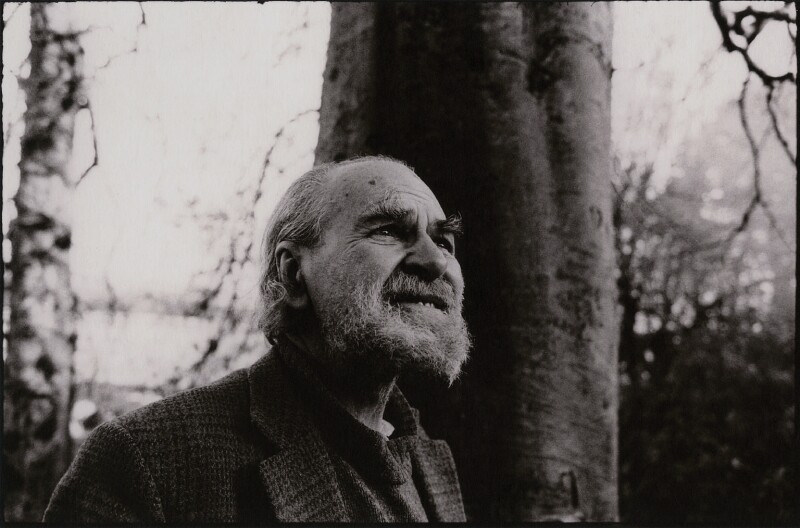
Basil Bunting. Photo: National Portrait Gallery, Creative Commons licence
Letters of Basil Bunting
Selected and edited by Alex Niven, Oxford University Press, 2022, £35
LIAM GUILAR welcomes new insights into a little-studied modernist’s mind

Basil Bunting died in 1985. Despite having been praised as one of the twentieth century’s ‘greatest poets’ critical attention to his work has been rare. A reliable biography didn’t appear until the publication of Richard Burton’s A Strong Song Tows Us in2013; an annotated collected poems, edited by Don Share, not until 2016. Now, with the publication of Alex Niven’s much anticipated edition of Bunting’s correspondence, it’s possible to eavesdrop on one of the twentieth century’s most interesting conversations about poetry[i].

In his eighties, Bunting looked back on his life:

Once upon a time I was a poet; not a very industrious one, not at all an influential one; unread and almost unheard of, but good enough in a small way to interest my friends, whose names have become familiar: Pound and Zukofsky first, Carlos-Williams, Hugh MacDairmid, David Jones, few indeed, but enough to make me think my work was not wasted.[ii]

If you recognise the names of his friends, that ‘good enough in a small way’ is an excellent example of the English art of understatement. But it’s not a popular list and despite the excellence of his poems, Bunting remains a marginal figure. No one reviewing the letters of T. S. Eliot needs to explain who T. S. Eliot was, or why he is of interest. 

The life

Born in 1900, Bunting was imprisoned as a conscientious objector immediately after leaving his Quaker school in 1918. He studied economics before drifting to Paris where he met Ezra Pound and worked, alongside Ernest Hemingway, for Ford Madox Ford. Following Pound to Italy, he met W.B. Yeats and Louis Zukofsky in Rapallo and began a life-long and life altering affair with Persian literature.

His first published poem, Villon, is one of the finest long poems of the 1920s[iii], but by the end of the 1930s Bunting’s career as a poet had stalled: his first marriage had failed, he was out of work and separated from his children. The war rescued him. He discovered he had skills that others valued. He rose through the ranks to Squadron Leader, worked for British Intelligence, then after the war, returned to Persia, first as a diplomat, before resigning to marry a Persian and becoming the Persian correspondent for The Times.

Expelled from Persia and then unceremoniously dumped by The Times, he struggled to find work in post war Britain.

Despite the excellence of his poems, the story could have ended here, with Bunting as a footnote in histories of literary modernism, remembered as one of Pound’s ‘more savage disciples’[iv], but in his sixties, spurred on by his meeting with a young Tom Pickard, he wrote Briggflatts; at 700 lines a short long poem, praised as the ‘finest’, ‘greatest’ or ‘most important’ long poem either of the twentieth century or ‘since The Wasteland’. He enjoyed a brief period as ‘Britain’s greatest living poet’ before fading away in a series of university jobs and poetry readings.

Poetry

From such a long and varied, life Niven estimates only about 800 letters have survived, of which approximately 600 relate to Briggflatts and the period after its publication. He has selected almost two hundred and thankfully decided to print complete letters rather than extracts.

Divided into three sections, the bulk of the book is devoted to the 1960s and afterwards. For anyone interested in poetry, rather than Bunting’s biography, the core of the book may be the pre-1960s letters to Pound and Zukofsky.

Briggflatts was praised by critics of the stature of Hugh Kenner and Donald Davie and poets as diverse as Thom Gunn, Allen Ginsberg and George Oppen, but Bunting’s status in the critical hierarchy has never been secure.

Perhaps his version of poetry is too austere to be popular. In a letter to Poetry Chicago (not printed by Niven), he wrote:

We are experts on nothing but arrangements and patterns of vowels and consonants, and every time we shout about something else we increase the contempt the public has for us. We are entitled to the same voice as anybody else with the vote. To claim more is arrogant.[v]

Throughout these letters and in later interviews he repeatedly stated the belief that politics, philosophy and theory harm poetry. The poet’s job is to write good poems.

What I have tried to do is to make something that can stand by itself and last a little while without having to be propped by metaphysics or ideology or anything from outside itself, something that might give people pleasure without nagging them to pay their dues to the party or say their prayers, without implying the stifling deference so many people in this country still show to a Cambridge degree or a Kensington accent. [vi]

It’s possible to go through these letters and compile a list of quotations to show he had little time for academics or literary criticism. He was publicly dismissive of creative writing courses and poetry competitions, while working on the former and once, memorably, judging the latter. He didn’t think poems should be explained; if a poem requires footnotes it’s a failure and tying the poem to the poet is a fundamental mistake.

What characterised Bunting and his correspondents was the intense seriousness with which they applied themselves to writing. Poetry was a craft and writing it involved ‘sharp study and long toil’. The ‘study’ involved arguing into existence a standard of excellence selected from poems going back to Homer. Once tentatively established, they attempted to excel their models, supporting each other through stringent criticism.

Bunting’s criticism, shown here in his letters to Zukofsky, was not for the faint hearted, but it was driven by the belief that some poets, Pound and Zukofsky explicitly, were ‘entered without handicap against Dante and Lucretius, against Villon and Horace.’ In the same letter, he explains: ‘At least for my part, I’d rather have somebody who is thinking of Horace call my poems bloody bad than to hear them praised by somebody who is thinking of-who-Dylan Thomas?’ (p.194).

Two other reasons for Bunting’s odd position in the critical hierarchy stand out. In some quarters he is tainted by his association with Pound, especially where Pound is only known, vaguely, for his political and racial opinions. The other is the insistence that ‘All Roads lead to Briggflatts[vii] which condemns him to the role of a minor poet who pulled off one great poem and consistently ignores the quality of the rest of his work.   

The letters qualify the first of these, while Niven’s editing and commentary seem driven by the second. If there ever was a tribe of Ezra to match the tribe of Ben, with Rapallo replacing the London taverns, Bunting was always too obdurate an individual to be anyone’s acolyte. [viii].

The explosive end of the pre-war correspondence with Pound is well-known, though the full text of the letter hasn’t been available until now. What becomes obvious is that from the late 1920s and through the 1930s the letters show Bunting becoming increasingly resistant to Pound’s politics. Bunting’s repeated statements that poetry is hampered when it tangles itself in philosophy and politics became focussed in his insistence to Pound that banging on about ill-informed economic theory was a waste of Pound’s time and literary talent, although Bunting himself isn’t adverse to sharing his ‘theories’ with Pound.

Initially refusing to believe Ezra was writing for the British fascist movement, he finally reached the limits of his patience when he learnt that Pound was ‘spilling racist bile’ in his letters to Zukofsky. His angry letter to Pound ends:

I suppose if you devote yourself long enough to licking the arses of blackguards you stand a good chance of becoming a blackguard yourself. Anyway, it is hard to see how you are going to stop the rot of your mind and heart without a pretty thoroughgoing repudiation of what you have spent a lot of work on. You ought to have the courage for that; but I confess I don’t expect to see it. (p.136)[ix]

It says a lot about the robust nature of their friendship that despite this, Pound would continue attempting to promote Bunting’s poetry, and Bunting would continue to acknowledge his debts to Pound. After the war, when Pound was incarcerated in Saint Elizabeth’s hospital for the mentally ill, Bunting picked up the correspondence, encouraged by the news that a letter from Basil brightened up Ezra’s week. Pound’s letters to Bunting, by turns abusive and incoherent, didn’t put him off.

As he wrote to Zukofsky: ‘The difficulty is how to avoid being involved in the network of fallacies while profiting from his illuminate faculty for verse and enjoying his energy and kindness.’

The same problem faces everyone today: how to see beyond the politics and racism to profit from what any poet in the past had to say about poetry and learn from what he or she achieved as a poet. Bunting managed it with his two closest friends, one a communist, one a fascist. It seems an important precedent.

Anyone interested in Basil Bunting or twentieth century poetry owes Alex Niven a great debt for the time and work that must have gone into this project.

How different the picture would be if this were a complete edition of the letters, only he knows. When Jonathon Williams published a selection of his letters from Bunting, he wrote: “What a stern, serious, funny, extraordinary ‘literary’ (LETS HEAR IT FOR LITERARY) North of England person he was’ (Williams, p.252).[x]  The Bunting of those letters, watching the birds and wild life in his garden, is absent from Niven’s collection, as are the descriptions of Persia that suggested to Burton that Britain lost a major travel writer to the Official Secrets Act.

The book’s sense of its reader is uneven. Niven explicitly describes a model reader who knows the outline of Bunting’s life and is not put off by occasional difficulties (p.xxvii). This model reader has a positive effect on his annotations, but seems to have been forgotten when he came to write his commentaries.

Why Niven thinks such a reader needs to be told what to think about the letters and how to interpret them, is a mystery. You buy an edition of a poet’s letters, wanting to read the poet’s words, and find a portion of the book contains the editor’s personal opinions and interpretations which you will never reread.   

Based on his model reader, Niven’s annotations are usually deft and show a shrewd judgement of what this reader could be expected to know. He assumes that anyone reading these letters won’t need a gloss on Dante, Swift, Winston Churchill, or others. He is also unwilling to overload the letters with commentary, assuming, (rightly), that anyone who wants to follow Bunting’s detailed responses to Pound’s books; ABC of Reading, Guide to Kulchure, will have a copy.

In his letters, Bunting could be crudely dismissive of poets he didn’t like. It’s disappointing to see his editor join in: ‘Philip Larkin (1922-1985) hard right British poetaster and trad jazz critic.’ (n.277 p.384).

Sometimes the annotation strays a long way from objective facts: ‘It must be said that Briggflatts faintly resembles certain of [Dylan]Thomas’ work in form, subject and (marginal sense of) place’ (p.194). Briggflatts probably ‘faintly resembles’ a lot of things, but it also must be said it’s hard to imagine Bunting admiring Thomas enough to be influenced by him.

The introduction includes a clear and necessary discussion of editing methods. Whether an introduction to a selection of letters needs a dramatic retelling of the first reading of Briggflatts, or is an appropriate place for a summary and critique of existing criticism, depends on the individual reader. As I don’t agree with his evaluation of Don Share’s edition of the Collected Poems, unless ‘the book’s only major limitation’ is intended ironically, or his criticisms of Burton’s biography, and I think he misreads the Pound-Bunting disagreement over Bunting’s translations of the Shahnemeh, I’m suspicious of his statements about literary matters where he strays from simply providing factual biographical context.

He uses his introduction to stake out his version of Bunting’s life, at times in explicit opposition to other published versions. I’m not convinced this is the right place for it. His dissent from Burton’s views of the significance of Bunting’s Quakerism is pointed, but his dismissal of Burton’s biography as ‘relatively light on critical explication’ is baffling. Eager to point out that book’s ‘shortcomings’, he seems to be criticising Burton’s biography for being a biography while temporarily forgetting just how problematic and limited letters are as biographical evidence.

The trust in the reader, obvious in the annotations, is not evident in the editorial commentary running between the letters. I think there’s too much. Rather than let the letters speak for themselves, he interprets the evidence and intrudes his opinions, unnecessarily:  

For all that his language and actions often fell a long way short of today’s ethical standards, Bunting certainly thought of himself as a determined anti-racist-and this letter would seem to support that view. In the context of his historical moment, Bunting’s basic philosophical views about race were, to put it mildly, considerably more progressive than Pound’s. (p. 134-135)

Comments such as this one and less lengthy interventions like ‘even if the age difference of over thirty years was problematic in more ways than one (p.140)’ seem to miss the point that adult readers are capable of coming to their own conclusions.

Sometimes the comments have nothing to do with the content of the letters: ‘There is a pressing need to apply more and deeper scrutiny to Bunting’s colonial phase than has been evident in previous scholarly and biographical treatments. But whatever its unexamined moral and political complications’ […]. (p.139)

Superfluous in terms of contextualising a letter, this manages to suggest something sinister without being informative. Even for a reader who knows the biography it’s not clear what the unexamined ‘complications’ are, or how ‘scrutinising’ them would add to the enjoyment of the poems or why or to whom such a need is ‘pressing’.

Letters encourage the tendency to tether the poems to the poet. The results of failing to distinguish between the two is a depressing characteristic of contemporary discussions of poetry, obvious in attitudes towards writers as diverse as Ezra Pound, Phillip Larkin (see above) and most recently, Dorothy Hewett[xi].

As Bunting wrote to Zukofsky:

Letters are meant to be written to affect one bloke, not a public. What is true in the context of sender and recipient may be a bloody lie in the context of author and public…secondly: the bane of the bloody age is running after remnants and fragments and rubbish heaps to avoid having to face what a man has made with deliberation and all his skill for the public’. (June 1953 qtd in Burton, page 354 Ellipsis in Burton.)

There’s nothing anyone can do to prevent that, it’s still the bane of this age, but its sad inevitability is outweighed by the opportunity to eavesdrop on one of the century’s most interesting conversations about poetry. Hopefully, Niven‘s suggestion that a complete collection of the Pound Bunting correspondence should be published will be taken up sometime soon (preferably with the letters to Zukofsky). What they had to say about poetry transcends their time, politics and personalities.  

‘Long awaited’, ‘much anticipated’ and ‘ground-breaking’ are cliches of the blurb writer.  For once they can all be applied honestly and accurately to Niven’s work in making these letters available. The good news is that the long wait and the anticipation have been generously rewarded.   


[i] Page numbers are to Niven’s book. Richard Burton’s Biography, A Strong Song Tows Us is referred to throughout as Burton.

[ii] I transcribed this from Peter Bell’s film, Basil Bunting: An introduction to the work of a poet (1982). He seems to say something after ‘David Jones’ but I can’t understand it.

[iii] The poem was written sometime in the 1920s but first published in 1930. As Niven explains, the letters cast doubt on the standard dating and chronology of some of the poems.

[iv] The description belongs to W.B. Yeats. He surprised Bunting by reciting one of Bunting’s poems from memory when they met.

[v] Poetry, Vol. 120, No. 6 (Sep. 1972), pp. 361-365 http://www.jstor.org/stable/20595781

[vi] Another transcription, this time from a talk Bunting gave in London, in Keats’ house, in 1979.  From ‘The Recordings of Basil Bunting’ with thanks to the late Richard Swigg who looked after ‘The Bunting tapes’.

[vii] Julian Stannard. Basil Bunting Writers and their work.  p.88

[viii] Consigning Bunting to the role of ‘Pound’s disciple’ is to misrepresent him as badly as Tom Pickard is misrepresented when his own excellent poetic output is ignored and he’s remembered simply as the boy who midwifed Briggflatts.

[ix]  Zukofsky’s response to this letter and whatever Pound had written that offended Bunting so much, can be read in Pound/Zukofsky Selected letters of Ezra Pound and Louis Zukofsky ed Barry Ahearn.  

[x] Williams, Joanthan, ‘Some Jazz from the Bazz: The Bunting-Williams Letters’ in The Star you Steer By. Ed, McGonigal and Price.

[xi] For Hewett and a recent example of this problem of confusing poet and poem see the remarks in https://www.theguardian.com/books/2021/apr/04/the-whole-canon-is-being-reappraised-how-the-metoo-movement-upended-australian-poetry