LIAM GUILAR finds a much-hyped recent TV series worse than vacuous
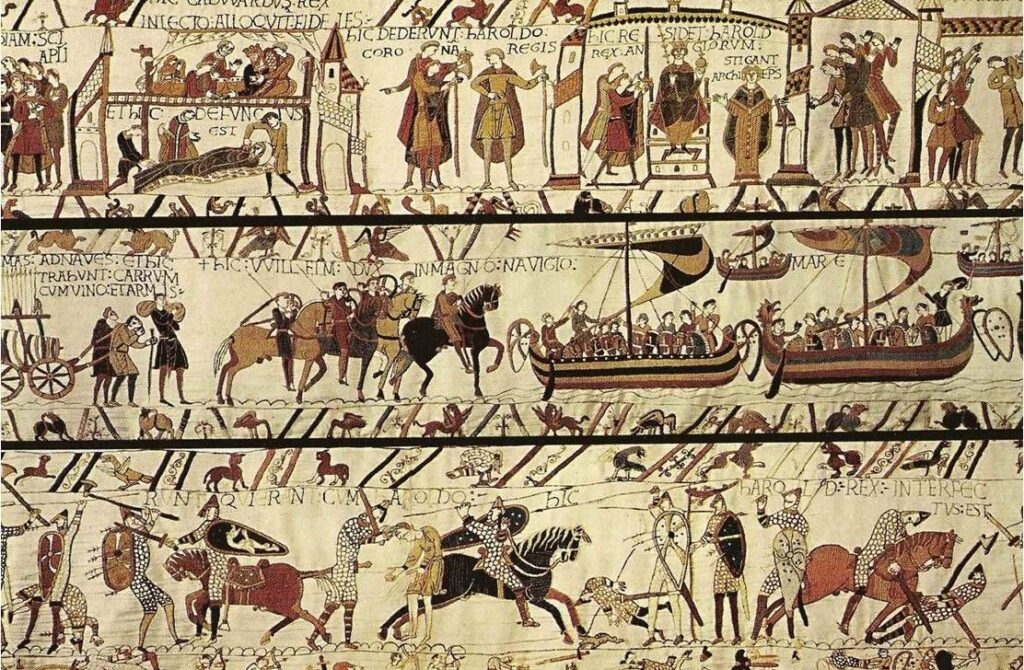
The dust has settled and King and Conqueror has faded away to wherever TV series go to be forgotten. Nominally based on the events leading up to the Norman Conquest, it attracted criticism for its many historical inaccuracies. The history was wrong; the changes to chronology dizzying; characterisation was preposterous; the costumes and the armour were bad; men said fuckalot and everyone and everything was permanently dirty. Some of its defenders pointed out that it was not a documentary but “historical fiction”.
If the history was so inaccurate it can’t be called ‘historical’, the fiction was the latest instalment in a collective infantilisation of the Middle Ages. Instead of the rich strangeness of the past appearing in historical dramas, film makers insist on confusing history with fantasy while erasing the differences between past and present. By leaning on the tropes of modern film, and fantasy films in particular, they present an adolescent version of the past which is rarely as dramatic as the reality it pretends to dramatize.
There’s a probably apocryphal story about the screening of the film, Titanic. Someone in the audience started to object, loudly, because the pattern of the rivets on the ship’s hull was not historically accurate.
Every historical film brings out the Rivet Counters. Harold’s cloak is fastened incorrectly. The armour is wrong. The hairstyles are wrong. It gives people with specialised knowledge the opportunity to air their expertise. King and Conqueror has given the Rivet Counters many reasons to object. You will find their objections on YouTube.
Not all historical objections are rivet counting, and more is at stake than the lack of colour in the clothing or the preposterous attempts at ‘armour’, especially in this case because those involved with the production have repeatedly claimed their version is historically accurate.
A consulting company called SceneSpan claims on its website:
King And Conqueror.
In this project, history was the script. Brought in during early development, we advised across the script to ensure historical authenticity from the ground up: story arcs, character motivations, political dynamics, and cultural detail. Set during the Norman Conquest, the series required careful navigation of both Anglo-Saxon and Norman worldviews. Our role helped ground the drama in the lived realities of 11th-century power and identity.
[Emphasis theirs][i]
What grounds a story in the ‘lived realities’ of the past is a question: in this place and time, would a character of this rank say this, or act in this way?[ii] The failure to consider this ruins King and Conqueror and almost every other film set in and around this period.
In the first episode characters are ignorant of their own history. When William and Matilda are arguing with the king of France, the latter scornfully suggests that only a fool would try to sail an army across the channel. It’s meant as dramatic irony, given that we all know that’s what William will do, but the historical king of France would have known armies had been sailing back and forth across the Channel and the North Sea for centuries. How else did he think Sweyn Forkbeard conquered England or the ‘Normans’ got to ‘Normandy’?
At other times characters act with no knowledge of the lived reality of their world. William rides away from the coronation on his own. He’s a Duke. In a culture where public display was essential, there should be a retinue and all the other signs and symbols of his wealth and status. He’s also a royal guest, which meant the king was responsible for his safety and would have provided guides and an escort. He had been ambushed on the way there, but apparently this doesn’t make him cautious on the return journey. How was he going to find his way to Pevensey on his own? Did the writer imagine a modern road with signposts?[iii]
The changes to chronology are dizzying. William was born in 1028. Even if he had attended the coronation (he didn’t) you can work out his age. In King and Conqueror an adult William leaves the pregnant wife he didn’t marry until the 1050s to attend the coronation in 1043, where he is introduced as the victor of Val es Dunes, a battle he didn’t fight until 1047. The events at Dover, which are being plotted at the coronation, and which will lead to Godwin being banished, happened in 1051.
If time is treated loosely, characters are melded together, their names are changed, or they are left out. The evil Earl of Mercia is called Morcar. At the time of Edward’s coronation, Leofric, was earl of Mercia. His grandson, Morcar, became earl of Northumbria when the locals rose against Tostig and deposed him in 1065. Making him earl in 1043 means the devious goings on of 1065, which potentially reveal so much about Harold’s character, have been erased[iv].
The defence against these objections, and even in the first episode there is so much more to object to, is that this is not a documentary, but historical fiction. It’s a sound defence. Some historical inaccuracies need not ruin a film, and accuracy does not guarantee a film will be entertaining.
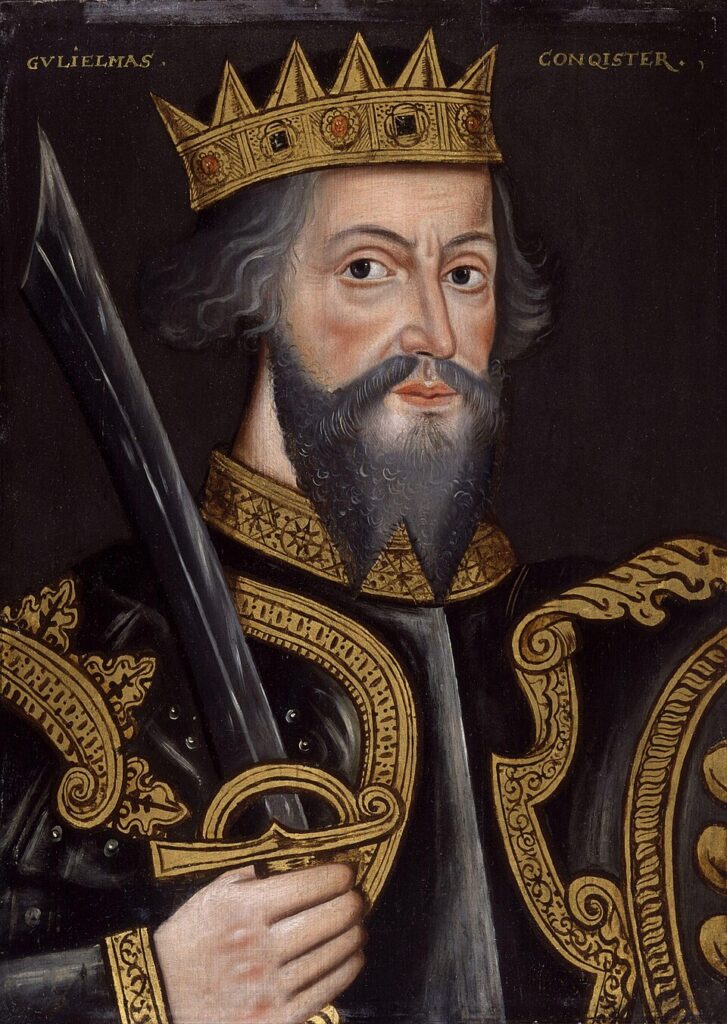
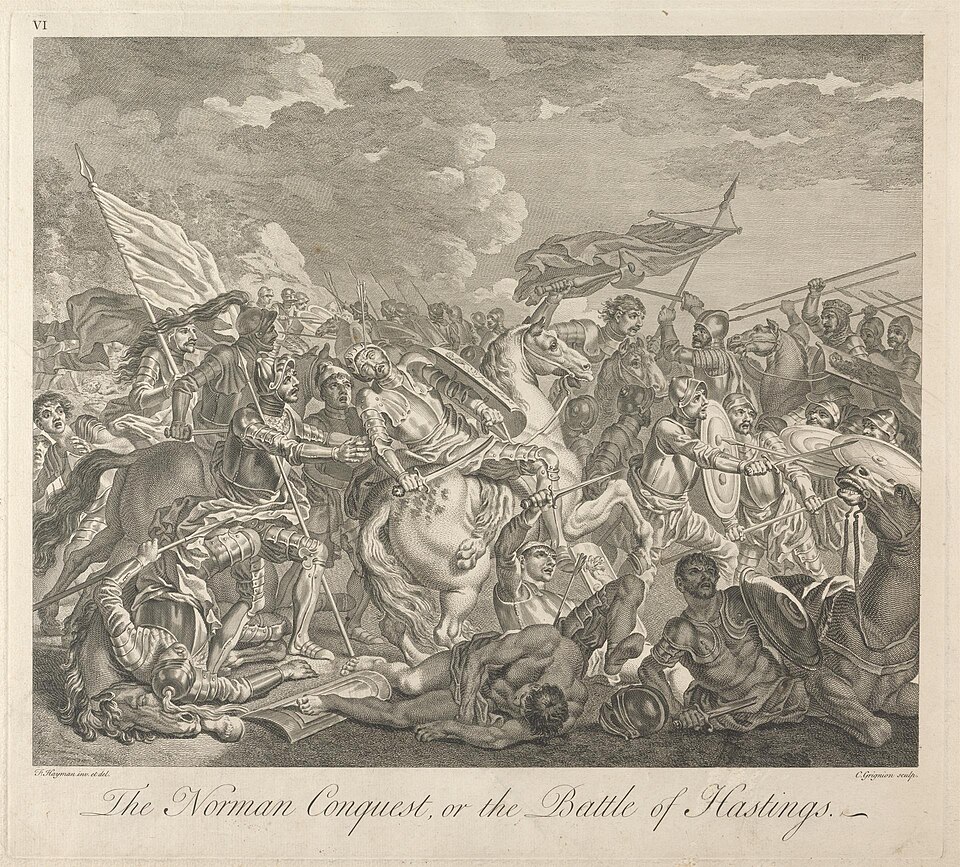
If you take the history out of historical fiction the characters are left flapping in the wind. In the complex context of their time, their choices and actions defined them. Remove that context and the characters are just names. Remove the history as context, and something must replace it. In King and Conqueror, the replacement is always so much less than what it replaces.
The period between the coronations of Edward the Confessor and William 1st is covered by well-written, historically accurate books aimed at a non-specialist audience. Without learning Old English, Anglo-Norman and Latin, it’s easy to stack a shelf and be up to date with the current knowledge of the time and the characters. It is depressing to think that the writer and producers of King and Conqueror didn’t bother. It is even more depressing to think that they did and then decided to throw out the history because they thought their version was better.
Godwin was banished in 1051 because of an incident in Dover. The facts are murky. Different versions of the Anglo-Saxon chronicle give slightly different versions of the events. Returning to the continent, Eustace of Boulogne and his men were involved in an altercation with the inhabitants of the town. There were deaths on both sides. Eustace seems to have raced to the king and given his version of the story. Without waiting to ask Godwin to investigate, Edward called on him, as the relevant earl, to reestablish the king’s justice by punishing the town[v].
When Godwin refused, and according to some versions demanded Eustace’s men be punished, he was called on to answer charges of treason. Turning up to court without guarantees of safe conduct, including the formal exchange of hostages, was never a good idea. Godwin was old enough to remember at least one culling of the earls. He refused to appear and called out his armed supporters. The king was expected to keep the peace and punish wrongdoing. Edward could not withdraw the order without losing face. Edward and the Witan found Godwin guilty of treason. The other earls sided with Edward. Godwin fled and his family scattered into exile. [vi]
Earls were not kings, they were the king’s appointed officers, and their job was to enforce the king’s rule. When Godwin refused the order to ravage Dover he was challenging the king’s authority. For nearly ten years he had been the most powerful man in the country. His daughter was the queen. He must have thought he was secure enough to ignore a royal order.
Why did Godwin refuse a direct order from his king: arrogant self-confidence that reveals his own bad judgement and his poor opinion of Edward? Or was he feeling his influence slide, his advice ignored, his proteges passed over and trying to assert himself? Did he have a personal dislike of Eustace, or of the ‘foreigners’ who Edward seemed to be favouring?
Was Edward overconfident? Not thinking clearly? Desperate to please a foreign relative? Was he looking for an excuse to break Godwin’s hold over him. Did he expect Godwin to protest and then back down and was taken by surprise when he didn’t?
No ‘personal’ records survive from this period. We don’t know what the characters were thinking. The writer of historical fiction is free to explore the possibilities within the framework of the historical events.
King and Conqueror replaces this with simplistic nonsense about Godwin being accused of ‘breaking The Treaty’. It’s clear to the audience that whatever happened in Dover was due to the machinations of the Evil Mercian Morcar and the Wicked Queen Mother. Godwin becomes the ‘Good Guy’ done over by ‘The Baddies’. It’s childish in the most derogatory sense of that term.
Fictional characters don’t have to be realistic, but they need a coherent story world in which to operate. Mangle the history, and the possibilities of coherence become increasingly small. The fashion for presenting characters in ‘the past’ as though they were modern people with the approved attitudes and fashionable responses adds to the mess[vii].
In the first episode, Sweyn has sex with a bride on her wedding night as it’s his ‘right as her lord’[viii]. His brothers are disgusted, and he has to threaten Tostig to prevent him from telling their father. Their disgust is a modern reaction. If it were his right, legal and customary (which to be clear, it wasn’t) why would they have been disgusted? They would have normalized the behaviour.
Harold promises his mistress he’ll never let his father force him into a ‘church marriage’ with anyone else. This is the romantic, individualistic modern lover of popular fiction speaking. If Harold Godwinson ever said that to Edith Swanneck, they would have both known that he was lying[ix].
Without the historical context, King and Conqueror settles for importing the adolescent tropes of modern fantasy. The result is fiction as bad as the history.
Emma, the queen mother, is the only woman in history to have married two kings of England and had two sons, by different fathers, who ruled the country. She survived the reigns of five kings before Edward, her son by her first marriage, was crowned. Matilda alludes to all this before William leaves for England. Yet the writers do not have Emma behave with the subtlety of a survivor and successful political operator. She is a strident pantomime witch. Harold is a tousled haired womble with daddy issues. He likes to bite noses during combat. He’s dominated by his mistress and portrayed as an untrustworthy liar. You’d think twice about following him to the pub.
The characters are juvenile, leaning heavily on the tropes of popular film. We know these are hard men because they say fuckalot. Both William and Godwin have wandered in from a film about gangland struggles for control of the neighbourhood. Godwin seems to be the last survivor of the Kray Brothers gang. And there’s the ‘Bromance’[x].
The film industry has a long record of treating the Middle Ages as a vague backdrop and mangling history in the process. In the general slop of cheap art chasing money at a time of rising historical ignorance, it would be surprising if King and Conqueror wasn’t the mess it was.
Does it matter that King and Conqueror is less true to the eleventh century than House was to a modern American Hospital?
We knew House was fiction. But King and Conqueror has been presented as history. This is not a story about fictional characters in the past. It uses the names of historical persons in a way that suggests this is a representation of those people in their specific historical setting. Publicity for the series made repeated claims for its accuracy as history.
Responding to criticisms about historical inaccuracies, James Norton, the actor who plays Harold, stated:
The truth was, they were friends. They met at the coronation, we know that William invited Harold over to Normandy to fight against the Baron of Brittany, he did swear, he acknowledged William’s rightful claim to the crown over the relics – whether he meant it or not, we don’t know. But so much of what we tell, in terms of their relationship and friendship, is true.[xi]
It is not the truth. They were not friends. They did not meet at the coronation. They probably didn’t meet in person until 1065 when Harold was (possibly shipwrecked) on the continent [xii].We don’t know why he was on that ship but none of the suggested reasons include an invitation from William ‘to fight against the baron of Britanny’. We do know Harold was in William’s custody. We do not know what oath Harold made, if he made an oath, over relics while he was there. William had no ‘rightful claim’ to the crown of England.
Whether this is ignorance or indifference, the insidious lie, ‘This is true’, is where the damage is done. One can guarantee that there are now people who believe this is ‘the real story’ because James Norton said so, and for them an actor is a more reliable source of information than any historian. There are people who believe Clive Owen’s King Arthur revealed the identity of the real king Arthur because the film was advertised as “The untold true story that became the legend”[xiii]. No amount of fact-based refutation is going to change their minds. They saw it on the screen.
Perhaps it’s a minority view, but King and Conqueror turns a period of unusual historical importance into a pantomime. It would be naïve to expect any film maker to treat the past with respect or have any respect for people who do. Art chasing money doesn’t have a conscience. The idea art should, or could, be responsible, seems quaintly, almost embarrassingly, old fashioned. The period between the coronations of Edward and William I is crucial in the history of the British Isles. Old fashioned as it seems, it’s possible to believe it deserves better than to be presented as a second-rate episode of Game of Thrones or Bored of the Rings without the attempted humour.
[i] https://scenespan.com/our-work/ Their emphasis in bold. The kindest thing to say about this quote is that perhaps they worked on a different King and Conqueror to the one we all watched.
[ii] To be very clear I don’t mean they should be speaking Old English or a faked version of it.
[iii] William never learnt to speak English, so he couldn’t ask for directions either.
[iv] Tostig, was unpopular as Earl of Northumbria. In October 1065, while he was away at the royal court, the locals killed his followers, and marched south. They were joined by the Mercians under their earl, Edwin (Eadwine). The Northumbrians then offered the earldom to Morcar, Edwin’s brother. King Edward wanted to call out the army and crush the rebellion. The army refused to muster. Harold acted as mediator, and Morcar became earl and Tostig was banished. The date is not known but either before or after the uprising Harold married the sister of Edwin and Morcar. Harold swore he was not involved in planning the uprising. Tostig was probably not the only person who didn’t believe him.
[v] Ravaging towns that broke the King’s peace was not unusual. Godwin, Leofric and Seward ravaged Worcester for three days under the previous king after two of the king’s men had been killed in the town.
[vi] King and Conqueror begins by stating that England is emerging from decades of ‘bloody civil war’. This is historically wrong. Cnut had ruled from 1016-1035, and while there was disagreement over the succession, it didn’t lead to ‘a civil war’. Despite the popular idea that medieval people went to war at the drop of hat, there is evidence to suggest that those in power in England at the time preferred to avoid armed conflict. Thismight explain why the Earls first sided with Edward, and then the ease with which Godwin was allowed to return.
[vii] For an extreme example, see ‘The King’ (2019) in which Henry V is presented as a pacifist who is shocked to discover his courtiers are making money from the war against France.
[viii] The idea of ‘Premier Noce’ or ‘Droit de seigneur’ or ‘jus primae noce’ has been shown to be a myth invented by much later writers. The historical Sweyn was banished after eloping with an Abbess and murdering his cousin.
[ix] Calling Edith his mistress is unavoidably and unintentionally derogatory. She was his wife ‘after the Danish fashion’. This was a marriage that was not sanctioned by the church but regarded by everybody else as a marriage. It allowed aristocratic men to choose a wife, knowing that when the time came and they entered into a church marriage for political reasons, (and all aristocratic marriages were political), they would not be entering into a bigamous relationship.
[x] I dislike this term as it cheapens friendship but it’s exactly what is presented in King and Conqueror.
[xi] https://www.huffingtonpost.co.uk/entry/king-conqueror-stars-address-criticism-nikolaj-coster-waldau-james-norton_uk_68b034efe4b0bbcc3f8e4d8a For similar claims see https://www.televisual.com/news/james-norton-on-king-conqueror/
[xii] There is not only disagreement about what happened but about when it happened. Edward’s most recent biographer puts it in 1065. William’s opts for 1064.
[xiii] This phrase appeared on the poster for the film, popularising the candidature of L. Artorius Castus for the role as ‘the real king Arthur’. However, King Arthur is a good example of a film that is both entertaining and historically inaccurate.

LIAM GUILAR is Poetry Editor of The Brazen Head, and the author of several poetry collections, including the series A Man of Heart, Presentment of Englishry and The Fabled Third (Shearsman), set in post-Roman Britain. His most recent publication is a translation of the Mabinogion folk-tale How Culhwch Won Olwen (Shearsman, 2026)