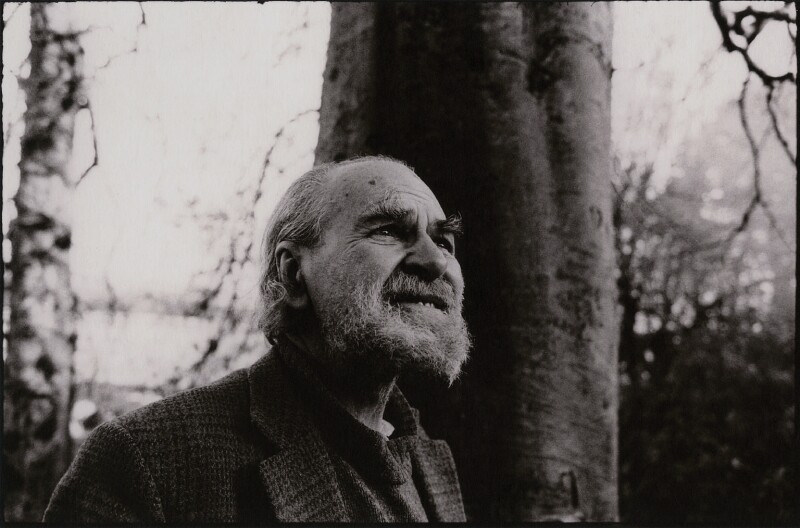
The epistolary Eliot

The Letters of T.S. Eliot. Volume 8: 1936-1938

T.S. Eliot, Valerie Eliot, John Haffenden (eds.), Faber & Faber, 2019, 1,100pp + li, illus., £50

The Letters of T.S. Eliot. Volume 9: 1939-1941

T.S. Eliot, Valerie Eliot, John Haffenden (eds.), Faber & Faber, 2021, 1,072pp + lxix, illus., £60

ALEXANDER ADAMS loses himself in a great litterateur’s letters

In the ongoing Faber & Faber publication of T.S. Eliot’s letters, the project has reached the late 1930s and the wartime years. These were years in which Eliot was involved in writing Four Quartets (1936-42), Old Possum’s Book of Practical Cats (1939) and The Family Reunion (1939); this was in addition to his work as a director of Faber & Faber. Devotion played an important part in Eliot’s life, never less than in the dark years when his wife was confined to an asylum. The confinement was something for which Vivienne’s family were responsible and with which Eliot acquiesced, and that weighed on Eliot’s conscience. The punishing routine of work between early-morning prayer and late-night fire-watching during the Blitz seem at least in part a form of penance. Eliot’s engagement with the place of Christianity in a secular society is frequently the prompt for letters and solicitations for book reviews.  

These letters cover Eliot’s private life, professional correspondence and publishing business. We get his letters to James Joyce, W.B. Yeats, Wyndham Lewis, Virginia Woolf, Henry Miller, Djuna Barnes, Louis MacNeice, Lawrence Durrell, Stephen Spender, W.H. Auden, Dylan Thomas, Herbert Read and John Betjeman. Most are cordial and unrevealing. His long-standing correspondent Ezra Pound is ever present, mainly writing about publication matters. Eliot approves of a critical review of a collection of Pound essays, anticipating Pound’s reaction: ‘a furious letter, which I shall have to suppress in his own interest.’[i] In these volumes, Eliot seems wearied by Pound’s relentless passion, quixotic changes and prickliness.

A more regular correspondent was John Hayward, the brilliant and difficult English-literature scholar and editor, who would play a significant part in Eliot’s life. Hayward would become a housemate of Eliot’s in the 1940s and 1950s, an arrangement that lasted until Eliot’s second marriage. Hayward was assiduous in collecting letters, books and other Eliot material, which he later bequeathed to King’s College, Cambridge. In that case, Eliot was aware that his playful badinage was being preserved and would be read by others. Hayward consulted Eliot about bibliographical rarities and letters that appeared in booksellers’ catalogues.

Among numerous letters tactfully declining volumes of poetry by obscure writers and evading explaining ‘The Waste Land’, there are some more weighty letters. He declines publishing Céline’s anti-Semitic Bagatelles, while appreciating the inventiveness of the prose. An internal memorandum from Eliot to fellow Faber director Geoffrey Faber puts the case for publishing Djuna Barnes’s Nightwood.

Lesbianism merely happens to be the variety of the dis-ease that Barnes knows the best, so it is through that form that she has to get at something universal (she has obviously a great deal of the male in her composition). […] And as for her style, it has what is for me the authentic evidence of power, in that I find myself having to struggle, directly after reading, not to ape it myself: and very few writers exercise that pull.[ii]

There are numerous letters displaying Eliot’s tireless support for poet George Barker. ‘[…] I believe in your genius, so far as one is ever justified in believing in genius except in retrospect, and I believe that it is genius if anything and not talent.’[iii]

There are flashes of wit and acerbic commentary. ‘[…] what horrifies me is that your young people should actually be set to study contemporary verse in qualification for the degree of B.A. They ought to be reading Aristophanes.’[iv] He includes general rules for poets. ‘Nobody ought to attempt free rhythms until he has served an apprenticeship in strict ones.’[v] Eliot states that poets must continually develop. Unlike a novelist, who can produce books that conform to a successful formula, a poet ought not to publish books too similar to previous ones, lest he bore his readership. His pragmatic business side took over when he recommended winding up the quarterly journal The Criterion, which he had edited for sixteen years. Facing a drop in subscriptions and the storm clouds of war, the journal was closed in 1939.

We get a few insights into Eliot’s verse writing during a period when he was moving to verse plays. He posted sections of Old Possum’s Book of Practical Cats to the children of the family he stayed with in the countryside. Eliot never had children, and these children – and the children of his fellow director Geoffrey Faber – became his surrogate offspring. Enclosed is a pre-publication report from one reader of the manuscript of Practical Cats, damning it as ‘Personally, I find them pretentious, and cannot recommend publication.’[vi] There are mentions of visits to Little Gidding, East Coker and Burnt Norton, but these are arrangements rather than reflections. Even if he enclosed verses and composed nonsense verse to amuse recipients, Eliot was not given to poetic flights in his letters.

By and large, politics and current events go undiscussed in Volume 8. The abdication is mentioned but the events in central Europe cause barely a ripple in the volume. During the war, Eliot lived a peripatetic lifestyle, staying with Geoffrey and Enid Faber and others. He often travelled by train and bus, laden down by manuscripts and reference books, as he worked on the last of the Four Quartets. He joined the A.R.P. as a fire warden, seeing relatively little action in his allotted sector. We encounter little description of the impact of the Blitz, outside of the ways in which it disconcerted people and disrupted daily life.

The introduction of Volume 9 approaches discussion of the poet’s anti-Semitism. While it is true that Eliot published poems with disagreeable portrayals of Jewish characters and wrote in 1934 ‘reasons of race and religion combine to make any large number of free-thinking Jews undesirable’, Eliot was solicitous of the safety of Jews he knew personally. The volumes contain many letters of recommendation supporting the candidacies of Jews (including refugees) for employment positions. He also was unable to allow Pound’s anti-Semitic screeds being included in Faber’s editions of the Cantos. Eliot preferred for Pound to rewrite the parts but Pound made a point of leaving the censorship apparent. The intensity of Jewish condemnation of Eliot seems to be due to the potency and prominence of his negative depictions of Jews. Eliot’s dislike of Jewish material success and cultural influence seemed a strong instinctive aversion rather than malevolence.   

We get a few retrospective glimpses of the poet in earlier years. Eliot wrote to his brother Henry of his early life in London:

I was of course too much engrossed in the horrors of my private life to notice much outside; and I was suffering from (1) a feeling of guilt in having married a woman I detested, and consequently a feeling that I must put up with anything (2) perpetually being told, in the most plausible way, that I was a clodhopper and a dunce. Gradually, through making friends, I came to find that English people of the sort that I found congenial were prepared to take me quite as an ordinary human being, and that I had merely married into a rather common suburban family with a streak of abnormality which in the case of my wife had reached the point of liking to give people pain.[viii]

He goes on to comment that the only blasphemous poem that he ever wrote was ‘The Hollow Men’. ‘[…] this is blasphemy because it is despair, it stands for the lowest point I ever reached in my sordid domestic affairs.’[ix]

The shadow of Vivienne’s instability looms large in Volume 8. Eliot apologises to Henry for her sending a Christmas card from her and her husband. He notes that (even though long separated) she has put his residence as hers, in the telephone directory.[x] Her letters are included here. She wrote to the Faber office about her husband’s health and offered herself as an illustrator for one of his poems. Her communications are odd and inappropriate, mainly. Sometimes there are glimpses of darker thoughts, such as when she announces to a Faber employee that she is being followed. 

Printed in full is a letter from Vivienne’s brother, dated 14 July 1938.

V. had apparently been wandering about for two nights, afraid to go anywhere. She is full of the most fantastic suspicions & ideas. She asked me if it was true that you had been beheaded. She says she has been in hiding from various mysterious people, & so on. It would be deplorable if she were again to be found wandering in the early hours & taken into custody.[xi]

As a result of a pattern of alarming behaviour, Vivienne was committed to a secure residential home, Northumberland House. Eliot did his best to punctiliously sort out her financial and legal affairs, as discretely as possible. Even though he did not visit her – such an encounter would have been too distressing and destabilising – Vivienne was never too far from Eliot’s conscience.

This review is written in the shadow of the impending publication of Eliot’s letters to Emily Hale (on 1 June 2023, by Faber & Faber), which seems set to be a publishing sensation. That collection of 1,131 letters was deposited by Hale at Princeton University and was only unsealed on 2 January 2020. That book promises to show the most intimate side of Eliot, that which was so carefully hidden by the poet. It was during the late 1930s, while Eliot was living in London and Hale was teaching in Massachusetts, that they corresponded most often. In a rather defensive statement of 1960, Eliot wrote of the difficulty of marriage for him as a poet. After explaining that his marriage to the unstable Vivienne would inevitably seem inexplicable, he conceded that the tensions of an unhappy marriage provided inspiration for poetry.

Emily Hale would have killed the poet in me; Viviennene nearly was the death of me, but she kept the poet alive. In retrospect, the nightmare agony of my seventeen years with Viviennene seems to me preferable to the dull misery of the mediocre teacher of philosophy which would have been the alternative.

He went on the state that Hale did not understand or love his poetry, even though it seems they discussed his poetry at length and that ‘Burnt Norton’ (1936) of Four Quartets was written as a coded love poem to her. It should be noted that when Eliot wrote this statement he was defending his decision to marry his second wife, Valerie, and aiming to downplay his commitment to Hale and hers to him. Hale does appear indirectly in the letters in Volume 8. She visited Eliot in England and there are comments from him about her arrival, departure and activities during her time with him. In his statement of 1960, Eliot affirmed that he had never had sexual relations with Hale.

The publication of this separate volume will be significant in its revelations about the life and ideas of a great poet, showing him at his most unguarded. The ethics of publishing such letters is redundant. As the letters were deposited at Princeton University and due to be the subject of study, it is the correct decision to publish them in full, annotated, rather than allowing salacious snippets from circulating out of context.

The preceding review does not do full justice to the pleasure of having to hand such first-hand testimony of such a major figure. Being presented with such a huge body of letters – not even all of them, apparently – is a sort of treasure store, one unavailable for most cultural figures. One is impressed at Eliot’s indefatigable diligence; writing to colleagues and strangers, editing, reading, publishing, serving his church, not to mention finding time for his own writing, Eliot’s work rate is formidable.

We get an understanding of Eliot the man – driven by a moral core of Christianity, passionate about culture (especially literature), a loving godfather, cautious in his romantic attachments. Being such a prominent figure – author, publisher, cultural commentator, public intellectual – Eliot knew that his most private and informal communications would be bought, sold and scrutinised. Although Eliot bore the burden relatively lightly, there remains the suspicion that Eliot was curbing his most cutting comments for the sake of his posthumous legacy.   

The editing is exemplary. I spotted only one error (in footnote numbering, on p. 626) in over 2,000 pages. There are notes on recipients, context provided and often extensive quotes. These quotes are of letters that Eliot was replying to or extracts of books and journals. The editors have dug through archives of journals and newspapers and long-forgotten books. Letter text not in English is translated and many passing references tracked down. The only failing is omitting to indicate the place of writing. That sort of information seems more pertinent than the location of the letter manuscript. Unfortunately, this seems Faber policy regarding letter publication, so there seems no hope of the publisher revising its practice. Great care has been taken in the printing and binding. This series provides an unparalleled view of multiple aspects of the greatest poet in the English language of the Modernist era and gives us a glimpse of history as it was being made.


[i] Vol. 8, p. 585

[ii] Vol. 8, pp. 151-2

[iii] Vol. 8, p. 665

[iv] Vol. 8, p. 83

[v] Vol. 8, p. 676

[vi] Vol. 8, p. 871

[vii] Vol. 9, pp. 517-8

[viii] Vol. 8, P. 10

[ix] Vol. 8, P. 11

[x] Vol. 8, P. 52

[xi] Vol. 8, p. 91

The good old days?

This is chapter Seven of LIAM GUILAR’s almost completed epic of Britain. Chapter One was published in Long Poem Magazine #25 Spring 2021, and Chapters TwoThreeFour,  Five and Six in The Brazen Head. For more information about Hengist, Vortigern and the Legendary History, see www.liamguilar.com

The story so far. Mid Fifth Century Britain. After the legions have withdrawn, the island is facing civil war and a growing number of external enemies. It is also experiencing a steady tide of pagan, Germanic migrants looking for land.

Vortigern has been appointed to protect what’s left of Roman Britain. Following standard imperial practice, he has employed Saxon mercenaries led by Hengist. Together they have defeated the immediate threat of an army of Picts and a Northern rebellion and stabilised the province. Vortigern has married Hengist’s daughter.

A united province could withstand any invader, but Vortigern faces growing resistance from his own people, potential betrayal by his own officers, and a simmering threat to his leadership from the exiled sons of Constantine. Before travelling to a meeting with the Northern Lords, he has to ensure the South West is safe. He uses his travels to gather information about his province. 

This brief chapter ends part one of the book.

The Britons object

‘Now listen to us, our lord the King,

listen to the advice of your councillors,

Bishops and book learned men,

chieftains and their men at arms.

You have bought disaster and evil upon yourself.

You have favoured heathens, abandoned God’s laws,

and fornicated with a foreign, pagan woman.

We beg you, for the sake of peace,

and God’s favour to your people,

cast them off, drive them out.

If you will not do so, we will drive them from the land

and cut them down, or die in the attempt.’[i]

Vortigern took the speaker’s sleeve,

gently between his thumb and finger.

‘Such fine brocaded silk.

Boots of finest Cordovan.

I see your wealth: I see no scars.

How will you fight with Hengist and his people?

You could not stop the rabble

who plundered your homes,

stole your wives and daughters,

dragged your sons to slavery.

You ran away and hid,

then crawled back on your bellies,

sniveling round your huts

as though your tears could put the fires out.

How will you fight these people,

when you could not fight without them?

No raider dares come south.

The crops are in, the cattle fed.

Where there was famine we have brought relief.

The traders bring the wine you drink,

the silk you wear. Men go to sleep

expecting they will see the morning.

What else do you require?’

‘We want them gone. They are a plague

corrupting everything they touch,

a filth that should be scoured from our land. 

When they exhaust their pigs, they chase our women.

Their women whore themselves for pleasure,

leading our young men to perversion and damnation.

Their grunting language hurts our ears.

Their disgusting customs foul our country.’

Keredic helps Vortigern to collect stories

Wondering what atrocity I’d be forced to witness,

I followed the Thin Man at Hengist’s insistence.

A slave does not demand an explanation.

Nor does he ask what’s in the cart

that slows armed riders to a painful crawl.

A scattering of huts,

angular and box like,

not the usual beehives.

There was no ditch or palisade.

They did not run away.

A tall blonde man, an axe in hand

strode towards us; Wes Þu hal.

He hadn’t heard of Vortigern

or was a brave man who didn’t flinch.

The cart is brought forward.

Inside there’s the carcass of a pig

and jars of wine and mead.

‘Tell him, if he cooks this,

I will share it with him.’

The man is impressed.

‘What does he want?’

Vortigern replies: ‘Stories’.

The pregnant girl

This was my family’s land, but my brother went with Constantine.

We never heard from him again. Mam died soon after.

One day this old man and his two sons appeared.

Tad was glad to have some help about the place

even if we couldn’t understand a word they said.

The boys worked hard. The old man knew his stuff

where sheep and pigs and cattle were concerned.

When the coughing sickness took their father,

tad asked the boys to stay. When he was dying,

he left our land to them. This bump will be our second child.

Their cousins are arriving soon. More workers in the fields.

More arms when neighbors try to filch our cows. 

The wife

We were desperate.

First year we grew nothing.

The rain was late, the frost came early.

Scrabbling on marginal land

I’d have whored my starving bones

for the leavings from their table

to feed the children.

But the local big man gave us food,

suggested we move here.

Fed us through the winter.

We’ll repay him with a pig this year.

And when it comes to fighting

my man’s arm will pay our debt.

We were lucky.

My sister and her daughter went begging at another villa’s door.

They stripped them both and beat them to the boundary.

She died soon after, but not before

they burnt her house, enslaved her children,

killed her man then went down on their knees

to thank their loving god.[ii]

At first I couldn’t understand

I jumped at any sudden noise.

At night it was so quiet

I couldn’t sleep.

He’d go off to work

and he’d come back!

Days, then weeks and months,

when no one died.

Vortigern asks questions

Inside their well-built house,

Vortigern admires the skill

of the woman’s weaving;

the well-made cloth.

He touches the solid jointed wood,

admires the functional designs

sees that an age of wood

might have its own attractions.

Curiosity is an appetite he can’t appease,

like the golden lady,

asking questions about everything.

Nothing is beyond his interest.

‘What is his name?’

It is not a slave’s place to disobey,

but I do say If I ask him that

he will recite his genealogy all the way to Woden

and the pig will be burnt before he’s finished.

‘Call him hlāford, it is an honorary title.’

‘And the woman?’ ‘Hlǽfdige.’

‘Ask him why he came to Britain?’

‘He says, my children.’

But he knows that’s not enough.

‘There was only so much land;

bad for crops and worse for cattle.

We’d heard the ground is fertile here

and if a man stays clear of strife

his children have a future.’

We left them to their pigs and fields.

The Thin Man paused on the hill,

overlooking the farm. Now, I thought.

Now they all die. But he said,

to me, to the slave,

to the less than nothing;

‘You can teach a soldier to be brave.

Train him well, he’ll stand his ground

when his drinking partner from the night before,

is split open and his guts are tangling his feet.

But you can’t teach the heroism of parents

faced with a sick child or a failed crop,

or the courage of migrant families.

Why should these people be my enemies?’

The broken work of giants[iii]

Vortigern moves around the country,

listening, making others listen.

Heading west after the wedding,

with Hengist and Rowena,

to visit his estates.

Her reaction to his villa.

How easily she was lost indoors;

hesitation entering any room,

hand reaching for her knife.

The way she was confused by corridors.

He heads off track towards

the largest building he had ever seen.

But the portico, with its broken columns,

its neck-wrecking upward reach,

was an immediate affront.

He overheard her muttering with her father:

‘Wrætlic is þes wealstan’

‘Wyrde gebræcon’

‘Burgstede burston’

‘brosnað enta geweorc.’[iv]

Hengist had remained outside.

She crept into the building, dwarfed and daunted.

Her escort, Hengist’s hand-picked, finest killers,

like frightened dogs nosing into a bad place.

Where the walls had fallen,

they left the escort and went on alone

over rubble and shadows,

hearing the scrabbling echoes of startled beasts

in the rattling echoes of their footsteps

‘till they emerged into the great pool;

the vast chambered emptiness of it.

Steam rising from the dark grey waters,

ribboned silver where the sunlight,

streaming through the broken ceiling

fifty feet above their heads,

patterned the water’s surface, flicking the walls.

He heard her muttering ‘giants’ and ‘magic’.

Ignore the memory of her body,

and the knowledge she had used that knife

to carve more than her meals.

He saw that he had frightened her and was ashamed.

Sit on the steps that lead down to the water,

explain, the way your grandfather explained,

how Baldud King, doomed by the rotting of his flesh,

came here, and bathed, and was made beautiful and whole.

How Romans came and bult a temple to Minerva

and prayed to her then let their slaves

scrape, pummel and then massage them clean.

Take her hand, explain the building and its functions.

Evoke the voices and the rituals,

memories from your granddad’s childhood,

and learn your explanation is another fairytale

no more credible than her mutterings

of vanished giants and sorcery.

He wanted to take her in the pool,

watch her wide-eyed wonder at its warmth,

but there was no time for self-indulgence.

Stepping into daylight, Saxons standing upright,

shaking away the shadows,

Hengist’s hand-picked killers once again.

They parted ways, Rowena, for her safety,

returning to her uncle in the east,

while Vortigern and Hengist headed west

to meet the man who had united

Dumnoni and Durotriges

and was now acknowledged as their leader.

Enter Gorlois[v]

Clean upright walls, no tiles missing on the roof,

memory made real in the present,

the strangeness of it lost in its familiarity.

The floors had been repaired, the garden tended.

The water feature was still working.

The room he waited in was someone’s library.

His hands hovered near the scrolls

but he resisted the urge to take one out,

drift on the beauty of carefully chosen words.

God save all bookish men, thinks Vortigern,

perhaps their time will come again.

A time for Latin poetry and dinners,

evenings in the garden, making plans,

knowing talk of literary sinners.

Gwendolin mustered Cornwall,

trashed her husband and his army

then ruled Britannia with an iron fist

disguised as women’s hands.

Has he fallen for the story?

Is he looking to the west

for a saviour who will rise?

So enter Gorlois.

A neat man, a tidy man.

A pious, praying man.

Gloucester said he looks so young

he could be taken for the 12 year old

he’d married to secure his future. Now

the western tribes acknowledge him as leader.

But the western tribes are so much landfill

if Vortigern decides they need to be subdued.

Given small commands, he’s been methodical,

imaginative and ruthless. Trustworthy,

obvious, but vague around the edges.

Impatient with stupidity. Often tactless.

Ambitious. Capable. But Loyal? Possibly.

Gorlois waits, doing his version of inscrutability.

Impassive as a figure painted on a wall:

‘Loyal soldier waiting for his orders.’

‘You can read? Good.’

Vortigern hands him two sealed scrolls.

‘Not now. Later. That one first.’

‘We head towards a gathering of the northern lords.

I’m giving you the land south of the Severn’s Mouth.

All forces west of Tamar are under your command.

You are to fortify the land and keep the raiders out.

Make sure the trade routes to the continent

stay open.’ He stops. There’s nothing else to say.

If Gorlois is intelligent he knows what needs be done.

If not, then telling him just wastes the time.

But the wall painting doesn’t speak.

Vortigern can hear the small unhurried sounds,

the breathing of his guards,

knows he cannot laugh, not now.

God save me from these amateur theatricals.

Gorlois kneels. And he could say;

Screw you, the West’s already mine;

Thank you, I’m honoured;

I am too young. I am not worthy;

I will repay your trust. Instead, he says

‘I accept.’ As though he had a choice.

Gloucester to his messenger

Take this to The Boys.

You will find them in Gaul,

where rivers flow uphill, springs geyser blood,

the dead walk home from battle fields

and mad dogs gambol in their wake.

Take my message. Tell them: soon.

End of Part One


[i] This first section is a close version of Laȝamon’s lines. He doesn’t identify the speaker. Vortigern’s reply is not Laȝamon’s.

[ii] See ‘The Landowner’ in A Presentment of Englishry. 

[iii] The idea that Roman ruins were the work of Giants, ‘enta geweorc’, occurs in Old English poetry.

[iv] The first two lines of ‘The Ruin’. Literally: This stone work is wonderful/ fate broke it/the fortified place is broken open/ the work of giants, decaying. (A less literal translation would do justice to the music of the lines.)

[v] Gorlois’ story is told in part three of A Presentment of Englishry.

Sanctions and sanctimony

A gallery of Russian oligarchs. Wikimedia Commons
LAURA GASCOIGNE casts an eye on oligarchs and their arts

The Art Newspaper has published its annual museum attendance figures for 2021. The Louvre is top, 5% up on the year before, followed by the State Russian Museum at + 88%. Really? There are four Russian museums in the top ten: the Multimedia Art Museum at no 3 (+42%), the State Hermitage Museum at no 6 (+70%) and the State Tretyakov Gallery at no 9 (+77%). By comparison Tate Modern lags at no 16 (-19), the V&A at no 24 (-2) and the National Gallery at no 30 (-41).

There was a time when British visitor figures needed boosting to attract government funding. No longer. Now galleries hope desperation will loosen the purse strings: the message being sent out is HELP. So are we really supposed to believe that during a pandemic, with the international tourist industry in meltdown, Russian museums beat the British Museum (+4%) into 11th place?

No. No one is actually meant to believe these figures. Like the Ukrainian Nazi regime with its Jewish President and the Special Military Operation to remove it, they’re a pack of obvious lies. For the Kremlin, lying is official government policy. As our own government is discovering, lying works: if it doesn’t convince, it sows alarm and despondency. In fact, the less it convinces, the more alarm and despondency it sows, by loosening the population’s grip on reality.

However much we now gasp and stretch our eyes at the dreadful lies being told by Putin, we were happy to ignore the truth when it suited us. Western liberal democracies accepted arts sponsorship from Russian oligarchs without ever stopping to ask where the money came from. It’s not as if we didn’t know; we knew all along. It’s only now that we’re faced with the brutal reality of what an authoritarian kleptocracy means in practice that our cultural institutions are responding to Russia’s Special Military Operation with a Special Reverse Ferret Operation.

Western museums have rushed to ‘freeze’ relations with their Russian counterparts, at some cost to their exhibition programmes. It’s more than a case of the National Gallery’s being short of the odd Holy Family from the Hermitage for its Raphael show; the Ashmolean has had to put its summer exhibition ‘Russia! Icons and the Avant-Garde’ on indefinite hold and the National Railway and Science Museums have been forced to cancel their joint Trans-Siberian exhibition. The V&A has brazened it out and hung onto all the eggs in its Fabergé exhibition basket, two of which are on loan from the Fabergé Museum in St Petersburg funded by sanctioned oligarch Viktor Vekselberg. Still, no British museum has so much egg on its face as the Fondation Louis Vuitton in Paris, which commissioned Putin to pen the foreword to its recent Morozov Collection show.

Now the art market is feeling the pinch. On 15 March, four days after Arts Council England introduced a moratorium on loans, the government banned exports to Russia of all high-end luxury goods including art and antiques. Russian collectors have been sent to Coventry where they can brush up on their knowledge of another English cathedral, hopefully without poisoning any of its parishioners. Like rats leaving a sinking superyacht, Sotheby’s announced that they were shutting up shop to Russian buyers. A spike in sales of high-end art to Russians was apparently recorded in the run-up to the invasion of Ukraine on 24 February as oligarchs rushed to put money into non-seizable assets they could squirrel away in secretive freeports of the sort our tax-paying chancellor is so keen to open on these shores. Fortunately for Sotheby’s, thanks to the use of intermediaries it’s almost impossible to find out whether buyers are Russian, unless they pay in roubles.

The big hit will be to museum sponsorship. Of the big four oligarchs sanctioned by our government, three have been heavily involved in cultural philanthropy and their beneficiaries are scrambling to dump them. On 1 March it was announced that Petr Aven, a long-term trustee of the Royal Academy and a leading donor to its Bacon exhibition, had ‘stepped down’ before being pushed down the Potemkin steps; with some sense of honour, the RA returned the money before painting out his credit at the exhibition entrance. Roman Abramovich’s name has also vanished, without recompense, from the supporters’ list outside the Holocaust Galleries he helped to fund at the Imperial War Museum and Viktor Vekselberg has forfeited his honorary membership of the Tate Foundation. His contribution to Tate Modern’s extension now consigned to history, it was out with the chisels to chip his name off the donors’ plaque.

It’s harder to write Russian money out of museum history when it’s sunk into bricks and mortar. Vekselberg’s 2016 support of Tate Modern’s extension, then called the Switch House, was not as generous as that of his mate from Moscow college days, Len Blavatnik, whose record-breaking £50m donation to the Tate turned the Switch House into the Blavatnik Building. Though not a Russian citizen – he holds US and UK citizenship (bought for a song in 2010) – Blavatnik is a person of interest. A Ukrainian Jew born in Odessa, he emigrated to America with his family in 1978 aged 21 but that didn’t stop him joining the feeding frenzy that followed the ‘opening up’ of the Russian economy in the 1990s. With Vekselberg as a partner, he laid the foundations of his global business empire by buying up state aluminium and oil companies. Last year he topped the Sunday Times Rich List for the second time with an estimated fortune of £23bn; he raked in an extra £7.2bn during the pandemic.

Blavatnik likes to splash the cash on cultural causes. He has donated to the National Gallery, the National Portrait Gallery and the RA, funded a new Blavatnik Hall at the V&A, financed the Courtauld’s refurbished Blavatnik Fine Rooms and in February – just weeks before the invasion of Ukraine – underwritten new Blavatnik Art, Film and Photography Galleries at the IWM due to open late next year. He was knighted for services to philanthropy in 2017 and in 2020 the Times described him as ‘Britain’s art philanthropist-in-chief’. But in the current mood of sanctimony, with sanctioned friends like Vekselberg and Oleg Deripaska, his position is borderline. How long before the Blavatnik Building is switched back to the Switch House? Watch this space.

When our museums took money from the previous philanthropists-in-chief, the Sacklers, they could at least plead innocence of Oxycontin. It’s not so easy to plead innocence of the crimes perpetrated by Russia’s oligarchs on the Russian people. We all know where the kleptocrats’ money came from; in accepting funding from them, Western museums have been knowingly in receipt of stolen goods. Cabbage soup has been taken from the mouths of ordinary Russians so that museumgoers in rich democracies can enjoy blockbuster exhibitions and swan about in overextended galleries. For years our museum sector has been living beyond its means. Who will we turn to for subsidies next? The Saudis? The music changes, but it’s the same old dance with the devil. We can be sanctimonious after the event, but at some point our museums must face the fact that, in the matter of so-called cultural philanthropy, sanctimoney is the exception, dirty money the rule.

This review first appeared in The Jackdaw, an independent review of the visual arts edited by David Lee, which has been called ‘the Private Eye of the arts world’. To subscribe, please click here.

How time flies – British Art Show 9

DAVID LEE attempts to take an interest in a forty-year old artistic institution

Not that it’s much fun remembering, but can it really have been more than 40 years ago that, like a new comet, the British Art Show (Arts Council prop.) first swam into our ken? It’s been coming back to haunt us every five years since, and now here it is again, ninth time round and laden as ever with empty promises and disappointment. Do we mind? No, not that much, for minding even mildly requires the taking of at least a little serious interest in the first place, which no one really does these days, and small wonder. I most certainly don’t – as the blank space in the index to Moping On – the Collected Works (rejection slip pending) amply testifies. I did see BAS8, or was it number 7, but, whichever, only out of convenient and idle curiosity. Remembering the faintest of anything in it is quite another matter: blur doesn’t come near it.

The pity is that it did seem quite a good idea, back in that Golden Age of Wislon, Sunny Jim and Dolly Scargill, oh, so long ago. It was the brainchild of one Frank Constantine, benign and enterprising director of the Sheffield City Art Galleries at the time – and in his youth, a seriously fast opening bowler, I believe, and a stylish middle-order batsman too: though I may be thinking of someone else – who, feeling that too little of the best and brightest of contemporary British art was ever to be seen north of Hampstead, persuaded the Arts Council to commission a major touring show, every so often, of just such stuff but one which – and this is the nub and very heart of the matter – would never, as it were, be seen in Town.

The guiding premise, as I remember, was that it should offer a generous if idiosyncratic overview of whatever of interest or merit, preferably both, had been produced within the previous two or three years, sought across the full field of current engagement in painting and sculpture and allied trades. Furthermore, there were two defining conditions attached: first, that the selection should be entrusted to a single selector; and second, that practical or logistical constraints apart, the choice was to remain a personally accountable judgement quite free of any policy or pressure on the Council’s part. Independence was the rubric, and, mirabile dictu, so it was: Amen to that, I hear you cry.

In the event, work by just over 100 artists was shown, from unabashed representation to abstraction at its most minimal and austere, with a leavening of conceptualism for good measure. There was of course the usual hullabaloo. ‘My child could do better than that, or would be severely punished if he didn’t’, of course, and ‘what a waste of good wood and canvas’. Sheffield’s steel mills closing down on a daily basis hardly helped. Even the Arts Council’s own General Secretary at the time –  a worthy Yorkshireman from Sheffield called Shaw, which explains a lot – after giving it the honour of a single sentence in his annual report, with due emphasis laid upon how much it had cost, a little later condemned out of hand an exhibition he had never seen.

And so of course the Arts Council lost its nerve. A single selector? Goodness no, far too risky. From BAS2 it has always been a committee job, if only one of two or three. And since no self-respecting committee meets without an agenda, so by grandmother’s footsteps themes and policies, the more correct the better, crept in and for many years now the Arts Council’s cold hand has been firmly on the tiller. Which dire conclusion brings me back to how boring and correct in its self-congratulatory diversity it all now is.

BAS9, selected by Irene Aristizaval and Hammad Nasar, began its tour in Aberdeen last autumn, and, having lately closed at Wolverhampton, is now inflicting itself on Manchester before moving on to Plymouth for the coup de grâce. A brief account of its sojourn amongst the Wolverhamptonians may offer the ever-patient denizens of Manchester some idea of what they’re in for.

Irene, now Head of Curatorial and Public Practice at the BALTIC, Gateshead, was until lately Head of Exhibitions at Nottingham Contemporary; while Hammad is Lead Curator at the Herbert Gallery, Coventry, Senior Research Fellow at the Paul Mellon Foundation, and Principal Research Fellow at the University of the Arts (Central St Martin’s as was), London. You have been warned.

Notable amongst Irene’s recent group shows have been ‘Still I Rise – Feminism, Gender Resistance, and Photography from the Civil Rights Movement to the Reagan Era’. And Hammad is known, you may be intrigued to learn, ‘for collaborative, research-driven and exhibition-led inquiry’ so quite the Renaissance Man. His recent successes include ‘Speech Acts: Reflection-Imagination-Repetition and Structures of Meaning / Architectures of Perception’. There was also ‘Excessive Enthusiasm: Ha Bik Chuen and the Archives of Practice’. And I’m sorry I missed his ‘Lines of Control: Partition as a Productive Space’. You get the picture, or perhaps not as the case may be.

Getting down to brass tacks – for which I believe the town was once renowned – Irene and Hammad said with one voice ‘how thrilled they were to present the second iteration (and how we love that ‘iteration’) of BAS9 in Wolverhampton’, where the focus was to be ‘on an intersectional approach to living with difference’. Their approach would ‘foreground (and here I find myself reaching by reflex for the red pen – Old Beaky would have reached for something else) the contemporary resonance of the Black Lives Matter protests with the historic context of Enoch Powell infamous (notorious?) and divisive “rivers of blood speech”.’ Oh dear: but on we go.

Taken over all, BAS9 ‘explores [of course it does] themes of healing, care and reparative history; tactics for togetherness; and imagining new futures,’ and I can’t wait for the mug of cocoa and a digestive biscuit afterwards, for which I’ve already chipped in my two and six. It ‘showcases [I shall run out of red ink soon] the multidisciplinary work of 47 artists, reflecting a precarious moment in British history, which has brought politics of identity and nation, concerns of social, racial and environmental justice, and questions of agency (??) to the centre of public consciousness.’ Yes, My Dears, so it does, and calm down, as the great Sir Michael might have said: for my part I would remind you this was once, and perhaps still is, supposed to be an art exhibition, not a public meeting in the Islington Oddfellows Hall. Where’s that cocoa, for goodness sake? But there’s no stopping yet.

In Wolverhampton, it seems, the focus was on ‘how we live with and give voice to difference, showcasing [Damn and blast: I’ve now stubbed the nib] only those 34 of the 47 whose work, steely eyed, forensically investigates identity from an intersectional perspective (ouch). By exploring, map and compass at the ready, coexisting identities such as class, [count to ten] ethnicity [slowly] gender [up to 20] and sexuality [now 30], works will be presented in critical dialogue with Wolverhampton’s cultural history shaped by the diverse populations that have arrived since the War.’ Of course they will: but I’m too old for all this. I it is who really must calm down.

This article first appeared in The Jackdaw, an independent review of the visual arts, which has been called ‘the Private Eye of the arts world’. To subscribe, please click here.

Images of Bacon

Francis Bacon, by Reginald Gray. Wikimedia Commons

After/Après Francis Bacon

Alexander Adams, Bristol: Golconda Fine Art Books, 2022, 60 pages, £10. English and French (French translation by Peggy Pancini)

LIAM GUILAR follows an influential artist’s flamboyant trajectory through verse

Some years ago, the Canadian critic, Hugh Kenner, in conversation with Charles Tomlinson, lamented the disappearance of the ‘documentary tradition’ in poetry. He was referring to poetry where the verse functions primarily as a carrier of information. He was not making the false distinction between form and content, but describing a type of poetry that could be read for information the way one would read a newspaper, text book or biography. In Kenner’s view, such poetry had all but disappeared by the mid-nineteenth century, to be replaced by the egocentric poetry of the Romantics, and the poetry emptied of significant content written by those who followed. Alexander Adams’ new book, his seventh, After/Après Francis Bacon, proves the book length documentary poem is still being produced, despite its unfashionable nature.

Adams, an artist as well as a poet, takes as his subject the life of Francis Bacon (1909-1992).  The poems follow the trajectory of Bacon’s life, from his early years in Ireland, via his time in Paris and London, to his death in Madrid. There is a facing page French translation by Peggy Pancini.

The book’s twenty-one numbered but untitled sections read like stills from a documentary film. The sequence begins in Ireland, appropriately with colours:

Surrounded by duns, olives, sages,

grey browns of trampled paddocks

the alcohol blue flame of asphyxia

burns with all the vignetting of unconscious

darkening and diffusing the periphery. (p.4)

Moving to London in the blitz:

Down from the ruin [Sic] ramparts

men grey with dust pass bundles

and expressionlessly scrape up

former people with their shovels. (p.14)

To Tangiers:

Sweet mint tea on the terrace,

hashish smoke wafts over.

Sea is flat as a strip of paper.

Endless warmth, dry air.

Paint dries fast but ideas come slow. (p. 34)

The writing evokes place and time, and like any biography contains snippets of social history: Paris after the Occupation; London rebuilding after the war, later a lost world of dilly boys, when homosexuality was still illegal, and where, in the saloon bar of The Grapes, ‘where men commune’:

The only woman is Marie,

behind the counter, beehive hairdo,

artificial nails, counting shillings,

menthol cigarette at the

corner of painted lips. (pp. 47/48)

The artist’s development is sketched into this trajectory. From his first excitement at seeing Picasso in Paris, which ‘broke you out of Edwardian airs/-dainty portraits, potted ferns-/and shaped you modern’ to an early exhibition where the punters, faced with ‘ostrich bodied, Buchenwald cadavers’, walked out in disgust ‘glad to be out of/their unwholesome presence’. To fame, drink, drugs, and finally death in Madrid.

The danger inherent in a poetry where information is the focus is that the writing can read like notes for a story that hasn’t been written. Details accumulate, but without context or effect and the possibilities of rhythm and sound are sacrificed. Section ten begins:

Men bending, lifting a heavy weight

Paralytic child crawling

Mastiff walking slow

Woman throwing a stick, three quarter view (p.28)

and continues like for this for the rest of the section’s mostly unpunctuated seventeen lines. It could be an exhibition catalogue, a summary of works produced, or it could be a young artist noticing the world around him, or all three. As information it is confusing; as poetry it’s flat.

Adams usually avoids this trap. His clipped declarative style keeps the story moving and creates deft images. The blank canvas is

-a mute mirror to perfect order

refuting the composite imagery

that grows so richly elsewhere.

At night,  the canvas stands unchanging

like a locked door without a handle. (p.48)

The overall experience of reading After/Après Francis Bacon, is very similar to walking through a gallery hung with large pictures. Moving through them in their numbered sequence suggests they are related. However, the connections between the pictures are left unstated, and at times continuity and coherence are suggested solely by the fact that one picture follows the next.

It’s obvious that the Model Reader of this book knows as much about Francis Bacon as Adams does, and for that reader little will be obscure. Leaving aside the question whether the poems offer such a reader any new insight on Bacon’s life, what about the reader who knows nothing about Francis Bacon the artist?

It’s possible to enjoy the poems as poems. Adams provides enough information to suggest a biography. Relationships are hinted at. Names occur: Eric, Peter, George. However, there are sections where a lack of background knowledge makes the writing obscure.

Next day, the apartment was wrecked,

plaster gouged by chair leg at head height,

wine bottle dashed upon the tiles,

a canvas is rent open in a frayed V

lying on its side, cockeyed. (p.36)

Are we witnesses to a raucous drunken night or domestic abuse?

In passages like these, Adams makes no attempt to cater to the visitor to his exhibition who has strolled in out of curiosity. In section XV, if you don’t know who George was, then the seventeen lines listing some of George’s actions are just a list and the writing doesn’t make the list interesting.

George climbing a set of steps.

George cycling, double exposure

George seated on a stool

George seated on a chair, legs crossed (p.38)

However, even if, like me, a reader knew nothing about Francis Bacon before reading After/Après Francis Bacon, there is enough of his life in the poem and enough life in the poems to sustain and reward the reader’s attention. The writing, which is mostly vividly impressionistic, is guaranteed to make you want to know more about Bacon and his art.

The political landscape

Photo: Derek Turner

Green Albion – Restoring Our Green and Pleasant Land

Various authors, Conservative Environment Network, 2022, 101 pages, free download

DEREK TURNER welcomes a practical contribution to often overheated eco-arguments

Environmental protection is conventionally seen as a ‘leftwing’ concern, because its most voluble advocates are often equally vociferous on what are dismissively called ‘woke’ preoccupations, from asylum-seekers to transsexuals, or EU membership to Scottish independence. Yet there has always been a conservative kind of environmentalism – famously represented by the late Duke of Edinburgh, and his son – although at times in postwar history it has faded from view, sidelined by administrations prioritizing the economy over the environment.

If modern Greens often gravitate in leftwing directions, it is at least partly because from the 1950s on, mainstream conservatism developed a brusque, complacent and unimaginative streak, which held that business, ‘freedom’ and ‘growth’ mattered more than the natural world. Influential opinion-formers and politicians chortled at ‘tree-huggers’, and sometimes even said environmental damage was just Darwinism in action. An effect of this almost Randian reductionism was essentially to abandon a hugely important area of concern (and large swathes of university-educated and younger voters) to the ideological left – which whatever its other shortcomings could see that the environment was not only precious, but priceless.

This was ironic, because during the twentieth century socialist countries had a shameful ecological record. Soviet and Maoist economic, industrial and social practices laid waste their respective ecosystems, whilst in America supposedly retrograde conservatives took some difficult long term decisions, often against the wishes of big business backers. Theodore Roosevelt established the United Forest Service, five national parks, and fifty-one bird reserves. Richard Nixon created the Environmental Protection Agency and signed both the Clean Water Act and the Clean Air Act, while Ronald Reagan designated more than ten million acres as wilderness. Whatever their other limitations may have been, these could at least see that conservation and conservatism are adjacent conceptually as well as alphabetically.

The natural world, with its blind instinct, harshness, hierarchy, and territoriality is not an obviously congenial area of interest for ‘progressives’ or ‘radicals’, who are usually more concerned with abstract moral values, and believers in human plasticity. Nature is neither egalitarian nor kindly, and examples from what was tellingly called the ‘Animal Kingdom’ lead logically towards a Hobbesian interpretation of the world. Early environmentalists and organic agriculture advocates were more often ‘right’ than ‘left’, seeing animals and landscapes as contributors to, and symbols of, national characters. Into the 2000s, there was a strand of English conservatism which supported hunting as rooted in national history and human nature, epitomised by writers like Robin Page, R W F Poole and Roger Scruton, and the huge, if ultimately unsuccessful, campaigning of the Countryside Alliance. The fact that in most modern Western countries environmental politics have become a kind of leftist reserve says much about the ‘culture war’ fighting capabilities of the West’s conservative parties.

In Britain, there are precedents for the Johnson government’s notable interest in environmental issues from energy policy via gene-edited crops (to reduce fertiliser and pesticide use) to rewilding. David Cameron’s Green stances earned him considerable scorn within his own party and from some in the Conservative press, but like Johnson he was borrowing from old ruralist Tory tradition, and more recent small-c conservative thinkers like Edward Goldsmith, who founded The Ecologist, and was instrumental in the founding of the Green Party. There were political precursors too. Macmillan’s, Eden’s and Major’s governments passed noise abatement and clean air legislation, while Churchill’s created several new National Parks (following the Labour government’s creation of the first, in 1951).

Although Thatcherite neo-liberal policies entailed a hefty environmental price tag – encouragement of conspicuous consumption, the opening up of ecosystems to rapacious corporations, road building, relaxation of planning laws – sometimes they also meant improved environmental protection, as the new private company executives became suddenly accountable to public opinion. Mrs Thatcher took a perhaps surprising interest in global warming, acid rain and pollution. Her aversion to the British coal industry was based at least partly on her knowledge of coal’s environmental impact. In 2012, former Friends of the Earth leader Jonathan Porritt noted marvellingly, ‘Thatcher…did more than anyone in the last sixty years to put green issues on the national agenda.’

In 1989, she told the UN General Assembly, ‘The environmental challenge that confronts the whole world demands an equivalent response from the whole world. Every country will be affected and no one can opt out… No single generation has a freehold on the earth.’

These were resonant words from a politician not even the most callow Objectivist could accuse of fuzzy sentimentality, or anti-business sentiment, or ‘big government’ instincts. There were contradictions in her outlook, but something in her sensed that governments have an historic and moral responsibility to protect the landscapes and wildlife which help define the character of the nation they govern. She saw that the Green movement, for all its faults, was addressing real problems. She could also see that the Greens would benefit greatly by the involvement of more down-to-earth ‘Blues’ to represent the legitimate interests of agriculture, industry and landowners, and balance frigid universalism with local attachments, and the ideal with the achievable.

Thatcher’s words are emblazoned along the masthead of the Conservative Environment Network’s (CEN) website, because of their insightfulness, but also because her name is likely to disarm anthropogenic climate-change sceptics, who are drawn almost exclusively from the political Right, from libertarian conservatives to populists in the Farage, Trump and Bolsanaro mould.

Environmental problems can seem intractable, the literature is frequently tedious, and ‘activists’ often smugly jejune. Considerable credit ought therefore to be extended to the politicians who have taken the trouble to contribute to this compendium, which nods at national nostalgia (Blake, Wordsworth, Larkin et al) but also offers practical suggestions on a range of interrelated issues. It is about time that Britain’s long-suffering landscapes were afforded less exploitative kinds of treatment – ‘undevelopment opportunities’, to allow it (and us) to recover.

There are contributions by eleven MPs and one peer on wetlands, peatlands, woodlands, maritime habitats, rivers, and some of the possibilities for UK agriculture in the post-Common Agricultural Policy landscape. The essays are topped by a Foreword by the Minister for Farming, Victoria Prentis, and tailed by an Afterword by Ben Goldsmith, Chair of the CEN, representing the public-spirited family which has done so much in recent years to force responsible environmentalism onto a sometimes reluctant party (Ben’s brother, Zac, is Minister of State for the Pacific and International Environment). It offers an ambitious and thoughtful vision for a renewed environment – even if we suspect much of it may never be realised, amid Brexit, Covid and global insecurity, on top of the usual political vicissitudes.

The Minister hails ‘the biggest changes to farming and land management in 50 years,’ using environmental land management schemes (ELMs) to make agriculture more efficient and improve food security, while increasing biodiversity and protecting existing habitats. Stroud MP Siobhan Baillie speaks of incorporating ‘natural capital’ into Treasury thinking, to restore 100,000 hectares of wetlands as carbon sinks, floodwater repositories, and refuges for rare species – and even as a means of improving mental health. Robert Largan calls for the rewetting of lowland peat where possible, new kinds of crops that can be grown on wetter soils, the banning of peat-based fertilisers, and the prohibition of disposable barbecues, often the cause of devastating moorland fires.

Michael Fabricant wants millions more trees to be planted, plus natural regeneration, and better protection from imported diseases by home-growing saplings – with special provisions for threatened temperate rainforest, and an updating of the Forestry Commission’s century-old charter. Hastings and Rye MP Sally-Ann Hart seeks to encourage coastal (especially saltmarsh) and undersea carbon sequestration, ban bottom trawling in Marine Protected Areas, and action on maritime pollution to increase underwater vegetation and boost fish stocks.

Andrew Selous gives a ‘Christian stewardship’ perspective, setting out ideas to improve management of statutory nature reserves as well as Church and National Trust properties, and improving biodiversity through a new land designation of ‘wildbelt’. He also calls for less intensive farming methods to improve soil and reduce flooding, with reduced grazing and tilling pressures, and using fewer chemicals. Craig Williams, whose Montgomeryshire constituency is threaded by the Severn, envisages an holistic riparian management strategy to cover tributaries and whole watersheds, with better waste management, bankside tree planting and channel restoration to reduce pollution, boost wildlife and reduce flooding.

Anthony Mangnall and Jerome Mayhew draw urgent attention to the financial pressures faced by farmers, but discern possible benefits from Brexit. While welcoming organic methods, they acknowledge these are not applicable to all farmland, and generally mean more expensive food. Rewilding, engaging and useful though it is, is not easily compatible with large scale food production, and needs to be tempered with a ‘land sharing’ approach (which Ben Goldsmith terms ‘wilder farming’). Ideally, their contributions would have been balanced by one making the case for rewilding, but they make valuable suggestions, such as less use of high-carbon chemical fertilisers to reduce greenhouse gas emissions and chemical runoff into waterways, and market mechanisms to ensure attempts to contain carbon at home do not lead inadvertently to increased emissions abroad.

Jonathan Djanogly calls arrestingly for expediting cellular meat production – meat grown in laboratories from muscle tissue harvested from living animals. Cellular meat of course entails no animal deaths, far less land use and pollution, and far fewer hormones or other chemicals. This would not replace conventional livestock farming, but could open up huge new markets, especially in Asia, where burgeoning middle classes are demanding ever more meat that at the moment is not always available, or only at great environmental cost.

Baroness Jenkin is concerned with minimising UK food waste – the UK wastes more food than anywhere else in Europe – through better supermarket practices, redistribution of still–edible food to the neediest, more food waste collections by councils (that can then be used to make energy), and – a Thatcherian touch – thriftier household management to simultaneously benefit the planet, and save families money. The government’s ambitious (and hugely controversial) energy policy is scanted in this volume, but Pauline Latham demands an end to the burning of biomass, now known to be not renewable as once thought, in order to lessen air pollution and land use, as well as the carbon released by the removal and burning of trees. Ruth Edwards takes up the bosky theme, with a call for global as well as domestic action on deforestation, building on existing government commitments to bar imports of products like palm oil and soya produced on recently deforested land.

This book overflows with ingenious ideas which, if realised even in part, would go a considerable way towards meeting the objectives of the likes of Extinction Rebellion, without endangering the economy. But there are curious omissions. While it was only to be expected that the huge and complex area of energy policy would need to be treated separately, it is strange to have little or nothing about such matters as plastic pollution, factory farming of animals, the wasteful profligacy of the electronics and fashion industries, eco-building technology, planning laws, or the proper management of parks and verges for wild flowers. One would also have liked some detail on the thinking behind the crop gene-editing legislation presently going through Parliament, and about post-CAP farm finances, especially of smaller farms.

And what about overpopulation? The United Kingdom is already one of the most densely populated countries in Europe, and the Office for National Statistics predicts that the present population, of around 68 million, will increase to some 77 million by 2050, largely attributable to immigration. Whatever mitigations may be in place, or whatever fixes may be found, the truth is that more people equals less nature. The government is taking little or no interest in this subject, partly because busy with other matters, but also, one suspects, out of unwillingness. Yet if they do not start to soon, lovers of the British countryside, whether romantic rewilders, pragmatic farmers, well-meaning MPs or weekend walkers, may all ultimately find that their efforts, ideas and inmost emotions are rendered redundant by sheer pressure of people. ‘Greenness’ and ‘pleasance’, and sense of place, can only be located within quietude and space.

It is to be hoped that this admirable caucus will increase our sense of obligation to them by taking up these subjects in subsequent publications.

The booklet can be downloaded from https://www.cen.uk.com/green-albion

The sharpness of Ruskin Spear

Ruskin Spear (1911-1990), Patients waiting outside a first aid post in a factory. Wikimedia Commons

Humankind: Ruskin Spear

Tanya Harrod, Studies in Art, The Estate of Francis Bacon Publishing and Thames & Hudson, 2022, £35

PHILIP WARD-JACKSON remembers an unpretentious but greatly gifted artist

‘This is not a full-scale biography’ apologizes Harrod, lamenting the dearth of diaries and letters left by her subject, but it is the closest approximation to one that you are likely to get for some time. A huge array of oral and other forms of testimony is deployed to formidable effect and a man who was derided in his final years by some of the movers and shakers of the art-world as a populist and a tabloid pet, stands revealed as a brilliant painterly recorder of the London scene. As a portraitist he was ready to accept sedate formal commissions, but was perhaps happiest capturing his subjects in action, as in his Poet Laureate Afloat of 1974, depicting John Betjeman as a boater-wearing oarsman, or his Brightly Shone the Moon that Night, in which Ted Heath conducting Christmas Carols becomes a cosmic event.

Some of us had known that this book was impending. Its appearance was finally announced by the author herself in a puff which appeared in the Spectator of 22 January under the amusing title ‘Bring me my Spear.’ Like the apology already quoted, this puff seemed to hint at an unwarranted diffidence. Only the baffled response to requests for it from some major London bookshops, happy to fill their windows with the latest products of the inexhaustible Francis Bacon industry, testified to the need for such self-promotion.

It was the Spectator editors who came up with that snippet from Jerusalem. After initially thinking it clever, on further thought it began to look like a misnomer. There is a distinct lack of ‘pleasant pastures’ and ‘mountains green’ in Spear’s world, and none of that mystic pantheism which drew contemporary neo-romantics to William Blake and Samuel Palmer. His world is resolutely urban, including seaside breaks.

Spear was born in Hammersmith in 1911, son of a coach painter and a one-time domestic servant. He was affected by polio in early life, which left him with a weakened left leg, but didn’t deter him from painting at the easel without the mahlstick, an article of faith where he was concerned. Only action painters and chimpanzees mucked about on the floor. He studied at Hammersmith School of Arts and Crafts and at the Royal College. In fact Hammersmith and the Royal College, where he was later to teach, are the backdrop to the greater part of his creative activity. 

Spear achieved a degree of public recognition during the 1950s, mainly through his exhibits at the R.A. Summer Show. His son Roger Ruskin Spear, who played in the Bonzo Dog Doo-Dah Band, was one of the people who made London swing. The musical talent was passed down, Spear having been a skilled jazz pianist, but the father’s view of London has a distinctly post-war look. In some details representing London buses, posters, pub brasswork and flowers, and most appositely in the case of one small pub canary who makes multiple appearances, the colours sing out from an overall tonality which is sombre to the point of despondency. The beauty resides in the ways in which the paint is put on, and the variety of Spear’s brush marks is staggering. When it comes to the draughtsmanship, or, as was increasingly the case, drawing in paint, Spear alternates between a strict perspectival rendering of his subjects reminiscent of contemporary Euston Road painters, and a freer, illustrational, at times caricatural style. The latter is much in evidence in the portrayal of his signature cast of seasoned bar-flies of both sexes, street hucksters and assorted Hammersmith denizens.

Harrod gives us more of a look at the pre-War period than an earlier biographer, the painter and writer Mervyn Levy, whose small monograph on Spear appeared in 1986, four years before the subject’s death in 1990. Work as a war artist, carried out in defiance of his own pacifism, seems to have brought Spear out of a domestic shell, most of his earlier work having been centred on the family home. These early figure subjects indicate an awareness of the work of the French intimistes, Bonnard and Vuillard. Not a much travelled man (foreign jaunts seem to have been limited to a Mediterranean stag cruise before marriage, and a trip to Russia in 1957, accompanying the exhibition ‘Looking at People’ to the Pushkin Museum), Spear’s knowledge of the impressionist and post-impressionist scene would have benefited from his apprenticeship at the Royal College with William Rothenstein, who had rubbed shoulders with Degas and Lautrec. All of this rather calls in question the assumption of early commentators that Spear epitomised the Englishness of English art.

Another of the book’s strengths is its situating of Spear in the various social and artistic circles, with which he interacted over the course of a lifetime. Some of these are new and unfamiliar. There is fascinating documentation, for example, concerning early patronage by the well-connected Essex dilettante, Jack Brunner Gold, who organised an exhibition of Spear’s flower paintings in his home, Little Codham Hall in 1935. The combination of Spear’s portrait of the man in country-gentleman pose, and the teasingly de haut en bas quotes from Gold’s letters vividly summon up an all too familiar picture of the connoisseur attempting to shape a young protégé. Then there is the colourful network of relationships, sometimes friendly and symbiotic, at others thorny, with fellow-teachers and students at the Royal College of Art between 1948 and 1975. Spear taught such luminaries of the next generation as Peter Blake, David Hockney, Frank Auerbach and Ron Kitaj. Alongside the happy memories of some, are those of students who remembered Spear as a bullying bastard. A painting by Spear entitled Young Contemporary, which caricaturally represented one of his students sitting looking confused in front of one of his own action paintings, does seem to infringe pedagogical proprieties. On the other hand Spear’s debunking of art-world pretensions must have come as a relief to many outsiders who felt bamboozled by colour field abstracts and piles of bricks.

The panjandrums of the art world do not take kindly to seeing their hot air balloons deflated. Spear had in 1952 and 1954 depicted public bemusement when confronted by works of modern sculpture by Henry Moore and Reg Butler. Other pictures made plain his sentiments with regard to minimalist and painterly forms of abstraction, leading the future director of the Tate, Sir Alan Bowness, to classify his work as ‘vulgar’. In 1984 came what looked like a particularly brutal act of critical cancellation, when Spear was omitted by Richard Morphet, self-appointed high-priest of post-modern figuration, from his Tate exhibition, ‘The Hard Won Image: Traditional Method and Subject in Recent British Art’. Tanya Harrod suggests that Spear’s work was excluded because it gave so little indication of struggle. A lifetime of painting and observation had enabled him to achieve a rare degree of articulacy and pleasurable virtuosity, in which he could express his likes and dislikes with regard to the world around him. There is perhaps one thing that needs clearing up here. Was Spear in fact excluded, or, alive and kicking as he then was, did he decline to have his works shown with that rag-bag of figure painters, even though it included some of his own closest friends and ex-pupils?

This is a most attractive book, whose illustrations and text both call for and repay the closest attention.

This review first appeared in The Jackdaw, an independent review of the visual arts edited by David Lee, which has been called ‘the Private Eye of the arts world’. To subscribe, please click here.

Voyages through vanities

Gulliver’s New Travels: Lemuel Gulliver Collides with the 21st Century

Guy Walker, self-published, 2022, 140pp, £4.99

DEREK TURNER is entertained by a clever updating of a classic

Satire, often thought of today as a liberal genre, can also be a conservative art. Any writing that relies for its comical or scourging effects upon the discrepancies between fantasy and truth, hypocrisy and sincerity, can lend itself easily to a conservative sense of realism, and distrust of fine rhetoric. Cant, dishonesty and foolishness are perennial, and no respecters of parties.

Satire was practised by Aeschylus and Euripides amongst others, who wrote plays as jocular tragedies, wherein the actions and words of serious characters were constantly being undercut by drunken, foul-mouthed, priapic satyrs. Such contrasts have a recurring appeal to a certain type of person, who may be of either ‘Left’ or ‘Right’, depending on who is in power, and how badly they are abusing that trust.

Chaucer belaboured corrupt clerics, not on anti-clerical but on pro-Church grounds. Satire was also deployed by reforming humanists like Sebastian Brant, whose still-read 1494 Das Narrenschiff (‘Ship of Fools’) was just one of many similar salutary works – not to mention Thomas More’s Utopia (1516). Rabelais’ Gargantua and Pantagruel was officially condemned, but 16th century Cardinals kept copies in their cassocks. Juvenal’s withering satires of the Rome of the first and second centuries were of intrinsic appeal to the 18th/19th century writer William Gifford, editor of the Quarterly Review (the journal which coined the term ‘Conservative’), who became one of the poet’s most successful interpreter-translators. The contemporary comedian Andrew Doyle uses his avatar ‘Titania McGrath’ to lampoon the inconsistencies of ‘intersectionalism’, and prick the priggishness and pomposity of over-sensitive orthodoxies. 

Jonathan Swift was first a Whig and then a Tory, whose loathing of the Deist and mercantilist currents of his time led him into morally outraged vituperation, most famously his 1829 Modest Proposal to deal with Irish poverty by advocating anthropophagy, at a time when the English authorities seemed content to let the Irish starve – a phrase which has become shorthand for any straight-faced outrageous suggestion. Most lastingly, of course, he dreamed up the disingenuous Lemuel Gulliver – a supposedly simple mariner cast up by shipwreck into a parallel universe, where the assumptions, institutions and practises are oddly reminiscent of those of early 18th century Europe, with just a wicked twist to emphasise the essential ridiculousness of the originals.

Gulliver epitomises Swift’s ideal of the Englishman – brave, enterprising, inquisitive, resourceful and sturdily commonsensical, with a tincture of Protestant prejudice. Gulliver’s Travels was deservedly successful, even if at times Swift’s touch is too heavy, and the conceit is carried on too long. Two centuries on, the English writer Guy Walker has been inspired to follow this great unflagging example, and apply Swiftian lucidity and smiling scorn to some of the deceits and rodomontade of today.

Walker is notably widely read and a retired teacher of language, attributes made evident by the orthographical exactitude of his text (‘atchieve’, ‘Emmets’, ‘extream’, ‘Fanfaronade’, ‘smoak’), and his familiarity with the atmosphere and state of knowledge of the England of Swift’s time. An unwary reader could easily assume that the ‘real’ Gulliver did indeed visit the fantastical realms of Khiliastika, Obversia and Ypsilosia, especially as these are interponed on this itinerary with Swift’s Houyhnhnms and non-fiction’s St. Helena. The ‘authenticity’ of Walker’s style and vocabulary inescapably entails offensiveness to certain refined members of modern audiences, for whose delicate benefit he includes a prior ‘WARNING’ that is all part of his vigorous joke. But inside all his rumbustious humour, as inside Swift’s, is a swingeing critique of some of our prevailing reductive philosophies, a wonderfully witty appraisal of some of the ways we delude ourselves.

Khiliastika is a land of ostentatious self-abasement, whose inhabitants vie with each other in demonstrations of humility, even publicly classing themselves below animals. Inevitably, this so-public humility is really private pride, a neat inversion of the former worldview, when pride in being part of the hierarchical ‘Great Chain of Being’ had really been a kind of modesty, which acted as restraint. The present Khiliastikan elite is idly rich, existing parasitically on the fruits of former industry and responsibility, with rather too much time to adorn themselves and consider their own reflections in strategically placed mirrors. Domestic servants and other workers on Khiliastika (as elsewhere!) are largely disregarded as irrelevant, even as their masters and mistresses vie with each other in expressing egalitarian and internationalist sentiments, and loudly apologising for their very existence. Parallels with modern middle-class checking of privilege and virtue-signalling (a phrase Swift could almost have coined) hardly need to be adumbrated.

Wealthy Khiliastikans are also subscribers to an apocalyptic philosophy, which holds that the old industries had critically damaged the world through over-heating of the air, exacerbated by the ‘Flatus and Ructations’ of ‘Cattell’, horses, and the islanders themselves. People are ergo expected to abstain from meat-eating and leather- or wool-wearing, and await the coming of a braided young ‘Prophetess’ bearing a not wholly adventitious resemblance to Greta Thunberg.

Prestigious ‘Virtuosi’ and ‘Universal Artists’ are employed to find ways of storing the animals’ involuntary emissions, and even to plug an active volcano. Others are building vehicles powered by magnets, springs or wind, others metal domes to afford protection for when the sky falls in, yet others an Ark for the end of days. Those who diverge from any detail of the orthodoxy are pilloried, ridiculed and excluded even from employment. Even for readers less sceptical of anthropogenic climate-change than this author, the satirical strokes fall fast, and hard.

Onwards to Obversia, a black kingdom whose inhabitants treat the mariners with extraordinary condescension – because amazed ‘at the Miracle of Humans of a white Complexion shewing that they too could make Shift to build and navigate a Merchantman.’ Rich Obversians compete to offer accommodation to the pale barbarians, because they see this as an opportunity to demonstrate their non-racist charitableness. They are haunted by Obversia’s one-time prominence in the slave trade, which had long ago entailed the kidnapping of countless ‘white-Complexioned’ people to boost the economies of Africa.

Obversia’s impressive-looking Grand Academy is staffed by grave intellectuals, determined to upturn all assumptions (such as that men differ from women), and ultimately erase Nature. According to the Academy’s overarching theory, everyone is equal and interchangeable, and everything inherited from the past, including maths and science, is illegitimate. Politicians, including the rather ponderously-named ‘Sir Kirkley Streamer’, when not in power themselves, as a matter of both principle and policy always advocate the opposite of whatever the government is doing, irrespective of its merits. Poor and starving people are kept on a barren offshore island, so they can be inspected and publicly petted by wealthy mainlanders, who have themselves painted in such edifying poses. A whole ‘Œconomy’ has grown up around this practice, and when Gulliver asks why the poor are not allowed off this island, to settle in available fertile land on the mainland, he is laughed at for his simplicity – because they are more valuable to the exchequer (and public morality) where they are.

They leave this island gladly, and are then captured by the airborne ships of the powerful Ypsilosian Navy. All the Ypsilosians’ military might is dedicated ironically to the service of a state which advocates a universal language and ultimately universal peace. The savants and wealthy residents of the capital, Schro Dinga on the River Phrenos, float serenely above the ground, uplifted by the rarefaction of their reasoning, while earth-bound drudges toil below. Beautiful women in elegant salons condemn their Objectifycation and oppression by men, and bewail the squalid necessity of child-bearing. Prominent businessmen call for higher taxes, and condemn the common people for worrying about the price of food and value of their hovels. Senior military men espouse saccharine pacifism, and the country’s leading intellectual urges the severance of all connections to culture and nation – and biology and geography. At the Temple of Transcendence, a gorgeously attired celebrant preaches disbelief in deities, but foresees lifespans of a thousand years and in the meantime, the survival of intelligence by means of electricity.

Gulliver and his companion dislike all this vastly; ‘we had begun to find the Attempt to be and not be the same Thing at the same Time inimical to the Composure of our Brain and the Quietude of our Minds.’ They escape, and make sail to St Helena, a British colony and assumed safe haven – only to find that ideas like those prevailing in his recently-visited dystopias have made their way here too.

Under the rule of a party calling itself the Know-Alls, the common islanders have been discouraged from making up their own minds about anything until ‘This might extend to their not even being able to distinguish confidently between their Posteriors and their Elbows.’ Now called contemptuously Know-Nothings, ordinary people have been fenced out of old land-holdings by Projectors, enclosed out of ‘Common Sense’. Philosophers strive to reduce life on even this tiny outpost to rigid formulae, even trying to mathematize the arts, banning dangerous displays of spontaneity and enjoyment. This abhorrent state of affairs calls for outraged action, and Gulliver is just the kind of Englishman to act. Condign punishments ensue, and ancient arrangements are resumed, to general contentment.

Gulliver sails on eventually, the ever-restless Englishman, an Anglo-Saxon Everyman – but he leaves behind a better island, and real-life readers wishing real-life restorations could be quite so easy, or swift.

John Wyndham, genius and prophet

The Wyndham Collection

John Wyndham, three vols. (Day of the Triffids, The Midwich Cuckoos, The Chrysalids), Folio Society, 2022, 704 pps, £125

ALEXANDER ADAMS finds 1950s classics have troublingly modern messages

The publication of a clothbound boxset containing the classic novels Day of the Triffids, The Midwich Cuckoos and The Chrysalids by John Wyndham (1903-1969) by the Folio Society, prompts the question, ‘How much is Wyndham a man of his time?’ In this review, we will look at the novels, these illustrated editions and how much 1950s England influenced these stories.

Wyndham had a difficult childhood. His parents were involved in a high-profile divorce case, at a time when divorces were rare, and must have been aware of the consequent press coverage. The family moved around the country, and the young Wyndham attended a number of schools, including the famously progressive Bedales School. He had a number of different professions before deciding to pursue fiction writing. While he had some success as a writer of science fiction and pastiching American detective stories during the inter-war era, he did not seem to have found his metier. Although he did not know it at the time, his background and writing had set him up for spectacular success in the post-war period.

It was the catalyst of the war which seemed to bring Wyndham new introspection and a wider view of human nature. He was attached to a corps which saw heavy fighting in the advances through western Germany. Seeing the effects of wartime barbarity first hand – and the related crimes, atrocities, despair and vengeance – gave his vivid thoughts immediacy. Seeing exceptional events occurring in ordinary towns and houses, and the tide of history demolishing the certainties that complacent lives generate, meant the clichés of science fiction and crime noire (however clever) no longer seemed adequate.

The result of this transformed – or perhaps condensed – outlook led to Day of the Triffids (1951), the first book in this set. It is set in an alternative 1951, where a bio-engineered plant has become cultivated across the world for its rich oil. This ‘triffid’ plant can eat meat, stings animals, and can walk. Possessing a rudimentary form of intelligence, this plant is kept under control by docking the stings in ornamental individual plants or by penning undocked crop plants. In this alternative timeline, weaponised satellites orbit the Earth. A shower of meteors arrives, or an accident triggers weapons satellites; whichever it is, the result is that lights in the night sky blind almost the entire human population. Survivors have to struggle against gang warfare, disease, starvation and the threat of the triffids, which come to dominate the land.

In Triffids, Wyndham’s interests and skills form a glorious combination in his most successful and popular book. His progressive schooling and multiple careers gave him insight into the problems of farming and food supply; his wartime experiences sharpened his imagery of social breakdown and casual brutality. Wyndham’s sci-fi-writing origins allowed him to think through the plot; his experience of writing detective thrillers gave his prose a clipped asperity and punchy impact. He wrote strong characters and a compelling plot, yet Triffids is actually more of a novel-of-ideas than it seems. The excitement of the plot, believability of the characters and emotional appeal of the situations combined to make Triffids an ideas book that gets readers to think about issues organically, as we see characters deliberating options or forced to live out the consequences of their circumstances. Added to which, the astonishing imagery and haunting atmosphere make Triffids one of the best novels of the century. It far transcends science fiction, thrillers, dystopias and sociologically oriented examinations of the human condition and – I would say – functions as literature of the highest level. For the issues-driven, it includes discussion of environmentalism, disarmament, geo-politics, ethics and self-sufficiency. It has elements of thriller, romance, dystopia and social commentary, blended in a manner that is seamless.

Well, almost. There is a single chapter that is devoted to the backstory of the development of the triffids, which, while necessary, is rather dry on first reading. It is an obligatory exposition dump. On subsequent readings, it answers some of thoughts of readers now familiar with the titular antagonists of humanity. This chapter is the creakiest in terms of prose. Palanguez, the South American intermediary who smuggles triffid seeds from their point of origin in USSR laboratories, has a ‘sleek, dark head’ and addresses his interlocutor as ‘señor’. Wyndham’s pulp-fiction apprenticeship shows through a little. We have to sit through a bit of global politics, which is something that mars Wyndham’s follow-up novel The Kraken Wakes (1953 – not included in this set). However, if you can make it through chapter 2, the rest of Triffids is a terrific read – gripping, memorable, moving, thought-provoking. The contemporary film version was a wretched traducement, as was an embarrassingly updated 2009 television mini-series. A television version, co-produced by BBC Television in 1981, is excellent and well worth seeking out. 

© Patrick Leger from The Folio Society’s The Wyndham Collection – The Midwich Cuckoos

Wisely, for its new edition, Folio Society commissioned illustrations by Patrick Leger that are firmly in the 1950s style. The limited colours, bold blocking and strong line work all point back to the classic illustrations of comics and pulp fiction from the 1920s-1950s era. The speckling and deliberately loose registration imitate the printing of the time. Leger brings a cinematic eye to scenes, viewing protagonist Bill and young Susan from an aerial viewpoint. My favourite is the view of Bill in his hospital bed, with a swatch of sunlight illuminating his sheets. Folio Society, because it markets directly, rather than through bookshops, does not have to put text on its cover to inform browsers. This gives Folio Society designers a freer hand than otherwise. (Producing volumes for a boxset also allows book covers to remain text free.) Leger has illustrated all three books, including the covers.

Like Triffids, The Midwich Cuckoos (1957) is infused with Cold War anxiety. Midwich, a village in southern England (based on Midhurst, Sussex), is suddenly isolated by an inexplicable forcefield and the residents rendered unconscious. When the barrier is lifted and people revive, they soon discover that all the women are pregnant. The human-seeming babies turn out to be uncanny cuckoos, planted into the wombs of women by aliens. Once born, the cuckoo children develop fast, act in a disciplined collaborative way and have powers of telepathy and limited mind control. This makes them an inscrutable and dangerous enemy. The hosts find themselves being held hostage by the parasite children, who threaten to grow strong enough to destroy the community that (warily and fearfully) cares for them.

Wisely, Wyndham does not dilute his story by introducing the aliens as other than prime movers. He has no interest in aliens. The science-fiction premise is merely a device to allow Wyndham to explore how communities (and civilisations) respond to the knowledge that they have in their midst forces that wish to supplant them and that are ruthless. From inter-species rivalry, Wyndham has moved to in-species rivalry. Of course, what must have been obvious to more observant readers of the time, was how this was an allegory for Communist infiltration of the West. The Midwich cuckoo-children, like Communists, form a tightly knit group working in concert to overturn the current order and advance to the next level of development, using any means necessary to overcome opposition. What seems so troublingly prescient, is how this scenario could act as a parable of multiculturalism. When a foreign group cannot be integrated, conflict for resources and status arises. If the organised minority overcomes the disorganised majority – as Mosca’s Law tells us – the numerical inferiority of the foreigners is no bar to them consolidating themselves and even coming to rule the hosts. So, while Midwich may seem dated sci-fi tosh set in a rural England of the past – Brian Aldiss will be forever remembered as the writer who damned Wyndham’s novels as ‘cosy catastrophes’ – it is actually a novel of ideas that is vitally relevant in a multicultural society facing a crossroads.

Likewise, The Chrysalids (1957) gives us another brilliant novel with exciting action, suspense and vividly drawn characters in a unique world, and one with a deeply troubling ethical conundrum. Chrysalids is a coming-of-age story set in a post-nuclear-war rural community in Canada, where millenarian Christianity holds sway. The society is obsessed by genetic stability, considering it a moral issue, which they police by destroying produce and animals if they genetically deviate from the norm, and exiling abnormal children. David, the protagonist, becomes aware that he has the power of telepathy. Living in fear that his psychic deviancy will come to light and lead to his expulsion, David forms a bond with the few other children of his age who also have this rare power. Eventually discovered, David and his friends have to flee into the wilderness to escape torture and (potentially) sacrifice.

Perhaps inadvertently on the author’s part, Chrysalids presents us with a question that is even more pointed than the one in Midwich: How far would you go to preserve your values and culture? What would you do if your children joined an extremist political group, or converted to a radical religion? Would you exile (even kill) relatives or your own children, knowing that if you did not, their values would supplant your own? I cannot think of any novels of ideas that are more pertinent today. Engaging with the novel’s issues honestly will result in readers doing some painful self-assessment about his/her limitations and the robustness of his/her values.

Wyndham, like every author, wrote in and of his time. In Triffids, a character drains the petrol from a car’s reserve tank. I don’t think I have ever travelled in a car with a reserve tank, although the concept is decipherable enough from the name. Perhaps the youngest of readers might need a reminder of what a corkscrew is; the idea of vacuum-packed cigarettes is rather neat, although today’s cellophane wrappers perform an inferior but cheaper alternative.

The language and social mores are of their time – which is a strong recommendation to readers of today – and this is particularly so in Triffids. When Wyndham presents the debates between pragmatists and Christians about whether or not sighted men should have multiple blind wives (who could give birth to seeing children), we encounter a slice of 1950s Britain, the last time Christian traditionalism had social hegemony. Today, I suppose many people would consider the matter merely one of avoiding partner jealousy rather than the breaching of a moral commandment.

The illustrations have a strong period flavour, with clothes, interiors and vehicles in Triffids and Midwich being contemporary with the period within which they were written. The retro quality of the illustration style suits the texts. If I had to venture one minor reservation about the illustrations in the Folio Society Wyndham boxset, it is that Leger tends to place us close to the actions, with main figures reaching the page edges. That means we are immersed in an event depicted, rather than viewing a scene at a distance. We are inside a motif, rather than outside a picture. This has some advantages – immediacy, engagement, impact, energy – but also reduces detached artistry, complex composition and contemplative reserve. On balance, it is well that Leger remains stylistically consistent within each volume and across the set.

Designers have taken care to co-ordinate the cover colours with the front and end-papers. The production quality is high and the margins and bindings make reading easy. This boxset with pictorial slipcase and hardback books with cloth spines (a reissue of the editions originally published in 2010) is a handsome set, and an ideal way to enjoy key novels of one of the greatest post-war British novelists.

The Folio Society’s The Wyndham Collection, three-volume set, with three novels by John Wyndham, illustrated by Patrick Leger, is available exclusively from: https://www.foliosociety.com/uk/the-wyndham-collection.html

Taken from the riverbank – Millais’ missing vole

Photo: Andrew Dore
JO CARTMELL longs for the resurgence of one of Britain’s most charming mammals

A shy water vole (Arvicola amphibius, also known as A. terrestris) sits nearby on the bank, peering tentatively between garlic mustard stems which he is rapidly consuming, having finished dining on nettles with ease. Ever alert to the sounds of potential predators, or on this occasion, human voices (his hearing is sharp, his eyesight not so good), he dives into the brook with a resounding ‘Plop!’ to enter an underwater burrow, kicking up mud as he does so to prevent becoming prey. Water voles rarely stay around for long; although some become habituated to humans, any sudden movement or sound will alarm them. Motionless, they are difficult to spot as their brown fur blends into bare earth banks, or they are hidden amidst tall plants by mid-May, so are often missed by people.
Before vanishing, my chubby-faced, charismatic companion’s black, bright eyes momentarily met mine. My gaze and heart have been spellbound by them since my first encounter at the age of six, whilst standing on a bridge over the Letcombe Brook in Oxfordshire. I had excitedly asked my mother for the name of the small animal which had just swum across the crystal clear water, nipped a piece of water crowfoot and was sitting on the bank with it. ‘Oh, that’s just a water rat!’ she said. They were commonly seen in 1959, so it was an unremarkable encounter for her, yet life-changing for me. I loved to wander by my local brook in the hope of seeing a water rat to light up my heart and my life – especially as in the following year, I had mistaken my dear ‘Ratty’ for Hammy the Hamster, star of the children’s TV series Tales of the Riverbank. Their name was later changed to water vole to avoid confusion with brown rats (Rattus norvegicus), who were regarded as vermin and trapped.

It was a revelation in recent years to learn that John Everett Millais spent up to eleven hours a day, quietly studying and sketching on the banks of the Hogsmill River in Surrey for his painting of Ophelia (the tragic noblewoman of Hamlet). If you are going to see a water vole, sitting or standing in solitude for hours in a quiet spot besides a river, or stream, is the way to do it. Millais, having seen a water rat, included one swimming next to the floating noblewoman for the unveiling of the painting. For Pre-Raphaelites, the realistic depiction of nature was paramount, so Millais’ inclusion of the water rat was in keeping with their aims. To be absolutely sure he had a true representation of this small mammal, his assistant took a live specimen from the Hogsmill for his reference.

But now Millais’ story takes an interesting turn, when he notes a conversation with fellow Pre-Raphaelite William Holman Hunt’s relatives in his diary:


Hunt’s uncle and aunt came, both of whom understood most gratifyingly every object except my water rat… The male relation, when invited to guess at it, eagerly pronounced it to be a hare. Perceiving by our smiles that he had made a mistake, a rabbit was next hazarded. After which I have a faint recollection of a dog or a cat being mentioned.


It was 1851 and Millais was showing his painting for the first time. As no one seemed to realise what the small rodent was, he decided to paint out the hapless water rat!
This is an important indication that even in 1851, water voles were not as widely known as we tend to think they were during that period. This is partly because many people were forced to leave the countryside to live and work in towns and cities after the Enclosure Acts of 1700-1801, mainly due to the abolition of the open field system of agriculture, and also the growing appeal of better-paying work in the nascent new industries. Although Kenneth Grahame’s The Wind in the Willows, published in 1908, evocatively helped to bring water rats back into the limelight as the beloved Ratty, some people must have assumed he was a brown rat, which can also swim excellently:


‘As he sat on the grass and looked across the river, a dark hole in the bank opposite, just above the water’s edge, caught his eye, and dreamily he fell to considering what a nice snug dwelling-place it would make for an animal with few wants and fond of a bijou riverside residence, above flood level and remote from noise and dust. As he gazed, something bright and small seemed to twinkle down in the heart of it, vanished, then twinkled once more like a tiny star. But it could hardly be a star in such an unlikely situation; and it was too glittering and small for a glow-worm. Then, as he looked, it winked at him, and so declared itself to be an eye; and a small face began gradually to grow up round it, like a frame round a picture. A brown little face with whiskers. A grave round face, with the same twinkle in its eye that had first attracted his notice. Small neat ears and thick silky hair. It was the Water Rat!

I have watched a water vole nimbly climbing along a willow branch to gnaw through branchlets, clutched in those dexterous hands, and have had to stifle a giggle as he loses balance and falls in, with an undignified splash. It felt like watching a scene from the book.
Even now water voles are still mistaken for the similarly sized rat. In Helen Macdonald’s Vesper Flights (2020), there is a story about a group of strangers clustered in a bird hide, and the embarrassment that fills the place when one of the men there confidently identifies an obvious rat as a water vole, and everybody else is too polite to correct him. There are easy ways to avoid this confusion: a water vole’s ears are almost hidden, not upright like a brown rat’s, and the muzzle is blunt, whereas a rat’s face is pointed.

A brown rat (Rattus norvegicus) for comparison

I have spoken to people of my generation, aged sixty or older, who look at me in astonishment, saying they have never heard of a water vole, or a water rat. I have also met people in their twenties and thirties, who have heard of water voles being at threat of extinction, but don’t know what they look like. Occasionally I have been given a quizzical look when I say ‘I’m looking for a water vole’, in response to a query, and they respond with: “A waterfall?” For a long time, I thought that it was my tendency to be softly spoken until Tom Moorhouse mentioned similar conversations in his brilliant 2021 book, Elegy for a River. All this inspired the creation of our website www.watervole.org.uk,  to help raise their profile nationally, along with a quick guide film.
In Glasgow, there is a population of land-dwelling (fossorial) water voles, some of which have black fur. They were discovered in 2008 by people living in nearby flats, who inevitably initially mistook them for rats. To have grassland water voles (they are not a separate species, or even subspecies) that are living a considerable distance away from water, and furthermore adjoining a busy motorway, is very unusual and rarely recorded anywhere else in the UK – although in some parts of mainland Europe they are so well known they are regarded as an agricultural pest because of their burrowing of farmland.
I feel privileged to still have water vole kin in some local villages. The latest population estimate for water voles, published in the Mammal Society’s Red List of British Mammals (2020) was 132,000 in Great Britain. This can be broken down as 77,200 estimated in England, 50,000 in Scotland, and 4,500 in Wales. They were formerly widespread and common across England, Scotland and Wales, ranging from Cornwall to the extreme north-east of Scotland, with an estimated population in 1900 of around eight million. But between 1970 and 2000, they underwent one of the most serious and catastrophic declines of any species in the UK. They are still widespread, but patchy. In the UK, sadly, the water vole is on the IUCN’s Red List as a threatened species, along with the hedgehog.
Taking Cornwall (where they became extinct in the 1990s) as a snapshot of the pattern of water vole decline across the UK, the major factors were habitat loss due to intensification of farming practices during the Second World War, such as drainage of wetlands, habitat degradation and fragmentation. Residential developments were and are often built too close to water courses; there is an increasing awareness of the harm caused by cat and dog disturbance, which although often non-lethal can lead voles to abandon an area.
Another primary cause is the introduced American mink; a breeding female is small enough to enter a vole’s burrow and will wipe out an entire colony in one breeding season. In contrast, native predators with whom voles have evolved, such as fox, otter, stoat, weasel, brown rat, owls, herons and pike, prey on them without causing serious decline. In the Scottish Highlands, even golden eagles will eat water voles.
But since 2001, Devon-based rewilder Derek Gow, who is noted for his work in reintroducing the beaver to Britain, has also been rearing captive bred water voles for release projects – up to 30,000 to date. Impressive, vital work! Beaver reintroductions help water voles to thrive, as they are crucial wetland ecosystem engineers who create ponds with interconnecting channels that voles can inhabit. In 2013, water voles were reintroduced to Bude in Cornwall (where the last 1990s sightings were made), and are slowly expanding their range, with some recent sightings near Maer Lake. Recently, Kernow Conservation’s water vole project raised enough funds to reintroduce more of them to Cornwall, which makes their future bright. They have also been reintroduced to Millais’ Hogsmill.

All water voles ask us to do is to provide habitat that will give them plenty of food and cover from their many predators, to enable them to populate territories and strengthen the gene pool. They need extensive wetland reed-beds where they weave rugby ball-sized nests made of reeds, or lakes and waterways with slow flowing water and steep earthen banks to make their burrows. If we provide wide buffer zones with lush riparian bankside vegetation, fringed with emergent rushes, sedges or reeds, they can return to these habitats and thrive. Water voles are not fussy eaters, and are known to eat 207 species of plant – but they do need a lot. They need to eat around 80% of their body weight in food each day, and a breeding female needs double that amount.
Water vole reintroduction projects are hugely important, because, as research by Rosalind L Bryce at the University of Aberdeen revealed, water voles are vital ecosystem engineers. Waterways with species-rich plant communities were found to have higher numbers of water voles. Their network of excavated tunnels helps move nutrients around, bringing some to the surface needed for specific plants to grow, including dormant seed. Their latrines are nutrient-rich, too. The burrows, lawn-making around them and felling of tall plants along runs, beneficially shape the ecosystem where they live.

Wetlands without water voles (and beavers) are bereft of biodiversity – and of beauty, and charm. They cannot come back soon enough, to help reverse the UK’s shameful position as one of the most nature-depleted countries in the world. I hope soon to see them busily engaged in ecosystem engineering – and lifting spirits in this exquisite web of life – along everyones waterways.