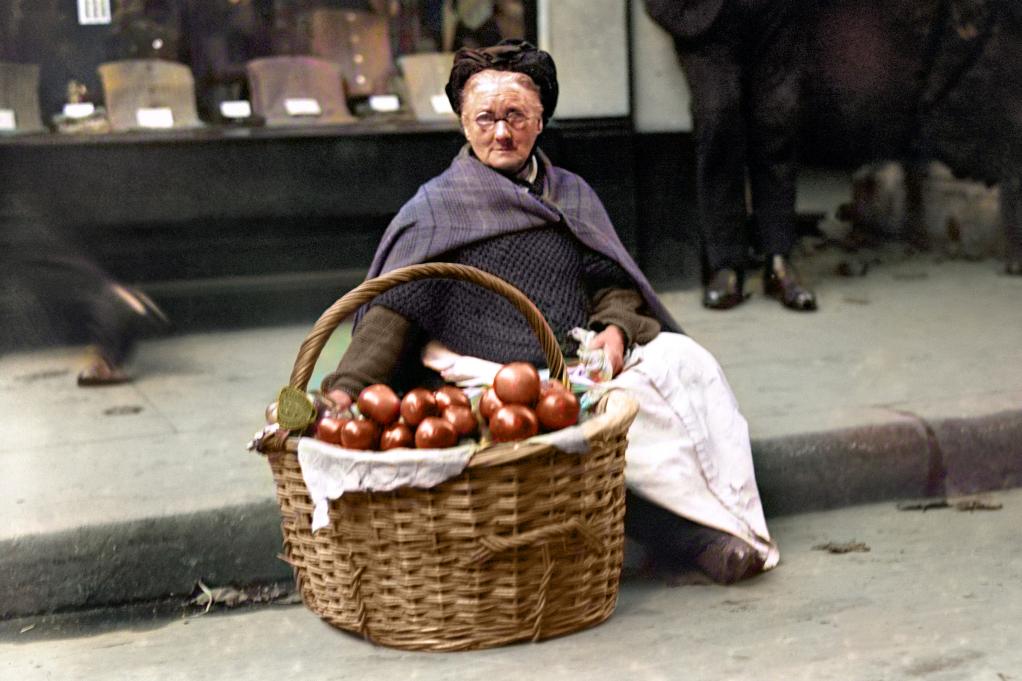
A journey into Britain’s recent past

Image: Clem Onojeghuo. Courtesy of Pexels

About Britain: A Journey of Seventy Years and 1,345 Miles

Tim Cole, Bloomsbury Continuum, June 2021, 384 pages, £18.99

KEN BELL drives down a northwestern Memory Lane

The Festival of Britain in 1951 was intended to show that the war was over and Great Britain was back on her feet. As an ancillary to the Festival, a series of motorists’ guidebooks were written which covered all the regions of Britain. Each one of the thirteen guides contained several motoring tours that allowed the visitor to explore the country’s highways, gave advice on where to stop for food and drink, and contained plenty of photographs to keep the non-motoring public happy. Tim Cole, Professor of History at the University of Bristol, collected these guides and decided to follow a dozen of the routes. The book he wrote is a lyrical, yet sadly depressing, account of British decline since 1951.

It is interesting that none of the journeys include much information about the great cities that often start and end a journey. Newcastle is dealt with in a sentence or two about the football ground and the barracks, with the road out of the city being one of ‘unimaginative industrialism’, according to the 1950 author. It is unlikely that any modern guides would so dismiss the cities, but in 1951 the bourgeois motorist probably only saw them as starting points on his journey into the real land that was rural to his mind.

The chapter dealing with the Northwest interested me the most, mainly because as a Mancunian I am from that region. The original guide took the visitor through Preston and the mill towns, and was obviously intended to show Britain’s industrial might as well as offering nice views and decent eating houses. Some of those roadside hostelries are still in operation, by the way, but now they offer Indian and Italian foods rather than the meat and two veg of 1950. Preston in 1951 was a major port for the export of cotton and the mill towns of Accrington, Blackburn, Burnley and Nelson form a string of towns on the guide that the visitor would have driven though on his way to the Pennines and the wool towns beyond.

This is where the depression sinks in, as the Preston docks closed not long after the guide was written, just as Accrington and Blackburn lost their role of makers of cheap, thin cloth for the peasants of India and Africa to wear. Burnley no longer made ‘narrow cloths for printing’ and Nelson ceased to make patterned fabrics.

As Tim Cole points out, the 1950 author really did believe that the wartime boom would remain, and he then goes on to trace the sad decline from that optimistic year. He looks at the increasingly desperate attempts to introduce manmade fibres into the Lancashire spinning process, often using fibres that had been invented in Britain. Those new processes did not need an army of skilled or even semi-skilled workers: what they needed were a few unskilled machine minders, but even so, tariffs and competition from abroad quickly rendered the mill towns uneconomic. Each mill town brought over cheap labour from Pakistan to reduce the wage bill as a final throw of the dice, and when that failed, one by one the companies that had brought them to Lancashire shut up shop and left the towns to sink.

Tim Cole takes the reader out of Burnley, along the road to Colne, via Nelson and then up to the Pennine Hills and on into Yorkshire and the relics of its woollen past. I have made that journey myself many times and Cole’s sympathetic portrayal of the region shines through. Sadly, it is a journey from prosperity to aching poverty in a few short miles that took seven decades to complete.

Dispatches from 1643

The following is an extract from Book II of William G Carpenter’s epic poem about the English Civil Wars.

The poet is Philip Meadowe, assistant to John Milton in his role as Foreign Language Secretary for the Council of State under the Protectorate.  Meadowe reads his lines to Milton at Milton’s house in Petty France, Westminster. 

1643: a tough year for the Parliamentarian armies, with defeats in every quarter of England, and ever and always short of money and provisions.  Robert Devereux, Earl of Essex (herein “Dev-Ex”), Captain-General of the Parliamentary Army, is Meadowe’s protagonist in the early sections; this excerpt presents the successful conclusion of Dev-Ex’ siege of Reading in April 1643.

An excerpt from Book I, The Sword of Gideon, may be found at Expansive Poetry Online Spring 2022 (www.expansivepoetryonline.com/CarpenterPoem.html). 

WILLIAM G. CARPENTER is the author of Eþandun (Beavers Pond Press,2020), which depicts King Alfred’s struggle with the pagan Danes in 878 AD.  Available from Amazon, Itasca Books Distribution and www.williamgcarpenter.com

The Loss of the West

Dev-Ex’ men were dying by the score: 

“to death, by troops, the soldiers went,” says Chapman,

men spotted, burning, writhing, raving, bruised,

the life of men ebbing in stinking rills,

yet Dev-Ex knew no crime against Apollo,

no priest’s daughter seized, no ritual stinted,

that merited infernal punishment

of his half-frozen, always hungry men –

unless, as seemed unlikely, He preferred

east-facing altars and communion rails

and a Book of Common Prayer for the godly Scots –

unless He favored base servility

towards every courtier that caught Charles’ ear,

including Laud, Charles’ encroacher-in-chief. 


Or was it our indifference to His Word,

maiming and murdering maugre Majesty? 

Rupert had stormed Birmingham on Good Friday,

then, on the very feast of the Resurrection,

Sir William Waller occupied Welsh Chepstow –

perhaps no insult to the Prince of Peace

unless pursued without humility,

which was, Dev-Ex conjectured, Waller’s way. 

Our guns knocked down the tower of St. Giles,

but only when the Rs set a cannon on it. 

As to maimed rites, Parliament starved his army,

though willing enough to grant him compensation

for R despoilment of his lands in Staffs

out of the lands of Arthur Capel, Charles’s

lord-lieutenant of Salop, Chesh, and North Wales –

who loyally had bought a barony

when Charles, hungry for money, slashed the fee. 

(A bargain at three hundred fifty pounds;

Sir Richard Newport later paid six thousand.) 


The “generals” in the Houses, knowing famine

and filthiness would breed disease in soldiers

who could afford nor daily bread nor clothing

whenever their promised daily eight pence failed,

nevertheless dared not incur the blame

of taxing men enough to fund the war –

pretending to themselves that Charles’s false

and dilatory treaty for a peace

would obviate the need to pay the army. 

Wherefore the Houses tottered along on loans,

first voluntary, then by threat of law,

and now sought to shift the hugeous cost

of war onto the Rs by sequestrations,

a measure certain to inflame their hatred. 

Only Pym, the true, the brave, foresaw

the Ps must needs dig deeper for the Cause

and dared to introduce an excise bill,

which naturally would kindle popular ire. 


As Dev-Ex lay in Daniel Blagrave’s bed,

his mind floating up through depths of sleep,

Sir John Meyrick breathing next to him

in darkness, with Sir John’s siege-guns rumbling

all day, all night, now going on nine days,

from west, north, east, and south of the worn town,

the birds a-chattering in the intervals,

he knew the siege of Reading verged on failure. 

Most of his regiments were undermanned,

primarily from this devilish camp fever

that wantoned through his army’s camps and billets. 

Provisions, powder, shot grew ever scarcer. 

And today, Charles’ host would arrive in force. 

At least the dead and dying could be shipped

down the Thames, which the Ps controlled downstream. 

An army is a perishable thing: 

maybe he ought to have rolled the dice at Oxford,

leaving Aston’s garrison in his rear. 

War was martyrdom, whoever triumphed. 


Pudsley dressed him.  Dev-Ex breakfasted

with Carey-Rochford, Robartes, Grey, and Hampden,

Constable, Goodwin, Skippon, and Du Boys. 

Meyrick, of course.  Cold capon, bread, and wine. 

They then progressed from Blagrave’s house in Southcote

to Caversham, where they met with Colonels Holborne,

Barclay, Meldrum, and Middleton, who’d slept

close to their regiments across the Thames. 

Dev-Ex had brought his secretary, Baldwin. 

Dawn lightened the rainy air.  No sun shone,

though fresh buds glowed on the tips of branches. 


“This Council of War shall now come to order.” 

Thus President Meyrick.  A dim chill tavern. 

“To recapitulate,” Dev-Ex began,

“why we’re here instead of Charles’s capital: 

leaving Aston’s regiments in our rear,

seven of foot and several troops of horse,

whilst charging Charles’s ring of garrisons –

not wise.  Whilst our more greener regiments

further dissuaded us from undertaking

the more hazardous task.  For which cause, too,

we thus far have elected not to storm

the governor’s forbidding palisadoes. 

Also our bargemen crave this reach of Thames. 

To boot, this matter weighed as much as any,

the welfare of the godly Reading people

groaning under Sir Arthur’s popish cruelty,

beaten, robbed, enslaved – their homes their prison. 

Rupert’s troopers roar like a sudden squall,

but Aston’s swarming plunderers have settled

like locusts on the folk, consuming them. 


“We’ve held off from mortaring their houses

and burning the unhappy town to the ground. 

Our guns play on their works, not on their churches. 

And so we find ourselves:  the walls unbreached,

their garrison intact, and our men scourged

by fever – with Charles and Rupert and young Maurice

and ten or twelve regiments, horse and foot,

arriving from Wallingford at any hour. 

In which light, the sole course, best to preserve

what yet survives of our afflicted force –

you know not how it gnaws at me to say it –

the only certain means to preserve our army,

is penitently to march back to Windsor,

relinquishing this siege for better days.” 


They sat in silence, stunned.  Constable bridled: 

“My lord, you mock our faith and fortitude. 

Think of the vast mercy shown at Kineton

and other fields too numerous to name. 

Crawling back to Windsor, where our men

had starved, but for killing of Charles’s deer –

with Charles and Rupert snapping at our flanks –

it behooves us, rather, to quick-march to Oxford

and storm it, having lured the popish wolf,

the wolf and the wolf’s cubs, from their popish den.” 


Du Boys added, not to be thought timid,

in his tongue-tied Netherlandish accent,

“When we have Oxford, they must sue for peace.” 

Meyrick had replaced him on the ordnance. 

The president studied faces, but said nothing –

betraying no dismay or disagreement,

unclear whether he was for or against retreat,

as Dev-Ex’ oldest, closest comrade present. 


Anticipating, Skippon answered thus: 

“Respected sirs, our horse may reach the town,

but our lame foot would quickly be devoured

by Cavaliers raging along Thames-side. 

And it will take some days to ship our sick

downriver, lest Sir Arthur murder them.” 


The small coal fire began to warm the room,

“divine tobacco” (Spenser) scenting the air. 

Said Hampden with a smile:  “My lord but tempts us. 

Not so, Lord General?  You would try our courage? 

The mercies Colonel Constable refers to,

they follow us today.  My Lord Grey (nodding)

has swelled our host.  Our trenches indefeasibly

advance on Aston’s works.  This man Flower –

we’ve now cut off Charles’ traffic with his people.” 


“A malignant messenger,” commented Meyrick. 

“A drummer of ours fished him out of the river.” 

Goodwin spoke up eagerly, “And look

at the feats of our fierce Caledonian friends,

Barclay and Holborne foiling the Earl of Forth;

Meldrum and Middleton, at Dorchester,

routing Charles’ life guard and snatching a cornet.” 


Dev-Ex exhaled a puff of smoke, content

to hear his councillors debate the motion. 

An old Parliament man, the General knew

that deference must be pricked to foster counsel. 

Grey added that the Eastern Association,

having assumed the risk and the expense

of sending several regiments abroad

(minus the Norfolk troop that mutinied

rather than fight for foreign counties’ safety)

with Cavendishes criss-crossing their northern borders,

if the Houses’ host rearward marched to Windsor

never again would join in such campaigns. 

The Parliament itself might reconsider

commissions should this mountain sire a mouse. 

The colonels knew that Lord Grey’s eastern levies

were the worst-equipped, -disciplined, and -paid

of any mustered for the present siege. 

They studiously refrained from knowing glances. 

Dev-Ex nodded.  Grey could contribute nothing. 


“I see that none here favors our withdrawal,”

said Dev-Ex, releasing peaceable smoke,

“which therefore, for lack of a second, dies. 

Yet such would not impair our army’s principal

purpose, which of course is guarding London. 

Nor do all favor a sudden lunge at Oxford. 

And so, a bear at stake, we abide Charles’ dogs. 

War is martyrdom, whoever triumphs.” 

They sat a moment, till Dev-Ex suggested

the Council briefly adjourn to Caversham Hill,

whence they might gain celestial instruction

as to their dispositions for the day. 


With Meyrick leading, following the thunder

that broke at intervals from the thick cloud

and smoke that hid the battery up the hill,

recalling Sinai to those godly captains,

they left behind the houses of the village

and left their horses at the barricade

that guarded Aston’s knowledgeable works. 

They found themselves exposed to wind and rain,

and earthquake when the greater pieces roared,

then huddled in the lee of a makeshift shed

erected on the south perimeter

to guard the match and powder from foul weather. 


Stepping into the wind, the General peered

across the river towards the battered town,

once prosperous, once occupied by Danes

as hostile as Sir Arthur Aston’s Rs. 

He scarcely could discern its walls and ditches

through the slanting rain and low blowing clouds. 

Nor could he find his other batteries,

whose smoke the rain and gale bore away. 

Beckoning, he led the shivering colonels

across the hill’s crown to its northmost fence. 

From there they could make out their furthest outworks,

but beyond those, nothing.  Where was Charles? 

He scanned the plain with his perspective trunk,

then absently passed the device to Meyrick. 

He eyed the dripping faces of his fellows. 


“Here we are,” said Dev-Ex.  “At the stake. 

Four good if weary regiments we have

facing Charles’ most probable approach. 

Can four withstand his ten?  And what if Rupert

swoops in from west or south, and Aston sallies,

an anvil to the German prince’s hammer? 

The Houses’ army could be smashed to bits,

the London road left practically unguarded,

and us to face whatever punishments

befall men who squander the Lord God’s host.” 

A wet gust licked Dev-Ex’s fringe from his brow. 

Meyrick ushered the Council back to the shed,

where Dev-Ex dabbed his eyes.  Continuing: 

“Yet I concur, I must, with your advice,

Lord Grey, that to scurry back to Windsor

would be at least as costly to our Cause,

worse than defeat, in weakening the spirit

of those who do, and those who might, support us.” 


Unwilling to infect them with his dread,

and wishing, further, to lift up their hearts

despite the wind and rain, despite their prospects,

Dev-Ex glanced from face to face.  How he missed

Greville – his faith, his quiet joy in those he loved,

his portion of Our Savior’s kindliness,

his lucency in speech, his unrestrained

audacity in countering the foe. 

At least he still had Meyrick, Hampden, Robartes –

unlike Achilles, who went mad with grief

when his Patroclus fell to Hector’s spear. 


He caught the expectant glint in Hampden’s eye,

Hampden’s lips as if prompting his next words: 

“Let us rejoice, dear friends,” concluded Dev-Ex,

“in how Our Lord has favored this our leaguer. 

His mercies you know well, and his afflictions. 

It is our privilege to fight His battles.” 


Still Hampden looked at him expectantly. 

“Meyrick,” Dev-Ex said.  “Turn these great guns

to north-northwest.  Charles will be here soon.” 

Hampden, yet again, now Goodwin too. 

His two MPs, with Constable a third. 

Meyrick was a fourth, but “grappled to him

with hoops of steel and worn at his heart’s core.” 

“Robartes,” Dev-Ex added, to the baron,

“your foot, men know, stood firm at Kineton. 

Go quickly, now, and march them over the bridge. 

Meldrum will dispose them in his lines. 

We’ll meet Charles with five regiments at Caversham.” 

Robartes paled, pursed his lips, and nodded,

the slow action more a submissive bow. 

“Questions?  Meyrick, you may adjourn the Council.” 


They silently recrossed the battery,

the south wind spitting rudely in their faces. 

Dev-Ex felt as though his mask had cracked,

allowing chill tears for the coming slaughter

to drench his shaven cheeks in rivulets. 

The slender works he’d raised against his dread

gave way, and fear suddenly swarmed his trenches. 

“Dear Lord.  Dear Lord,” he muttered to himself. 

“Only you.  Only you, my Lord.  My God.” 

And the Lord God of Hosts heard his appeal. 

He stopped and looked across the river, where

the drifting cloud concealed and revealed Reading. 

A whitish thing appeared and disappeared,

wavering on the corner of the wall,

the northwest corner, facing Caversham Bridge. 

He looked, and the others followed his gaze,

as the white cloud opened and closed the vision. 

He took back his perspective-trunk from Meyrick. 

It was.  Yes.  A white flag of parley. 

“Praise God,” said Dev-Ex.  “Aston wants to talk.” 


But Aston did not want to talk.  Bedridden,

speechless from an injury to the head

inflicted by a falling chimney tile,

thanks to Meyrick’s diligent cannoneering,

Sir Arthur had laid down his tyranny. 

Command devolved on Colonel Richard Feilding,

a kinsman of William Feilding, Earl of Denbigh,

an R, and of P Colonel Basil Feilding. 

Dev-Ex hurried back across the river

and sent a trumpeter with Carey-Rochford,

whose father, Dover, served in Charles’s horse guards,

to make a truce, if offered, and give terms,

God willing, for surrender of the town. 

The Rs sent Colonel Bolle and LC Thelwell

and Sergeant-Major Gilby out to treat,

while Carey-Rochford stayed behind, a hostage,

joined by LC Russell and SM King. 

Meyrick’s guns fell silent, as did Feilding’s. 


When Dev-Ex summoned Aston, he’d refused

to let him march away with all his men. 

“I came not,” Dev-Ex said, “for the town only,

but for the men” – the whole three thousand of them,

a formidable access of strength for Oxford. 

But now, with Charles and Rupert on his doorstep,

his regiments consuming with the fever,

Dev-Ex willingly approved that trade

(excepting renegadoes from his army),

but capped removal of R guns and plunder. 


“Do we lack faith?” asked Hampden, privately,

once the trumpeter was on his way. 

They stood a few steps off from Dev-Ex’ tent,

where the R envoys sat.  The rain had paused. 

“Where is the sword of Gideon and the Lord?” 

Hampden continued.  “We outnumber Charles. 

Relief from Oxford was expected, which

is why we came with such a populous host.” 

“I’ll bear whatever blame accrues,” said Dev-Ex,

“without undue concern for martial glory. 

We cannot risk leaving London naked. 

Better a living dog, than a dead lion. 

Their ‘full honors of war’ will cost us nothing.” 


A distant cannon fired, well beyond Caversham. 

Charles was coming.  They went inside the tent,

Dev-Ex quietly ordering the guards

to keep the Rs from running back to Reading. 

“We’re under a truce,” he said to Colonel Bolle. 

The rain resumed.  Cannon- and musket-fire. 

The Rs were agitated, caught between

their truce and their obedience to Charles. 

A messenger from Colonel Meldrum came: 

Barclay’s and Robartes’ men were holding firm

against the whole brunt of Charles’ attack. 

Hampden left the tent to order dinner

and fetch a few more guards to watch the Rs. 


Colonel Bolle hailed from Louth in Lincolnshire,

but his foot regiment was raised in Staffs. 

Dev-Ex, the latter county’s lord-lieutenant,

knew Bolle’s officers and knew their families. 

Gilby, a papist, served under papist Belasyse. 

They dined.  There was no sally out of Reading,

which, Dev-Ex said, was good news for their treaty. 

Good news, he meant, for the R negotiators,

now Dev-Ex’ hostages in all but name. 

He ordered Hampden to the nearest battery,

with orders to let fly with one great gun

to mind Colonel Feilding of his position. 


The cannonfire dwindled and fell silent. 

Feilding asked for leave to seek Charles’ blessing

on the terms he and Dev-Ex had agreed. 

A messenger was sent and Charles was found

encamped amid his host near Wallingford. 

He seemed to give assent to Dev-Ex’ terms,

whereupon Colonel John Belasyse MP,

Lieutenant Colonel Edward Villiers, Bolle,

Gilby, Thelwell, and George Bond joined Feilding

and cosigned the articles of surrender. 

The following morning, Aston’s garrison

(including Henry Mordaunt in disguise,

soon to inherit his poor father’s earldom)

marched from Reading out Grey Friar’s gate,

led by Sir Arthur on his horse-drawn litter,

drums rattling, colors hanging, trumpets bleating,

the foot with ball in mouth and smoking match,

with four pieces of ordnance in their train

and fifty wagonloads of bag and baggage.  

The enigmas of Erskine Childers

Image: Gary Woods
CHRISTOPHER SANDFORD remembers a gifted novelist and nationalist contrarian

The era either side of the First World War was a golden age for the spy novel. Perhaps there’s nothing like a really cataclysmic global shock to get the creative juices flowing. In July 1914, Arthur Conan Doyle put Sherlock Holmes aside long enough to publish a story with the unambiguous title of ‘Danger!’, a cautionary tale of the British Isles being starved into submission by an enemy submarine blockade – and in at least some accounts one that proved spectacularly counter-productive, in that it spurred the Kaiser and his naval chiefs to do exactly what Doyle had warned of. The following year, John Buchan’s The Thirty-Nine Steps mixed jingoism and Germanophobia in a topical yarn involving a sinister anarchist gang, a man with part of his finger missing, and an extended chase scene through the Scottish highlands.  Somerset Maugham went one further and actually became a wartime spy, an experience he later put to good use in his celebrated Ashenden series.

But perhaps the pick of the literary crop was 1903’s The Riddle of the Sands, by the Anglo-Irish writer, soldier, politician and latterly radical nationalist Erskine Childers. It had the lot. If some destructive process were to mysteriously eliminate the world’s entire spy-thriller library, only The Riddle remaining, we could surely reconstruct from it every outline of the basic formula, every essential character and flavour contributing to the genre. In essence, the novel mixes some gentle satire about the graded snobberies of the Edwardian class system (at least a generation ahead of its time in that respect alone) with a lively seafaring adventure involving a couple of topping British chaps going after German spies in the Baltic. It’s not only a riveting tale in itself, but so cogent in its account of the decrepit state of Britain’s maritime defenses that it prompted the Admiralty to hurriedly install a series of new coastal gun batteries, and The Times to call the author ‘a hero’ as a result; an ironic and perhaps poignant tribute in the light of what ultimately happened. Childers’s book was an instant bestseller, and still ticks over today. No less a judge than Ken Follett has called it ‘the first modern thriller.’ If you want a really gripping read, with plenty of white-knuckle action, some energetically sustained period idiom, and the sort of mass of technical description and verifiable detail later found in the James Bond series, The Riddle is for you.

Jenny Agutter in the 1979 film of The Riddle of the Sands

Curiously enough, about the one person seemingly unmoved by the book’s success was Childers himself, something of an odd bird, by all accounts, even by literary standards. Aged 33 at the time of The Riddle’s publication, he never wrote another novel, instead concentrating on dry military manuals and increasingly strident political tracts. To call Childers a man of humanising contradictions is an understatement. On the one hand, he served the Crown as a wartime intelligence and aerial reconnaissance officer, greatly distinguishing himself in the 1915 Gallipoli campaign. On the other, he was busy on the side smuggling German-bought guns to supply the Home Rule nationalists in Ireland, running the weapons onto a moonlit beach north of Dublin on his racing yacht Asgard, accompanied by his wife Molly and a small crew. It was almost like a scene out of The Riddle, with the critical distinction that instead of sounding the alarm about German ambitions, Childers was in the curious position of serving the King while transporting arms from the Kaiser intended for a revolution behind the lines.

The 1916 Easter Rising that saw the deaths of 485 men, women and children, among them a number of swiftly enacted judicial executions, in a week of rioting around Dublin seems to have finally clarified any remaining questions of allegiance in Childers’s mind. ‘I am daily witness to the prostitution of the British Army I served to fulfill the many aims I loathed and combated,’ he wrote. ‘I am Anglo-Irish by birth. Now I am identifying myself wholly with Ireland.’

Having cemented his establishment credentials by winning the Distinguished Service Cross for his work at Gallipoli, Childers settled down to live as a sort of proto-hippy on a farm in County Wicklow, extolling the virtues of vegetarianism, enjoying an occasional toot of cocaine and, it’s said, a degree of freedom from the traditional monogamous ideal, while sending his three young sons to a progressive school where they would be taught nothing about religion until they were old enough to decide for themselves.

The war over, Childers was a victim of the worldwide Spanish Flu pandemic, and barely survived. This was apparently another significant, or decisive, turning-point in his evolution from popular middlebrow author to radical activist. At least one of his biographers has speculated that he suffered a psychological breakdown during the winter of 1919-20 as a result, with a subsequent ‘addiction to danger that amounted almost to a death-wish.’ The following May, Childers published Military Rule in Ireland, a stinging attack on British policy, and followed it by a series of articles in the weekly Irish Bulletin tearing the Liberal prime minister David Lloyd George to shreds. Childers was secretary to the delegation that negotiated a treaty with Westminster in December 1921, providing for effective Home Rule a year later. Following that, the proposal went, the Dublin government would act as a self-sufficient dominion of the British Empire, much like Canada or Australia. Lloyd George wrote in his diary of a ‘sullen’ Childers, seething with ‘compressed wrath’ that his attempts to bring about total and immediate Irish independence had failed. Winston Churchill went one further, calling him a ‘murderous renegade’, and a ‘strange being, actuated by a deadly hatred for the land of his birth.’

The Anglo-Irish Treaty spurred Childers, and others of his persuasion, to take direct action in the face of what they saw as a sellout to London. After a further series of articles in the perhaps provocatively titled War News, one morning in early November 1922 the now middle-aged and frail Childers set off by bicycle from his current home in County Kerry on the 200-mile journey to confer with Eamon De Valera and his fellow rebels in Dublin. There might almost be a certain wry comedy to the scene, which you could imagine, say, Alec Guinness later portraying on film, but for its consequences. Childers was soon arrested by British troops along the way, and found to be in possession of a small .32 calibre pistol, which may or may not have been in working order, in violation of the recently passed Emergency Powers Resolution.

The subsequent judicial proceedings were swift. Childers was indeed taken to Dublin, if under radically different circumstances than he would have wished, where he was put on trial a week later. The proceedings ended on 18 November 1922, after the defendant had refused to recognise the legitimacy of the British Military Tribunal convened for the event. The possession of the pistol was enough to condemn him to death. Childers lodged an appeal against the sentence, and this was heard the next day by a civil magistrate who said he lacked jurisdiction because of the ongoing paramilitary disturbances in the area. ‘The prisoner disputes the authority of the Tribunal and comes to this Court for protection,’ the judge wrote, ‘but its answer must be that its jurisdiction is ousted by the state of war that he himself has helped to produce.’

Early on the morning of 24 November 1922, Childers, now a stooped, gaunt-looking man of 52, was led into a tin-roofed shed used as a firing range on the Beggars Bush barracks in Dublin, where a row of twelve soldiers was waiting for him in front of an open coffin. Perhaps nothing in the life of this brilliant, troubled and sometimes perverse figure became him like the leaving it. After shaking the hand of each member of the firing squad, his final words were: ‘Take a step or two forwards, lads, it will be easier that way.’ A few hours earlier, Childers’s 16-year-old son – also named Erskine, and a future President of Ireland – had been allowed to briefly visit his father in his cell. The condemned man made him promise two things: that he would forgive every minister in the provisional government who was responsible for his death, and that if he ever went into politics he was never to seek to capitalise on his execution. The younger Childers did as he was asked, and in later years sometimes produced a scrap of paper on which his father had written his last testament: ‘I die loving England, and passionately pray that she may change completely and passionately towards Ireland.’

The hunt for Merlin

The story so far (Chapters 2-8 inclusive have all previously been published on this site, starting here). The complete poem has just been published as A Man of Heart, by Shearsman.

Mid 5th century Britain. After the legions have withdrawn, the island is facing civil war, a growing number of external enemies and a steady tide of pagan migrants looking for land.

Vortigern has been appointed to protect what’s left of Roman Britain. The precarious balance of power he had established has been destroyed by a British revolt, led by his son. He retreats towards the hills with his wife and the remainder of the Field army.

At this point, the late 12th century narrative I’m following slides into a different version of the past, and any connection with History as understood in the 21st century is lost.  

LIAM GUILAR‘s continues his epic of post-Roman Britain

The Hunt for Merlin

Vortigern, his wife and retinue

have retreated to the green hills

with the grey mountains at their back.

The wizards tell him where to build.

Each day the workmen sweat to raise a wall;

during the night the walls collapse.

(Seven times, not three as you’d expect).


The wise-men mumble together then announce

they need the blood of a fatherless boy.[i]

Find him, they thunder, sprinkle his blood

and your fortress will be impregnable.

Rowena, astonished by stone buildings,

seeing magic in the masons’ every move,

understands the fact of sorcery.

Vortigern, patient, muses:

four centuries of Roman stone

and now we cannot build a wall?

He sends men hunting down the hill

into the wooded valleys.


In the unmeasured space between

an end and a beginning, along a ridge,

scraped drop on either side, to the summit.

Looked down at broken clouds, across to distant,

unknown, crumpled peaks. The valley;

inept geometry of distant fields,

a path falling off the ridge towards the track

that followed the scrawl of infant river.


Companions wearing mail,

thick woollen cloaks, dark red,

held at the shoulder with an ornate brooch,

only their eyes visible in the helmet’s gilded face,

reading the boundaries, a line of trees,

a stream, a standing stone.

Saw the rustler’s pathway peeling off the ridge

to meet the hammered track

leading to the cluster of round huts,

pointed roofs and sagging thatch,

fenced space, the drift of smoke.

The perfectly ordinary settlement.


Entering the village, they walk into a silence

abrupt as the chill slap of a breaking wave.

No child is playing. No woman singing at her work.

Painted figures, fading on the grey wall of the cloud.

No one runs away, or screams, or sounds alarum.

No one is reaching for an axe. They stop.

They watch. They follow, herding the strangers towards


the largest hut, white walls blotched

beneath the inept cone of sagging thatch.

The chieftain waits to greet them,

wrapped in a bear skin, the skull as hood.

The messengers stop to admire the skin,

trying to frame a compliment.

The old man nodded. ‘Old ways.

My dad took me down into the trees.

Gave me a spear, said, good luck son.

Come back with a bear skin or don’t come back.’


They step into the hut.

‘You have come for the child.

He says you will take him to his woman.’


Behind the fire, in the gloom,

a dark stain, small and indistinct.

Something catching the light flicks,

golden. ‘Do not deny your mission.

He knows what happened, what will happen’

-The shape moved, seemed larger-

‘could happen.’


This man, who as a child

went after bear, alone,

armed only with a spear,

is terrified.


A girl came to the entrance.

The boy stood up and left with her.


‘I have sent word to his mother.

She will travel to the King.

We have sheltered the abomination

and in return, he has shown us what we are.

True, he has given us dominion

over the peoples of the valley.

He has kept our cattle healthy,

our crops abundant. Terrified,

our neighbours pay us tribute,

sacrifice their daughters to his lust,

give us gold and precious things

from places far beyond

the eastern limit of the Empire.

Glass bowls, jewelled cups,

silk filigreed with gold.

At first we gloated over our success,

and wallowed in the excess of desire.

But then we realised the price we paid.


We have done foul things at his bidding.

But we have seen him part the clouds,

make running water turn to ice in summer.

He has raised a hand and brought down hail,

fist sized, to smash our enemies

and ten feet from them not one of us was touched.

We have done too much to keep him happy.’


Outside someone was sobbing.

‘You are the King’s men.

That makes you loyal and brave.

You stayed when all the others ran.

Take the boy to Vortigern the King

He rarely speaks, he seldom asks…’

The old man’s voice was melting.

‘I would rather face a bear again,

with only these old hands,

than risk the anger of that child.

But warn your King, tell him: take care.

The child will give him anything he wants

but his price will be beyond imagining.


When news spreads that he is gone

our enemies will devastate this village,

take not one slave, touch not one woman.

They will kill everyone and then

erase this stinking cess pit from the landscape.

When they arrive, we shall not fight.

Death will bring a fine forgetting.’ 

2

The villagers gathered in the fog,

the women clutching their children,

like failed approximations of the living.

The men stranded in poses of dejection.

The chieftain led them along the path

towards the rising hills. As the ground

sloped steeply upwards he left them.

‘You will need a week to reach your King.

By then, if your mind is still intact,

you will believe everything I’ve said.’


On the first day,

they followed the track upstream to the ridge

in fog so thick they never saw the sun.

The boy did not speak.

He didn’t greet them in the morning,

nor wish them well at night.

On the second day they picked their way downstream,

the slopes of scree like broken shards of fog,

scattered in shining fields that clattered away downhill.


On the third day he said;

‘We will go no further in this valley.

My enemies are waiting. 

We must climb that ridge.

On the other side is a village,

where there are horses.

You will kill their owners,

then you will take me to my woman.’


Vortigern had trained them well.

Their plan was clear and simple.

Entering the settlement, first

they would ask for horses

in the King’s name. Then

they would offer to pay.

If this was refused, then,

and only then, the killing would begin.


The boy had other plans.

Eyes closed, swaying, lips mumble,

hands move, an unexpected squall

drives rain against the window

and blurs a clear view. Or on high ground

the clouds move in so fast the outlines disappear

and there’s only vagueness and sudden dark.


Swinging axe and stabbing spear,

cutting through to the surprise

of scattered bodies, bloodied edge.

They were saddling the horses.

‘Where is the boy?’

‘With the women.’
‘I thought we killed them all?’

‘We did.’


There was the rain

and somewhere was the night.

Each man huddled in his own cloak

and endured the darkness

until the boy made a pile of sticks.

A movement of his hands, a black flame,

tinged silver at the edges,

sprang upward like an army

leaping from its place of ambush.

They huddled closer. No light,

but their sodden cloaks began to steam,

their frozen hands unclenched.

The wood was not consumed.


The escort saw the landscape

as passage, difficult or easy;

shelter, safety, risk. The boy?

Scree was the outrider of his enemies,

the scattered boulders sentries for his army,

waiting for the signal to advance.

Only the water was patron and friend,

escorting him towards his woman.

In the woods their passage slowed.

He must greet every tree he passed,

laying his palms flat on each trunk,

lips moving to shape words no one recognized.

If no blossom sprang beneath his hands

that was worse than the making of fire.

3. Merlin’s Mother

Care has worn her face into perfected sorrow.

But even in the habit of a nun,[ii]

she is sensuality incarnate,

a delirious possibility of carnal bliss.


‘Tell me lady, who is the father of this child?’


‘I am a King’s daughter, Conan was his name,

before the Saxon’s came, before they killed him.

I do not know the father of this child.’


‘You were raped? No? So tell me, lady,

tell me, how did you get this child?’


Rowena wraps her cloak around the sobbing woman,

leads her away from the armoured men,

settles down to listen, seeing images.


…summer flies in clouds above the shattered brightness of the pool.

Girl children playing: armoured guards like dirty statues in the shade

along the rocky shore.

‘Beneath my father’s palace a stream snaked between the trees

and upstream of where it cut the path leading from the fort

our childish secret place, a spring running from a carved grey stone,

with swirling snakes coiling around an open mouth

and a broken headless statue.

(We blushed the first time that we saw it, erect, enormous.

Imagine that? And other silly chatter).

My slave girl trying to be important,

told us pagans worshipped this forest god, this half-man, half-goat,

and if a maiden, toying with herself, close to this place of power,

spoke his name three times, he would appear and pleasure her.

No one believed her rubbish.

We were children,

girls in their white shifts splashing in a pool,

drifting through the summer heat.


A long hot summer.

Maybe five years after we had found the stone.

The river shrivelled to a chain of stagnant ponds.

 Unmarried, un-promised

with maids to the river bank.

Tents in the shade of the trees.

Guards? Of course.


On the hottest night,

aware of sweat beading and running

like grazing insects,

aware of my own body,

humming its lust.

 Images of a future husband,

a constriction in the throat,

the heat became intense.

I murmured the god’s name,

opened my eyes to the golden man,

the carving of Priapus come to life.

His eyes blazed golden in the shade.

The frost burn of pleasure.

All night delirium, the rhythms of flesh,

exhausted, weeping with delight, I fell asleep.

In the morning, in the river, trails of blood,

signs of the night’s excesses

but no signs anyone had slipped into my tent.


That afternoon I dreamt

church doors were shut against me.

I saw the priest and congregations

stone a woman in the field

and knew that she was me.

But until the Golden Man returned,

my body crooned for him.

 My mind a swamp of images of what we’d done.


3 nights the Golden Man appeared and played with me.

3 nights of ecstasy I’ll never know again.

Then no more.

I prayed for him. I prayed to him, but the nights were a rack

and I despised the sunrise confirming that he had not come.

I sickened. After three days, my clothes were tight

and food was hateful to me.

In three weeks I gave birth:

 a child with golden eyes.

As they laid it on my breast,

he smiled at me and said:

‘Daddy sends you greetings

You will not meet again.’


And that lady is how I got my child.


Must I stay ‘til it arrives?’


‘You fear your own son?’


‘Speaking his crimes would rot my mouth.

Remembering them is penance enough.’


Rowena let her go.

Vortigern asks: ‘Is it believable?

She wouldn’t be the first maid

who snuck away to meet her lover

and then made up such a story

when she found out she was pregnant.’

‘No. Her fear is genuine.

Whatever he did is so foul she won’t speak it.’ 

4. A Fatherless Boy

The messengers, staggering, 

bring the boy before the King.


Like a dead bird on a wire

animated by the breeze,

a stain gaining definition

as it strikes, the boy,

brushing aside the soothsayers,

swooping towards Rowena.


‘Blessed is the well below the valley.’

He strokes her breast. She recoils,

hands tying invisible knots, speaking

words that no one present understands.

The boy stumbles, recovers, laughs,

brushing flies from his face.

Reluctantly, he turns to Vortigern.


An old man’s voice,

with rust at its edges

and rot at its core.


‘I have loosed the bands of Orion.

I can summon leviathan.

He will make a covenant with me.


I have gone down to hell

and freed the rider in the clouds.

When he’s enthroned upon his mountain

he will bow before me as my slave.

I can harness the unicorn to the plough.

I can make you Emperor.’


‘Of what?

The Empire’s gone.’


‘It can be rebuilt.

For you.

For a price.’


‘And you want my soul?’


‘I wouldn’t wipe my arse on it.

I want your wife.’


Vortigern hears Rowena hiss,

senses she has stepped back,

holding seax in a steady hand.


‘She doesn’t want you.’


‘Look fool!’ Vortigern sees his province,

refined to a detailed map.

To the south, the shrinking stain

of Vortimer’s rabble and across the Channel,

the scum filled puddle of The Boys’ growing horde.

The black plague of uncountable ships,

swarm the coast, or burrow up river

like maggots attacking a corpse.


‘Give me your wife.

I will annihilate your enemies.

I will be a tempest in a field of corn.

The plans that they have nurtured,

their dreams and ambitions, I will ruin

as they watch, like patient farmers

as hail destroys their crops,

announcing their starvation.

Give me your wife.’


‘Child, she is not mine to give.’


Time thickens like a river freezing.


There is only the voice;

a wind from nowhere,

and the images of burning homes,

pestilence, atrocities, famine.

Vortigern sees his kingdom.

The dead lie where they fell,

crops rotting in the fields,

the starving cattle wander free.

He could see misery,

surging over the land and drowning it.

‘I can put an end to this.

That’s what you want;

peace, order, stability.

Give me your wife.’


He sees himself in gold embroidered silk,

seated on a marble throne,

in a many columned hall.

The cities flourishing again,

merchants on the roads,

ships safe in the harbour. He hears

the grateful people speak his name.


No enemies, assassins

outrage or complaints?

This time, he laughs.


The ice breaks.

The river moves.


‘Child, this is not yours to give.

There will always be wars. Always

people who starve while others feast.’


‘You will die alone.

The sky will rain fire.

You will be vilified

for eternity unless

you give me your wife.

They will debate your name

and your existence.

Your life will be obscure,

your death will be unknown

unless you give me your wife.


She is blessed amongst women.

The fruit of her womb will be the Messiah:

a Warrior King to end the Saxon threat,

reconquer Rome and found a Reich

to last a thousand years.

His name will never be forgotten.

Nor will mine.’


‘Child, she is not mine to give.’

Vortigern dwarves the chubby boy;

a foul vagueness slithered from a cave,

shrivelling in the unaccustomed light.


‘Go your way.

Take this gold,

my thanks

for the lesson.’


‘We will not meet again,

Vortigern Dead King.

I could have saved you.’


‘No,’ he says,

with the conviction of a rock.

‘No, you could not.’

5. The end of the province of Britannia

Morning, and the mist filling the valley below,

clouds streaking the sky like smoke plumes

streaming from the distant peaks. The sun

cold, bright and ruthlessly indifferent.

His officers accumulate around the wagon.


A baffled Rowena stands beside him,

leaning into whatever happens next.


The remnants of Britannia’s last Field Army.

Faces he remembers from the day they left for Lincoln[iii].

He knows them all; their families, their stories,

which one can improvise, who imitates a wall,

who plays it safe, who takes a chance. 

‘Some of you are angry. Some feel betrayed.

You think you would have danced

to your crucifixion if a comrade could be saved.


We have all lost friends who gave their lives

so we could live. You think I’m selfish

because I wouldn’t trade this woman to a child

to save the province.’ He heaved a sack towards them.

‘There is all the coin that’s left.’ He threw a second,

two malignant lumps shifting as they settled.

‘And there’s the plunder; gold rings, armbands, torques…’

the list is endless and irrelevant, dismissively

he waves his hand towards the chests beside him.

‘The royal treasury. The province. Britannia.

That’s all that’s left of what we swore to serve.


But what we swore to serve

meant so much more than that.

I will not sacrifice another life

for two bags full of shiny trash.


Divide it now amongst yourselves.

See that no man feels aggrieved.

Those who wish to leave: go home.

Or you can take an oath to follow me.

I will not ask you to do anything

I have not asked before,

but I will make you rich,

and give you lands for your old age.’


The sound of swords being drawn,

the rustle of kneeling men.


Later she finds him, on a fallen trunk.

The twisted branches of the stubborn trees

behind him like a web the boy had spun

to trap a king.


‘You are a strange man, Vortigern Cyning.

Locrin locked a woman up and lost his kingdom.

You risked the loss of yours to set one free.

The two sacks are untouched in the grass

and not one man has left.’


‘We’ve clung to the old titles;

adepts of a failed dispensation,

whose rites and formulas

belong to history, repeating

an incantation that’s familiar,

habitual, comforting,

when it’s obvious the gods

have long since left the temple

and the words no longer work.


It’s a strange new world

we’re stepping into;

clean, cruel and honest.

At least until we discover

new reasons for hypocrisy.’


[i] Laȝamon describes this advice as ‘leasing’ (lies.)  The shift from bishops and priests to wise men and soothsayers is in his text.

[ii] Another one of Laȝamon’s anachronisms. The story of Merlin’s birth and conception follows his version.

[iii] See chapter 4

More information about Laȝamon’s world and work, as well as the two published volumes in this project can be found at www.liamguilar.com

Parnassus, and patria

Tumuli at Revesby in Lincolnshire

Sunken Island: An Anthology of British Poetry

Various authors, edited by Alexander Adams, foreword by William Clouston, London: Bournbrook Press, 2022, pb, 55pps, £12.50

Bournbrook Press is an offshoot of Bournbrook Magazine, founded in 2019 to offer a “primarily British audience with traditionalist, socially conservative argument and entertainment”. This venture’s newest publication is something unusual, and unlikely to be financially profitable – an anthology of original poetry put together specifically to appeal to small-c conservatives, a subset of the population not noted for their interest in new verse.

Poetry written for political purposes always runs a risk of being bathetic, just as other arts can easily become ‘artivism’ – a point amply understood by this collection’s editor-contributor, who has written an informative book on this subject. I have a 1900 anthology on my shelves, Heroic and Patriotic Verse, and while much of the verse is excellent (it includes Byron, Goldsmith, Gray and Shakespeare), some has dated less well, including ‘Of old sat Freedom’ (one of Tennyson’s windier effusions) and the frankly indigestible ‘The Roast Beef of Old England’. The verse in Sunken Island is similarly uneven, but when it is good, it is, as Social Democratic Party leader William Clouston notes in his Foreword, “both serious and enjoyable”.

Clouston also points out that this book’s eight contributors are not “blind to the country’s flaws”, and this gives this collection both muscle and a certain wryness of outlook notably absent from some patriotic poets, like Rupert Brooke or Henry Newbolt. There is no bombast to be found in Sunken Island, nor sentimentality, nor Patience Strong-style platitudes. The two prevailing emotions are love, plus loss – an odd echo of Hugh Kenner’s A Sinking Island (1988), which concluded that “there’s no longer an English literature”. 

Kenner’s gloom is to some extent gainsaid by the poets in here, who suggest that a kind of distinctively English literary sensibility may still be discoverable – or at least a British one, because one of the poets included (the pseudonymous ‘Columba’) is Scottish, while another (Rahul Gupta) is a noted exponent of traditional alliterative verse. This does not mean that the other six contributors are stodgily suburban, nor even a hundred percent English. Alexander Adams is a justly well-regarded artist whose work is in the V&A (several of his drawings are used in Sunken Island). Benjamin Afer calls himself an “authentic reactionary”, but authors futuristic novels. Daniel Gustafsson is a bi-lingual (Swedish) doctor of philosophy, as well as a highly-regarded poet. A. Robert Lee taught in America and Japan, and lives in Spain. Nicholas Murray is a biographer of Kafka and Chatwin, and a Fellow of the Welsh Academy. S. D. Wickett is an aficionado of Lovecraft and Phillip K. Dick, and affianced to digital media.

The poems vary greatly in style. Nicholas Murray’s six short contributions feature everyday vexations, from standing on a train station concourse to being bitten by someone else’s dog (for which he apologises, the most stereotypically ‘English’ moment in the book). He notices small things, and honours the 19th century clergyman-diarist Francis Kilvert, who did too – “…the man of God whose fine gift / for seeing things lights the day / As sunshine after sudden rain”. He looks into a painting of a Lancashire landscape, and remembers its departed artist. He is abashed by the force of nature, in the form of a night wind which blew away rooftiles, and “glib proposals”. He then eavesdrops on an imagined conversation between James Joyce and Percy Wyndham Lewis, as verbose Irishman and Vorticist Englishman consider quantity, and the urgent need to stir things up, to dissolve “the solid shell”. 

A Robert Lee’s contribution, ‘From…’, addresses Englishness, coherent but complicated, encapsulated by the “multi-there” and “multi-then” of his own odyssey from 1950s Manchester via London, America, and Japan to 2022’s Spain. “The initial from takes on lengthening distance…” while everything changes and he changes with it, but remains in some ways strangely the same. ‘From…’ is more impressionistic jottings than verse, yet it ably conveys diverse textures and odd connections – between Manchester, Lancashire and Manchester, New Hampshire – between London periods and London postcodes – between the Kents of Chaucer and supermarkets – between the island mentalities of Britain and Japan, and the “inside outsider” status of being a Spanish-speaking Englishman in Spain. In him, national nostalgia seems in permanent tension with what Germans call Fernweh – ‘farsickness’, a wish to see far-off places – and perhaps he needed to get away to understand where he had come from. As Kipling asked, “what should they know of England who only England know”? Lee at least has come “to relish the from and the to: England’s away-day, England’s away-life”.

Adams’ poem ‘Roadside Diner, Shropshire’ is less sanguine, a contrast between the heartbreaking hills of Housman, and the plastic-bottle spotted county Adams and companion view from a bleary café window, downing terrible food while “vital, indifferent” traffic dashes by, heading nowhere purposefully. This England is, he repines, “an absent people, a civilization surrendered”, and sometimes he feels like a “lone journalist remembrancing a defeated land”. Lack of legacy nags and nags at him, as he sees sunning girls arising and going “back to life, leaving nothing of themselves” – fewer traces than even the evanescent, underestimated flowers of May.

Daniel Gustafsson’s ‘Bulbs’ strikes a brighter botanical note, reminding us that even the gnarliest corm in the coldest ground pushes green spears upwards each spring, offering potential for beauty and self-realisation. His work is rhizomed in Yorkshire, a county whose notoriously crumbling Holderness coast offers plentiful metaphors for erosion of substance. “The guards have let us down”, Gustafsson warns, political leaders and opinion-formers mere “architects of entropy”, letting everything slide into the abyss out of sheer carelessness. “We’ve seen our footings fall / to sludge… have seen, through slurred decrees and sleights of hand, / a state of blank forgetfulness / usurp the patterned sand.” Spurn Point at the northern tip of the Humber could be nationally emblematic, a sandy spur soon to be an island, near where the great port of Ravenspur once saw kings land, and monks build monumentally. The East Riding’s erosion is symbolic to him of a country’s “great diminishing”, as a former “common ground” is washed across by shallow sloganeers, who impose their views on others like some postmodern Morality Police.   

Gustafsson’s lyrical wistfulness is given a more combative edge by Benjamin Afer, whose ‘Lines on an English Street’ express feelings of inner exile, the author feeling alienated from his ancestral domain by demographic changes as symbolized by ethnic restaurants – “a surfeit of whiffs”, from an alphabet soup of eateries in High Streets that have somehow become Grand Bazaars. “It’s a solitary walk the Englishman beats / In the swelling crowds of the English streets”, he insists bleakly, notwithstanding possible economic upsides: “The happy ringing of tills and drumming feet / Make a merchant at home on the English street.”

The collection closes on an unexpected crescendo, with four extracts from larger works by Rahul Gupta. The author, who holds a doctorate in alliterative verse, and is undertaking a major translation project from Old Norse, is alive with logophilic intensity, pouring torrents of words onto pages as if upending some wonderfully capacious cornucopia. Familiar words are deployed in unexpected ways, unfamiliar ones summoned from OE word-hoards where they have lain too long asleep, and new ones are smithed – and all are marshalled to striking mythopoeic purpose.

Gupta’s chief area of operations is the post-Roman, pre-English world, when Angles, Celts, Jutes, Saxons and Scandinavians moved across claimable spaces between downfallen towns, where horse-masters could be kings and stones sacred, and ravens battened on bodies at real battles whose locations we have lost, and which we barely now remember even as names. This is ‘Matter of Britain’-territory, Gog Magog-country, the Logres that lies under even the ugliest parts of everyday England, giving the least imaginative modern Englishman some vague sense that he belongs in some continuum. This epic subject – so liable to be conventionalised and sentimentalised – gains vastly in vitality at his hands.

‘A Norse Étude’ is a combat scene condensed from all the hyperboreal epics, from Heimskringla and Orkneyinga to Beowulf and the Battle of Maldon, imagining “horny-nebbed” hooded crows descending on men falling under a hail of “Flanged arrows as flinder- / fledges leapt from edges / over shields, bows shrilling, / when shank-deep was dankness / of gore”.  Poems were – and are – also weapons in these wars of all against all, as tribal minstrels interpret and invent legends, weaving words “from that web of swords”, trying to forge the future by capturing the past.

‘The Turn and Fall of Leaf’ could be a title from Tolkien (to whom Gupta has been likened), a lambent disquisition on autumn, its colours and significances, its glories and sadness, as the glowing greenwood goes glorious, then brown and blighted. Winds pick up and shiver the timbers, and their chlorophyll clothes weep to the far-below floor. Secret glades are shockingly made naked, and rides are mounded deep in dry detritus – “pathways choked, by parched masses: / crinkled chamoisy, crunched underfoot / as shuffling drifts. With shift and ruffle / They enswathe the sward”.

Time for ‘The Onset of Winter’, with clouds and winds as “sky-skirmishers, obscure armies / of ill omen”. The Wild Hunt passes, baying and foaming hounds headed by Herne, antler-masked “wood-warlock of the warrior-band”, in elemental pursuit of white harts from heraldry, while berserkers and whippers-in howl and scream and “chew the shieldedge” in frenzy. And then – the chase passes and the thrumming hoofbeats recede into infinity. Nature exhales, and all is suddenly motionless. Overhead, “Hunter and Hound are hovering still” in a sky diamonded with stars and a moon of mother-of-pearl.

At other times, winter deals harsh hail and sleet to punish the patient earth – “gravel-grain that grows no harvest”. Yet other days, snowfall hushes all noise, subdues all striving; a giant Cold Genius walks the whitening land with his finger to his lips, casting crystals of infinite variety indifferently over the quick and the dead, obliterating boundaries, ivorying all the colour-fields. “All wear his harness: / ironhardened earth” and “The ice tightens / Wonderfetters”.

But there is release at last, as even in winter there is the possibility of warmth. In ‘The Midwinter Sun’, the “all-tending orb” suddenly rides high and reaches down with effortless sensuality. He “…drives the spore: he inspires the bud, / as the twig whitens, to untwist her whorl: / he parts her petals; the pollen to smoulder / from flaunting catkins”. Blinking, yawning animals emerge from hibernation, hungry for the starting grass, conscious of urgent impulses that make the male hen harrier seek out multiple mates, send hares careering across champaigns, adders intertwine Gordianally, and unsettle cattle in crew yards. The poet tracks Phoebus lovingly through his golden ascents, then Wheel of Fortune downturns, as the “traitor-barons…eclipse the glory of his lion’s mane”, as so often before. The uncertain sun sinks into the sea, and troubled men set out in tiny boats, “travailing westward /… on benighted tides, / In search of the dawn.” Like all his others, this is a virtuosic performance, a welcome reminder that there is still blood in the tradition.

The contributors to this volume could all be seen like Gupta’s metaphorical sailors, navigators of unknown waters, seeking Sol-ace in a gathering dark, reaching for verse to reverse eclipse. If sometimes their reach falls short, at other times it does not, and always they are honourably-intentioned. This public-spirited Parnassian project can be judged a success if even a few of the many other anxious among the English are inspired to poetry in their turn.

Overlooked Orpheans

STUART MILLSON enjoys some neglected gems of British music

Why does the spiritual toll of the Great War seem to have been harsher for Britain than for any of the other European combatants, asks organist, scholar, music-writer Robert James Stove, in commentary for a booklet which accompanies a new CD on the Australian Ars Organi label. His answer is clear and convincing: ‘… the innate stability of British political institutions meant a lack of opportunities for citizens to work off their war-neuroses by revolutionary activism, as agitators did on the Continent.’ Only in a marginal way did iconoclasm and an avant-garde spirit affect Britain, post-Passchendaele: for every Vorticist there was a Vaughan Williams offering benediction, although few realised that the composer’s Pastoral Symphony of 1922 was inspired by his own experiences of service on the Western Front. (Listen more closely to the ghostly, wordless voice in the unsettling final movement…)

The new recording, a superb audio curation of British music made in the magnificent acoustic of Our Lady of Victories Basilica, Camberwell, Victoria, Australia, assembles less-well-known names from the canon of Albion’s musical renascence. Alongside John Ireland and Vaughan Williams, for example, are Thomas F. Dunhill (excerpts from his Three Chiddingfold Pieces), Sir Walter Galpin Alcock (Westminster Abbey organist at three coronations during the high-tide of Empire) and Alan Gray (successor to Stanford in the organ loft at Trinity College, Cambridge).

All works and composers chosen by the Ars Organi Recordings for this collection have in common a profound attachment to English tonality (although Norman Fulton, at CD track 11, is a Scot). It is as if the music of our islands is a mirror-image of the (physical and psychological) architecture of the very institutions that have long-governed us. The slow-breathing, hushed voices of churchgoers, a ray of wintry light, piercing through a cathedral window like a gimlet; a sense of eyes being drawn toward the pinnacle of a Norman arch – these are some of the feelings and imaginings inspired by many of the works, some of which are ethereally-enhanced by the participation of singers Elizabeth Barrow (soprano), Brigette De Poi and Emily Tam (mezzo-sopranos), Leighton Triplow (tenor) and bass, James Emerson.

John Ireland’s The Holy Boy and a George Herbert setting (The Call) from Vaughan Williams’s Five Mystical Songs are probably the best-known pieces in the entire collection. Peter Warlock’s old English carol, Adam lay Ybounden, also finds an occasional place in concerts and Radio 3 schedules. But who knows the music of the composer, whose work concludes the CD: Geoffrey Turton Shaw? A near-contemporary of Vaughan Williams, he served as a school inspector and was himself schooled by that master of church music, Sir Charles Villiers Stanford. Setting Milton, Ring outye crystal spheres/Once bless our human ears… Turton Shaw embodies all the virtues of his genre and world, confirming the past, present and future solidity of English music.

The music of a Welshman, Daniel Jones (1912-1993) makes up another important collection of lesser-known music from our shores, in a well-presented four-disc set from Lyrita Recorded Edition. Many will remember the remarkable ground-breaking Lyrita vinyls of old: symphonies by Bax and Rubbra, John Ireland songs, The Magic Island by William Alwyn, and a record that particularly caught my eye when I first came across it in the record department of Foyles, some 40 years ago – Ireland’s Forgotten RiteLegendMaiDun and Satyricon – with its strange, haunting cover-artwork; a picture which hinted at the form of a landscape, with dotted colours and distances just out of reach. In fact, if I were to try to find a simple, neat description of Daniel Jones’s music, it would come close to those suggestions inspired by the Ireland graphics – although this enigmatic composer (a code-breaker during World War Two) never really embraced, at least self-consciously, folklore and the symbolism of place. He tended to think of himself as a composer who happened to come from Wales, rather than an artist who had a civic responsibility to proclaim a culture – although he did write a major choral-orchestral piece, The Country Beyond the Stars, which – post-Festival of Britain – seemed to have an ambience of dreamy peninsular coasts, beacons and Black Mountains.

Perhaps the nearest he came to a home-spirit, an imprint of Welshness, was in his Dance Fantasy, performed at the 1982 Proms by the (then) BBC Welsh Symphony Orchestra under Bryden Thomson – although the work still seemed somewhat set apart from Welsh dances and Celtic legends by fellow-countrymen Hoddinott, Mathias and Arwel Hughes. And it was at this concert that I briefly met the musician… As I walked around the hall at the end of the evening, making my way back to the tube station and suburbia, I spied the bespectacled composer (this one-time friend of Dylan Thomas) at the Royal Albert Hall Artists’ Entrance. Venturing over, I asked for an autograph, which was cheerfully forthcoming and written in a neat, methodical hand, with a fountain pen. An avuncular, slightly diminutive figure, Daniel Jones seemed very pleased by the performance of his own music at the Proms. (It has to be said, the Proms Planning Department has been less than generous to the composers of Wales.)

Lyrita’s new CD collection puts the music of Jones and Cambria very much on the map. Pianist Martin Jones has spent many hours in the National Library of Wales, painstakingly uncovering an almost Bach-like progression, cycle, abundance of piano works, from a neatly-crafted Capriccio of 1934, to the much more ambitious (“big stride”, was the composer’s own description) ThemeVariations and Fugue in C-sharp minor, dated 1945 – the year of Britten’s Peter Grimes and the advent of the Attlee era. Tonal, but sometimes wandering away from those clear lines; meditative, but never obscurely introverted, Daniel Jones created, it seems, pure music, for its own sake. Rigorous, never arduous, and always making the listener wonder what the next piece will bring.

A great deal of the composer’s character is also suggested by some of the photographic portraits featured in Lyrita’s CD booklet, not least the final black-and-white plate: Dan Jones, with benevolent eyes and a grin, partly concealed by the pint of bitter he is bringing to his lips. A good Welsh brew, no doubt.

CD details

Undertones of War, British Organ and Vocal Music After 1918. Robert James Stove, organ. Ars Organi, AOR004

Daniel Jones, Rediscovered Piano Works, Martin Jones, piano. Lyrita, SRCD.2396

Wilko Johnson, 1947-2022

Wilko Johnson
CHRISTOPHER SANDFORD remembers the first time he met Dr. Feelgood’s ace guitarist

It’s a strange thing about biography. No matter how many facts are told, how many details are given or lists are made, the essential thing all too often resists telling. To say that so and so was born here, that he did this and did that, that he wrote this song or painted this picture, that he went around the world and married and had children and grew old and died – none of that tells us very much. What we want is a story.

In that spirit, all I can personally add to the numerous obituaries of the guitarist, sometime actor and raconteur Wilko Johnson, who died on 21 November at the age of 75, is a primordial memory of around December 1974, when I was just up at Cambridge and the Fitzwilliam student union somehow scraped together enough money to hire the band Dr. Feelgood to enliven our college Christmas party. This was the season, let it be remembered, of ubiquitous high heels and loon pants, of crushed velvet jackets with lapels as wide as hang-glider sails, when the charts were full of extravagantly quiffed artists like Rod Stewart and Bryan Ferry, or David Bowie camping it up in his soul-revue phase, with a rather depressing weekly Top of the Pops regimen characterised by names like Charlie Rich, the Carpenters, John Denver, Olivia Newton-John and Jasper Carrott doing his ‘Funky Moped’.

Anyway, into the midst of this dross came the Feelgoods, and such was the shock I had to momentarily check the cigarette in my mouth (those were the days) to see if it might possibly have been tipped with something more exotic than Players Number 6. I mean, incredible. Four stony-faced Canvey Island geezers who looked like they might just as soon put the boot in as entertain you: two brooding hulks on drums and bass, both well tasty, and the twitchily charismatic figure of Lee Brilleaux up front singing – snarling, really – in a suit that might once have been white, jabbing his fist around in time to the beat in a way that suggested definite malice rather than some hippy-like state of being transported by the music, banging out a no-frills mix of sweaty rock and rhythm and blues typified by two-minute songs with titles like ‘I’m a Hog for You’ and ‘Stupidity’ and ‘Tequila’. This was not a group you could imagine sitting cross-legged over a communal bowl of brown rice to a backdrop of herbally-tinged joss sticks and the wafted strains of the latest Yes triple-gatefold concept LP.

And then slightly stage left, right there in front of me, Wilko Johnson on guitar. Amazing. Clad totally in black, pudding-bowl haircut, eyes staring out across the audience like searchlights, about twice a song he would suddenly take off like an overwound Energizer Bunny and go lurching across the stage, side to side, back to front, all the while keeping up a stark, percussive rhythm with a chopping right hand interspersed with a few demented solos that seemed to be more the product of a semi-tuned chainsaw than a traditional musical instrument, a routine he varied only by periodically lifting the guitar to his shoulder and peering down it as if to strafe the audience. As I say, stunning. [EDITOR’S NOTE: Johnson’s distinctive guitar style and powerful stage presence can be seen here.]

At the end of the show, Wilko walked right past me. He had little choice in the matter, because there was no backstage area to speak of and the band just had to push their way through the crowd as best they could in order to make it out to the impressively knackered-looking transit van waiting for them at the back gate. Anyway, there he was: sweating, hollow-eyed, carious teeth, funereal two-piece suit that looked like he might have slept in it. ‘Great show,’ I said with that originality of phrase certain critics later so admired in my various rock biographies. And since Wilko apparently still wasn’t going anywhere, I had a further moment of inspiration. ‘Who’s your favourite guitarist?’ I asked, thinking it might be one of the consensus heroes of the day like Clapton or Beck or Page, or even dear Keith Richards, with whom he undoubtedly shared a certain laconic, back-to-basics playing style. But no. ‘Mick Green,’ my new friend informed me, and then to my surprise stuck around long enough, right there in the chaotic aftermath of the gig, ankle deep in spilled beer and stubbed-out fags, as people banged past us, to tell me, a total stranger, all about Green, another great British eccentric, it transpired, and sometime staple of early-60s combos who also liked to chop up his lead and rhythm parts into one percussive wall of sound, and – proving his versatility if nothing else – later went on to rock up albums by everyone from Paul McCartney and Van Morrison up or down to Cliff Bennett and Engelbert Humperdinck. At the end of what became a sort of oral PhD thesis on the whole history of early British R&B, Wilko asked my name, introduced himself – as though he might not already be familiar – shook my hand, and effusively signed the scrap of paper I hurriedly thrust at him. ‘Keep in touch,’ he said. My first interview. Then he was gone.

Speaking of versatile, it later turned out that Johnson himself had been to university, wrote poetry, spoke Old Icelandic among half a dozen other slightly fringe languages, and in later years developed a keen interest in astronomy to the extent that he built an observatory on the roof of his Essex semi. Along the way, he married his childhood sweetheart Irene and they remained together, raising two sons, until her death from cancer 38 years later. As the world knows, Wilko himself was diagnosed with an apparently incurable tumour in 2013. He reacted with notable stoicism, remarking that he had never felt so alive than whilst under an imminent death sentence, continuing to perform every night he could and teaming up with The Who’s Roger Daltrey to make the album Going Back Home. Then the apparent miracle happened, and doctors in Cambridge performed a nine-hour procedure that saved Johnson’s life while relieving him of most of his intestines. Paradoxically, having cheerfully faced death, Wilko fell into one of his recurrent funks once given the all-clear. ‘I knew I was really getting better from the cancer when I started getting depressed again,’ he said wryly.

It seems funny to say this, but for all the bug-eyed stage antics and raucously loud, sweat-soaked nights in dingy rock clubs, there was a quality of innocence – an innate modesty, the eagerness to please, to connect with the audience, never to lose sight of his roots – that distinguished Wilko Johnson throughout his life and career. I doubt we’ll see his like again.

“Music for a while, shall all your cares beguile”

STUART MILLSON can hear Restoration London from 21st century Kent

Music@Malling, planned and organised by classical musician and educator, Thomas Kemp, is one of those provincially-based, smaller festivals which succeeds in bringing performers of national and international standing to local and semi-rural settings. So, instead of having to travel to Kings Place, Wigmore Hall, or St. James, Piccadilly for the pleasure of hearing the finest chamber music, discerning audiences in a mid-Kent community need only stroll to their local church, or the modern performance space of the Norman-built Malling Abbey to savour baroque bands such as Fretwork, who gave Music@Malling’s lunchtime concert on Wednesday 28th September.
With thoughts of the succession of the modern monarchy still fresh in our minds, Fretwork transported us to the candlelit rooms of Restoration England – to the great, collective release of breath and creativity that followed the crumbling of Cromwell’s Commonwealth and the return of the ‘Merry Monarch’. It was the great Henry Purcell of William and Mary fame, and the sometimes overlooked Matthew Locke (who possibly taught that renowned composer) who together gave voice to this other, long-before-Elgar English musical renascence. Fretwork’s Malling Abbey tribute to them could not have been more all-encompassing, because although only a group numbering five players and performing just sequences of fantasias, the choice of works somehow captured, perfectly, the authentic soul and sound of the composers and their age. If one representative musical fragment of an epoch could survive, the cadences of those intimate Fantasias would suffice.
Purcell’s immense creativity, packed into his remarkably short life (1659-1695), was legendary; like an English Mozart, a stream of work flowed, with Fretwork giving us an example of this impossible productivity, in the form of Fantasias 8 (in D minor) and No. 9 (in A minor) written on consecutive days. The trait of English melancholia, which would surface again some three centuries later in Vaughan Williams, Britten and Alexander Goehr (the latter earning a place in Fretwork’s programme) is clearly audible in Purcell’s music, but perhaps less so in Matthew Locke’s Consort of Four Parts No. 3, who allowed more of the spirit of the boisterous bourrée into his music, but still tempering his lighter touch, with the reflection of the sentimental saraband.

Alexander Goehr. Photo: Etan Tal. Wikimedia Commons

In his introduction to the concert, Festival organiser, Thomas Kemp, spoke of Purcell’s music as “harmonically complex for the period in which it was written”. Yet contemporary composer, Alexander Goehr, writing in an age of deliberately difficult atonality, decided to reach back to the general harmonies of Purcell’s time in his own Fantasias, written for Fretwork in 2000. Goehr’s music may be seen as Purcell through a modern prism (like Britten’s absorption of Dowland) and yet the Fantasia No. 2 for Five Viols begins with an abrupt phrase – a jolt, or disturbance in the autumnal English landscape, confirming Goehr as no purveyor of pastiche, but a composer in the continuum stretching back to Purcell and Locke’s time.
Ancient and modern were reconciled not just in the music. Fretwork’s music-stands held, not paper scores, but digital devices on whose screens were displayed the staves and notes of the 17th century. It was a fitting touch at this most memorable recital.

“Once upon a time I was a poet”

Basil Bunting. Photo: National Portrait Gallery, Creative Commons licence
Letters of Basil Bunting
Selected and edited by Alex Niven, Oxford University Press, 2022, £35
LIAM GUILAR welcomes new insights into a little-studied modernist’s mind

Basil Bunting died in 1985. Despite having been praised as one of the twentieth century’s ‘greatest poets’ critical attention to his work has been rare. A reliable biography didn’t appear until the publication of Richard Burton’s A Strong Song Tows Us in2013; an annotated collected poems, edited by Don Share, not until 2016. Now, with the publication of Alex Niven’s much anticipated edition of Bunting’s correspondence, it’s possible to eavesdrop on one of the twentieth century’s most interesting conversations about poetry[i].

In his eighties, Bunting looked back on his life:

Once upon a time I was a poet; not a very industrious one, not at all an influential one; unread and almost unheard of, but good enough in a small way to interest my friends, whose names have become familiar: Pound and Zukofsky first, Carlos-Williams, Hugh MacDairmid, David Jones, few indeed, but enough to make me think my work was not wasted.[ii]

If you recognise the names of his friends, that ‘good enough in a small way’ is an excellent example of the English art of understatement. But it’s not a popular list and despite the excellence of his poems, Bunting remains a marginal figure. No one reviewing the letters of T. S. Eliot needs to explain who T. S. Eliot was, or why he is of interest. 

The life

Born in 1900, Bunting was imprisoned as a conscientious objector immediately after leaving his Quaker school in 1918. He studied economics before drifting to Paris where he met Ezra Pound and worked, alongside Ernest Hemingway, for Ford Madox Ford. Following Pound to Italy, he met W.B. Yeats and Louis Zukofsky in Rapallo and began a life-long and life altering affair with Persian literature.

His first published poem, Villon, is one of the finest long poems of the 1920s[iii], but by the end of the 1930s Bunting’s career as a poet had stalled: his first marriage had failed, he was out of work and separated from his children. The war rescued him. He discovered he had skills that others valued. He rose through the ranks to Squadron Leader, worked for British Intelligence, then after the war, returned to Persia, first as a diplomat, before resigning to marry a Persian and becoming the Persian correspondent for The Times.

Expelled from Persia and then unceremoniously dumped by The Times, he struggled to find work in post war Britain.

Despite the excellence of his poems, the story could have ended here, with Bunting as a footnote in histories of literary modernism, remembered as one of Pound’s ‘more savage disciples’[iv], but in his sixties, spurred on by his meeting with a young Tom Pickard, he wrote Briggflatts; at 700 lines a short long poem, praised as the ‘finest’, ‘greatest’ or ‘most important’ long poem either of the twentieth century or ‘since The Wasteland’. He enjoyed a brief period as ‘Britain’s greatest living poet’ before fading away in a series of university jobs and poetry readings.

Poetry

From such a long and varied, life Niven estimates only about 800 letters have survived, of which approximately 600 relate to Briggflatts and the period after its publication. He has selected almost two hundred and thankfully decided to print complete letters rather than extracts.

Divided into three sections, the bulk of the book is devoted to the 1960s and afterwards. For anyone interested in poetry, rather than Bunting’s biography, the core of the book may be the pre-1960s letters to Pound and Zukofsky.

Briggflatts was praised by critics of the stature of Hugh Kenner and Donald Davie and poets as diverse as Thom Gunn, Allen Ginsberg and George Oppen, but Bunting’s status in the critical hierarchy has never been secure.

Perhaps his version of poetry is too austere to be popular. In a letter to Poetry Chicago (not printed by Niven), he wrote:

We are experts on nothing but arrangements and patterns of vowels and consonants, and every time we shout about something else we increase the contempt the public has for us. We are entitled to the same voice as anybody else with the vote. To claim more is arrogant.[v]

Throughout these letters and in later interviews he repeatedly stated the belief that politics, philosophy and theory harm poetry. The poet’s job is to write good poems.

What I have tried to do is to make something that can stand by itself and last a little while without having to be propped by metaphysics or ideology or anything from outside itself, something that might give people pleasure without nagging them to pay their dues to the party or say their prayers, without implying the stifling deference so many people in this country still show to a Cambridge degree or a Kensington accent. [vi]

It’s possible to go through these letters and compile a list of quotations to show he had little time for academics or literary criticism. He was publicly dismissive of creative writing courses and poetry competitions, while working on the former and once, memorably, judging the latter. He didn’t think poems should be explained; if a poem requires footnotes it’s a failure and tying the poem to the poet is a fundamental mistake.

What characterised Bunting and his correspondents was the intense seriousness with which they applied themselves to writing. Poetry was a craft and writing it involved ‘sharp study and long toil’. The ‘study’ involved arguing into existence a standard of excellence selected from poems going back to Homer. Once tentatively established, they attempted to excel their models, supporting each other through stringent criticism.

Bunting’s criticism, shown here in his letters to Zukofsky, was not for the faint hearted, but it was driven by the belief that some poets, Pound and Zukofsky explicitly, were ‘entered without handicap against Dante and Lucretius, against Villon and Horace.’ In the same letter, he explains: ‘At least for my part, I’d rather have somebody who is thinking of Horace call my poems bloody bad than to hear them praised by somebody who is thinking of-who-Dylan Thomas?’ (p.194).

Two other reasons for Bunting’s odd position in the critical hierarchy stand out. In some quarters he is tainted by his association with Pound, especially where Pound is only known, vaguely, for his political and racial opinions. The other is the insistence that ‘All Roads lead to Briggflatts[vii] which condemns him to the role of a minor poet who pulled off one great poem and consistently ignores the quality of the rest of his work.   

The letters qualify the first of these, while Niven’s editing and commentary seem driven by the second. If there ever was a tribe of Ezra to match the tribe of Ben, with Rapallo replacing the London taverns, Bunting was always too obdurate an individual to be anyone’s acolyte. [viii].

The explosive end of the pre-war correspondence with Pound is well-known, though the full text of the letter hasn’t been available until now. What becomes obvious is that from the late 1920s and through the 1930s the letters show Bunting becoming increasingly resistant to Pound’s politics. Bunting’s repeated statements that poetry is hampered when it tangles itself in philosophy and politics became focussed in his insistence to Pound that banging on about ill-informed economic theory was a waste of Pound’s time and literary talent, although Bunting himself isn’t adverse to sharing his ‘theories’ with Pound.

Initially refusing to believe Ezra was writing for the British fascist movement, he finally reached the limits of his patience when he learnt that Pound was ‘spilling racist bile’ in his letters to Zukofsky. His angry letter to Pound ends:

I suppose if you devote yourself long enough to licking the arses of blackguards you stand a good chance of becoming a blackguard yourself. Anyway, it is hard to see how you are going to stop the rot of your mind and heart without a pretty thoroughgoing repudiation of what you have spent a lot of work on. You ought to have the courage for that; but I confess I don’t expect to see it. (p.136)[ix]

It says a lot about the robust nature of their friendship that despite this, Pound would continue attempting to promote Bunting’s poetry, and Bunting would continue to acknowledge his debts to Pound. After the war, when Pound was incarcerated in Saint Elizabeth’s hospital for the mentally ill, Bunting picked up the correspondence, encouraged by the news that a letter from Basil brightened up Ezra’s week. Pound’s letters to Bunting, by turns abusive and incoherent, didn’t put him off.

As he wrote to Zukofsky: ‘The difficulty is how to avoid being involved in the network of fallacies while profiting from his illuminate faculty for verse and enjoying his energy and kindness.’

The same problem faces everyone today: how to see beyond the politics and racism to profit from what any poet in the past had to say about poetry and learn from what he or she achieved as a poet. Bunting managed it with his two closest friends, one a communist, one a fascist. It seems an important precedent.

Anyone interested in Basil Bunting or twentieth century poetry owes Alex Niven a great debt for the time and work that must have gone into this project.

How different the picture would be if this were a complete edition of the letters, only he knows. When Jonathon Williams published a selection of his letters from Bunting, he wrote: “What a stern, serious, funny, extraordinary ‘literary’ (LETS HEAR IT FOR LITERARY) North of England person he was’ (Williams, p.252).[x]  The Bunting of those letters, watching the birds and wild life in his garden, is absent from Niven’s collection, as are the descriptions of Persia that suggested to Burton that Britain lost a major travel writer to the Official Secrets Act.

The book’s sense of its reader is uneven. Niven explicitly describes a model reader who knows the outline of Bunting’s life and is not put off by occasional difficulties (p.xxvii). This model reader has a positive effect on his annotations, but seems to have been forgotten when he came to write his commentaries.

Why Niven thinks such a reader needs to be told what to think about the letters and how to interpret them, is a mystery. You buy an edition of a poet’s letters, wanting to read the poet’s words, and find a portion of the book contains the editor’s personal opinions and interpretations which you will never reread.   

Based on his model reader, Niven’s annotations are usually deft and show a shrewd judgement of what this reader could be expected to know. He assumes that anyone reading these letters won’t need a gloss on Dante, Swift, Winston Churchill, or others. He is also unwilling to overload the letters with commentary, assuming, (rightly), that anyone who wants to follow Bunting’s detailed responses to Pound’s books; ABC of Reading, Guide to Kulchure, will have a copy.

In his letters, Bunting could be crudely dismissive of poets he didn’t like. It’s disappointing to see his editor join in: ‘Philip Larkin (1922-1985) hard right British poetaster and trad jazz critic.’ (n.277 p.384).

Sometimes the annotation strays a long way from objective facts: ‘It must be said that Briggflatts faintly resembles certain of [Dylan]Thomas’ work in form, subject and (marginal sense of) place’ (p.194). Briggflatts probably ‘faintly resembles’ a lot of things, but it also must be said it’s hard to imagine Bunting admiring Thomas enough to be influenced by him.

The introduction includes a clear and necessary discussion of editing methods. Whether an introduction to a selection of letters needs a dramatic retelling of the first reading of Briggflatts, or is an appropriate place for a summary and critique of existing criticism, depends on the individual reader. As I don’t agree with his evaluation of Don Share’s edition of the Collected Poems, unless ‘the book’s only major limitation’ is intended ironically, or his criticisms of Burton’s biography, and I think he misreads the Pound-Bunting disagreement over Bunting’s translations of the Shahnemeh, I’m suspicious of his statements about literary matters where he strays from simply providing factual biographical context.

He uses his introduction to stake out his version of Bunting’s life, at times in explicit opposition to other published versions. I’m not convinced this is the right place for it. His dissent from Burton’s views of the significance of Bunting’s Quakerism is pointed, but his dismissal of Burton’s biography as ‘relatively light on critical explication’ is baffling. Eager to point out that book’s ‘shortcomings’, he seems to be criticising Burton’s biography for being a biography while temporarily forgetting just how problematic and limited letters are as biographical evidence.

The trust in the reader, obvious in the annotations, is not evident in the editorial commentary running between the letters. I think there’s too much. Rather than let the letters speak for themselves, he interprets the evidence and intrudes his opinions, unnecessarily:  

For all that his language and actions often fell a long way short of today’s ethical standards, Bunting certainly thought of himself as a determined anti-racist-and this letter would seem to support that view. In the context of his historical moment, Bunting’s basic philosophical views about race were, to put it mildly, considerably more progressive than Pound’s. (p. 134-135)

Comments such as this one and less lengthy interventions like ‘even if the age difference of over thirty years was problematic in more ways than one (p.140)’ seem to miss the point that adult readers are capable of coming to their own conclusions.

Sometimes the comments have nothing to do with the content of the letters: ‘There is a pressing need to apply more and deeper scrutiny to Bunting’s colonial phase than has been evident in previous scholarly and biographical treatments. But whatever its unexamined moral and political complications’ […]. (p.139)

Superfluous in terms of contextualising a letter, this manages to suggest something sinister without being informative. Even for a reader who knows the biography it’s not clear what the unexamined ‘complications’ are, or how ‘scrutinising’ them would add to the enjoyment of the poems or why or to whom such a need is ‘pressing’.

Letters encourage the tendency to tether the poems to the poet. The results of failing to distinguish between the two is a depressing characteristic of contemporary discussions of poetry, obvious in attitudes towards writers as diverse as Ezra Pound, Phillip Larkin (see above) and most recently, Dorothy Hewett[xi].

As Bunting wrote to Zukofsky:

Letters are meant to be written to affect one bloke, not a public. What is true in the context of sender and recipient may be a bloody lie in the context of author and public…secondly: the bane of the bloody age is running after remnants and fragments and rubbish heaps to avoid having to face what a man has made with deliberation and all his skill for the public’. (June 1953 qtd in Burton, page 354 Ellipsis in Burton.)

There’s nothing anyone can do to prevent that, it’s still the bane of this age, but its sad inevitability is outweighed by the opportunity to eavesdrop on one of the century’s most interesting conversations about poetry. Hopefully, Niven‘s suggestion that a complete collection of the Pound Bunting correspondence should be published will be taken up sometime soon (preferably with the letters to Zukofsky). What they had to say about poetry transcends their time, politics and personalities.  

‘Long awaited’, ‘much anticipated’ and ‘ground-breaking’ are cliches of the blurb writer.  For once they can all be applied honestly and accurately to Niven’s work in making these letters available. The good news is that the long wait and the anticipation have been generously rewarded.   


[i] Page numbers are to Niven’s book. Richard Burton’s Biography, A Strong Song Tows Us is referred to throughout as Burton.

[ii] I transcribed this from Peter Bell’s film, Basil Bunting: An introduction to the work of a poet (1982). He seems to say something after ‘David Jones’ but I can’t understand it.

[iii] The poem was written sometime in the 1920s but first published in 1930. As Niven explains, the letters cast doubt on the standard dating and chronology of some of the poems.

[iv] The description belongs to W.B. Yeats. He surprised Bunting by reciting one of Bunting’s poems from memory when they met.

[v] Poetry, Vol. 120, No. 6 (Sep. 1972), pp. 361-365 http://www.jstor.org/stable/20595781

[vi] Another transcription, this time from a talk Bunting gave in London, in Keats’ house, in 1979.  From ‘The Recordings of Basil Bunting’ with thanks to the late Richard Swigg who looked after ‘The Bunting tapes’.

[vii] Julian Stannard. Basil Bunting Writers and their work.  p.88

[viii] Consigning Bunting to the role of ‘Pound’s disciple’ is to misrepresent him as badly as Tom Pickard is misrepresented when his own excellent poetic output is ignored and he’s remembered simply as the boy who midwifed Briggflatts.

[ix]  Zukofsky’s response to this letter and whatever Pound had written that offended Bunting so much, can be read in Pound/Zukofsky Selected letters of Ezra Pound and Louis Zukofsky ed Barry Ahearn.  

[x] Williams, Joanthan, ‘Some Jazz from the Bazz: The Bunting-Williams Letters’ in The Star you Steer By. Ed, McGonigal and Price.

[xi] For Hewett and a recent example of this problem of confusing poet and poem see the remarks in https://www.theguardian.com/books/2021/apr/04/the-whole-canon-is-being-reappraised-how-the-metoo-movement-upended-australian-poetry

One last portion of ‘Chips’

Chips Channon. Photo: National Portrait Gallery, Creative Commons licence
The Diaries 1943-1957
Henry ‘Chips’ Channon and Simon Heffer, Hutchinson, 896pp, £35
KEN BELL closes the book on the celebrated diarist

This third volume of the Channon diaries concludes the publication of all the surviving diaries that have come down to us, and as with the previous two volumes it is a hernia-inducing doorstopper of a book. Chips really saw fit to include just about everything that he did in his diary and by 1943, with his ministerial career over, an awful lot of what went on involved Channon lounging in bed, making long telephone calls to snipe about others and planning his social engagements.

Although the war still had two years to run, it hardly impinged on Channon or his set, so there are few references to world events in this volume. Instead, we are treated to a series of engaging vignettes involving Channon and any number of other men getting it on, as the young people say. In previous volumes, Channon often seemed to want to do little more than allow women to see him naked and dream about young men, but by 1943 he is giving us chapter and verse on his sexual life.

Peter Coates (“Petticoats”), to whom we were introduced to in the second volume of the diaries, was still Channon’s great love, but as he was in India with the army that left Chips with plenty of free time. The House of Commons, according to Chips, was a sort of glorified molly house and Channon was quite happy to bed members from both sides, in a spirit of bipartisanship. Thus he had a fling with Labour’s Raymond Blackburn, an alcoholic who would later be imprisoned for fraud, and ended his days as an assistant to Lord Longford in the latter’s entertaining anti-porn campaign. Nigel Davies was a Tory MP who was also being bedded by Selwyn Lloyd, a future foreign secretary who ended up as Speaker of the Commons. That did not stop him from finding the time to have a foursome with Chips, the playwright Terence Rattigan and Lord Montagu of Beaulieu.

As if there was not enough excitement in Parliament, Chips had the energy to enjoy a four-year fling with a corporal in the Life Guards, until 1955, when the soldier married a woman named Brenda. One likes to think that the money that Chips paid him gave the happy couple a good start to their new life. Channon was generous to all his bed mates, especially Rattigan who took over while Petticoats was away on military service. When Channon’s mother (whom he loathed) died and her final legacy of just over £1,000 arrived in Chips’ account, he spent most of the money on a gift for the playwright.

Channon’s often obtuse comments about the people around him are much in evidence in this volume. Upon seeing the images of starved corpses of concentration camp victims, he wrote: “The rows of dead emaciated bodies all looked like Margot Asquith naked!” At the end of his life, he was still as incapable of predicting the future as he had always been. Thus, in 1952, he predicted that “The new Queen is determined, humourless, serious and will be a success but not loved – after her youth and novelty wear off.”

He wasn’t too keen on the rest of the Royal Family, either. Chips avoided the Princess Margaret and Peter Townsend affair, “as I don’t like either of them”. He blamed it on the “fat Queen Mother” for being too lazy to stop the affair becoming a public scandal, and fulminated that Margaret was “a silly, selfish, ill mannered sensationalist”. Townsend he dismissed with his greatest insult of being “middle-class”. Chips, of course, loathed the middle-class with a passion: “How I detest the middle classes! Two from Southend proposed themselves to tea at the House and stayed two hours, never knowing when to leave!!”

We read Channon for his waspish descriptions of events. Thus, at the coronation of Queen Elizabeth II in 1953, we learn that the four Garter knights carrying the Queen’s canopy managed to bungle the operation, and that Lady Carnock “was so drunk that she had to be removed forcibly from the abbey.” For his part, Channon nipped outside several times during the service onto the parapet for a cigarette and a chat with others having their own smoke breaks.

It is a pity Channon only commented on events in which he was directly involved, so there is no analysis of the Suez Crisis of 1956. Simon Heffer thinks charitably that this may be because Channon was in the last year of his life, but it seems more likely that Chips just didn’t care, because he wasn’t at the centre.

Channon in later life. Photo: National Portrait Gallery, Creative Commons licence

Nevertheless, he is a great chronicler of events during the first half of the last century. Even his failure to understand them gives us an insight into how men of his time and class thought; thus he gives us a window into the world of the upper-class Tory grandee, still at the height of his power. As an individual, I suspect that an evening with Channon would be an engaging night to remember.

It is to be hoped that a single volume of the diaries will be produced. This smaller portion of Chips is needed for the general reader who may not wish to plod through endless accounts of conversations with titled people and minor royalty. However, for the serious student of Britain in the inter-war and post-war period, these three volumes taken together are an essential primary source.