IAN C SMITH’s work has been published in BBC Radio 4 Sounds, Cable Street, Griffith Review, North of Oxford, Rundelania, The Spadina Literary Review, Stand, & Westerly. His seventh book is wonder sadness madness joy, Ginninderra (Port Adelaide). He writes in the Gippsland Lakes area of Victoria, and on Flinders Island
Correlations
In March 1790 Bligh reaches England the same day as his letters describing the Bounty mutiny written five months earlier, Bligh aboard a Dutch vessel from the East Indies, his cannon shot news via France which seethes with its own uprising as does he with his need for vindication.
A new luminary deriving from his account of the miraculous feat of seamanship in the open launch, Bligh both seethes and basks at first. But questions soon arise suggesting all is not quite right with this talk of the town exploit, and Fletcher Christian is better connected than many in England, including Bligh. His clan numbers bishops, MPs, and university alumni, one brother a lawyer, another, a doctor.
Unable to defend himself, Fletcher of the tattooed arse constructs huts of vegetation and yard, cultivating his semi-tropical garden in a mutineers’ allotment on a little known and maddeningly more difficult to find island of the remote Pacific in residence with one of several native women and various scoundrels. Even from that distance he has allies with clout.
Rumour, gossip, abounds. We all love a mystery, each with an opinion. Nobody knows where Fletcher and his makeshift mob are, nor has heard from Bligh’s launch crew. Some scoff at the idea of so many ordered into an open boat, armed and provisioned, allowed to make their way home, however hazardous, without putting up a fight, the shame of this.
Several survivors of the incident-riddled launch odyssey are silenced, dead in the East Indies where tropical diseases scythe Europeans. Others stranded there by Bligh who couldn’t wait to be disencumbered of them are now debauched, drunken, threatening, even mutinous. Bligh writes to families of some of the original crew, expressing his feelings towards these shocked innocent people’s loved ones, whether calumnious or praiseworthy.
Fletcher’s fame, or infamy, puts Cockermouth on the map. Bounty’s voyage was financed to cultivate breadfruit as a profit-skimming basic slave diet. Political radicals sympathise with the French revolutionaries, among these the young Wordsworths in this time of a burgeoning anti-slavery movement. William attended the same school as Fletcher whose brother, Edward, shall later help the Wordsworths receive their rightful inheritance.
By 1808 when news of the discovery of the isolated Pitcairners – a tribe now with their own language – spreads, the South Pacific is well-charted. Illegally deposed as Governor of New South Wales during the Rum Rebellion after rubbing rogues the wrong way again, Bligh has nine years of life left.
In the heat of the mutiny he reminded Fletcher that he had dandled the Bligh children on his knee. His wife remaining in Lambeth where their twin sons are buried, Bligh’s married daughter deputised as his first lady in Australia. Did she captivate Sydney’s fledgling society with her childhood memory of Fletcher Christian?
Theatrical extravaganzas, prequels to future film flimflam, made much of Bligh’s dramatic days during his extraordinary life. Today, some still believe Fletcher found his way home to England, or vanished into America’s melting pot. In Hobart, anxious to clear his name again, did Bligh learn of the mutineers’ island descendants? Were these days of regret, of trembling sorrow?
IAN C SMITH’s work has been published in BBC Radio 4 Sounds, Cable Street, Griffith Review, North of Oxford, Rundelania, The Spadina Literary Review, Stand, & Westerly. His seventh book is wonder sadness madness joy, Ginninderra (Port Adelaide). He writes in the Gippsland Lakes area of Victoria, and on Flinders Island
My Auntie Audrey used to cut the edges of her lawn with scissors. The grass was bowling green standard and a source of great pride, labour and constant concern. Her garden reflected her personality – meticulous attention to detail and a capacity to work endlessly to maintain her own high standards. I cannot remember her actually sitting in her garden, taking in the scents and views. The esteemed editor of this magazine takes a different view. Let nature do its magnificent work whilst I lounge with a glass of something refreshing. Both approaches to gardening were to some extent on display at this year’s Chelsea Flower Show. The event has become a high societal event akin to strawberries at Wimbledon and flags at the Proms.
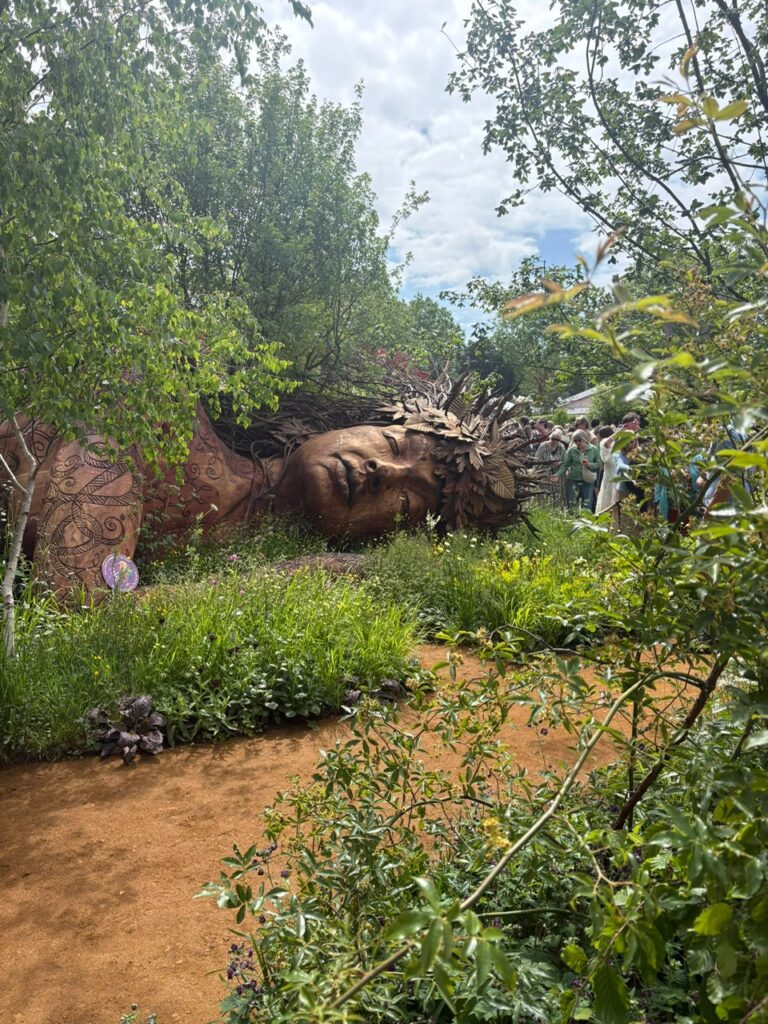
The best show garden this year was judged to be Sarah Eberle’s ‘On the Edge’ garden for the Council for the Protection of Rural England (see picture above). “Some of the best landscapes are where people and nature coexist in harmony…It’s about how it makes you feel. It’s almost a homecoming, an embrace, a hug.” A central feature of this extraordinary garden is a fallen tree sculpted into the guardian figure of Gaia or Mother Nature. Her willow hair forms the top of a dry- stonewall that weaves through the copious, verdant planting. Weeds are reimagined celebrating our native flowing plants. There is a rusty corrugated tin fence suggesting a barn or tumbling warehouse where the countryside and development meet. Sarah Eberle’s guiding philosophy is for all gardeners to work with what they have. A boulder or tree stump can become a feature rather than a problem. She advises that we browse second-hand shops for weathered metal or wooden furniture. Beauty, she reminds us, can exist in the ordinary. The design encourages us to sit and ponder and do nothing.
The Tokonoma Garden
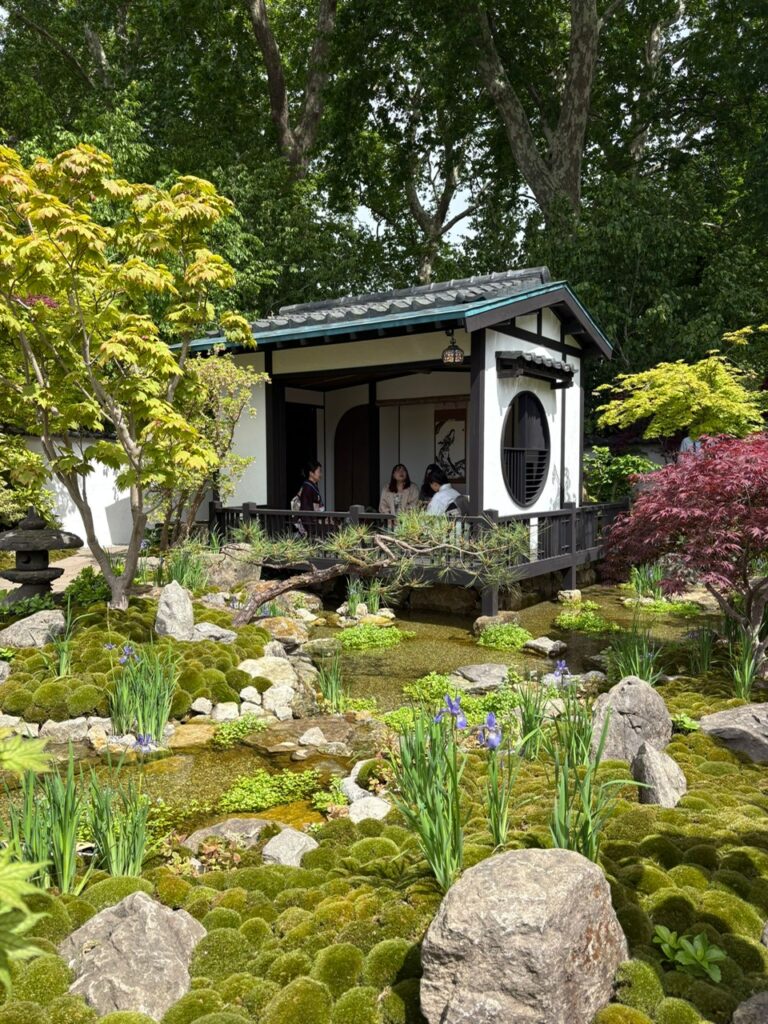
Contrast all this with the Tokonoma Garden designed by Kazuyuki Ishihara where Auntie Audrey’s scissors would definitely come in handy. Everything is finely honed, brushed, choreographed. Everything has its defined and delicate space. It is the garden almost as a film set guided by well-defined Japanese traditions of harmony and beauty. Weeds and corrugated iron are not welcome here. Nature has been squeezed and shaped into exquisite arrangements. The effect is stunning for very different reasons. In the CPRE garden you take off your shoes and socks and stretch out languorously. In the Tokonoma Garden you straighten your tie or adjust your fascinator. Two styles, two approaches, two designs that are different in almost every aspect in that one embraces nature and the other shapes it.
The Garden for Every Parkinson’s Journey
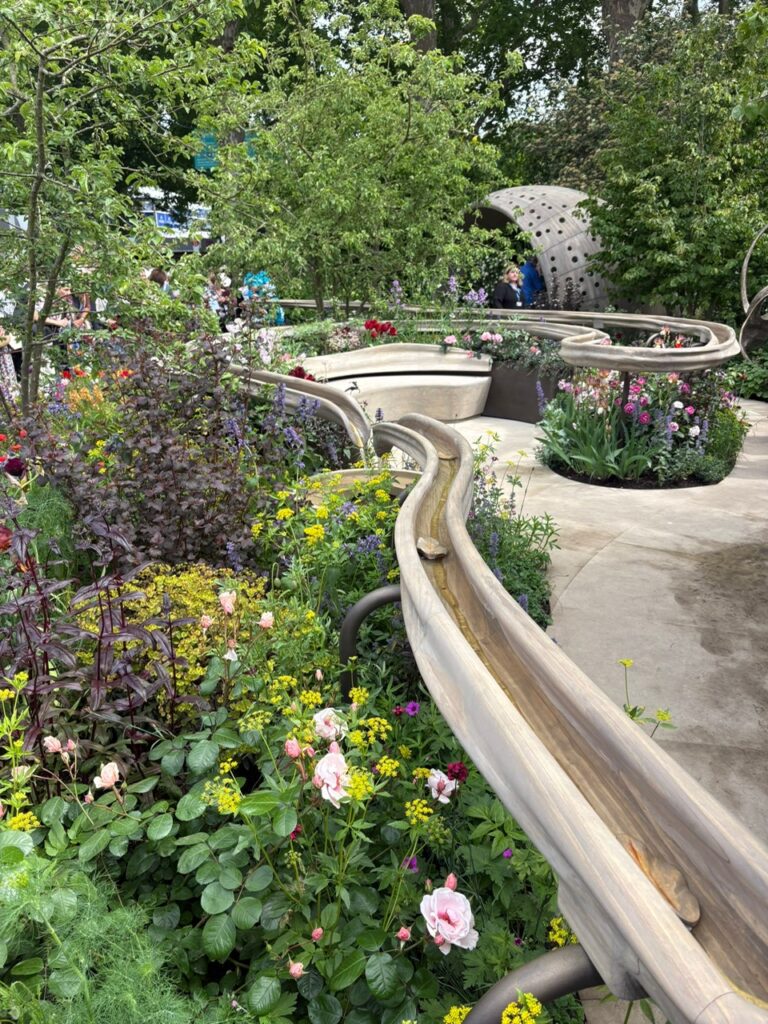
There are also show gardens with an explicit narrative, a message to convey. Such as the Garden for Every Parkinson’s Journey. We will ignore the overuse of the word ‘journey’ in current human experience. This garden is wonderful. A smoothly carved handrail weaves through the planting, offering stability and sensory experience for those afflicted by Parkinson’s. Its designer, Arit Anderson, has a sister who lives with the disease. The garden offers a safe space to relax for a moment or two away from the constant challenges of living with Parkinson’s. It is also a soothing night garden as many people with the disease have difficulty sleeping. One can see so clearly that Arit Anderson has designed the space for her sister. It is personal, empathetic, emotional. It underlines the immense beneficial impact that our gardens can have on both our mental and physical health. This has become a common topic for discussion: our garden ‘journey’ for mental wellbeing. And whilst being sometimes overblown, it is not new. For centuries we have known that being in nature is good for us even if it is well trimmed and intensely weeded.
My own garden journey was interrupted by an overheard remark: “Well, I must say that is the neatest lady garden I have ever seen.” Gardens never fail to surprise. I was now in front of the Lady Garden Foundation show garden. The information leaflet informed me that 21 women die every day from gynaecological cancers most people cannot even name. This ‘Silent No More’ garden was designed, somewhat disappointedly, by a man, Darren Hughes. It contains five sculptures to signify the different cancers – ovarian, uterine, cervical, vaginal and vulval. It is an unashamedly propaganda garden with a clear, vital message. At first, I was a little uneasy with the idea but slowly as I took in the planting and the message, I understood. Two ladies were chatting about a hysterectomy one had and the discovery of an undiagnosed cancer. It had got people to talk although its underlying message was skipped over by the BBC in their filming of their evening show. The idea for the garden came from Lady Garden Foundation ambassador Emily Plane who was diagnosed with ovarian cancer at the age of 23 and died five years later. A highlight for me was the contrasting ideas of planting to encourage both private and group conversations. The garden will be dismantled and rebuilt across multiple sites in Jersey and Cornwall.
With an equally therapeutic ambition is the Breathing Space Garden from Asthma + Lung UK. The design of the garden by Angus Thompson draws on the Japanese aesthetic of yohaku no bi – the beauty of empty space and ma – the beauty of empty time. He was giving an impromptu talk as I arrived. The aim was to create a tranquil woodland-edge retreat to help visitors to slow down, breathe more deeply and reconnect with the restorative qualities of nature. Despite visiting on a day when 30,000 others crowded across the site, I stared at the space and felt transported to a quieter place.
That is the power of gardens. Ultimately it is not about skilled design, strong messaging, striking architecture but discovering a space where you can breathe deeply and relax profoundly. And if you are lucky enough to have Gaia carved out of a fallen tree then all the better. One hopes that given these circumstances even my industrious Auntie Audrey (who now gardens in a higher place) would put down her scissors.
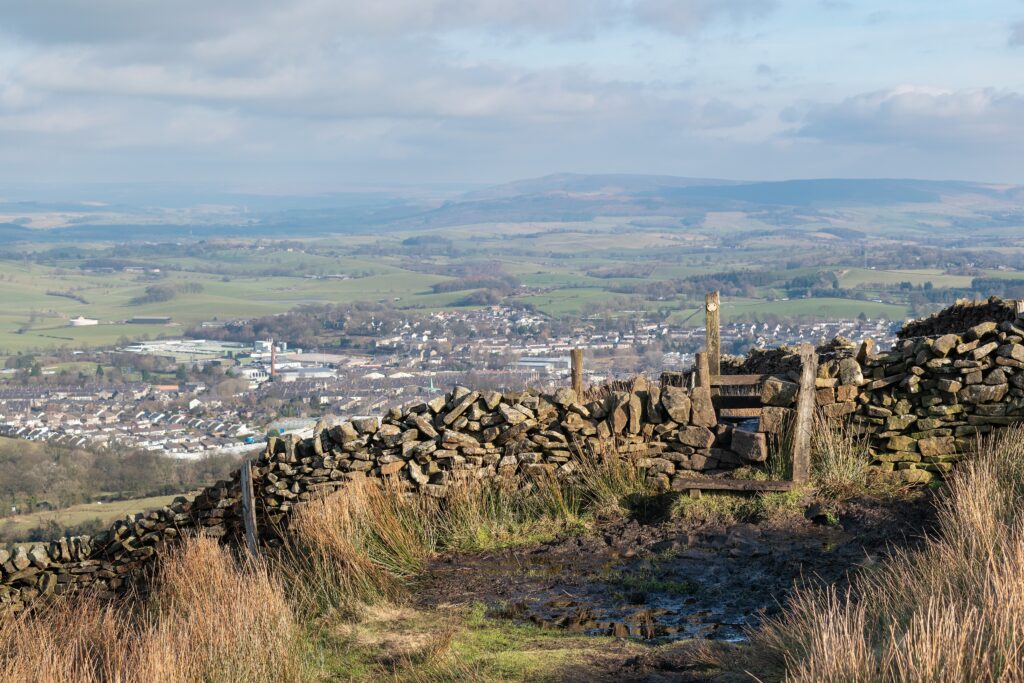
Barnoldswick and nearby Yorkshire from Weets Hill by Dominic Nelson. Image: Wikimedia Commons
Lancashire: Exploring the Historic County that made the Modern World
Chris Moss, London: Old Street, 2026, hb., 364pps., £25
DEREK TURNER admires a survey of an amazingly inventive and influential county
In his classic 1902-1904 Collecteana, folklorist Vincent Stuckey Lean cites a proverb which has since passed into cliché – “Lancashire thinks today what all England will think tomorrow”. Travel writer Chris Moss’s task in this highly personal book is to show how his home county helped make modern England – and so the wider world.
Until late medieval times, much of the future Red Rose County was remote and sparsely inhabited, its moors and uplands unsuited to agriculture, and too near Scotland for safety. In the Domesday Book, the county was referred to as merely the land “inter Ripam et Mersam” (between Ribble and Mersey), and accounted under Cheshire; it was not named until 1182. But the Dukedom of Lancaster, first created in 1351, became increasingly powerful and was ultimately merged in the Crown in 1413. There was even a folk-tradition that King Arthur had been Lancastrian, Lancashire supposedly a corruption of ‘Lancelotshire’. The combative nature of the inhabitants is suggested by an anonymous fifteenth century poem ‘The Shires’, listing the supposed characteristics of each county, which describes Lancashire as “a fair archer”.
By Tudor times, the county was increasingly integrated into the national mainstream, despite a reputation for Roman Catholic recusancy. The mother of William Camden, author of the nation-shaping 1586 chorography Britannia, came from Poulton. Alexander Nowell of Read was Dean of St Paul’s during Elizabeth’s reign – and the inventor of bottled beer! As Archbishop of Canterbury, Farnworth’s Richard Bancroft oversaw production of the King James Bible.
Michael Drayton hymned Lancashire in his 1612 loco-descriptive poem Poly-Olbion for its cattle, the “deepest mouth’d” of hunting hounds, silvery rivers, and women “who beare away the Bell” for beauty. There were seventeenth-century sayings alluding to regional power – “The North for greatness” – and cleverness – “He’s too far North for me”. The county was nevertheless rent by the Civil Wars, its north and west for the King, the rest for Parliament. The 1648 battles of Preston and Winwick were the last of the Second Civil War, and Preston would also be the locale of the last battle on English soil, during the 1715 Jacobite rebellion.
But Lancashire’s most important days began with the Industrial Revolution. Indeed, the Industrial Revolution was largely a Lancastrian creation. County inventors, speculators and visionaries yoked steam power to an array of new technologies and new thinking that would galvanise the globe, and give rise to vast questions which even now remain unanswered.
The world knows of Liverpool, Manchester, the Pendle witches, Stephenson’s Rocket, Lancashire cotton, St Helens glass, the Peterloo Massacre, Frederick Engels, the footballers of Everton, Liverpool, Manchester City and United, the Beatles and the Smiths. There was, or sometimes still is, also steel at Nelson, paint-making at Burnley, brickmaking at Accrington, wire at Warrington, beer at Blackburn, aerospace at Samlesbury (where Donald Campbell’s Bluebird K7 was constructed), submarine-building at Barrow-in-Furness, and fishing at Fleetwood. Peter Paul Roget compiled his Thesaurus at Manchester’s Portico Library.
Within the UK, Lancashire also conjures images of L. S. Lowry, Blackpool Tower, George Formby, Liverpool’s “Three Graces”, black pudding and pies, Eccles cakes, treacherous but magnificent Morecambe Bay, Coronation Street, Boys from the Blackstuff, Anthony Gormley’s Another Place, Bernard Manning, Les Dawson, Peter Kay, and a host of other bands, from Gerry and the Pacemakers to Joy Division.
It also connotes decline, division, ugliness, motorways (England’s first motorway was the Preston Bypass), harsh weather and a proverbial dourness of temperament. The author acknowledges that the county is often not conventionally beautiful, with exceptions like the Forest of Bowland, but even its least prepossessing locales “engage the mind”.
He is acutely aware of the hardness of life for many Lancastrians both during the Industrial Revolution – famously fictionalised in Hard Times – and in its wake – as documented in Orwell’s The Road to Wigan Pier. As he observes, “Lancashire was the first to turn the engines on, and the lights out.” Dickensian-style Gradgrinds, grasping though they were, at least sometimes gave back to their communities, leaving many magnificent public buildings, museums, schools, charitable bequests and a bittersweet memory of gritty civic pride. Later neoliberals merely shuttered still viable industries, hollowed out communities, and filled characterful quarters with soulless glass and steel.
Social suffering accounts for local traditions of radicalism – from seventeenth century Dissenters and Enlightenment intellectuals like Joseph Priestley via the Luddites and Chartists to the beginnings of Mass Observation (in 1930s Bolton), the first meeting of the Campaign for Homosexual Equality (in 1971, in Burnley) and contemporary anti-racism. Moss sees radicalism as a key county characteristic, although perhaps not every reader will share his admiration of the decor of Roughlees Clarion House, a country hostelry furnished with photographs of Labour MPs, copies of the Morning Star, and a banner exhorting “Workers of the World Unite”. But unlike some enthusiasts he realises the impossibility of erasing inconvenient facts (like slave-trading legacies) from cultural memory. He is open to all, but never uncritical.
The book is filled with little-known facts – such as that the American Civil War really ended on 6 November 1865, when the sole remaining Confederate Navy vessel, CSS Shenandoah, surrendered at Liverpool Pier Head. He also honours now unjustly forgotten local dialect poets. The Lancashire dialect was the first English dialect to be treated with cultural seriousness, thanks to writers like John Collier (‘Tim Bobbin’) whose 1746 comic tale View of the Lancashire Dialect, by way of Dialogue between Tummus o’ William’s o’ Margit’s o’ Roaf’s and Meary o’ Dick’s o’ Tummus o’ Peggy’s was one of the first books of its kind. Another was “the Lancashire Burns” Edwin Waugh, who sold shoes on Rochdale market and resided in a cellar, but whose 1855 Sketches of Lancashire Life and Localities impelled Thomas Carlyle to pronounce him “a man of decided mark”.
Moss greatly regrets the brutal truncation of 1974, when two-fifths of the historic county was reallocated arbitrarily to Cheshire, ‘Cumbria’, ‘Greater Manchester’ and ‘Merseyside’. The rump became a backwater, notwithstanding a richly suggestive – even sacral – heritage. Gawain sought the Green Knight in nearby Wirral Forest. An early seventeenth century sect called the Grindletonians was sure the Ark of the Covenant was hidden in Grindleton Chapel. George Fox, founder of the Quakers, climbed Pendle Hill in 1652 and was enraptured, writing in his journal: “When I was come to the Top of this Hill, I saw the Sea bordering upon Lancashire: and from the Top of this Hill the Lord let me see, in what places he had a Great People to be gathered”. The 1961 film Whistle Down the Wind, in which children mistake an escaped convict for Jesus, was shot in the Ribble valley. The ghosts of Scottish Royalists killed in 1651 have been ‘seen’ on the M6.
So long a stranger to his shire, the author ‘finally’ wanders closer to home and his heart – finding his own past amid landscape irreducibility and a septentrional poetry of placenames – Fair Snape, Goosnargh, Hail Storm Hill, Oswaldtwistle, Prickshaw Slack. He closes with conflicting feelings – “Lancashire lets me down, but I can’t compare it with anywhere else”. This is not just an overdue survey, but an unusually enquiring one – an admirable examination of an incomparably important county.
This review first appeared in Country Squire, and is reproduced with permission
DEREK TURNER is the editor of The Brazen Head, as well as a novelist (A Modern Journey, Displacement, and Sea Changes) and widely-published reviewer. His first non-fiction book, Edge of England: Landfall in Lincolnshire, was published June 2022. Some of his writing may be found at www.derek-turner.com He is also on X – @derekturner1964
STUART MILLSON ranges from Manon Lescaut to Mystical Songs
Sumptuous sound – yet with pin-sharp detail – is the order of the day in the new Chandos issue of orchestral works by Puccini. Scaling the heights of dazzling audio-demonstration-level engineering, the Chandos engineers bring John Wilson’s Sinfonia of London into sharp focus – highlighting the brilliant solo playing of sections and section leaders (musicians all handpicked by the conductor) and the sheer unanimity of a sound that truly gels and sparkles. Puccini is just the right choice of composer for artists who set out to re-create what is, possibly, a lost style of orchestral playing – or at least, that resonant richness associated with the large London ensembles of the 1970s and ‘80s.
Listen out for the immaculate, tenderness of the woodwind at the opening of the Act II Prelude to Manon Lescaut, with graceful violins leading us on to the emotional blaze at the height of the piece. Likewise, a soft breeze from the Italian coast wafts through the Prelude to Act III of Edgar, a Puccini opera we hear very little. An old-world charm, reminiscent of Grieg’s Holberg Suite, is to be found in the Tre Minuetti (from about 1881, revised seven years later). This gem of a sequence started life in string quartet form, but John Wilson saw its potential for larger forces and so duly orchestrated it. From the thrilling, orchestral ‘attack’ in the short Scherzo (18812-83) to the famous, nostalgic, sepia, bittersweet Crisantemi, the Puccini collection will greatly appeal even to those who are not naturally followers of opera, but who nonetheless relish a tug of the heartstrings.
In a different era of recording, yet with an equally striking sound, but finely remastered, is SOMM Records’ Sir Thomas Beecham archive. Sir Thomas was one of a group of great inter- and post-war British conductor-knights, often known for their biting wit and somewhat authoritarian presence on the podium. At one rehearsal with the Royal Philharmonic, the position of the chair and music-stand on the conductor’s rostrum was not to Sir Thomas’s liking, and he became a little irritated by the arrangement. “Do you think I’m Samson?” he remarked, as he tried to adjust the heavy podium apparatus. “Sometimes, we do wonder, sir?” replied a brave member of the orchestra. Beecham saw the funny side, fortunately. Yet the conductor was a musical titan, as can be heard in Richard Strauss’s grand symphonic odyssey and autobiography, Ein Heldenleben.
For Strauss, his music rooted in Wagnerian willpower, the ‘Hero’s Life’ of the title referred not to a sword-wielding Siegfried, but to the German artist himself – fighting battles for recognition, for artistic truth, against sniping and snarling critics (Das Helden Widersacher – The Hero’s Adversaries). Heldenleben is, perhaps, Strauss’s version of Beethoven’s Eroica Symphony, although the work ends not in exultation, but in the sense of the artist having satisfied many of his desires. Sir Thomas Beecham revels in the almost operatic texture of the music – the grand sound of French horns and martial trumpets; the music striding on as if accompanying both Zarathustra and Don Juan, all in one. Once again with SOMM, Lani Spahr’s audio restoration leaves us in no doubt as to the mission of this record label: to establish for all-time, one of the most remarkable conductors’ and composers’ sound archives to be found anywhere in the catalogue. Also on the CD is Beethoven’s Eighth, a work of beauty, lightness, diversion – a recapitulation of all the good things we find in the Symphony No. 1 – and just the prelude needed before the mighty Ninth, the Choral Symphony. Lovers of vintage records will enjoy the mid-1950s sound, and it is truly enriching for us to be able to reconsider and re-assess the legendary musicians of 70 years ago.
But SOMM’s musical exploration of the past goes even further back in time: their first volume of Elgar from the Archives presenting two recordings from the 1920s of the Enigma Variations – one conducted by the composer himself; the other by the founder-conductor of the Proms, Sir Henry Wood. Given that the recording techniques here involved the Royal Albert Hall Orchestra – and Wood’s own Queen’s Hall Orchestra – performing in front of what looks like a large Trinity House foghorn, the sound quality is remarkably clear. Again, sound-supremo, Lani Spahr has done a wonderful job of “French-polishing” this (English) music, and because of it, we can enjoy the glorious playing of the orchestras’ woodwind and string principals in this most famous symphonic warhorse.
The Elgar disc is completed by delicate and sensitive recordings of the Violin Sonata and String Quartet, both works the products of Elgar’s stay in the woodland of West Sussex at the end of the First World War. For Lady Elgar, the slow movement of the Quartet captured the essence of sunshine; and Sir Edward’s chamber music from this southern sojourn was often generally referred to as showing a mysterious “wood magic”. Marjorie Hayward, violin, and Una Bourne, piano, are the soloists in this 1919 acoustic recording, while the String Quartet in E minor recorded two years later, shows the virtuosity and understated English emotion of the London String Quartet.
Finally, again from our own land, the words and music of Easter, and poet, George Herbert, set by Ralph Vaughan Williams. In Five Mystical Songs we sense the growth of flowers, of the daffodil – the Lent lily – and experience the quiet revelations of resurrection and renewal, although not through the usual choral and orchestral forces associated with the work, but in the composer’s own arrangement for baritone, piano and string quartet. The songs were first performed in Worcester at the 1911 Three Choirs Festival, that gathering so associated with such masters of our musical renascence as Howells, Elgar and ‘RVW’ himself. On a new recording from Albion Records and the Vaughan Williams Society, Roderick Williams, baritone, gives a warm-hearted, clearly-articulated interpretation of the songs, accompanied by the Sacconi Quartet – a performance of intimacy and reflection, reminding the listener a little of the atmosphere of Butterworth’s song-cycle A Shropshire Lad. Here, England at Easter-time lies before us: “Rise heart, thy Lord is risen. Sing his praise without delays, / Who takes thee by the hand, that thou likewise, / With him may’st rise…”
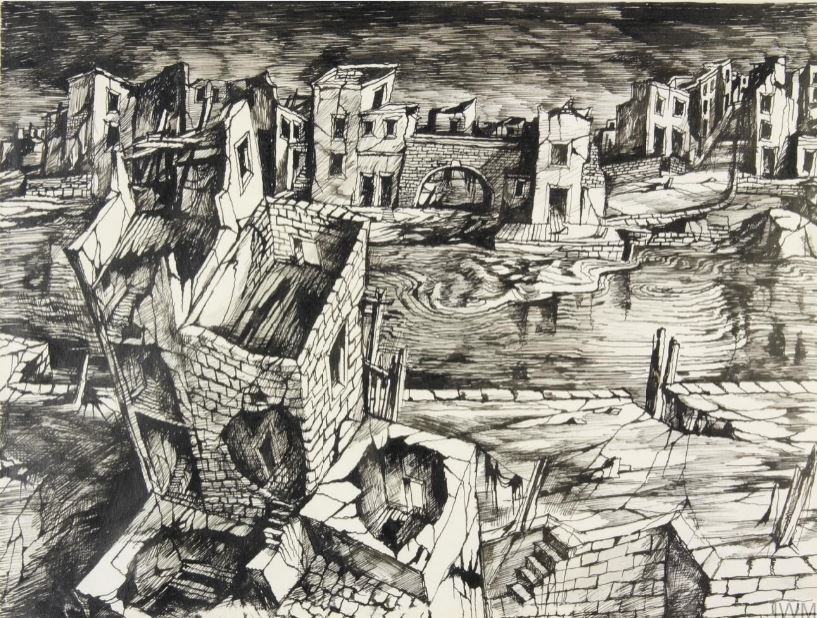
A Town Destroyed, Poplar 1941, by John Minton. Art.IWM ART 15910
Beauty and Destruction: Wartime London in Art
Imperial War Museum, March 20 – November 1
NICK BOOTH is impressed and moved by images of London under attack
Critics tend to rush by British art of the Second World War: for them there is no contest with the art of the First World War, which was revolutionary and packed with their favoured ‘isms’ – futurism, vorticism, cubism, the aesthetic fallout from Roger Fry’s post-impressionist movement in the years before Western civilisation’s headlong dégringolade to slaughter in 1914.
The art of the 1939-45 war has been judged unambitious and even, in the case of Edward Ardizzone’s work, ‘cosy’. This is unfair. This rather too small exhibition at the Imperial War Museum makes no effort to mount a counter-argument but nonetheless contains many good and affecting things. Probably there wasn’t space to lay out key conversions away from abstractionism and surrealism in the interwar period: that having hymned the world of machinery and progress some artists recoiled from the realisation that technological advances could have very nasty side effects. Thus the world of humans and nature came back into focus.
Then the war cut off Britain from the Continent, and her artists inevitably fell back towards an English tradition for the particular and the romantic. Beauty and Destruction: Wartime London in Art settles for paintings as record, sometimes almost as journalism – but many of the works operate on a much higher level. The show is worked up from Suzanne Bardgett’s excellent Wartime London in Paintings, which came out a few years ago and which is worth getting hold of if you are interested in this subject.
Two beautiful John Minton ink drawings appear early, A Town Destroyed, Poplar, and Looking Down on a Bombed Building by the Thames, Poplar 1941, are small and dreamlike, taking blitzed London and turning it into an inner landscape of melancholy emotion, a sort of visual analogue to Elizabeth Bowen’s wartime stories such as Mysterious Kôr, in which wrecked London ‘is drenched in moonlight’ and looks like ‘the moon’s capital, shallow, cratered, extinct’, and The Demon Lover, in which the evil ghost of a soldier – symbolic stand-in for the malign spirit of war visiting twice in a life – terrorises a woman in her closed-up London home.
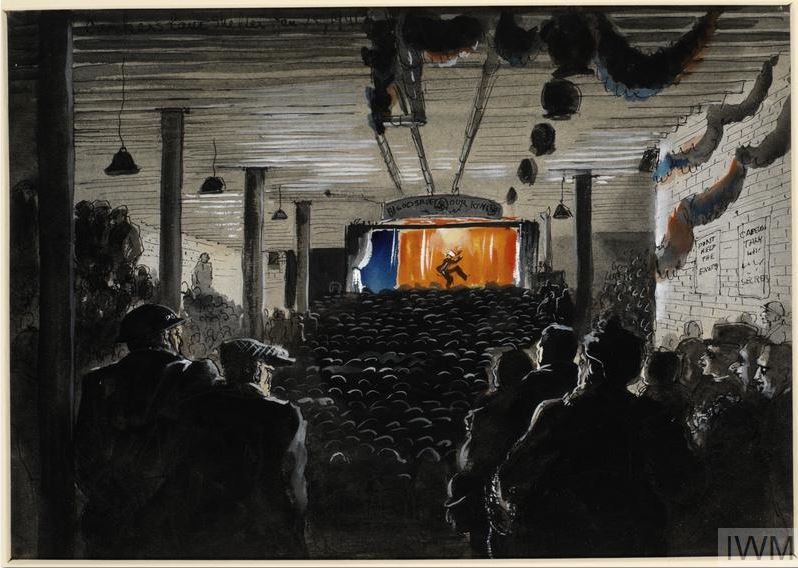
A Concert in a Shelter, St. Pancras Borough (1941) by Olga Lehmann. Art.IWM ART LD 1900
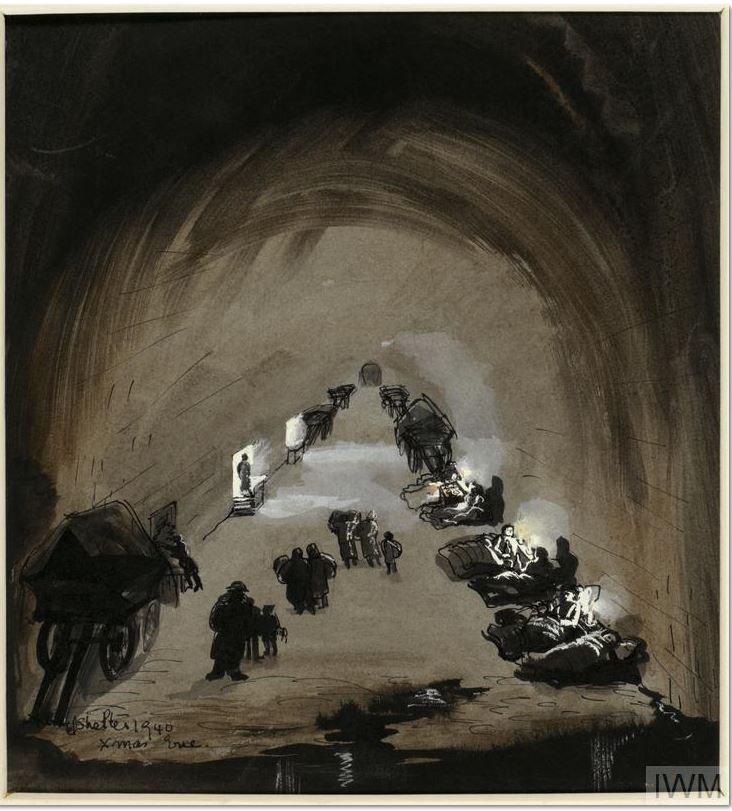
A Shelter in Camden Town under a Brewery: Christmas Eve, 1940 by Olga Lehmann. Art.IWM ART LD 1899
Two ink-and-wash paintings by Olga Lehmann portray the subterranean experience of sheltering from air raids. In the swift, brilliantly realised A Concert in a Shelter, St Pancras Borough (1941), the distant stage is a flash of colour in dark, overcrowded cellar. You can almost hear the ‘shelter cough’. Lehmann’s A Shelter in Camden Town under a Brewery: Christmas Eve, 1940, evokes the dingy grimness and looming terror endured under the streets.
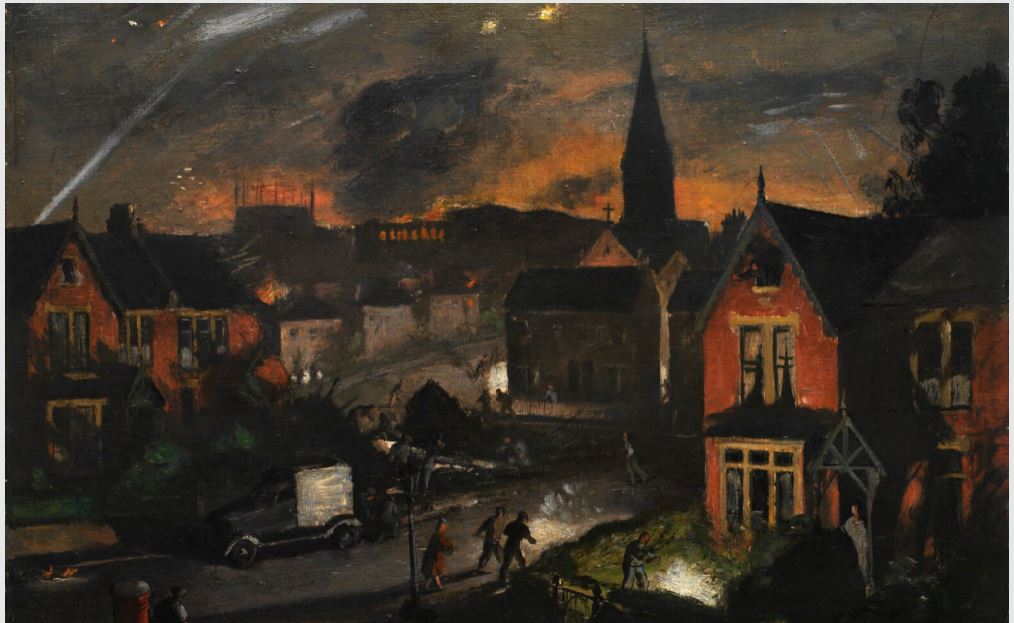
Incendiaries in a Suburb (1941) by Henry Carr. Art.IWM ART LD 1518
The prolific, technically brilliant and now largely forgotten Henry Carr gets a good showing. St Clement Dane’s Church on Fire after being Bombed crackles away – Carr lights up the Aldwych with the eerie glow of a big blaze. The newspaper publisher Cecil King saw the church burning on the night of May 10, 1941, and said the flames and sparks shooting from its spire was “an odd and rather beautiful spectacle”. Familiar Silhouettes shows squaddies lighting up fags in Piccadilly Tube; A Railway Terminus, a tour de force rendering of St Pancras Station vast and dimmed for the blackout, is blown up to wall size; and Incendiaries in a Suburb conveys the horrific surrealism of war without recourse to actual surrealism. There are the silent, blacked-out, deeply usual London homes but the horizon is orange with a demonic inferno, a searchlight roams the sky in which snarls AA fire, a church and its crucifix stands in silhouette, and piercingly bright alien incendiaries land in gardens, the UFOs of 1941. Humans scramble in the gloom. It is more strange and affecting than Magritte’s Empire of Light.
Priscilla Thorneycroft’s tiny ink drawing from the London Underground, Soldier with Child in the Tube (1940-1941), shows the weariness and strain of the Blitz in the soldier’s face. Kenneth Rowntree’s CEMA Canteen Concert, Isle of Dogs, London, E14 (1941), memorably records the tea-and-sandwiches collectivism of wartime entertainment. Graham Sutherland’s The City: A Fallen Lift Shaft (1941) is more fascinating in the flesh than it ever is on the page. When he saw the broken shaft in a ruin near St Paul’s Cathedral Sutherland said it “suggested a wounded tiger in a painting by Delacroix”.
With a collection as large as the IWM’s it seems strange the show is quite modestly sized. Space should have been found for Charles Mozley’s vivid The Thames Embankment (1940) a favourite of mine. Through misty blue winter London light, we see the view from the Savoy above Embankment Gardens with the National Liberal Club and Parliament in the distance underneath insect-like barrage balloons. A tram whirrs up the road, in the gardens below another barrage balloon is tethered, and to the right looms the ghostly dome of the National Gallery. This was London at the start of her agonies. The pre-war city would take many terrible blows and sustain heavy losses in every sense of the word. Mozley’s ‘monument to a moment’ in time, to use the great David Bomberg’s phrase, is the beginning of the end of the old capital, the city that was so brilliantly brought to life in Vaughan Williams’s London Symphony. The absence of Mozley’s painting is a glaring omission. You can see it here: https://www.iwm.org.uk/collections/item/object/19851
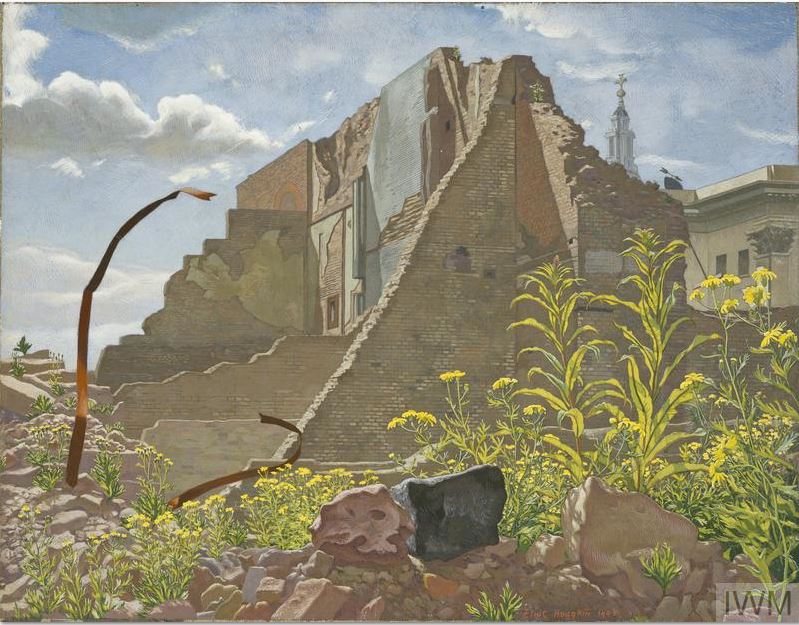
The Haberdashers Hall, 8th May 1945, by C. Eliot Hodgkin. Art.IWM ART LD 5311
Eliot Hodgkin’s wonderful The Haberdashers’ Hall, 8th May 1945, appears, though not at the end of the exhibition where logically it should be. This quiet, almost ironic view of the ruins of the hall with the lantern of St Paul’s rising behind is a sort of understated companion to Paul Nash’s 1918 We Are Making a New World. In Hodgkin’s painting here is the end of the European war, the last day; overgrown with weeds and littered with rubble and bent iron; huge and terrible things have happened; nothing will ever be the same again; meanwhile there is silence save for, perhaps, the faint merry singing of VE Day celebrants in the distance. The future will be along in due course.
On that point it’s a shame the IWM does not possess Carl Giles’s prophetic cartoon from the Sunday Express, August 5, 1945, (the uranium atom bomb ‘Little Boy’ was dropped on Hiroshima the next morning) called It’s Quicker By Rail showing the first appearance of his soon-to-be-famous Family trudging towards or back from their first peacetime holiday along a trainless railway track. https://blogs.kent.ac.uk/specialcollections/files/2020/08/ga5447.jpg The British were moving out of the ruins and into new challenges.
[iii] From 1945 – 1975: arguably the maximum period of post-war hope – during which (for one example) ecological concerns were fully realised but insufficiently acted upon. During which, global corporations became too powerful and greed became a virtue.
“It is the purpose of this paper to interpret the legend of St. George and the Dragon in terms of alchemical symbolism. While the victory of the Christian hero over the Dragon is traditionally interpreted as symbolic of the triumph of good over evil, it is argued that both combatants represent the four alchemical elements: air, water, earth and fire. Instead of a duel of opposites their combat transmutes the coiled-up energy of the dragon into solar light, which manifests as the beautiful princess of the myth. The conclusion is drawn that there is a dialectical movement of force in the battle between St. George and the dragon. The hero releases the antithetical power of the dense, dark matter symbolised by the dragon so that the elements of a polarity do not remain contrasted but are resolved creatively.”
[xi] Link Span, BTF film of 1956, directed by Michael Clarke. See: www.imdb.com/title/tt1754135/ “This documentary from British Transport Films, follows 24 hours in the life of three British Railways Channel ferry services.”
[xii] Colin Wilson paraphrasing Arnold Toynbee in Religion and the Rebel (1957) reprinted by Aristeia Press in 2017, page 130.
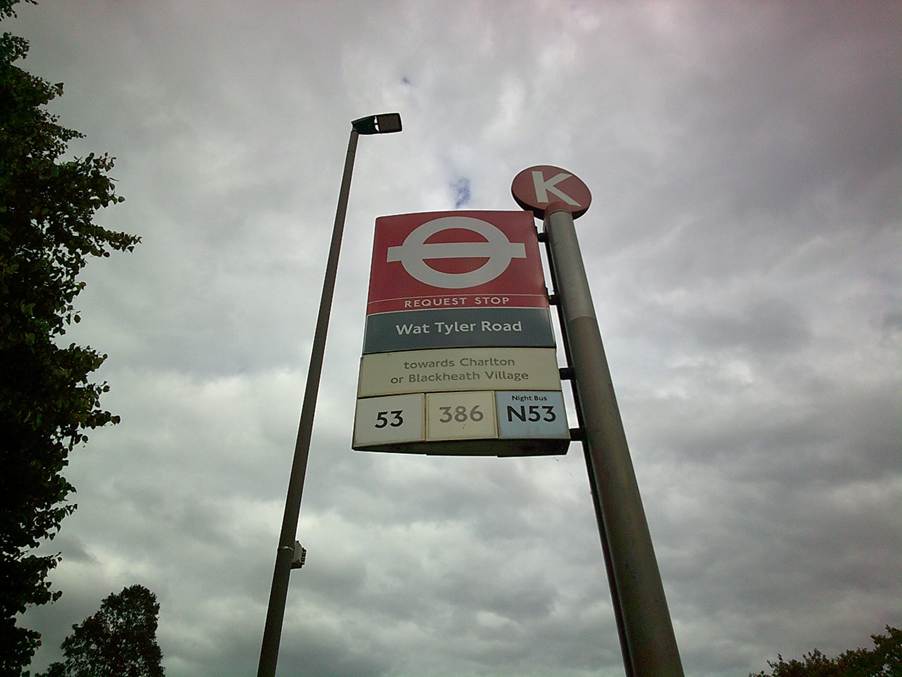
[xiii] Charlton village is the one here of many.
[xiv] https://en.wikipedia.org/wiki/Graham_Sutherland While Sutherland’s Pembrokeshire landscapes may not be “realistic”, personally, I wouldn’t think of them generally as “surreal” – which word to me indicates an element of attitude, even a degree of literary willing, more evident in (for example), Paul Nash’s gently surrealist, Landscape from a Dream, or in Dorothea Tanning’s, Eine Kleine Nachtmusik (A Little Night Music) www.tate.org.uk/art/artworks/tanning-eine-kleine-nachtmusik-t07346
Sutherland’s best Pembrokeshire work celebrates the mystery and reveals the hidden power and primeval qualities of the landscape. However, I can see how, given that his landscapes are often ‘more real than reality’, this can easily be associated with surrealism, and at times he does utilize a more surreal approach. In fact, it could be argued that the most relevant aspect of surrealism, is not the exaggerated drama of melting watches and so on, but simply an ability or a moment in which one sees and notices things more vividly. Walking through a suburb of Heysham yesterday, gradually moving into a heightened sense of seeing, I was reminded how ‘surreal’ so many houses and gardens can look in bright daylight, the layout of shrubs and pots, the window surrounds and porches etc – all those aspects of daily life it is so easy to take for granted or disregard. Down on the prom, I was reminded of Paul Nash’s short essay Swanage, or Seaside Surrealism published in The Architectural Review (Volume LXXIX, April 1936, pp. 161-4). Nash himself distinguished between the work of artists belonging to a Surrealist group, distinguishing their work by a capital ‘S’, and “artworks, situations, objects or locations that have a dreamlike character or incongruous settings that evoke disquiet or the uncanny. These, he describes, as surreal with a small ‘s’.” See: www.paulnashdorset.co.uk/timeline/1936#
LAWRENCE FREIESLEBEN, Film & Television Editor of The Brazen Head, has beenan artist and writer as long as he can remember – cycling away at weekends from the council estate where he grew up, to paint the countryside as an escape from the restrictive tedium of the school week. Leaving home at 16, he has lived in 17 different areas of the UK – from Devonshire to Northumberland – painting and writing, always vigilantly questioning the interior light of landscape, cityscape and wider atmosphere. Living virtually off-grid with his large family, both remote locations and urban visits have formed the backscene to a passion for film which has intertwined with art and writing throughout his career. Films remain a key creative focus since childhood, resulting in encyclopaedic folders and clippings as well as a constant stream of home-made film festivals. He currently lives in a dilapidated Lancashire seaside town
REAGAN UPSHAW’s selected poems In the Panhandle was published by Kelsay Books in 2024. He makes his living as an art appraiser in the Hudson Valley of New York, where he also gardens and keeps bees.
REAGAN UPSHAW’s selected poems In the Panhandle was published by Kelsay Books in 2024. He makes his living as an art appraiser in the Hudson Valley of New York, where he also gardens and keeps bees.
HILARY LAYNE writes fiction and nonfiction and also publishes long form video essays on Youtube on the subjects of storytelling and the cultural decay of fiction. Her channel is called The Second Story. Her website is here.
IT IS NOT ALWAYS THE HUNTER WHO CONSUMES
My beloved Hunter,
pursuit throws silk across my path
which I run barefoot and already
blood and honey-soaked.
And you, half-wild with hunger.
White clay from my soft belly
clings to brambles and tells you
how to find me. My oil blood
waits like a whispered dare
for the spark of your blade.
My beloved Hunter
where is the tender violence of
your metal when I most need it?
I flee not to escape you but
to feel the warmth of your pursuit
on the back of my neck,
to feel my hair comb through
your grasping fingers; to hear
the air tremble with the
violence of your pounding heart.
And, on the banks of the uncrossable river,
when the hunt bleeds its last pleasure,
I will stop and turn, eager to feel
at last the sharp release
of your victory.
HOW TO FEED A SLEEPING FOREST
The cottage, I have said, is your heart.
What is your heart if not the gilded chamber
of the bound soul? Bound, I have said, by the forest.
Look: much of the sky is a distant memory,
a song sung in faraway light by lonely stars
aching for one another across unsurpassable voids.
What do we do with their songs? What can we do
but be silent and listen? How much of our existence
can be described as this? this obligation to witness.
(The forest, I have said, is a witness.)
There is a box in your chest. A knot of bark,
woven with sinew and nerves. It is there
you must put these things, not in your heart.
The forest of trees is witness, guardian
To your heart which is the cottage in which you live
in which the soul is housed in her gilded chamber.
(The box, I have said, is a fire.)
Into this fire you will cast the pain that is
essential. Grief, for example, and small parcels of regret
bound in ribbons of guilt. These things you must
burn in the fire. Then you may look out through
the windows of your cottage and see
how the glow of that fire lights the forest.
By no other light could the forest
count the branches on its trees or the birds
nested there. By no other light could the forest
see the cottage all aglow and the soul resting there.
HILARY LAYNE writes fiction and nonfiction and also publishes long form video essays on Youtube on the subjects of storytelling and the cultural decay of fiction. Her channel is called The Second Story. Her website is here.
IAN C SMITH’s work has been published in BBC Radio 4 Sounds, Cable Street, Griffith Review, North of Oxford, Rundelania, The Spadina Literary Review, Stand, & Westerly. His seventh book is wonder sadness madness joy, Ginninderra (Port Adelaide). He writes in the Gippsland Lakes area of Victoria, and on Flinders Island
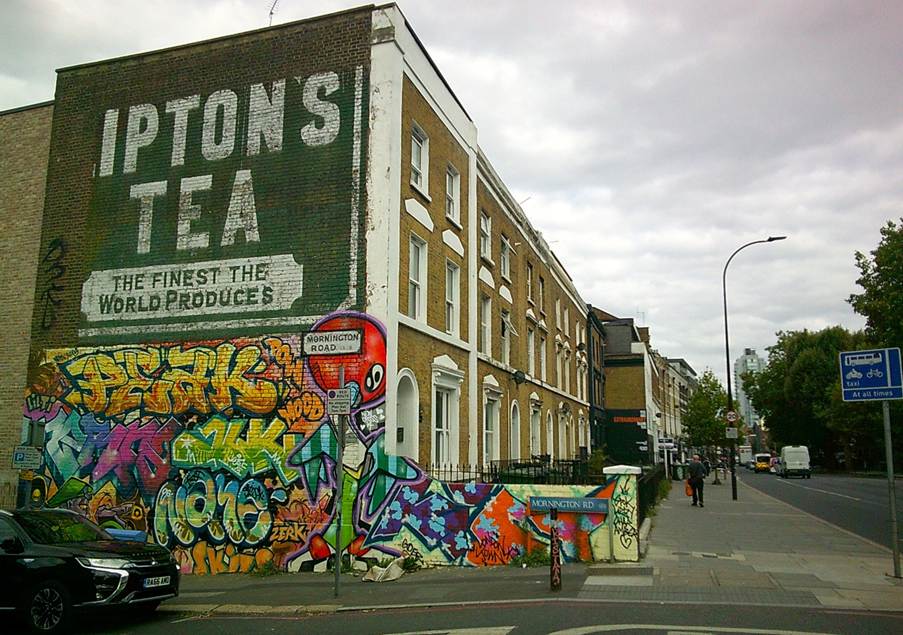
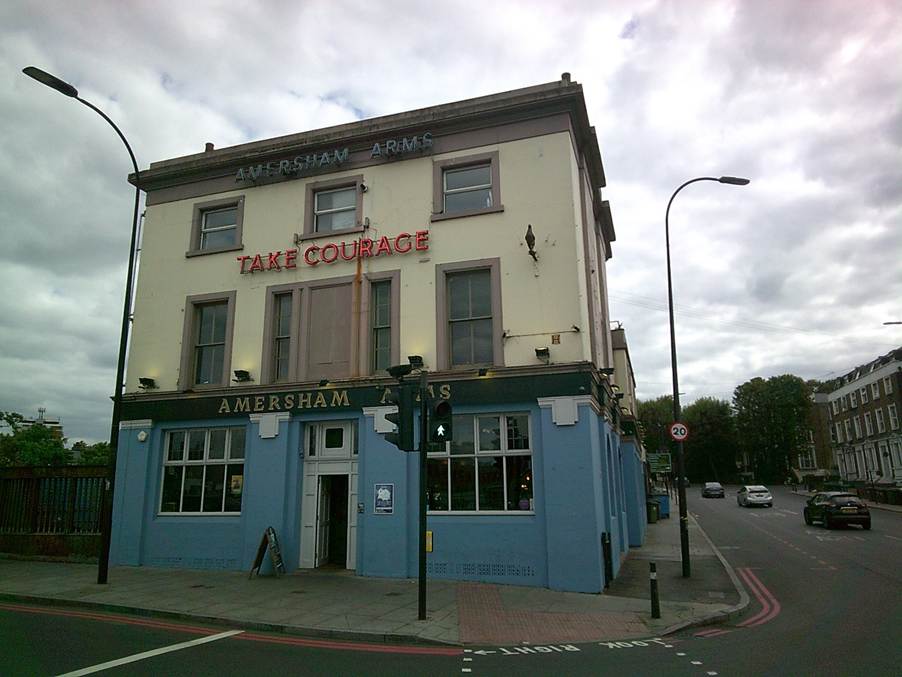
Arriving back in England after so many years I first visit my birthplace near London where even the smells have me reminiscing. From here the plan is to travel south along the Thames Estuary, then north along the coast.
As we were freed from Sunday school we all heard the short screech of brakes. A boy who lived near me was known for scaring drivers by sauntering saucily in front of them. I think I disliked him because he was bolder than me. I feared being run over after seeing a stricken dog’s blank eye bulging from its stilled face in the gutter. The jam factory closed until Monday, its usual burnt sugar smell diminished, my parents chose to potter in our miniature garden while our roast dinner bubbled in the oven, contributing to the neighbourhood olfactory menu change, rather than cleansing their sins. Our junior scripture, wasted on us, was their chance for a break. My mother had no idea of my commitment to her.
Riding his luck, that silly boy had also ridden a car’s grille. We both had sensible older sisters. I had already crashed my sister’s bike, breaking my arm. His travelled to the hospital in the ambulance, comforting him. He wasn’t badly hurt. The rest of us rocketed home with our dramatic news. My mad dash was impeded by a stitch from clutching my collar. My sister, perhaps not always so sensible, had instilled in me the belief that when you see an ambulance you must hold your collar until you see a dog, lest your mother died. Like some of us, the American T-shirt had yet to emigrate. Due to regular unwanted sightings of ambulances, often from buses, and dogs, although numerous, hiding when I needed them most, I only disproved my sister’s morbid dictum much later, a tardy laxness ending with guilty relief.
My family emigrated to Australia where that boy’s family also headed, where he became a policeman. An early school leaver, like him, I also found employment in an asteroid belt of hazards, a welding shop, where I fantasised about travelling. Sparks arced from steel melted by heat in that flashy crackling ghetto, shadows pulsing where men toiled to make ends meet. Tension simmered beneath crude camaraderie like a live nerve, with me Rilke’s panther trapped in a cage. I kept quiet there about my burgeoning reading solace. In that acrid netherworld of freckled light immigrants padded their vocabularies. That masquerade of spectral figures with shields and wands wearing identical overalls, who could have been space warriors, or prisoners, did little for the immigrants’ language education. Morale was weary, likewise, morality.
A newly-wed German listened to, asked, and copied us, occasionally with odd results. He managed to explain about an impending weekend visit to his English aunt, another immigrant, but, unlike us, well-to-do. Grasping a finger-printed mug of sweet black tea I tried to help with advice he sought regarding manners, etiquette, while others competed to hector us with vulgar suggestions. On the Monday after his social call the German raged in pent-up, back-to-front mispronounced oaths that doubled up the blue-flashed denizens of our Tartarus, the molten metal mob, in guffaws. The posh aunt had cut him like an oxy-acetylene torch in front of his bride, felling him with outraged scorn when, uncomfortable in his pressed suit, the German lad had suggested: ‘Would you please shift your slack arse to pass the fucking jam, Auntie?’ Or words to that effect.
Overcoming my velleities, bridges burned, finally educated but love still elusive, I feel so alive back where I started with my boyhood imagination. Driving through England looking hard at everything, I wonder about all I have missed while away, their shadows and echoes, now, in this cliché, my supposed mid-life crisis, albeit early. Anxious, I, now we, move on, never stopping long in my ancestral land of ancient sorrow. In Norfolk, an argument east of The Wash, ours no larksong at break of day arising, we approach an old man wearing a cloth cap with a horse, both their noses whiskery in grey light. A man, a horse, a cart, a sign. Should be a palindrome. Yes, my argumentative partner, her Australian accent rapid, twangier than mine, wants to take the ride, but with the reins in her experienced hands. English caution irritates her. The old man hears us out before agreeing to a test drive. He watches, worried. But I understand the need for money. Scavenging gulls also scrutinise her merry-go-rounding Wells-next-the-sea’s otherwise empty carpark. Sticking close to the old man, deferential, I talk her up as if sharing secret knowledge. You’d think she was Clancy of the Overflow’s direct descendant.
Our high seat a magic carpet, carriage erect, pert bottom sticking out like Chaucer’s Alisoun’s, her impatience with the Brits is ever-present. The morning air, still, with few cars, brings to mind Eliot’s certain half-deserted streets, and regular glimpses of the North Sea captivate me, horseshoes echoing on tarmac. That horse taking over, I ask my abrasive Queen Boudicca – East Anglia’s own – how she knows where to navigate her chariot. ‘The horse does,’ she says. ‘We’re just along for the ride,’ a fair description of our relationship. Early shoppers like figures in a Lowry painting stop, stare at the strangers with the familiar horse, its pace increasing. I wave to them languidly. ‘We must be heading back,’ my woman says. Wanting to believe her compelling logic, concerned, I ask if she is in control. ‘Hardly,’ she says. ‘Stop waving like the queen, you show-off.’ She does seem happier. In her element, I suppose. Beyond the horizon I picture Europe, geography as reality, mind fizzing only with travel’s romance, not the errancy of our ways. Then the old man looking lonely. Flushed with success, she is kind to him. Relief in his tone, he says he knew we would be all right, his demeanour a wavering lighthouse beam of warning we might well heed.
IAN C SMITH’s work has been published in BBC Radio 4 Sounds, Cable Street, Griffith Review, North of Oxford, Rundelania, The Spadina Literary Review, Stand, & Westerly. His seventh book is wonder sadness madness joy, Ginninderra (Port Adelaide). He writes in the Gippsland Lakes area of Victoria, and on Flinders Island
E.J. HUTCHINSON is Associate Professor of Classics and Director of the Collegiate Scholars Program at Hillsdale College (Hillsdale, Mich.). His poems and translations have appeared in First Things, New Verse Review, National Review, and elsewhere.
“Mars Hill”
The nearer sun beats down upon the bare
And desiccated Areopagus.
The mind on this unfeeling polished tomb
Refuses—will not feel that ever here
The Furies hunted Agamemnon’s son.
What ghost from underground could bear such light
Unshadowed by a mediating god? It beggars all belief that these would come
Exposed to drink Orestes’ guilty blood.
But suddenly a breath of clammy wind,
A passing cloud that blunts the sun, a wisp
Of cigarette smoke floating past, and all
Is changed, the cry of blood to blood seems near,
Seems almost audible.
But it is just
A momentary alteration in
The air, and it is gone.
Returns Apollo,
The nearer, bloody sun, and with a groan
Beneath the earth flees justice to await
Some other deity, some other sun.
“The Arrival of Dionysus” (Euripides, Bacchae 1-63)
I come, a child of god, to Theban lands:
Dionysus, whom Semele once bore,
Induced betimes by lightning-bearing fire;
Now giving up the god for mortal form,
I’m present at my native riverside.
I see my mother’s smoldering cenotaph,
The smoking ruins of her bridal hall
Nearby, the vital flame of Zeus’s fire,
The fruit of Hera’s outrage, undying.
But Cadmus makes this precinct sacrosanct:
For this, my praise. And I myself, with greenery of vine,
Have hidden all around this haunted place.
I’ve left behind the many-gilded lands
Of Lydians and Phrygians, the sun-
Baked plains of Persia, passed through Bactria,
Perilous Media, Arabia
The spice-rich; Asia, too, which lies beside
The salted sea, demesne of cities whose
High-towered walls embrace barbarians
With Greeks. At last I’ve come to Greece, and first
To Thebes—those foreign climes now dance for me—
To manifest myself a god to men.
Yes, first of this Greek land it’s Thebes I’ve raised
With cries, donning the fawnskin on my shoulders,
Taking the thyrsus, ivy spear, in hand,
Because my aunts, who should’ve had more sense,
Denied that Dionysus sprang from Zeus.
They said that Semele, pregnant from some affair,
Pawned off on Zeus her sordid bedroom sin—
Cadmean sophistries—and due to this
Alleged deceit about her mate, Zeus killed her.
Therefore, I’ve spurred these women, mad, from home;
E.J. HUTCHINSON is Associate Professor of Classics and Director of the Collegiate Scholars Program at Hillsdale College (Hillsdale, Mich.). His poems and translations have appeared in First Things, New Verse Review, National Review, and elsewhere.