STUART MILLSON reports from the English Music Festival – and reviews new issues of Shostakovich, Arvo Pärt and Rimsky-Korsakov
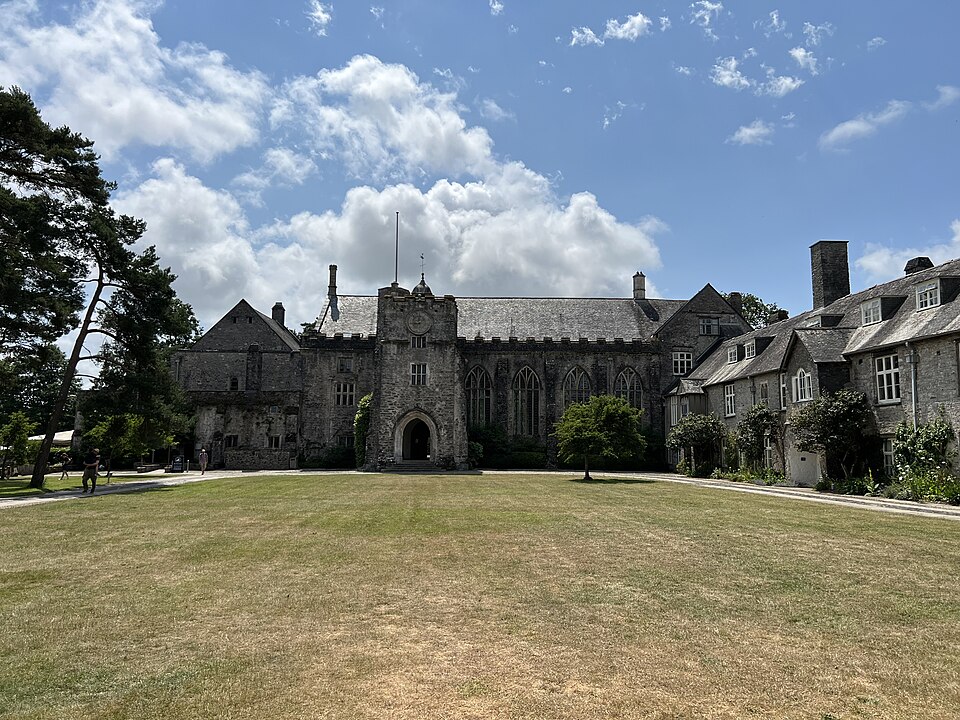
With funding for the serious, civilised arts in short supply in modern Britain (no Arts Council of Wales money for Mid-Wales Opera; the City of Birmingham Symphony Orchestra, de-funded by Birmingham City Council) the English Music Festival – EMF – is an inspiration and hope in the face of general adversity. As one of the Festival’s regular conductors, Hilary Davan Wetton, pointed out, if this were France, the government there would be pouring hundreds of thousands of Euros into a French music festival – a contrast to our own political elite, with their freebies for Britney Spears gigs and obsessions with ‘diversity’. The nineteenth English Music gathering took place, escaping this year to that utopian, rural setting of Dartington Hall in Devon – a magnificent structure built by the first Duke of Exeter in the 14th century, and turned into a prototype agrarian and arts community in the 1920s by monied visionaries, Leonard and Dorothy Elmhirst. A College of Arts flourished here between 1961 and 2010, and traces of the Elmhirsts’ William Morris-type outlook still survive in this idyll of garden and performance spaces.
EMF Founder-Director, Em Marshall-Luck, welcomed for her late May Spring bank holiday extravaganza artists of the calibre of the London Mozart Players, the University of Exeter Chapel Choir and numerous soloists and chamber musicians, all performing in the impressive and resonant Dartington Great Hall.
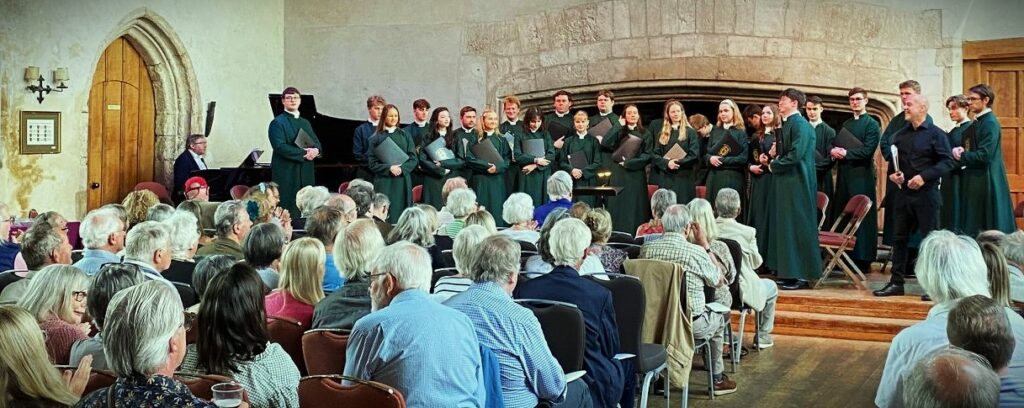
Saturday the 23rd May was a day of brilliant sunshine and intense heat, so Festivalgoers enjoyed the coolness of the old mediaeval building, filled as it was by the ethereal tones of the Exeter choristers in works from the 1920s and ‘30s – Vaughan Williams’s, Lord, Thou Hast Been Our Refuge (the choir used to grand antiphonal effect); Holst’s meditative The Evening Watch; Edgar Bainton’s To Thy Name Above Every Name (a testing work for the singers, and one which, perhaps, should have been conceived with orchestral accompaniment); and Dyson’s Lauds, from Three Songs of Praise. The concert ended with a dip back into the late 19th century, with Elgar’s whimsical choral postcards from old Germany – his Songs from the Bavarian Highlands, the sort of good tunes which you could almost sway along to with a brimming Stein. Elgar and his wife, Alice, clearly relished the countryside of Garmisch, and were inspired by lines such as “Quaff the bright brown ale my treasure, Hark! What joyous sounds!”
The next day, a complete change of mood, with the morning chamber recital – given by violinist, Rupert Marshall-Luck and South African pianist, Peter Cartwright – devoted to music by Bliss, Rawsthorne, Holst, Delius and Howells. Lancashire-born composer, Alan Rawsthorne, is probably best known for his film scores (including that for The Cruel Sea) and his Second Piano Concerto with its carnival-like final movement, but Rupert and Peter have rediscovered for us and curated the composer’s extensive works for violin and piano, giving at this festival the UK premiere of his Theme and Variations for Pianoforte and Violin.
Rawsthorne’s taut, concentrated, challenging writing proved to be an excellent foil to the more romantic sonata, from 1914, by Arthur Bliss – an early work, yet one which any listener, new to the piece, would consider a work of mastery and maturity. With its lovely whirlpool moments, its combination of sunlight, melancholy, nostalgia, the sonata was (for me) the outstanding work of the concert, especially the heartachingly beautiful piano opening, played with such gently paced and slow shaping by Peter Cartwright. Rupert Marshall-Luck more than embraced all the virtuoso moments of the piece, especially the exciting passage where the soloist has every opportunity to out-soar even Vaughan Williams’s famous ascending lark.
Now to recorded music: a new CDs from Chandos Records, of Shostakovich’s great Stalinist era monolith (yet with the composer confusing the totalitarians of his country with cryptic ideas and sardonic snarls) – his Symphony No. 5. Played with great tension and power by the Greater Manchester-based BBC Philharmonic – the old ‘BBC Northern Symphony Orchestra’ to we old Radio 3-ites – the recording dazzles at all levels, the players giving everything they have for the Finnish maestro, John Storgårds, a musician renowned for his readings of Sibelius and Nielsen. Here in the Shostakovich is a darkness that any Scandinavian or Russian would recognise, yet we are in the world, not of the Russian steppes or the cold Baltic coast, but the labyrinths of Moscow and the artist, enslaved but never truly at bay. For those who know their Shostakovich recordings, the new version is extraordinarily similar in temper and timbre to the early-1980s interpretation by that Russian patriot-dissident, cellist-turned-conductor, the great Rostropovich. Some may still remember the pent-up power and bare bones of the Fifth, as performed some 45 years ago by the USA Washington National Symphony Orchestra under that magisterial maestro.
Another famous conductor was Sir Thomas Beecham, founder of both the London and Royal Philharmonic orchestras. Beecham had a wide repertoire, and it is perhaps hard to pin him down: Wagner and Berlioz, and the lush, heavy tone-poems of Richard Strauss appealed to Sir Thomas; Delius, too, and Handel – and opera. But so did orchestral favourites, French ‘lollipops’, and Russian romanticism. New from Siva Oke and SOMM comes a full-blooded, orientally-shimmering account, recorded at a packed Royal Festival Hall in 1957 of Rimsky-Korsakov’s Scheherazade – an irreplaceable capturing of a style of playing which we often do not hear today; in which the orchestra heaves with turbulence and colour, and section leaders play like virtuoso soloists. Rimsky-Korsakov’s piece is a work steeped in the legends of an imagined Arabian world of magic – of a clever princess who outwits a despotic ruler, by beguiling him with stories which she tells, night after night. (One could almost see Shostakovich in a similar dilemma, using his musical powers to keep one step ahead of the hammer of doom.)
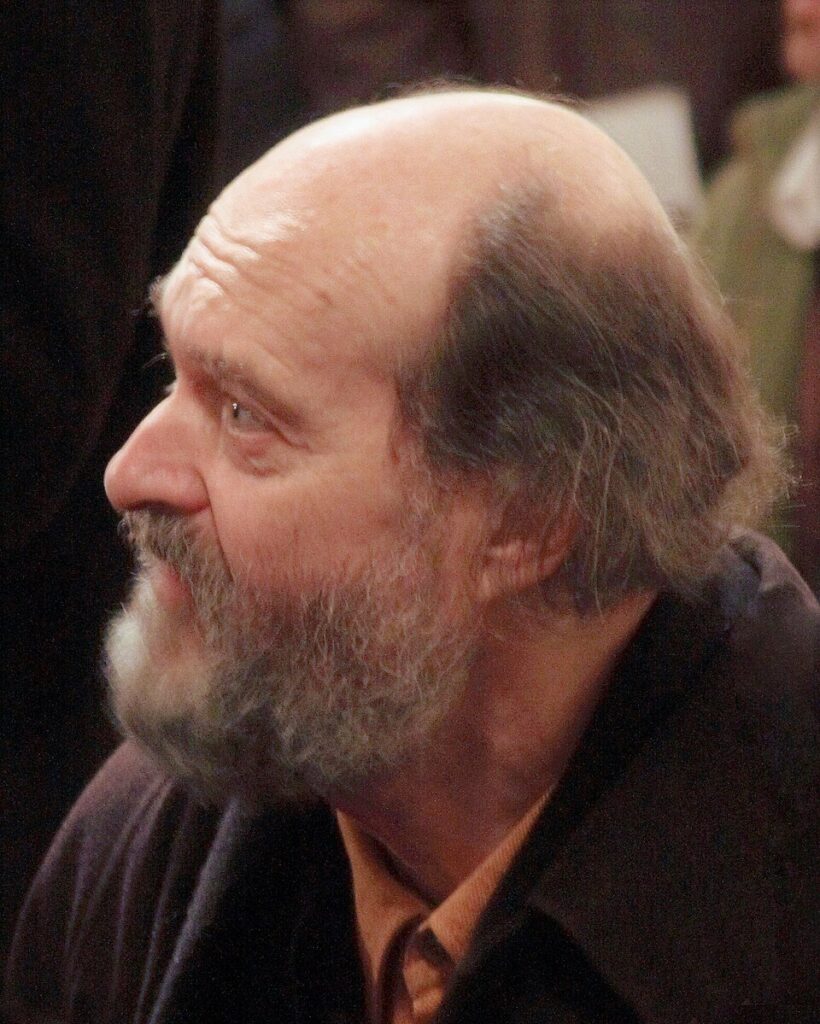
Finally, a return to Chandos Records and their new CD of Estonian musical magus, Arvo Pärt (born 1935) – the complete symphonies (1-4), performed by the Iceland Symphony Orchestra under Eva Ollikainen. “Worlds ahead for clarity” was a one-time sales slogan of Chandos, a choice of words which fully applies to this living-presence, revelation-of-detail recording made a year ago in Reykjavik; a presentation of a symphonic progression from the 1963 ‘Polyphonic’ – just over a quarter-of-an-hour in length, to the harp, timpani and percussion of the 2007-08 Fourth Symphony, subtitled Los Angeles – and dedicated to the Philharmonic Orchestra of that city. Essentially, Pärt’s music is concerned with the spiritual, with pure belief – orthodoxy, credo (‘Credo’ was a name of one piece from the late 1960s). In this collection, it is possible to find a rooted hope for music and for our world – every bit as reassuring as the mediaeval stonework and arches that we found earlier at Dartington Hall.
Recording details: Alan Rawsthorne, the complete works for violin and piano, and the Violin Sonata by Sir Arthur Bliss, available from EM Records, via em.marshall-luck@em-records.com; Shostakovich, Symphony No. 5 (with Second Symphony), CHSA 5378; Rimsky-Korsakov, Scheherazade, RPO, Beecham, SOMM-Beecham 34; Pärt, Complete Symphonies, CHSA 5372

STUART MILLSON is a member of the Chartered Institute of Journalists, and a Contributing Editor to The Brazen Head
