Three poems by Ian C. Smith

IAN C. SMITH’s work has been published in Across the Margin, BBC Radio 4 Sounds,The Dalhousie Review, Gargoyle, Griffith Review, Southword, Stand, & The Stony Thursday Book. His seventh book is wonder sadness madness joy, Ginninderra (Port Adelaide). He writes in the Gippsland Lakes area of Victoria, and on Flinders Island.

Prologue

‘And yet to me, what is this quintessence of dust?’ Act 2, Scene 2, Hamlet, Wm. Shakespeare.

At the Spithead a young midshipman rows through November’s dark ripple to meet his brother, Charles Christian, a ship’s surgeon. He rows, rhythmic, action immanent, peat smoke’s earthy scent of ancient moss airborne from the inn where he shall greet Charles in his familiar mocking tone buttressed by self-belief when they embrace. Charles’s journey recently completed, Fletcher’s is held up. They burn the candle quaffing ale, swapping news.

Charles, edgy, exudes relief recounting a tale of mutiny at sea on his East India Company vessel. He grips Fletcher’s arm, that pulsing strength, confessing his implication in the crisis, describes vile abuse, blows, loaded pistols, a terrible captain. Fletcher allays his concern with sentimental gossip about Cockermouth, mimics his own ill-mannered martinet he sailed with previously, raging in a fool’s accent about departure delays. In their cups, their bond infrangible, they laugh until it hurts.

Reassured, Charles leaves at first light, ships indistinct in mist. He turns, sees his brother’s face for what he can’t know is one last time, wishes him safe voyage, vowing to remember him in prayer, their fond farewells lost forever like all words uttered then. Fletcher, always exhibiting confidence, tells him not to worry. Bounty anchored in the roadstead’s silence, a sleeping soul cries out, dream as premonition.

Limp sails sigh in the Doldrums, belt of calms before sudden squalls; ahead, zero latitude, imaginary line between polar extremes beyond which their known world shall turn arse-around, where jacks might be kings, captains knaves. Harsh baptisms await the wary, but of a different kind.

South Seas palm trees in his mind’s eye, skylarking on deck to Michael Byrne’s sizzling fiddle, taking the piss out of Nipcheese Bligh’s parsimony, reeling to his specific orders, sweat flying, swarthy Fletcher anticipates the line ceremony: the tarring, the shaving, the acting, ducking-stool slowly swinging from the yardarm.

But this is not to be. Too brutal, Bligh, swearing no oath to Neptune’s courtiers, informs his log that is to become one of the most perused books from its time. He plans to quell the lads’ grumbling, their innate yahoo urges, by paying the initiates’ fines, topped with a generous issue of grog, so pleasing to the recorder of data.

Luau Love

Bligh responds to a roar, pounding on deck.  Fletcher jumps from one barrel into another, a standing spring, no hands.  The company, not Bligh observing bleakly, applauds this athletic gentleman, a lock of his black hair damp with sweat fallen loose.  Flicking it back, he grins, bows.  Now he claps with force, taps his foot in time with the dancing, the beat of his urgent heart.  Upper lip glistening, he radiates irony.

The only black in Bligh’s hair is the ribbon keeping it intact against his nape, though his rages be black blisters.  In the great cabin shared with 750 potted plants he suffers a megrim.  Chaperoned by chlorophyll’s calming influence, he polishes his sextant with a coat sleeve, reaches for a quill, his log always shipshape.  Hearing the sirens calling them he knows his vulgar jack tars will be ashore again tonight.  There are no suppurating gums, swollen faces, due to the fresh food and water.  Their grumbling in hiatus, he commandeers most of the provisions brought aboard, more tidy profit.

His cock seeing no action these days, he considers the pox, its consequences.  Ah, consequences.  Staring through a valance of leaves, not breadfruit for once, concealed from yet another ruckus of feast preparation, he is as hard as the nails these heathens covet so much.  He, also, could commit a sin watching the handsome six-foot woman the buggers call Mainmast kneeling, a devotee before her idol, hands, mouth, loving her Titreano, his skin, dark like hers, muscular shoulders, slim tattooed buttocks, clenching.  In this brief interlude of history, after Bligh’s encouragement of Fletcher on a previous voyage, he witnesses his bete noire, who mocks him receive tenderness from kleptomaniac savages who practise human sacrifice.

Dolorous memory flashes visit Bligh; hard bright light beating back from an endless ocean, England’s foggy harbours, cartography, sacrilege, as smoke sails across the verdant mountainscape, tang of bacon wafting.  He breathes faster, tries to divert thoughts towards a decent life again but a drumbeat crescendos, banjaxing his better intentions.  For privileged Fletcher, sated now, private torment awaits, a brooding time when the devils of melancholia shall steal upon his hours.

Pitcairn Scuttle

Carved images face distant Easter Island, eroded remnants of much earlier events on this micro-society’s incorrectly charted island perfect for pirates’ buried treasure rather than buried pasts, or worse; bodies. Women who shall survive watch from high above a cutter being loaded before hurriedly leaving an anchored ship, itself high – on a wanted list. The unravelling swell shirring leeside water peels back, baring this coast’s rocky hips. At first, nobody misses Matthew Quintal, nimble arsonist below, defying Fletcher Christian to secure his safety.

Those in the boat hear snapping and hissing as a shaft of fire engulfs the stern like a pyre. Charcoal flecks swirl, disappear into the air like angry words. Glow worms of minor eruptions backlight the much-flogged, mind-flawed Cornishman clambering back down to sea level, expression rapt now their identifier is doomed. They pull on the oars, away from radiant heat, feathering clear of the turbulent entrance’s white wash that guards their isolation boiling below the women watching from The Hill of Difficulty. These unified women expected another load of Bounty’s salvageable material, not this.

Flames, burning ash, shoot ever skywards, seabirds arcing the heat current while the women keen. Christian, whose initial exhilaration when he discovered Pitcairn uninhabited, its fertility, its water, though both scarce, most of its two square miles rocky slopes, some steep, understands the limits of human endurance. Distilling spirits from ti shall bring out the bestiality in the worst of them. His assumed authority eroded yet again, grief tugs at his heart, personal strain that remains mostly unexplained.

After suffering inhuman treatment from these Europeans the Pacific Islander men stage their own mutiny, first murdering John Williams, the armourer from Guernsey, Fletcher’s blacksmith, builder of their forge. Trapped gardening, startled, he cries out, swearing in French. When they confront Fletcher, also tilling his patch, perhaps saving him the ritual of a more ignominious end, through pain, his terrible ache for home, his last words are, Oh dear! Soft rain cleanses his wounds, his sins. He leaves Mauatua, who curates his skull for sacred reasons, their three offspring, the patois of English language she has learned, and an engrossing tale of memory and myth to pass on. He is gone. Oh dear, indeed.

Thomas Malory’s civilisation-shaping chivalry

Photo; Shutterstock
LIAM GUILAR revisits the too little-read Le Morte Darthur

According to the blurb for one Audible version of Sir Thomas Malory’s Le Morte D’Arthur:

Comparing Batman, Superman, and Captain America to Sir Launcelot, Sir Tristram, and Sir Galahad isn’t a huge leap of the imagination. Perhaps, for the 15th century reader, King Arthur and the Knights of the Round Table were the equivalent of our modern day Justice League or Avengers.[i]

This is an excellent example of ‘dumbing down a book’.

At the end of Malory’s book, Arthur tells his one surviving knight, ‘In me there is no trust to trust in.’ The Arthurian experiment fails because the best of those involved in it may have perfected their craft, but as humans they still have to negotiate the problems inherent in being alive in their world. They are not superheroes, they do not have super powers[ii], and Malory was writing as an adult, for adults. Modern readers may have lost the ability to hold contradictions open to create a space for reflection; Malory’s text assumes this is exactly what the reader wants to do.  

When I was in primary school, memorising carols for the inevitable Christmas concert, I was convinced that ‘The first Noel the angels did say/was to certain poor shepherds’ meant that the doubtful shepherds were being ‘certained’. The purpose of so much modern writing, whether fictional or not, in film or print, seems to be ‘to certain’ the audience. Comparing Sir Lancelot to Batman might certain a prospective reader, suggesting they will encounter nothing unusual or unfamiliar, nothing requiring thought or effort, but it’s a gross misreading of the book.  

The book most people refer to as ‘Malory’ or ‘The Mort(e)’ was written by Sir Thomas Malory, and published by William Caxton in 1485. It is the last great work of medieval English literature and the first great work of modern English prose. It’s also the high point of the European medieval Arthurian tradition[iii]. It is a book that refuses to certain anyone.  

Malory took the sprawling mass of Arthurian tales which had been circulating in Europe for over five hundred years and translating them mostly from French sources, shaped them into a single narrative.

He wasn’t the first English writer to tell the whole story of King Arthur between one set of covers. But running from Arthur’s conception, to his death at the Battle of Camlan, Malory’s book contains everything you probably think you know about Arthur and his Knights – the magical conception at Tintagel, the round table, the sword in the stone, Merlin, the Lady in the Lake, Morgan le Fey, the love stories of  Tristan and Isolde and Lancelot and Gwenyvere; Tennyson’s Lady of Shallotte, Mordred, the Quest for the Holy Grail, the suggestion that Arthur doesn’t die and will return to save Britain.[iv]

We don’t know a great deal about Sir Thomas Malory, despite the strenuous efforts of scholars to track him through the surviving records. Given medieval assumptions about authorship, what we do know can’t add much to an understanding of his work. He’s not much more than his book and a trace in some legal documents. But when he lived his life is possibly more important than how he lived it.

He belongs to the last generation that could take the Romance version of Arthur and Camelot as historical fact. Caxton claims he printed the book only after he had been convinced that Arthur was real.[v]

The knight errant, the central figure of these stories, the young man who dons his armour, gets on his horse and rides out to fight for truth, justice and the Arthurian way, had been a popular figure in medieval storytelling since at least the 12th century. It’s an attractive idea and in many ways explains the popularity of the stories: leave the mess of your daily life behind and go seek adventures.

But it is an adolescent’s fantasy. All the knight’s problems can be reduced to a single enemy who can be defeated physically. He gets the gold, the glory, and often the bride, in a finite world utterly different from the mess and tedium of real life. It’s a world where problems are simple, figured as dragons and giants and evil lords dressed in black armour. In the hands of the best storytellers, it was more than that, but it was a world that never existed.

Malory enjoyed the fantasy. His book is full of knights who are free to roam the countryside looking for adventures. But his version of the fantasy is shaped by the times in which he was writing. He had participated in the Wars of the Roses. Men had swapped sides, sometimes in the middle of a battle. Primitive artillery was making an appearance on the battle field. Malory did not live to hear of Richard III’s failed charge at Bosworth. The last massed charge by mounted knights in a major battle on British soil happened in the year his book was published. The knight, who had dominated the battlefields of Europe for four hundred years, was finished as a military force.

Authors who live through ugly times don’t always avoid the temptation to escape into fantasy, but he did. He knew the reality of rich men with their castles and their private armies of armed retainers – a reality made all too visible in the civil and social disruption they caused, and at battles like Towton (1461), where anything up to thirty thousand men died hacking at each other in a snow storm[vi].

So what makes Malory worth reading, and what makes him more grown up than the majority of writers, was his understanding that while the landscape might have giants and dragons and witches and warlocks, the real challenges people face are always personal and rarely straightforward.

Photo: Shutterstock

His book begins and ends with a betrayal. ‘The Sword in the Stone’, Disney’s cute version of T. H. White’s retelling, obscures the darkness that permeates the early books. Born as the result of a trick, Arthur is a strange, impetuous figure, who unwittingly commits incest with his half-sister then orders all the boys born on one day murdered. Merlin warns him that the woman he intends to marry will be unfaithful with his greatest knight, and Arthur blithely ignores him.

To offset the darkness, Malory presents the great Arthurian experiment. The newly formed Round Table Fellowship swear an oath,

never to do outerage nothir mourthir; and always to fle treson, and to gyff mercy unto hym that askith mercy… and always to do ladyes, damsels and jantilwomen and wydowes soccour, strenghte hem in hir ryghtes and never to enforse them upon payne of dethe. Also that no man take no batyles in a wrongfull quarrel for no love ne for no worldly goods.

It’s a radiant ideal: the people who would benefit most from anarchy; armoured knights, lords with castles, are promising to fight against it. The people who could most easily exploit the weak are promising to protect them. And the best of them do all those things most of the time.

But balanced against this idealism, is the picture of a court stained with jealousy, resentments and memories of old wrongs.

Perhaps the most adult of Malory’s perceptions is that the world is not divided into heroes and villains, into ‘good’ people and their polar opposites. There are caricatures littering the edges of some of the tales, giants and renegade knights and wielders of magic, who are little more than plot devices, but they are the gaudy inheritance of the genre. The challenges facing Malory’s characters are moral and personal as they attempt to negotiate different and often contradictory codes of behaviour. People do things, often with good intentions, but with unintended, unforeseeable, disastrous consequences.  

This is presented most succinctly in ‘The Knight of the Two Swords’, the second section of the first book[vii]. It’s a mini tragedy which feels Greek in its inexorable movement towards catastrophe. It turns the adolescent fantasy of the knight errant into a nightmare.

In a story that turns on the problems of recognition, everything Balyn, the Knight of the Two Swords, does, he does with the best of intentions. But he leaves a trail of misery and destruction in his wake as he heads towards a fatal duel. He kills, and is killed by, his twin brother and they recognise each other only after they have dealt the killing blows. It’s the darkest of the stories and it sets the tone for what follows.

If the Round Table is the best humans can manage, the quest for the Holy Grail shows that measured against the highest of ideals, it’s not good enough. But the lesson of the Grail, characteristically for Malory, works two ways. That so many knights fail is a critique of the value of the Grail ideology as much as it as a critique of the Knights. Galahad is the least likeable of Malory’s heroes. He is born to succeed in the Quest, and it never feels as though he won’t. When he achieves the Grail, he is transported on a beam of light to Heaven. To be human, to live in the world, is to try and find a way home through the forest, and the attempt to overcome greed and lust and ego is what characterises the best of humans. Perfection offers no way of living in the world.

The greatest of the Round Table Knights, Lancelot, is also the greatest contradiction. When he dies Ector speaks his threnody over his body:

And thou were the curtest [most courteous] knight that ever bare shield. And thou were the truest frende to thy lovar that ever bestrade hors, and thou were the trewest lover of a synful man, that ever loved woman, and thou were the kyndest man that ever strake with swerde. And thou were the godlyest persone that ever cam emonge prees of knyghtes. And thou was the mekest man and the jentyllest that ever ete in halle emonge ladyes, and thou were the sternest knyght to thy mortal foo that ever put spere in the reeste.

But Lancelot is an adulterer. In the moral framework of the time this means he’s going straight to an eternity of terrifying punishment in hell. In medieval terms, adultery with the queen is treason and the punishment for that was terrifying enough before he even got to hell.

And he fails. He fails in the quest for the Holy Grail because he can’t stop thinking about Gwenyvere. He unintentionally kills his friend, Gareth, who worships him ‘this side idiolatry’. And this greatest of knights arrives with an army that would have saved Arthur, but only after the final battle is over and lost. By simplified modern standards of heroism, Lancelot is a loser.

The idea of the ‘flawed hero’ is common enough. But it’s a simplistic way of reading, or writing: ‘Identify the tragic flaw in Hamlet’s character’. Ten points and a pat on the back if you answer ‘indecision’. No points if you try to argue that a character who only has one ‘flaw’ is less than human or that to argue there is a ‘flaw’ suggests there is a perfect personality which is not only attainable but identifiable. It’s symptomatic of a binary, all-or –nothing argument.

Sir Thomas Malory, knight, prisoner, is excluded by name from two general pardons issued by the Yorkist King. Even P. J. C. Field’s exhaustive study of the documents doesn’t bring to light who he had annoyed, and why. But he had annoyed someone with the power to keep him in prison and manipulate the judicial process, so he never came to trial. When scholars first discovered that a Sir Thomas Malory of Newbold Revel had been accused of various misdemeanours, including breaking into Coombe Abbey, cattle stealing, roughing up the locals, and raping the same woman on two separate occasions, there was a reaction against this identification. Surely this couldn’t be the man who wrote the Pentecostal oath.

But it could be and if Field is right, it probably is. Malory probably died in prison. We should qualify ‘prison’: not the kind of dungeon you can visit in a medieval castle. Wherever he was he had access to an impressive library, and time to write and stay focussed on his story. The temptation to escape into his fantasy must have been very powerful. And he obviously enjoyed whiling away the hours imagining two armoured knights bashing away at each other, a delight it is hard to share as a modern reader. But the ending of his book suggests that Sir Thomas Malory, Knight prisoner, had a very clear headed view of human nature.

The ending of the Morte is one of the great adult endings in English Literature. Malory’s best fictional creation is the relationship between Lancelot and Gwenyvere. They have grown older together, and they bicker like a fond old married couple. It’s difficult not to speculate: if Lancelot is Malory, then who was the Queen? And why did Malory resist the very human desire to allow his main characters to live happily ever after?

When Lancelot arrives from France too late to save Arthur, England is anarchic. It’s not clear who, if anyone is in control. He sets out on one last quest to find Gwenyvere. Traitor he may have been, adulterer he certainly was, but as Ector says, he was true to his lady.

He finds the Queen hiding in a convent. They have risked so much to be together. He tells her that now they can go to his lands in France and live without fear or guilt.

And she says no. She intends to spend the rest of her life praying for forgiveness. She knows that they have been instrumental in the destruction of their world. A lesser man might see this as a betrayal. But he accepts her decision and says he will follow her example and spend the rest of his life in prayer. Before he leaves, he asks her for one last kiss. And she says no.

This is the bare outline of the scene. It does no justice to the dialogue. He found this ending in his sources, and there are many ways he could have written it, but he stays true to the characters he had developed and the dialogue is his. If there was any doubt, at this point, Gwenyvere’s final refusal, you realise Malory didn’t flinch.

The Morte has been my desert island choice since the 1970s. It’s a book that rewards many readings. But it does belong to a lost world. It can hold contradictions in balance, admire what is admirable and leave judgements to the reader. It will not certain anyone.

Reading the Morte – a suggestion

If you’re interested in reading Malory, I would suggest using a version that hasn’t been modernised. Malory’s prose isn’t that unfamiliar, it takes a little getting used to but it’s worth remembering he probably spelt words as he pronounced them.

Hit befell in the days of Uther Pendragon, when he was kynge of al Englond and so regned, that there was a mighty duke in Cornewaill that helde warre ageynst hym long tyme, and the duke was called the Duke of Tyntagil.  

At times his vocabulary does show the influence of the French he was translating, so there are words that are no longer in use, but the trick is to commit to reading a number of pages, and allow the rhythm of the prose to carry you over the occasional phrase that’s unfamiliar.

His world is still medieval, with its casual acceptance of both brutality, cruelty and indifference: “Then he raced of his helme and smote off his head. Then they went into souper.” (p.517)

If you’re the type of reader who only reads what makes you feel comfortable, or you insist on your heroes being squeaky clean, don’t bother with this book.

If you just want to sample Malory, I’d suggest reading the final book. I think he learnt to write as he went on, and by the end he had mastered his craft.

Eugene Vinaver staked his critical reputation on his belief that Malory didn’t write one coherent book but eight ‘tales’. Whether he’s right or not can be left to the purists, but it does give you the freedom to pick what interests you in no definite order.

If you want to begin at the start and keep going you will need a relaxed attitude to Malory’s eagerness to describe, at length, every combat between individual knights, groups of knights, or armies, and his knights’ habit of levelling their spears and charging into each other at every possible opportunity.

First time through, you might skip the tale of the Emperor Lucius, which is where Malory dumped the Middle English alliterative Mort[viii], and perhaps the two long books of Sir Tristam, where Malory seems to have been dragged off course by his sources.


[i] This is from the publisher’s summary for the Audible audio book version of Le Morte D’Arthur read by Chris MacDonnell and published by Spoken realms. 

[ii] Gawain’s strength waxes with the sun’s rise towards midday, and wanes as it moves through the afternoon, but that’s it.

[iii] Until the 1940s, editions based on Caxton’s version of the text were the only ones available. In 1934 a manuscript was discovered in Winchester (these things do happen) which is one step closer to what Malory wrote than Caxton’s printed text. Detailed analysis shows it had been in Caxton’s workshop. The Winchester Manuscript was edited by Eugene Vinaver as The Works of Sir Thomas Malory. This became the scholarly standard.  Vinaver was convinced Malory wrote eight tales rather than a single book. The best single volume edition currently available is P.J.C. Field’s. (Sir Thomas Malory, Le Morte Darthur. 2017, D.S. Brewer Cambridge.) Claiming to be ‘the definitive original text’, this also contains a summary of Field’s extensive research into Malory’s life. Page references are to this edition. There is a two-volume edition, also edited by Field, in hard back. Translations and modernisations are unnecessary evils and are best avoided.

[iv] Not everything, the poem Gawain and the Green Knight, recently brutalised in the cinema, is missing and was probably not in his sources. Nor does Malory seem to have known the early Welsh story Culuwch and Olwen, in which Arthur’s retainers do have ‘super powers’.

[v] He notes in his preface that he had originally decided against doing so because ‘dyvers men holde oppynion that there was no suche Arhtur and that alle suche bookes as been maad of hym ben but fayned and fables’ however, having listened to the counter argument, he affirms: ‘Thenne, al these thynges considered there can no man reasonably gaynsaye but there was a king of thys lande named Arthur’.

[vi] How many fought, and how many died, at Towton is ‘a matter for scholarly debate’. The traditional figure of thirty thousand dead might be an exaggeration, but it is still the deadliest battle fought in England and a lot of the scepticism about the figure seems driven by an unwillingness to believe more died at Towton than on the first day of The Somme in 1916.

[vii] ‘Balyn le Sauvage’ in Field (pps. 47-75).

[viii]It would be a pity to shipwreck as a reader on the language of this section, since the language of the alliterative poem was probably old fashioned when Malory was transcribing it.

A poet’s pole position

Arctic Elegies

Peter Davidson, Carcanet, 2022, pb., 72pps. £11.99

DEREK TURNER feels impelled to look to the north

There are poets associated with particular places, or special states of mind, but Peter Davidson has made a geo-poetical genre of his own, as celebrant of a cardinal point. His interests are wide-ranging, but magnetized in one compass direction – towards ‘Norths’ geographical and conceptual, Norths as landscapes and mindscapes, Norths as essences of bleak beauty and soughing melancholy. Auden, Larkin and others celebrated septentrional subjects, but Davidson brings a clarity and suggestiveness all his own to the lonely latitudes that lie above the treeline.

Davidson studied literature and art history at Cambridge, and taught at Warwick and Leiden before spending many years as Professor of Renaissance Studies at Aberdeen. He is now Senior Research Fellow at Campion Hall, University of Oxford. His earliest writings were monographs on Scottish drinking songs, but he has also edited works of the 16th century Catholic martyr St. Robert Southwell and the 17th century Royalist diplomat-poet Sir Richard Fanshawe, and written an opera libretto (part of which features in this book).

A 2005 topographical tour-de-force, The Idea of North, set him undeviatingly on his compass course, and he followed up with Distance and Memory (2013), and The Last of the Light (2015). His 2018 book, The Universal Baroque, was a radical revisioning of cultural history in which national labels were rejected as otiose, and the very word ‘baroque’ released from its period prison. In his latest book, 2021’s The Lighted Window, the illuminated opening is seen in all its symbolical aspects – as sign of warmth and welcome for those out in the darkness, alternately allowing insights into interiors or outlooks onto wide worlds.

He has gazed northwards from different standpoints, but always through a prism (or snow-globe) refracting an English Catholic sense of dislocation and loss. Northern Europe has long been mostly Protestant (or post-Protestant), but he stakes an older claim, of the far North as fiefdom of ‘the Faith’. His Norths seem often empty, yet always echo, with thin ghost-voices wired on winds across gulfs of territory or time.

He is a celebrant of half-light and half-memories, looking out through long library windows onto winter afternoons with the cold coming down hard – of gloaming peregrinations across parklands and along secretive streets – of old houses and of wildness, of solitary ships and wandering stars, snowstorms and woodsmoke, falcons and thorns – bittersweetly aware of sacrifices made, failed schemes, doomed adventures, long exiles, lost expeditions and causes. Like Rose Macaulay, he takes pleasure in ruins; like Jun’ichirō Tanizaki, he finds substance in shadows.  The North, he notes in Distance and Memory, can be a place of “grim consolations” and wintry raptures, where dearth and even death can be counterbalanced by pristineness and purity. The lights of the North are conventionally held to be harder than those of the temperate zones – but even under the most unforgiving rays this evocative writer finds ample room for romance and ornate symbology, conveying great meanings in vastly evocative blank verse.

From a British vantage point, Norths are not necessarily polar wastes, but can be Pennine hillsides, Yorkshire towns, or Hebridean isles. Even those motorway signs on the edge of London which read “A1(M) The North” act almost as ambassadorial outposts, indicating richly-imagined places, and suggesting the supposed attitudes, habits, and traits of those who dwell in them – guardedness, practicality, sternness, stubbornness, terseness, thrift, toughness. The folksong phrase ‘North Country’ has long elicited images of lakes left by the Ice Age, broad fells, and drystone walls – and even today’s political term, ‘Northern Powerhouse’, is more romantic than rational, conjuring a domain of latent strengths. Entire Northlands can be evoked immediately in everyday architecture and art – stained railway arches, empty mills, the evenings of J. Atkinson Grimshaw – or even sounds – foghorns, geese, the haunted songs of Joy Division. In other countries, their Norths can be our Souths; an Italian’s idea of North may be Austria, and an African’s Italy. In Australia or New Zealand, vague notions of Northness may be swivelled to the South, with Antarctica taking the Arctic’s place in the cultural imagination.

The English east coast under snow. Image: Derek Turner

One of Davidson’s lost causes is the Stuart succession, with ‘Jacobite Song’ launching this second collection for Carcanet (following 2008’s The Palace of Oblivion). The forces of the pre-Reformation, clannish, chivalric Caledonia that briefly terrified Anglican, mercantile, rationalist England in 1745 are honoured in absentia – “The regiments like snow all overborne / The boat rowed far from the cold shore, long gone. / O blackbird taken in the fowler’s snare / He is now far who will return no more.” His king over the water has now gone over the ice, once-bonnie emblem of a past that has “Faded, flown, taken, frozen, falling, gone.” Later (‘Secret Theatres of Scotland’), under a carving of a stag in 1740s plaster he ponders scratched Scots words of desolate departure, graffiti of the gone – “Lang befor daylicht, he began his flicht”.

We then journey to find the jaded, tired Queen of the Adriatic reflected in Murano-made convexity in ‘Venice Glasses I’, one of three poems inspired by Victoria Crowe’s paintings. We can almost smell the Grand Canal and see gondolas rocking gently at their posts as another frantic day fades out – “When vanished things take shape in the stir of the waters / When glimpses and shadows pass at the edges of glasses”. This is a black and dank prospect, suggesting slimed piles and a faint under-whiff of sewage, mercifully uplifted by ‘Venice Glasses II’, where an overflying aircraft scrapes a bright stripe across the darkening welkin.

Back in the hushed old-maid austerity of Edinburgh, he scans second-hand bookshops well-stocked with the frigidly unsatisfactory productions of the eighteenth century – “A back room full of quarto shelves of Scotland / The August pleasures of dead advocates”, searching for sparks of passion within rows and rows of reason – “These wintry precincts of enlightenment / Which hold out for the moment, just, they hold.”

He hovers above 1845-8 to birds-eye the high-tech, high-hoped, disastrous Sir John Franklin expedition to find the Northwest Passage, which got frozen in forever, where “The ice grows downwards building in the dark”. He soars skua-like back to anxious England, and awaiting Lady Jane, pacing in her garden, seeking psychic aid to link to her too-long absent spouse, and eventually enlisting patriotic public opinion to make the Admiralty send in too-late search. We think of those famous pictures of the frozen corpses discovered long after – the luckier ones who died earlier, and received obsequies, before the rest perished miserably out in the white hell, benighted among bitterness, enmired in allegations of anthropophagy, insanity, lead-poisoning, and uncertainty. Davidson prays for intercession for these expeditionaries still – “Lord of the treasuries of Hail, absolve them now, / Queen of Miraculous Snowfall, lead them home.”

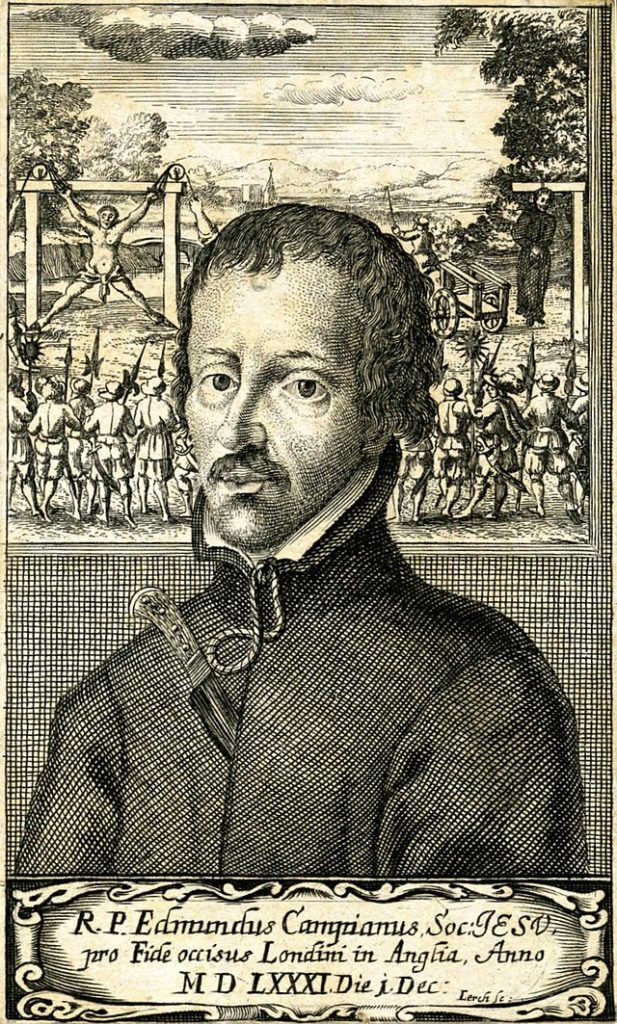
In ‘The Early Christian Monuments of Wales’, a poem titled like a treatise, we find evidence of earliest missionaries in monoliths on hawthorn-studded hills, and crude lettering in eroding inscriptions – the gospellers who gave birth to the monks, and the monks to the Matter of Britain – “Words growing thin in time’s vastness, names themselves breaking” – apostles long unreachable, and yet omnipresent even in today’s physical and psychological landscapes. Some poems are more straightforwardly devotional, like ‘St Edmund Campion meditates on the Passion’, or ‘Sonnet for Trinity Sunday’, but his abstractions are rooted in the natural kingdom of the North – “For we are God’s hands and eyes through each green day / Of dog-rose and elder, plough-furrowed leaf of the hornbeam.” Serenity of God is one with sublimity of scenery.

Faith filters into everything he writes – onto the fretted neck of John Dowland’s lute (‘Mr Dowland’s Midnight’), and into his allusions to Caspar David Friedrich’s hyperborean heroism, (‘Dialogue at Kloster Edelna’), and the works of other painters (‘Pryde’s Ghost’, ‘Rex Whistler’s Blues, August 1938’). The most personal lyrics of all thaw all permafrost to remember old friends, taste again late fruits once eaten in disordered once-elegant rooms (‘Lastness, or Rory’s Apple’), and honour his ages-ago aunt, losing her mind yet still able to remember Rilke (‘September Castles’).

Davidson’s conservative, mordant philosophy feels very far removed from those of most modern poets – indeed, it diverges radically from all modern outlooks – but there are times when he can cut through the deepest coldness, to pierce the most glass-slivered heart. He shows us in Arctic Elegies a land and state of mind both lyrically described and thrillingly delighted in – a land and state of mind both eminently deserving of celebration, and capable of shining suddenly with beauty and transformative warmth.

A Man of Heart – the scribe’s story

LIAM GUILAR continues his epic of early Britain

The story so far. In the 5th century Vortigern’s attempt to hold the imperial province of Britannia together has been defeated, not by external enemies but by British rebels led by Vortimer, his eldest son. Vortimer is a devout Christian and has invited the Pope to send an embassy to restore the church and combat the Pelagian heresy. What follows is the first half of Chapter ten which loosely follows the fifth Century Life of Saint Germanus . You can find chapters 2-9 on the Brazen Head. The complete story has been published as A Man of Heart, by Shearsman UK (January 2023), available here

At the court of Vortimer the King

Above, bare wooden beams.

The hall is badly lit, too many

shadows confuse the walls.

The candle complicates the page.

There’s a broken wreckage of a man

beyond the table, out of sight,

but he knows he’s on his knees,

the shadows can’t disguise

how uncontrolled his sobbing has become.

Two armoured men are looking carefully

at the wall behind him.


‘For your skill with words,’

said his superior,

‘you will join the Papal mission.

You will travel to Britain.

You will record everything.’

Only now he understands

it was curse not compliment.

Here words slither and slop,

like the entrails of a corpse

he has to carry to its grave.


‘Who saw the King today?’

the officer enquires.

The scribe indicates he cannot hear the man’s reply.

The guards move, the man sobs.

‘The pagan woman, the Earl of Gloucester,

slaves, attendant lords…


hand poised, aware the sentence is unfinished.

The officer leans forward. ‘Who else?’

Like a secret heard by accident,

so soft, if a voice could hide, his does:

‘Your masters.’


The two armed men stare at the wall

The scribe puts down his stylus.


They have questioned slaves

who revealed nothing before they died.

There are several court officials

who saw the King in their daily duties

but each swears he saw nothing

and no one saw him without others present.

There were still many wished to see him.


Not like that.

Remembering the last time he saw Vortimer,

writhing, frothing at the mouth,

fouling himself, screaming.


Lupus of Troies enters. ‘The King is dead.’

He indicates the scribe should write the news.

The guards remove the witness,

as Germanus of Auxerre re-enters;

Bishop, on an embassy to combat heresy,

ex-governor, ex-general, proto-saint.[i]


The scribe has travelled with these two,

has become alert to the way they rarely say

that water’s wet. Their silence has

so many meanings but they navigate

the alternatives and rarely get them wrong.

He is aware the words he writes dress

one version of the truth and send it

marching off towards the future

while other possible interpretations

loiter round the edges of the page

like unwanted slaves at an auction.


Germanus:

‘Every Lord who heard his welcome speech

has to be a suspect.’


‘It was poison.’

‘Domestic or foreign?’

‘Impossible to tell unless the vial is found.’

‘And that’s impossible?’

The drama of silence. How can there be meaning

without interpretation in what’s unsaid?

The words he writes across the parchment

have no spaces, but here so much happens in the gaps.

Face blank, he moves the words across the page

and later, perhaps tonight, perhaps at the ugly hour,

staring into nothing, curled into himself

a long way from his home,

imagining all the ways a boy can die,

he will wonder if he hasn’t just recorded a confession

and signed his name to his own death warrant.

He knows what wasn’t written down.


Germanus rests his hand,

so very gently on his shoulder.

If he touched the hand, the ink might blot,

might suggest to an observant scrutineer,

‘Here something happened.’


‘We came to root out heresy.’


They have been arguing.

Germanus is troubled by the inquest.

‘Pope Siricius debarred from holy orders

all who after baptism held administrative posts

or served in the army, the civil service,

or had ever practised as barristers.’


Lupus searches for the appropriate quotation.

He knows this man is closer to his Christ

than anyone he’ll ever meet.

But his literal reading of the gospels

is a cliff on which every ship must wreck.

His Christ never ruled a kingdom;

or had to deal with heretics and raiders;

or arbitrate between contenders for a throne.


He finds the appropriate quote

in his well-trained lawyer’s memory:

‘These powers have been granted by God

and the sword has been permitted

for the punishment of the guilty-

those who wielded it were not blameworthy.’[ii]


‘My Christ,’ says Germanus, quietly,

‘came to save the poor and wretched.

He bought a message of hope and charity.

How can I love my neighbour

and send him to be tortured?

What kind of lover sends their friends

to the executioner?’


‘A disappointed, saddened one?’


The ruthless governor, the iron fisted general,

the lawyer who could kill with words,

flashes to reanimate the bag of bones

and Lupus, despite himself, steps back.


‘Faith does not deal in dialectics.’


The scribe watches, wonders why this,

why now, and why this pause?

He watches Lupus, waiting, saying nothing,

until Germanus shrugs and they both smile.


He can hear the wooden walls

settle. He can hear the fire.

He can hear, outside, voices

and lamentations. Someone repeating:

‘The King is dead. Vortimer the King is dead.’

A gesture indicates the scribe should write again.

‘Where is the woman?’

‘Fled from the court my lord.’

‘And Gloucester?’

if you listen, and ignore the shock,

it’s there, the faintest trace?

Amusement? In the voices.

‘Outside, trying not to pace.’

‘Better bring him in then.’

Somewhere in northern France, months earlier

A young man on his knees

in the cold austerity of his cell.

Rare visitors, three much older men:

one white haired, chicken necked,

dressed only in a tunic and a mantle

despite the time of year:

his holiness, Bishop Germanus of Auxerre.

The other tall, solid, well-fed:

Bishop Lupus of Troies.


‘They are sent by our Holy Father in Rome

to combat the Pelagian disease in Britain.

They need a scribe to record their victory.

You have been chosen,’ said his superior,

who seemed small beside the others,

‘for your skill with words,

your beautiful calligraphy.’


And the sin of pride was his.

Thinking, of course, I am the best

and it is just that I am recognised

after the years of being slighted

by the other scholars.

They will watch me leave.

They will see I have been chosen.


He had not been outside his community

since he entered as a child. He had not seen

beyond the familiar sky line,

the terrifying open space

stretching before, behind, above.


They plodded towards the coast.

It was the ash end of the winter,

cold lurked in the morning

and a wind that shrank skin against bone

blew over the flat dead fields.

Reports of bagaudae made them cautious.

Incongruous discrepancies:

‘An historic Papal mission to save Britannia’s soul’

sounded grand on parchment, but

two old men, a boy, some servants

and a bunch of bored and scruffy soldiers.


They had sheltered in a ruin,

the walls liquid stains

on a darkness with no boundaries,

full of furtive noises. 

Shivering at the edge of light

scattered by their feeble fire,

he knelt for the comfort of prayer,

startled by a strange mewling sound

he recognised as his own voice.


The darkness split. Imploded.

A voice in his head screamed silence

and a vague stain appeared

suggestive of a man in chains.

Stones rose, began to pelt the travellers

who scuttled for shelter, except for Germanus.

‘What ails you? Why do you harm us?’

The stone storm falters into sounds of stones falling.

Germanus strides towards the ruin, passing the boy.

‘Follow child.’ He pauses at a pile of rubble,

speaks quietly, knowing the soldiers had come.

‘Bring light, dig here.’


Two rotted bodies, still in chains.

‘Thieves,’ said Lupus, ‘condemned men.

Dumped like the rubbish that they were.’


Germanus was offended.

‘Images of the Almighty, made in his likeness

should not be so mistreated. Find something

we can use for shrouds, bury them properly.

We will pray for their souls. ‘


The two bishops square off against each other.

One strong, virile, the other bent and old.

Neither speaks until Lupus smiles and bows.


Next morning the boy had stumbled over Germanus,

who was grinding barley for his breakfast,

dressed only in his hair shirt.

Lupus had servants to make him comfortable.

Germanus slept on the cold ground,

a faded military cloak for blanket.


But the old man was friendly,

keen to know the boy better.


‘My father left me with those monks

when I was barely five years old.

He would have sold me off to pay a debt

but couldn’t find a buyer in our village.’


Germanus sees,

bewildered, frightened and alone

a timid child in a hard bare cell.


‘God sees through you.

You were terrified of being wrong

so you learnt to be correct.

The library was home, the classroom

and the daily rituals offered certainty.

Applause substituting for affection.

Approval and your teacher’s admiration

as compensation for your peer’s contempt.’


Skewered, the boy looks away,

remembering the casual nastiness of boys

who had agreed he was the victim.


‘But you fell in love with words,’

continues Germanus.

‘The way they could be marshalled

to march away from ambiguity

and took a sour delight

watching boys who bullied you

being bullied by their teachers

because they were slow, and stupid

and didn’t know one case from another.


It’s alright child. You’ve done no wrong.

There is no grammar of divinity.

Language like the evening fire

only illuminates so much.

God exists beyond the pale glow

of human reasoning. Only fools

believe they understand his ways.

He had a plan for you and here you are.’


The boy looks beaten.

And because Germanus

can manage a robust kindness:

‘Do you have any questions?’


‘What is this Pelagius? Child, he was a British fool

who thought a man might find his way to Grace

without the help of God. Much that he said…

Much that he said was good.’ The old man’s

mottled hand moved the mortar slowly,

the rough barley crackling between the stones.

The disturbing bustle of their camp

distanced by the creased and speckled hands.

‘Pelagius said: A man must try to live a sinless life,

and if he fails, it is his own fault.’

‘But…’

‘Child, where is God in this? For Pelagius,

a man stands or falls alone. He doesn’t need

God or the Church. Nor can priest absolve the man

or give him penance. One sin damns you to hell.

Where is Christ’s charity in that?’

What manner of man is this, that even the wind and sea obey him?[iii]

First sight of the sea; a sullen border

between dark land and empty sky.

His shot nerves torn ragged.

The smell and noise and restlessness

of the wharves had no grammar, and then

the pointless rage of heaving waves

pushing and crashing and trying to erase their tiny ship.

He had clung to the rail and prayed

as the world lurched, rolled and staggered,

until, opening his eyes, he saw

right at the bow, Germanus

drenched in the rise and fall

like the saviour rising from death

shedding the green water,

hands raised, arms outstretched

and he will swear on the holiest of relics

on his chance of salvation

and on his faith in the risen Lord

that Germanus of Auxerre

ordered the sea to be calm.


And the sea obeyed him.

Arrival

They watched the riders coming down the beach

and he was frightened by the powerful grey horses;

teeth, hooves and sweating muscle,

and their armoured riders, more beastly than their mounts.

He knew their type; animals who could not reason,

or be reasoned with. A casual indifference to other’s pain.

He remembered men like this, riding through his village,

their arrogance, their twisted humour,

the ease in which they warped from indolence to rage.

Burnished armour, banners scraps of sudden colour on the breeze

and when the herald had established their identities

the riders moved aside to allow a young man on foot.

Dressed in gold brocaded silk; the kind of man, he thought,

who looks at home in silk. Not much older than himself,

but confident and eager. ‘Where is the King?’

asked Lupus, affronted by this lack of protocol.


‘I am Vortimer, ruler of this kingdom.

Vortigern is my father, a failed King his subjects drove away.

He brought in heathen people. They broke our laws,

defiled our women, corrupted our good customs.

We have destroyed their army, driven them to their ships.


In this new land we worship the true God.

With your help we will rebuild His church.

Every worthy man shall have his place,

and every serf and slave will be set free.

Church lands I will entrust to you.

Every widow will be exempt the tax

upon her husband’s legacy.

We will help you root out heresy

and crush all heathen practice.

Hengist, who will rot in hell,

has lead my father into folly, corrupted him,

used his daughter to confuse him,

until he turned his back upon the church.

You are welcome fathers,

together we will rebuild this battered island.’[iv]


‘I thank the Lord who made this world

and put such holiness herein,’ said Lupus.


But as they stumbled up the stony beach, the scribe

overheard him ask Germanus,

‘Did you see the reaction? His retainers?’

Germanus struggling on the shingle,

stopped and muttered, ‘A holy fool.

Not long for this world.’

Gloucester describing the rebels to Lupus of Troies

Champions of the church?

Don’t make me laugh.

Gobshites and wide boys

chancers on the make

jumping at an opportunity.


A patrician elite

suddenly without the power,

influence and prestige

their fathers had inherited

following a strutting fool

who talked a good war.

Men who squirm at discipline,

who dislike Vortigern’s desire

to protect the weak,

his willingness to deal

ignoring faith and place of origin.

They did not remember his ferocity.

How he stacked the corpses,

devastated towns, left nothing,

not a dog nor rat alive. They think,

he has outlived his usefulness.

Theirs is this new world

and they forget who made them possible.

They cluster round Vortimer,

like rot on an open wound.

His father’s son, and little more.

He owes his status to his name

donated, unrequested but

without that gift, incompetent.

A fool no one would tolerate.

Nice enough to have around

but not one to be followed.

The great men of the kingdom

no longer deferential,

no longer asking his opinion

have left him to his bitterness

and this pretence of a court.’

Vortimer, talking with a British bishop

‘The heretics will meet. They will debate.’

Gloucester entering the room like he’s storming a redoubt,

shattering the conversation. ‘She’s coming here?

With an escort and safe conduct?’


‘She comes seeking instruction in the Christian faith.

She asked for my permission to remain here with my father,

and for my father’s sake, I have agreed.’


‘Kill her,’ says Gloucester.


The bishop is still framing his response 

when Vortimer, sounding

so much like his father;

‘And that would be her introduction to Christianity,

if you were her instructor?’


‘She will ride through an avenue of severed heads

to reach your gates, and some of them were relatives.

You placed a bounty on her head. Is that yours?’


The bishop skilled in diplomacy,

tired of their bickering:

‘Your objection was her faith?

She comes here to be baptised.’


‘My lord the King

rebelled against his father

because he favoured pagans.

If she is baptised,

why are we fighting Vortigern?’


Vortimer, offended by Gloucester’s tone,

speaking in his own voice:


‘We will treat her with respect.

She will be baptized.

You will not harm her.’

To be continued


[i] Germanus of Auxerre is the most ‘historical’ of all the characters in this story. He did exist and he did travel to Britain to combat heresy in 429. His miracles, recorded below, are in the Life of Saint Germanus, written down in the late 5th century. Typically for The Legendary History, the chronology is wayward. If Hengist landed in 449/450 he arrived twenty years after Germanus had left.

[ii] Lupus is quoting Pope Innocent 1’s reply to an enquiry on this matter.

[iii] The Gospel of Mark, 4:41

[iv] Vortimer’s speech here, which follows Laȝamon, is one of  Laȝamon’s most astonishing additions to his sources.

A wasted ‘life’ of The Waste Land

Image: Derek Turner

The Waste Land – A Biography of a Poem

Matthew Hollis, Faber & Faber, 2022, 524pps., £20
LIAM GUILAR is disappointed by a would-be biography of the landmark poem

If any twentieth century poem deserves a biography, it is T.S. Eliot’s The Waste Land. First published in 1922, it was, and is, an extraordinary poem. Stripped of all the accumulated analysis, commentary, criticism and fashionable condemnation of its poet, it remains as new and startling today as it was a hundred years ago.  

Its significance for many of the century’s literary developments cannot be underestimated. It has also been a fertile source and target for successive fashions of criticism and a starting place for an astonishing number of academic performances.

Matthew Hollis’s The Waste Land – a Biography of a Poem promises to be just that. It isn’t. Instead of telling the story of the poem’s life after it was published, he narrates the lives of the Eliots and Pound up to its publication, reducing the poem to an incident in their lives.

The story of the poem’s creation has been known for fifty years. In 1914, T. S. Eliot had come from America to Europe to study. Instead of working diligently in the philosophy department at Oxford, he had married in haste and abandoned his Harvard PhD. He was determined to become the leading literary critic and poet in London, at a time when London was the centre of the English literary world.

By 1920 he had a secure, well-paid job at Lloyds Bank, a growing reputation as a reviewer amongst the people who mattered, and a circle of the necessary acquaintances. He was also struggling with the knowledge that he had written nothing outstanding since ‘The Love Song of J. Alfred Prufrock’ in 1911. He was keen to write a long poem. Great poets wrote long poems and he wanted to be a great poet.

Lurching from one illness to another, unhappily married, and ‘overworked’, his doctors had recommended he take time off and the bank had obliged by giving him three months paid leave. He went first to Margate, and then Switzerland. Soon after returning, having discussed his poem with Ezra Pound, The Waste Land was published to critical acclaim, scorn and baffled incomprehension. It divided the readership then and continues to do so now.[i]

The story was qualified when the manuscript resurfaced and was published in facsimile in 1971. It was then possible to see that the poem was initially twice as long. An assemblage of parts called ‘He Do The Police In Different Voices’, it began, not with ‘April is the cruellest month’, but ‘First we had a couple of feelers down at Tom’s place’. There was a long section in rhyming couplets describing a woman, Fresca, getting out of bed, which reads like Swift doing Pope with all the disgust but none of the rage or energy. What would become the shortest section of the poem, ‘Death by Water’ was originally a long narrative about a sea voyage. It became obvious from the facsimile that Ezra Pound and Vivien Eliot had played a significant part in shaping the final poem. Pound had cut the draft by half.

T S Eliot. Image: Sneh Vatsa. WIkimedia Commons

By the late 1970s, one source put the total of published books and articles about Eliot, his poetry and criticism, at 4,319. A bibliography for the years 1987-2013 adds another 1,624 items. Neither figure includes unpublished dissertations, theses, book reviews and conference papers or lectures. Hollis’s own bibliography runs for over twenty pages. There are at least two biographies of Vivien Eliot and a recent three volume biography of Ezra Pound. T. S. Eliot has been the subject of several, the most recent biography being Robert Crawford’s justly acclaimed two volume life. With all this information available, what hasn’t already been said? 

Hollis tells the story of the poem by tracking Pound and the Eliots through the years leading up to its composition, starting in 1918 but moving chronologically backwards and forwards. He writes eloquently, keeping his story moving, bolstering it with details and anecdotes to bring it alive, as when Eliot’s car breaks down and he must walk home “passed only by a wagon of Boy Scouts and pursued by a line of three ducks” (p.87).

Here, in one place, is a very readable version of many well-known stories. Hollis can make typing sound exciting.

“Eliot’s typewriter had seen better days. […] as he sat before it in the winter of 1921, he centred the carriage and depressed the shift lock. The strikers swung up from the type basket, prompting the escapement forward, letter by letter: a title, concluded as were all titles, with a terminal point.

THE BURIAL OF THE DEAD.

He rolled the platen twice for a two-line drop, and began to type the poem’s opening. But it was not ‘April is the cruellest month’ the line that would become synonymous with the poem, but something altogether different.”

pps.227-8

The dating and sequence of the manuscript’s composition are revealed – which typewriter was used, where, and when. One can only admire the patience that went into the study of typewriter ribbons and paper to excavate this information, while wondering what it adds to an understanding or appreciation of the poem. Hollis also tracks Pound’s editing, Eliot’s dithering over the final shape of the work and the negotiations leading up to publication.

The poem is returned to the human context which produced it: the sometimes spiteful, claustrophobic world of literary London in the years immediately after the First World War. Hollis quotes William Gardner Hale’s famous critique of Pound’s ‘Homage to Sextus Propertius’ which ends: “If Mr. Pound were a professor of Latin, there would be nothing left for him but suicide”. It stands as a good example of period criticism that could border on libel and be viciously personal. Such treatment humanises the production of literature, as does Hollis’s suggestion that Eliot cut the first page of the manuscript, not because it was tedious, but because it described a visit to a brothel, and he didn’t want to offend his mother.

However, the claim that Eliot was ‘the greatest poet of the twentieth century’ rests to a considerable degree on the fact he wrote The Waste Land. The story of the writing of the poem, as told here, is not the story of an artist in control of his material. 

Neither Pound nor Eliot seemed to know what they had created. As late as March 1922, Pound was describing ‘The Waste Land’ as “a series of poems”. Having allowed Pound to hack the original in half, Eliot was worried the poem, as it then stood, was not long enough for stand alone publication. In January 1922 he was thinking of padding out the final poem and giving it this form: “(1) Sage Homme by E.P.-(2) Gerontion-(3) The Burial of the Dead-(4) A Game of Chess-(5) The Fire Sermon-(6) What the Thunder Said- (7-9 in order unknown) Song-Exequy-Dirge.” (p.361)

Eliot may have gone on to dominate the critical and literary landscape, but in the early 1920s he seems to have had difficulty evaluating his own work. He had tried to convince Wyndham Lewis to publish ‘The Triumph of Bullshit’, a rhyming obscenity which would not have been out of place sung in the communal bath of a 1970s Rugby Union club.

Robert Crawford records that in Margate, Eliot had been “practising scales on the mandolin”.[ii] Not picking out tunes, or singing songs and accompanying himself, but practising scales. It’s a telling image for Eliot the poet: a master of technique who at that time was struggling to find a use for it. The picture that emerges is of someone eager for fame and publication, but with no real idea of what he was doing other than trying to become famous and published.

For all Hollis’s entertaining eloquence, the book feels unbalanced and becomes frustrating as it progresses. The problem lies with the title. A biography which did not tell the life of the subject would not warrant the name. This is not the biography of a poem, which would have been an original contribution to celebrate the centenary.

Ezra Pound. Image: Alvin Langdon Coburn, NPG. Wikimedia Commons

The book ends triumphantly, with Pound vindicated, and Eliot beaming. The last chapter, a coda of sorts, ‘London 1960’, focusses on Eliot’s attempts to challenge Pound’s growing sense of failure. In the rush to the end and the desire to reconcile the characters, the poem goes missing. Eliot’s public ambivalence about it is brushed aside, and the mixture of astonishment and derision which greeted its publication is reduced to two pages of decontextualised quotations. There’s very little discussion of the notes Eliot used to pad out the page count. He helped fuel an academic industry by claiming:

Not only the title but the plan and a good deal of the incidental symbolism of the poem were suggested by Miss. Jesse L. Weston’s book on the Grail Legend: From Ritual to Romance (Macmillan). Indeed, so deeply am I indebted, Miss Weston’s book will elucidate the difficulties of the poem much better than my notes do; and I recommend it (apart from the greater interest of the book itself) to any who think such elucidation of the poem worth the trouble.

Whether he’d read From Ritual to Romance is a moot question Hollis skips over.[iii] Given the obvious lack of ‘plan’ in the poem’s writing and the late addition of the title, the statement is at the very least an impressive piece of misdirection.

To tie the poem to the poet is to divert attention from the poem and go ferreting in the dusty scandals of our grandparents’ lives. Instead of asking what the printed poem does, or why it is was so successful or so useful to a fledging critical industry, one can speculate pointlessly about who was the “Man from Cologne” (p.352) or how often, when and where Vivien Eliot “slept” with Bertrand Russell.  

Narrating the lives leading up to the publication of the poem creates a problem of relevance the book ignores. The text runs for 386 pages. 217 pages detail Eliot and Pound’s movements before the poem is begun. When Eliot begins his rest cure in Margate, Hollis has discovered how many days he spent there, whether he had a hot bath, what he spent his daylight hours doing, who he phoned and how much the call cost. We get a potted history of Margate as a tourist resort. The other stories are well known and entertaining but why, for example, does the story of Eliot, Lewis, Joyce and the second-hand shoes have to be repeated? What did the floor plan of the Pounds’ apartment in Paris, or the fact Pound enjoyed boxing with Hemingway contribute to the poem?

The same seems true for the historical excursions. Because they exist at the level of generalised context, Hollis could have picked any distressing incident from 1900-1920.

The first chapter, ‘Armistice’, begins with the story of the death in combat of the last allied serviceman in the First World War. Like the excursions to the Irish wars in 1920, the burial of the Unknown Soldier, and to various international calamities, the link to the poem is never made explicit. Hollis’s Eliot is far too self-obsessed to be affected by what the Black and Tans were doing in Ireland, and there’s no attempt to prove that he knew about them, let alone that their behaviour affected his thinking or writing. A Poundian editor would have cut the first two hundred and sixteen pages: ‘Interesting/ enjoyable/ been done before/ irrelevant.’

Or perhaps there is a sly Eliotic irony at work, and Hollis is undercutting the usual ‘Poor Tom’ narrative. How depressing to have a steady job in the 1920s, earning 500 pounds a year, with an employer willing to give him three months paid leave. How oppressive to have to leave the rural weekend cottage to go to work to earn a living. Robert Graves was more blunt: “Who forced him, during the Battle of the Somme, to attend London tea-parties presided over by boring hostesses?”[iv]

There’s also an inconsistency in the treatment of the material. It is now compulsory for any writer on Eliot to excoriate him for his antisemitism. Hollis does so at every opportunity, but while Eliot deserves the criticism, it’s a modern, retrospective interpretation of the views of a man who was the product of his class and place and time. It draws attention to the things Hollis doesn’t criticise from a similar perspective.

Much of the narrative moves smoothly over the surface presenting the official version which tends to minimise the strangeness of the story. He quotes admiringly from Eliot’s early criticism, but a century has passed in which that criticism has been picked apart. While Hollis sees the relationship between the criticism and poetry as unproblematic, the much more interesting symbiotic relationship between The Sacred Wood (1920) and The Waste Land goes unexamined. In a book about the poem this wouldn’t matter; in a book focussed on the poet it seems like a major flaw.

Far from being objective statements of scientific truth, as some readers were willing to accept, Eliot’s early criticism is a brilliant game of smoke and mirrors, in which T.S. Eliot, Harvard-trained philosopher, wielding an intimidating erudition, justified the kind of poetry T.S. Eliot wrote or wanted to write, and rationalised his inability to produce poetry with the facility of a W.B. Yeats. Hollis quotes approvingly from a letter Eliot wrote in 1927; “The only criticism of poetry worth noting is that of poets” (p.211). The phrase is representative of so much of Eliot’s early writing about literature. It cannot be accurate without the absent qualification: ’Often’, ‘Sometimes’, ‘For my purposes’, ‘In terms of…’. Once the qualifications are added, the statement is revealed as little more than a personal preference.

Ezra Pound is the real hero of this book. Here too the retrospective critique is absent. It is obvious from all the available contemporary accounts that Pound was a tempestuous character, a tireless and passionate advocate for writers he admired. But his criticism and poetry from this period have not aged well.

Pound’s antisemitism is appropriately chastised, but otherwise Hollis takes him at his own evaluation. The reader is positioned to see criticism of Pound’s poetry as misguided, if not driven by malice and envy. To read Hollis you’d think poor Ezra was driven out of London by a conspiracy of jealous mediocrities who simply didn’t understand his genius. The fact that he was a self-appointed expert on a range of topics he knew little about is passed over, as is the fact that much of his criticism from this period consists of aggressive statements of personal preference masquerading as objective truths. The myth of Pound the brilliant editor is based on the idea that he was able to see The Waste Land in the draft and, in his own phrase, perform the caesarean operation to bring to light the poem Eliot wanted to write. 

Joyce’s comment about Pound’s attempts to edit Ulysses is telling on two counts.

I never listened to his objections to Ulysses as it was being sent him once I had made up my mind but dodged them as tactfully as I could. He understood certain aspects of the book very quickly and that was more than enough then. He makes brilliant discoveries and howling blunders[v]

Firstly, if critics have seen method and intention in the manuscript, Pound either didn’t understand them or didn’t care. With The Waste Land manuscript he slashed away at the level of word, line, and passage, regardless of the effect his deletions had on the whole. It was the action of a man with a cast iron sense of his own infallibility and a complete disregard for the writer whose work he was cutting. He noted his reasons in the margins: “Georgian”; “verse not interesting as verse to warrant so much of it”. He either had no interest in, nor understanding of, Eliot’s intentions, which allowed him to hack away knowing that nothing essential would be removed, because as far as he was concerned nothing was essential.

Critics tend to assume that Pound’s editing was entirely disinterested and for the greater good of ‘Poetry’ because that was Pound’s version. However, as Hollis writes, the cutting of the original ‘Death By Water’ is more difficult to justify as “powerful passages had been sacrificed” (p.64). Hollis takes the time to note the similarities between the sea voyages in the original ‘Death by Water’ and the Canto Pound was working on at the same time. He avoids describing this as plagiarism while providing enough evidence to support the accusation. He’s too kind to suggest Pound may have demolished ‘Death by Water’ so his sea voyage Canto had no competitor. Hollis also records that Pound didn’t show the Canto to Eliot when he wanted someone to help him to edit it. Hollis prefers to believe “Perhaps it was Pound’s sense of selflessness that left him unwilling to disturb Eliot” (p.352) rather than an unwillingness to offer up a poem for criticism to someone who might return the recent favour and demolish it on the same grounds – or who might be so crass as to point out the similarities.

Pound’s motives are lost. The truth about the writing of a poem, especially a hundred years after the event, is unknowable, and was perhaps only vaguely understood by the people involved. Hollis’ approach raises so many questions that it cannot answer, at the same time softening the strangeness of this poem’s creation.

Many writers solicit comments on their drafts, but Eliot was eagerly soliciting comments on fragments of an unfinished long poem. This is strange, but the real curiosity, obscured in retrospect, is why he was so willing to put himself under Pound’s direction.

Hollis claims of Eliot’s 1919 Hogarth Press selection of poems that “more than any gathering they would bear the fruits of his [Pound’s] management of Eliot’s work” (p.79). ‘Management’ is aptly chosen. Pound liked to manage his discoveries. But as Hollis also explains, these poems are unimpressive compared to Eliot’s best work: “caricatures wearily reappear; predatory males, wanton females, unscrupulous outsiders, untrustworthy Jews”. The poems exhibit a “claustrophobic formality buttoned up in iambic tetrameter” (p.82). The reviewer for The Times wrote that Eliot was “laboriously writing nothing” and “in danger of becoming silly”. Except for The Waste Land, little that Eliot wrote under ‘Pound’s Management’ advanced his reputation as a poet.

Hollis ends one section of the book with a summary of Eliot’s debt to Pound before the latter left London in 1920. The mystery is not why Eliot felt indebted to Pound for his genuine assistance in getting his work published, but why he was so willing to submit his poetry to Pound’s literary judgement. Was it really so infallible, or merely human as the Joyce comment suggests?

Were the Fresca couplets such a bad imitation of Pope? Pound told him “You cannot parody Pope unless you can write better verse than Pope-and you can’t.”[vi] Why did Eliot timidly accept this verdict? If he were following Joyce and using a range of historical styles, why didn’t he just shrug and follow Joyce in ignoring Pound’s dismissive comment?

The answer lies in the psychology of T. S. Eliot, and in his specific state of mind while he was writing the poem. Both are unknowable. What we do know is that he did not repeat the process and seems to have felt uncomfortable about the end product for the rest of his life.

If this really were the biography of the poem, then its life in the twentieth century should have been its focus[vii]. Eliot was born a year after the attempt to introduce an Honours school of English Literature at Oxford University was voted down. It was not until 1894 that resistance was overcome. If scholarship were replaced by criticism, how could the study of English Literature be more than “mere chatter about Shelley”?[viii]

The question haunted literary studies until they self-destructed in just over a hundred years. Poetry like Pound and Eliot’s, baffling to a contemporary reader bought up on Kipling, Yeats and the majority of poetry in the bookshops, supported the rise of the professional explainer and with it the cult of the ‘difficult poem’. If T.S. Eliot and The Waste Land did not exist, university English departments would have had to invent them to justify their existence.   

The Waste Land became an almost inexhaustible resource that could be quarried for allusions and biographical connections. It challenged established ideas about originality and plagiarism. Critics could announce that they had finally unearthed the poem’s meaning only to have their findings challenged by other critics. The notes provided starting points for careers. To be ‘The Greatest Living Eliot Scholar’ became a desirable title. With the inevitable reaction against Eliot’s perceived ideologies, the poem could be a target for every new fashion of criticism that could prove its own virtue by finding faults with the poem and the poet.

Yet despite all the critical attention, paradoxically, after The Waste Land, a single history of poetry in English becomes impossible to write. Despite Pound and Eliot’s insistence that their version was the only correct one, there are now many competing, sometimes mutually exclusive, assumptions about what a poem is and should be. The Renaissance or the Romantic Period mark definite shifts in the writing of poetry but the same cannot be said for the ‘Modernists’.[ix] Today, highly regarded poetry is being written which reads as though The Waste Land or the Cantos were never written. The temptation to naturalise all this could be resisted and a biography of the poem would have been a good place to start.

Despite all this chatter about Pound and the Eliots, despite the proof that the final version was an accident, The Waste Land remains: 433 brilliantly memorable lines. Whether Eliot knew what he was doing and whether Pound hacked away indiscriminately are questions that ultimately can’t be answered, and might not be worth asking.

Eliot’s undeniable ability to turn a memorable phrase and pack it with meaning – “I will show you fear in a handful of dust” – to create resonant images – “A woman drew her long black hair out tight/and fiddled whisper music on those strings” – and his superlative ability to manipulate sound and syntax (read the poem aloud for yourself) transformed what one admiring critic called “a cultural scrap heap” into a unique, never to be repeated or successfully imitated piece of writing. A hundred years after it was published, it still feels strange and new, still divides readers, and still rewards repeated re-reading. And its biography is yet to be written.


[i] On 29 December 2022 the New York Times published an article by a Mathew Walther entitled, ‘Poetry died 100 years ago this month’ with the line ‘I’m convinced. Eliot finished poetry off.’ https://www.nytimes.com/2022/12/29/opinion/eliot-waste-land-poetry.html

[ii]  P.389. Crawford, Young Eliot. From St. Louis to the Wasteland.  Farrar, Straus and Giroux, 2015

[iii] “Eliot’s first edition of Jesse Weston’s book is in the Houghton Library in Harvard with his inscription ‘This is the copy I had before writing The Waste Land’. It is virtually unannotated. Pages 137-40 and 141-4 remained uncut.”, Crawford, Young Eliot, p.352

[iv] ‘These be your Gods Oh Israel’ in Collected Writing on Poetry, Paul O’Prey (ed.), Carcanet, 1995

[v]  Letters of James Joyce Vol. 1 ed Stuart Gilbert, New York, Viking Press 1957 p.249

[vi] Qtd p.127 in T. S.Eliot. The Waste Land. A Facsimile And Transcript Of The Original Drafts Including The Annotations Of Ezra Pound, Harcourt Brace Jovanovich, Inc., New York, 1971 

[vii] There’s a good summary up to 1995 in John Harwood’s, excellent, iconoclastic, Eliot to Derrida. The Poverty of Interpretation, St. Martin’s Press, 1995

[viii] The remark is attributed to Edward Augustus Freeman, then Regius Professor of Modern History

[ix] It’s obviously possible to argue about when the Renaissance or the Romantic period began and ended, but it would be wilfully obtuse to argue that the majority of poetry written after 1650 is not markedly different to the poetry written before 1550. And the same would apply to 1750 and 1850

The Prince’s side

Spare

Prince Harry, Bantam, 2023, 416pps., £20
KEN BELL finds the Prince’s blockbuster book unexpectedly engaging

There can be few people in the English-speaking world who have not read a review of Spare, the memoir written by Prince Harry, and it is a pity that so many of those reviews seem to have been written by people who have not actually read the Prince’s book. A cynic might argue that the press is seeking revenge for what Prince Harry wrote about them in his book, or even that a section of the Royal Family really is out to get him. The press, certainly, come in for Harry’s ire, and if one of the motives for writing Spare was a desire to pay the press back with interest for their attacks on him, he has succeeded.

The most egregious example of dubious reviewing concerns Harry’s service in the most recent of Britain’s Afghan wars. Reviewers have told us that the Prince boasted about killing 25 enemy troops, when a simple reading of the text shows that he did no such thing. He was a helicopter weapons officer, charged with firing the missiles and guns at specific targets. Each operation had to be confirmed by men sitting in comfort far behind the lines, and afterwards the video of the action was played and replayed to make sure that the terms of engagement had been met. That was a judgement passed by men who also fought the war in comfort, far removed from what passed for the front lines in that country. What the Prince wrote in this section of his book reads like a fighting officer’s report of his engagements, rather than a former staff officer’s saloon bar boasting.

The first of the three parts which make up this volume is concerned with Harry’s childhood, the loss of his mother and his relationship with what is probably the most dysfunctional family in the world – all coupled with the most loathsome press who did seem to have it in for him. This section contains the supposed gloating at an alfresco sex bout in a field, which tuned out upon reading the book to be nothing of the sort. The whole matter is dealt with by the author in about 60 words, and is only referred to owing to an amusing mix-up between the Prince who thought that he was due to be hauled over the coals because of his sex romp, and a Buckingham Palace official who had been sent to confirm an unfounded tale that the Sun newspaper planned to run about drug taking.

Prince Harry did not manage to get the story killed, and his family declined even to try to defend him, so the evidence if fairly strong that memoir is in no small measure an act of revenge against the likes of the then editor of the Sun, who was, the Prince assures us, “an infected pustule on the arse of humanity, plus a shit excuse for a journalist.”

To be fair to the Prince, he does have good reason for his outrage. He went to a nightclub and chatted briefly to a pretty girl who turned out to be a topless model. The press got wind of this and began to run stories about how Harry was letting his family down by going out with such a girl, even though he wasn’t. His military service in Iraq was cut short because an Australian paper got hold of the details of his military deployment and he had to be quickly spirited out of the country before the enemy could mount an assault to capture or kill such a royal prize.

That said, the first section is in many ways the most moving part of the memoir and yet also the most unsatisfying. We are told so much about his childhood and how he came to terms with the death of his mother, and I defy anyone not to be moved by Prince Harry’s account of how he pretended that his mother had hidden herself away somewhere to avoid the attentions of the media and would return to him when the time was right.

Clearly, this was a boy who loved his mother, and was loved deeply by her. However, the area that may have been excised or at least toned down, concerns the author’s relationship with his father. For instance, we are told that Charles went to visit Diana soon after she had given birth to Harry and exclaimed: “Wonderful! Now you have given me and heir and a spare – my work is done.” He then strolled off “to meet his girlfriend”, which rather says it all about the man.

It is one thing for a Prince of Wales to have a harem of his own, as Prince Bertie, the heir to Queen Victoria had. When he was eventually crowned as King, a whole section of the Abbey had to be set aside for his mistresses. The man had three favourites and any number of others who came and went: he was truly a worshipper at the altar of Priapus. However, what he never did was personally humiliate his wife, Princess Alexandra of Denmark, in the way that Charles did Diana.

Both Bertie and Charlie made dynastic marriages with the aim of producing heirs and spares, but Bertie did seem to genuinely care for his wife and children. That did not stop him from bedding dozens of other women, but it did mean that the royal family was kept secure, and Queen Alexandra was contented enough with the situation to become friends with some of the senior mistresses.

Prince Charles seemed to have adopted a Mills & Boon attitude to life, with his wife cast as the villainess in the piece. This memoir could have provided Harry with a perfect opportunity to analyse his father’s incomprehensible behaviour and put it into some kind of context, but he missed that opportunity. So the mystery of why Charles could not maintain a decent front with Diana remains unresolved in this memoir. Instead, Harry contented himself by giving examples of Charles’ distant behaviour towards his sons which he unsatisfactorily summarises by saying that Charles had “always given an air of being not quite ready for parenthood… But single parenthood? Pa was never made for that.” This is thin analytical gruel, but it is the best that we get.

The third and final section of the memoir is mainly concerned with Meghan and his life with her. It is the gentlest and most hopeful section of the book, and it left this reader wishing the author well in his new life, as far away from the surrealism of his upbringing as it is possible to get.

Coster living

Beer-makers, Clapham Common, 1877. Wikimedia Commons

Street Food: Hawkers and the History of London

Charlie Taverner, Oxford University Press, 2023, 256pps, £30
KEN BELL remembers the street-traders who fed a burgeoning city

The image of London street food is a trendy one, with well-paid hipsters eating what they sweetly tell each other is authentic, usually ethnic, food that is purchased at a high price from a sleek metal catering caravan that has an expensive license to trade. However, for generations until the middle of the last century, as Charlie Taverner shows, street food was how the bulk of Londoners got their daily sustenance.

Many of them had no choice, because as London expanded, the established markets ever became further away from the new centres of population. A large number of people lived in rookeries, such as the monstrous one that existed quite near to today’s Regent Street, where they lived several to a room with little or no cooking facilities apart from, perhaps, a fireplace in the kitchen if they were lucky. So street hawkers enabled the urban poor to keep body and soul together.

Mrs. Hunt, selling at Covent Garden, 1923

The capital outlay needed to become a street hawker was very low, as a large wicker basket could be obtained for a small sum and the apples or other fruits needed to fill it being readily available at the Covent Garden market. Consider Mrs Hunt who was photographed in the 1920s with her wicker basket of apples (see above). One foreign visitor in the 1600s noted that Londoners did not eat much fruit at home, but were “always munching through the streets, like so many goats”, so we can imagine that women like Mrs Hunt were selling soft fruit to theatre audiences in Shakespeare’s day. Fast forward a few decades to the Restoration, and the legend of Nell Gwyn and her oranges is well-known even today.

Pretty much anything edible was sold on the street, with herring, shellfish and eels becoming as ubiquitous as the fruits. Milk was sold by milkmaids who purchased their supplies from the owners of herds of cows that were kept in London. In the days before milk was pasteurised or sterilised, an army of maids selling the fresh variety ensured that the supplies reached the consumers in a reasonable condition.

A step up in terms of capital outlay from the baskets was the wheelbarrow, which meant that more produce could be carried and sold, including hot food, and by the Victorian age, hawkers were selling hot pies and potatoes from an oven atop a wheelbarrow. Hawkers of hot coffee also used them with a brazier of hot coals, although quite why coffee was preferred by the street sellers and their customers to tea is anyone’s guess.

Finally, we have the hawkers who either owned or rented a cart which they pushed by hand or had pulled by a donkey. These were the famous London costermongers and although Taverner accepts them as a caste apart, he really does not give them credit for just how far apart they were even from the bulk of the street hawkers. A costermonger was noted for his dress, which was invariably topped off with a large handkerchief worn around his neck called a Kingsman. A costergirl would take one of her man’s handkerchiefs and wear it draped across her shoulders for probably the same reason that a girl today enjoys helping herself to one of her boyfriend’s shirts. Costers spoke a cant tongue to each other and were largely illiterate, mathematical geniuses. They could work out how much profit was to be made for a given wholesale price in their heads and then set to work in family groups to earn it.

They had to operate in a family unit as the work was labour-intensive. Children would be put to work intermixing live eels with dead ones in the hope that the customers did not notice and others would boil fading oranges to give them the illusion of vitality. When times were bad, costergirls were not adverse to a spot of whoring, usually with their boyfriends doubling as pimps and protectors. Much of this street colour is missing from Taverner’s work, which I think is a pity, but it probably owes a lot to the fact that it was first written as a university thesis.

That said, Street Food is an excellent overview of the earnings of street hawkers and a discussion of the casual nature of the work, with some hawkers shifting from street hustling on their own accounts to working for employers when such work became available. One such man who sold whelks is quoted as bemoaning that “seafood don’t pay more than a poor living,” so when times were really bad, “he left his wife with the barrow and took odd jobs such as beating carpets and cleaning windows”.

This casual economy reminds today’s reader of London’s latest innovation – the gig economy, with the delivery riders taking the place of the street hawkers of old. If we add to them the army of men who push the unlicensed hot dog carts around the West End of London, chased by the council jobsworths in much the same way as the costermongers were harried by officialdom in their day, a good case can be made for saying that everything has changed and much has remained the same.

Verses for a vanished town

Ravenser Odd

Michael Daniels, Poets House Pamphlets, 2022, 26 pps, £7
LIAM GUILAR admires an evocation of the eroding East Riding

This is Michael Daniels’ first collection – the traditional slim pamphlet.  The publisher, Poets House Pamphlets, of Oxford, has produced a fine object, printed on good paper, with understated, subtle artwork to enhance the text.

The story of Ravenser Odd deserves a poem. It was a settlement which lasted less than two hundred years at the mouth of the Humber on Britain’s eastern coast. A sand or gravel bank was created by storms at the mouth of the estuary in the early 13th century. By the 1230s, there is documentary evidence of people living and trading there and it was granted a royal charter in 1299. It became a very prosperous sandbank. At one point there was a chapel, warehouses, a jail and a windmill. There was a weekly market and two fairs a year. The town sent two MPs to Parliament.

The town suffered from a growing number of floods from the 1320s onwards, and the wealthier families began to move themselves and their money out. By the winter of 1356-57, Ravenser Odd had been abandoned. Then the land on which the town had stood was swept away in a final tempest in 1362. The storm, which inundated land on both sides of the North Sea, was so bad the Dutch gave it a name: the Grote Mandrenke[i].

It’s the stuff of folk tales, made better by the fact it’s true. An internet search reveals its continuing fascination. “Yorkshire’s ‘lost Atlantis nearly found’ after 650 years under water” reads one strange headline from 2022[ii]. As a story it can obviously be read in different ways: the contemporary enemies of the settlement might have seen its destruction as divine retribution. Today, it’s easy to see it as a symbol of nature’s indifference to human concerns, or a warning for those living along the same coast which in some places is being eroded at 30ft a year[iii].  Rather than pushing an interpretation, Daniels lets the story speak for itself.

The booklet is a sequence of linked poems that move chronologically through the history of the settlement. They are all written in terza rima. A note tells the reader this was chosen because “Dante’s development of terza rima was contemporaneous with Ravenser Odd’s highpoint”. If this seems an odd reason to choose a form, anyone who voluntarily writes in terza rima must be admired for making his own life difficult. The success of Daniels’ attempt is evident in the way the rhymes don’t intrude. The poems move smoothly, and there’s no sense that a rhyme has been forced or the lines padded to fit the form. The verse is spare, in keeping with the feel of medieval chronicle or folk tale.

From the start, the sequence announces that the specifics of the settlement’s history are also being used to contemplate the claims the dead have on the living. It begins:

What is it to be held in mind
by someone else, to dwell as ghost
or presence there? The drowned recline

in chambered mud, yet still we host
them in our heads, subdued and dim.
It isn’t us who need them most.

The link to The Divine Comedy inevitably evokes Dante’s concern with the dead, but it also illustrates an important difference. Dante’s dead are individuals with names and histories; Daniels are the nameless dead who remain undistinguished. “The dead know things we’ve never learned- / how hard it is to stay alive”.

The gardens they had tended went.

The cabbage rows were heaved and sloughed

as if the aching care they spent


to sow and plant was not enough,

as if the tilled and tidied beds

were cheap as salt and air. The rough


sea came and went all spring […]

Playing on the name, Ravenser Odd produces Odin’s ravens; thought and memory, who provide a bird’s eye perspective. They also appear as tiny pictures at the start of each poem.

The bird’s eye perspective means the poem deals with people, not individuals – the dead, not specific corpses. There is an unnamed feudal Lord; “…life was his to make the worse, / he was their breath, their bread, their meat”. Like most modern depictions of feudal lords, this one’s a sadist, but the strength of the writing means it’s unclear whether his story, and the story of the fishing vessel The Silver Pit which follows it, are retellings of chronicle events, or inventions of the poet.

The sea is the individuated character in the poem, and its restless power runs through the collection. When the end comes it ignores

such mortal dreams, but saved its breath

to asset strip the sinking town

of shattered timber, nail and lath-


The two ravens see the final calamity:


The people’s final prayer rose up,

petitioning their lonely god.

The ravens read their trembled lips


to scavenge scraps of uttered word,

then spat them back as raucous noise,

disemvowelling all they heard.

The pun in that last line is impressive, standing out in a collection where the diction is mostly conversational. The ruined voices of the dying and the dead are reduced to sounds the poet has been trying to hear, but which having been converted to noise, are lost. Even the final devastation of the land on which the town stood is a minor incident in a much larger tragedy. There is no conclusion, and if there is a moral to be drawn from the story Daniels thankfully leaves it up to the reader.

This is a small, impressive collection. The poet’s website (https://www.michaeldaniels.co.uk) contains files of him reading his work, with evocative visual images to accompany the readings.


[i] The death toll is placed around 25,000.  https://www.theguardian.com/news/2011/jan/20/weatherwatch-grote-mandrenke

[ii] https://www.independent.co.uk/news/science/archaeology/ravenser-odd-yorkshire-medieval-town-b2037441.html

[iii] ‘The Holderness coast, on which Spurn Point sits, is Europe’s most rapidly eroding coastline, with some areas disappearing by more than 30ft per year.’ https://www.express.co.uk/news/history/1593410/Yorkshire-Atlantis-Ravenser-Odd-Sir-Ernest-Shackleton-ship-Endurance  

Passport to rebirth

STUART MILLSON says a Scottish National Party idea suggests a way to preserve the Union

The resignation of the SNP First Minister of Scotland, Nicola Sturgeon – welcomed by relieved unionists, lamented by Scottish secessionists (some in tears during interviews on television news) – has brought the relationship between the countries of the United Kingdom again into the centre of political debate. 

Following the recent Supreme Court ruling that Holyrood did not have the right to initiate a second referendum on independence, an SNP conference scheduled for March has been cancelled. Nicola Sturgeon, standard-bearer of the paradoxical cause of an independent nation within the EU, who just six months ago proclaimed that “we are the independence generation”, has now effectively signalled the end of that euphoric period for Scottish nationalism.

Today, Scottish secessionists are pondering, not the arrangements for a forthcoming re-run of the 2014 vote (a result they have spent the greater part of the last nine years denying) but the question of who can possibly fill the vacancy created by Nicola Sturgeon’s departure. This is quite a change from the SNP’s triumphalism and optimism of 2022, when Holyrood’s civil servants were producing public briefing papers on ‘life outside the UK’ – even exhibiting artwork for a new Scottish passport, with accompanying plans for Scottish embassies to open around the world. However, in their zeal to create a distinctive Scottish identity, maybe the SNP has inadvertently stumbled upon the very ideas that could re-equip the Union with the tools and ideals necessary for its rebirth.

Would not a redesigned UK passport, bearing stirring emblems of the heraldry and history of all the Kingdom’s constituent nations, help assuage regional tensions? Couldn’t portraits of, say, Robert the Bruce or Rabbie Burns, not reassure understandably proud Scots that their country had not disappeared in 1707? Likewise, the establishment of Scottish embassies may not be too fanciful an idea: Montreal’s flag flies from grand offices in London’s Pall Mall, just a short stroll from Canada House – recognition that a French nation exists alongside the English-speaking land of the Maple Leaf.

West of the River Severn, no calls have yet been made for specifically Welsh embassies, but the issuing of UK-Welsh banknotes – say, Owain Glyndwr charging across a mountainous scene on £20 denominations – could help three million people in this corner of the realm to see that their nation’s life did not end with the incursions of mediaeval English armies. Welshmen and women can take justifiable pride in their part in shaping the United Kingdom: the Tudor dynasty originating in Cambria, David Lloyd George leading us to victory in the First World War, and the summit of the world, Mount Everest, bearing the name of a man born in Powys.

In Northern Ireland, too, couldn’t a new provincial flag – the shamrock, harp and the Crown, perhaps, maybe even images of moderate Home Rulers and patriot idealists of the past (for example, John Redmond, or W B Yeats) – help to heal rifts and, more importantly, encourage Irish nationalists to see that they can have an honoured place in the UK? 

Celts can, at least, take pleasure in the fact that so much effort is being directed to their well-being: the descendants of the Anglo-Saxons, it should be remembered, are the one group who, in this kaleidoscope of devolution, do not have their own assembly. The English are very forbearing about this democratic deficit; a further willingness to allow our fellow-Britons with whom we have such inextricably linked histories to celebrate their ancient achievements and national heroes alongside ours would be a characteristically generous gesture. It could also be a long-sighted one – and a catalyst for a troubled Kingdom’s rebirth.

The passing of traditions

Photo: Ben Kirby. Courtesy of Pexels

Whatever Happened To Tradition?

History, Belonging and the Future of the West

Tim Stanley, Bloomsbury Continuum, October 2021, 272 pages, £20

KEN BELL finds that banished traditions can come back in new ways

The central theme of Tim Stanley’s Whatever Happened to Tradition is that tradition in the West has been demolished by its great enemies of liberalism and enlightenment. That is not to say that enlightened men cannot also be conservative and traditionalist – and Stanley doesn’t claim that – rather that liberal, enlightened values are so dominant that they have taken over for the present their conservative opponents. Thus, writes Stanley, “Conservatives, most already economically liberal, have become more socially liberal; the left, most already socially liberal have become more economically liberal.”

So what we have in the West is not a debate between liberals and conservatives, but rather a managerial dispute as to which faction can increase the size of the state to better meet the demands of the populace. This is made worse by the fact that the elites “keep cocking things up,” which they do time and time again as we may be reminded in the winter of 2023 when we undergo power cuts.

Time was when the growing and increasingly authoritarian state would have been opposed by Tories who drew their inspiration from the ideals of the ‘freeborn Englishman’, with his pot of beer and his plate of roast beef. However, today’s Tories are just as much opposed to those notions of responsible individualism in an ordered society as any liberal New-Labourite. One can make a good, Tory position out of support for the miners during the Great Strike of 1984/85. Stanley reminds us that the miners were men who were not fighting to overthrow the established order. Instead what they wanted was to defend their position within that order; a position that involved decent pay and conditions backed up by a strong union. An old-style Conservative could hardly argue against the mines on the basis of economics, especially when the foundations of his beliefs are the monarchy, the Anglican Church, and the legitimacy of the established order. Few of those will bear close scrutiny from an accountant with a balance sheet.

Yet, the Tories are a pragmatic bunch as evidenced by their wholehearted acceptance of what used to be called the Gay Liberation Movement. When I was a young man, the homosexualists allied themselves with the broader Labour movement. We tolerated their predilections, and they took on board our view of how the economy should be run. It was the perfect alliance, with both sides getting something out of the deal. But by the end of the last century, the radical gay pride events had run their course and were attracting fewer and fewer supporters each year. This was especially true in London where the Pride Festival organisers found themselves at the door to the poorhouse. Corporate capitalism came to the rescue and transformed “a protest into a party endorsed by Tesco and Lloyds Bank… nowadays there are probably more middle-class heterosexuals at Pride than gays or lesbians.” Given that the Tories were only recently the party that introduced legislation that banned the promotion of homosexuality in schools, their transformation is a sight to behold.

It is also a very traditional Tory path to take. The party’s aim is the maintenance of the socio-economic status quo: everything else is just tactics. So, the Tories can ditch the anti-homosexualism and a few voters amongst the lower-middle-class in places like Nuneaton, and become pro-homosexual and get votes in Putney. Furthermore, a liberal line on gays does not cost money, unlike, say, levelling-up.

Tim Stanley does give traditionalists some glimmers of hope for a radical future, one coming from a very unexpected quarter. Fox hunting was a pastime of the old established order and was on its deathbed until New Labour gave it a boost by banning it. Hunts began to set their hounds to chase scents laid on the ground, which sounds rather desperate at first glance. However, the hunts became a focus of rural opposition to everything that rural people felt was wrong with the society at large. So thousands began to turn out to support their local hunt, with numbers increasing as urban people decided to go and support this traditional event.

The end result was the metamorphosis of the hunt from a minority interest to a mass event with an overtly political character. Hunt masters became the staunchest of Brexiteers and often provided the leadership for the Brexit campaign in their areas. Tim Stanley is surely correct when he speculates that all traditional values need is a little bit of state repression to give them a new lease on life.