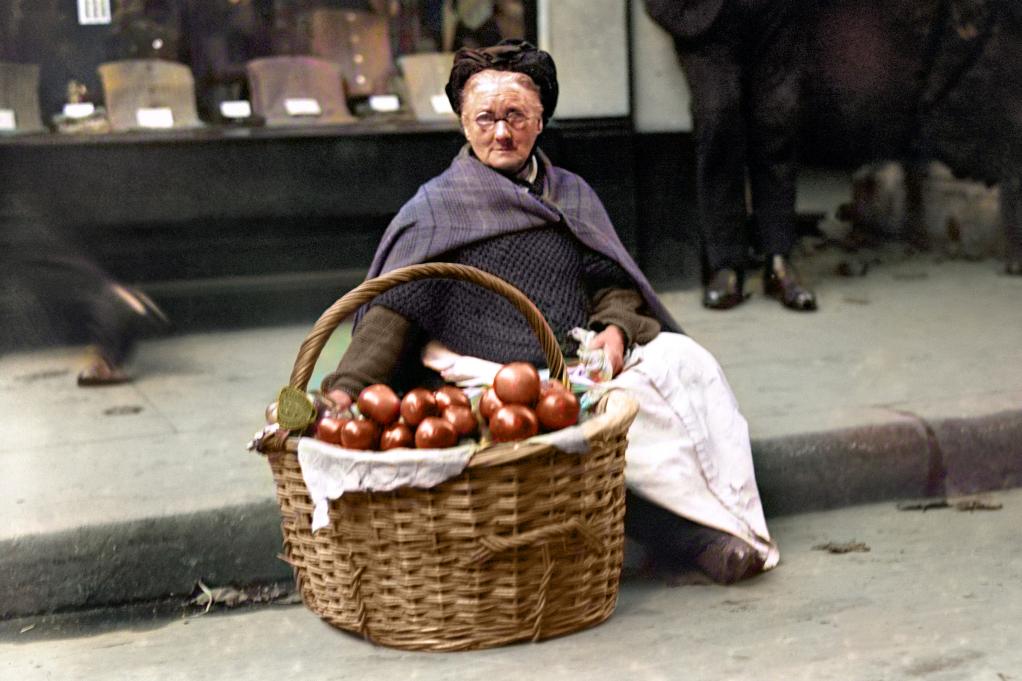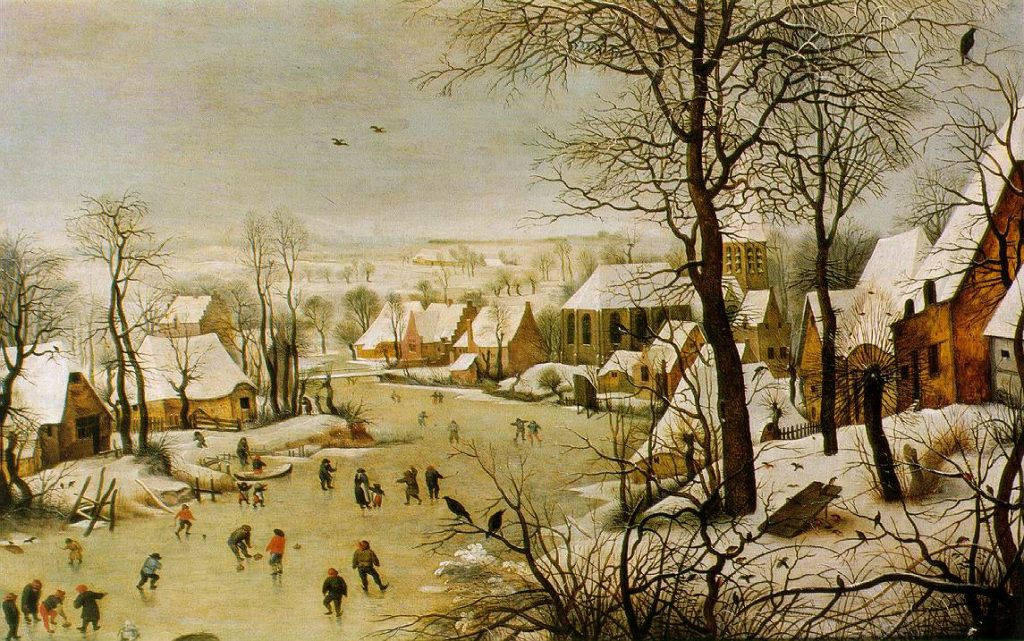
The good old days?

This is chapter Seven of LIAM GUILAR’s almost completed epic of Britain. Chapter One was published in Long Poem Magazine #25 Spring 2021, and Chapters TwoThreeFour,  Five and Six in The Brazen Head. For more information about Hengist, Vortigern and the Legendary History, see www.liamguilar.com

The story so far. Mid Fifth Century Britain. After the legions have withdrawn, the island is facing civil war and a growing number of external enemies. It is also experiencing a steady tide of pagan, Germanic migrants looking for land.

Vortigern has been appointed to protect what’s left of Roman Britain. Following standard imperial practice, he has employed Saxon mercenaries led by Hengist. Together they have defeated the immediate threat of an army of Picts and a Northern rebellion and stabilised the province. Vortigern has married Hengist’s daughter.

A united province could withstand any invader, but Vortigern faces growing resistance from his own people, potential betrayal by his own officers, and a simmering threat to his leadership from the exiled sons of Constantine. Before travelling to a meeting with the Northern Lords, he has to ensure the South West is safe. He uses his travels to gather information about his province. 

This brief chapter ends part one of the book.

The Britons object

‘Now listen to us, our lord the King,

listen to the advice of your councillors,

Bishops and book learned men,

chieftains and their men at arms.

You have bought disaster and evil upon yourself.

You have favoured heathens, abandoned God’s laws,

and fornicated with a foreign, pagan woman.

We beg you, for the sake of peace,

and God’s favour to your people,

cast them off, drive them out.

If you will not do so, we will drive them from the land

and cut them down, or die in the attempt.’[i]

Vortigern took the speaker’s sleeve,

gently between his thumb and finger.

‘Such fine brocaded silk.

Boots of finest Cordovan.

I see your wealth: I see no scars.

How will you fight with Hengist and his people?

You could not stop the rabble

who plundered your homes,

stole your wives and daughters,

dragged your sons to slavery.

You ran away and hid,

then crawled back on your bellies,

sniveling round your huts

as though your tears could put the fires out.

How will you fight these people,

when you could not fight without them?

No raider dares come south.

The crops are in, the cattle fed.

Where there was famine we have brought relief.

The traders bring the wine you drink,

the silk you wear. Men go to sleep

expecting they will see the morning.

What else do you require?’

‘We want them gone. They are a plague

corrupting everything they touch,

a filth that should be scoured from our land. 

When they exhaust their pigs, they chase our women.

Their women whore themselves for pleasure,

leading our young men to perversion and damnation.

Their grunting language hurts our ears.

Their disgusting customs foul our country.’

Keredic helps Vortigern to collect stories

Wondering what atrocity I’d be forced to witness,

I followed the Thin Man at Hengist’s insistence.

A slave does not demand an explanation.

Nor does he ask what’s in the cart

that slows armed riders to a painful crawl.

A scattering of huts,

angular and box like,

not the usual beehives.

There was no ditch or palisade.

They did not run away.

A tall blonde man, an axe in hand

strode towards us; Wes Þu hal.

He hadn’t heard of Vortigern

or was a brave man who didn’t flinch.

The cart is brought forward.

Inside there’s the carcass of a pig

and jars of wine and mead.

‘Tell him, if he cooks this,

I will share it with him.’

The man is impressed.

‘What does he want?’

Vortigern replies: ‘Stories’.

The pregnant girl

This was my family’s land, but my brother went with Constantine.

We never heard from him again. Mam died soon after.

One day this old man and his two sons appeared.

Tad was glad to have some help about the place

even if we couldn’t understand a word they said.

The boys worked hard. The old man knew his stuff

where sheep and pigs and cattle were concerned.

When the coughing sickness took their father,

tad asked the boys to stay. When he was dying,

he left our land to them. This bump will be our second child.

Their cousins are arriving soon. More workers in the fields.

More arms when neighbors try to filch our cows. 

The wife

We were desperate.

First year we grew nothing.

The rain was late, the frost came early.

Scrabbling on marginal land

I’d have whored my starving bones

for the leavings from their table

to feed the children.

But the local big man gave us food,

suggested we move here.

Fed us through the winter.

We’ll repay him with a pig this year.

And when it comes to fighting

my man’s arm will pay our debt.

We were lucky.

My sister and her daughter went begging at another villa’s door.

They stripped them both and beat them to the boundary.

She died soon after, but not before

they burnt her house, enslaved her children,

killed her man then went down on their knees

to thank their loving god.[ii]

At first I couldn’t understand

I jumped at any sudden noise.

At night it was so quiet

I couldn’t sleep.

He’d go off to work

and he’d come back!

Days, then weeks and months,

when no one died.

Vortigern asks questions

Inside their well-built house,

Vortigern admires the skill

of the woman’s weaving;

the well-made cloth.

He touches the solid jointed wood,

admires the functional designs

sees that an age of wood

might have its own attractions.

Curiosity is an appetite he can’t appease,

like the golden lady,

asking questions about everything.

Nothing is beyond his interest.

‘What is his name?’

It is not a slave’s place to disobey,

but I do say If I ask him that

he will recite his genealogy all the way to Woden

and the pig will be burnt before he’s finished.

‘Call him hlāford, it is an honorary title.’

‘And the woman?’ ‘Hlǽfdige.’

‘Ask him why he came to Britain?’

‘He says, my children.’

But he knows that’s not enough.

‘There was only so much land;

bad for crops and worse for cattle.

We’d heard the ground is fertile here

and if a man stays clear of strife

his children have a future.’

We left them to their pigs and fields.

The Thin Man paused on the hill,

overlooking the farm. Now, I thought.

Now they all die. But he said,

to me, to the slave,

to the less than nothing;

‘You can teach a soldier to be brave.

Train him well, he’ll stand his ground

when his drinking partner from the night before,

is split open and his guts are tangling his feet.

But you can’t teach the heroism of parents

faced with a sick child or a failed crop,

or the courage of migrant families.

Why should these people be my enemies?’

The broken work of giants[iii]

Vortigern moves around the country,

listening, making others listen.

Heading west after the wedding,

with Hengist and Rowena,

to visit his estates.

Her reaction to his villa.

How easily she was lost indoors;

hesitation entering any room,

hand reaching for her knife.

The way she was confused by corridors.

He heads off track towards

the largest building he had ever seen.

But the portico, with its broken columns,

its neck-wrecking upward reach,

was an immediate affront.

He overheard her muttering with her father:

‘Wrætlic is þes wealstan’

‘Wyrde gebræcon’

‘Burgstede burston’

‘brosnað enta geweorc.’[iv]

Hengist had remained outside.

She crept into the building, dwarfed and daunted.

Her escort, Hengist’s hand-picked, finest killers,

like frightened dogs nosing into a bad place.

Where the walls had fallen,

they left the escort and went on alone

over rubble and shadows,

hearing the scrabbling echoes of startled beasts

in the rattling echoes of their footsteps

‘till they emerged into the great pool;

the vast chambered emptiness of it.

Steam rising from the dark grey waters,

ribboned silver where the sunlight,

streaming through the broken ceiling

fifty feet above their heads,

patterned the water’s surface, flicking the walls.

He heard her muttering ‘giants’ and ‘magic’.

Ignore the memory of her body,

and the knowledge she had used that knife

to carve more than her meals.

He saw that he had frightened her and was ashamed.

Sit on the steps that lead down to the water,

explain, the way your grandfather explained,

how Baldud King, doomed by the rotting of his flesh,

came here, and bathed, and was made beautiful and whole.

How Romans came and bult a temple to Minerva

and prayed to her then let their slaves

scrape, pummel and then massage them clean.

Take her hand, explain the building and its functions.

Evoke the voices and the rituals,

memories from your granddad’s childhood,

and learn your explanation is another fairytale

no more credible than her mutterings

of vanished giants and sorcery.

He wanted to take her in the pool,

watch her wide-eyed wonder at its warmth,

but there was no time for self-indulgence.

Stepping into daylight, Saxons standing upright,

shaking away the shadows,

Hengist’s hand-picked killers once again.

They parted ways, Rowena, for her safety,

returning to her uncle in the east,

while Vortigern and Hengist headed west

to meet the man who had united

Dumnoni and Durotriges

and was now acknowledged as their leader.

Enter Gorlois[v]

Clean upright walls, no tiles missing on the roof,

memory made real in the present,

the strangeness of it lost in its familiarity.

The floors had been repaired, the garden tended.

The water feature was still working.

The room he waited in was someone’s library.

His hands hovered near the scrolls

but he resisted the urge to take one out,

drift on the beauty of carefully chosen words.

God save all bookish men, thinks Vortigern,

perhaps their time will come again.

A time for Latin poetry and dinners,

evenings in the garden, making plans,

knowing talk of literary sinners.

Gwendolin mustered Cornwall,

trashed her husband and his army

then ruled Britannia with an iron fist

disguised as women’s hands.

Has he fallen for the story?

Is he looking to the west

for a saviour who will rise?

So enter Gorlois.

A neat man, a tidy man.

A pious, praying man.

Gloucester said he looks so young

he could be taken for the 12 year old

he’d married to secure his future. Now

the western tribes acknowledge him as leader.

But the western tribes are so much landfill

if Vortigern decides they need to be subdued.

Given small commands, he’s been methodical,

imaginative and ruthless. Trustworthy,

obvious, but vague around the edges.

Impatient with stupidity. Often tactless.

Ambitious. Capable. But Loyal? Possibly.

Gorlois waits, doing his version of inscrutability.

Impassive as a figure painted on a wall:

‘Loyal soldier waiting for his orders.’

‘You can read? Good.’

Vortigern hands him two sealed scrolls.

‘Not now. Later. That one first.’

‘We head towards a gathering of the northern lords.

I’m giving you the land south of the Severn’s Mouth.

All forces west of Tamar are under your command.

You are to fortify the land and keep the raiders out.

Make sure the trade routes to the continent

stay open.’ He stops. There’s nothing else to say.

If Gorlois is intelligent he knows what needs be done.

If not, then telling him just wastes the time.

But the wall painting doesn’t speak.

Vortigern can hear the small unhurried sounds,

the breathing of his guards,

knows he cannot laugh, not now.

God save me from these amateur theatricals.

Gorlois kneels. And he could say;

Screw you, the West’s already mine;

Thank you, I’m honoured;

I am too young. I am not worthy;

I will repay your trust. Instead, he says

‘I accept.’ As though he had a choice.

Gloucester to his messenger

Take this to The Boys.

You will find them in Gaul,

where rivers flow uphill, springs geyser blood,

the dead walk home from battle fields

and mad dogs gambol in their wake.

Take my message. Tell them: soon.

End of Part One


[i] This first section is a close version of Laȝamon’s lines. He doesn’t identify the speaker. Vortigern’s reply is not Laȝamon’s.

[ii] See ‘The Landowner’ in A Presentment of Englishry. 

[iii] The idea that Roman ruins were the work of Giants, ‘enta geweorc’, occurs in Old English poetry.

[iv] The first two lines of ‘The Ruin’. Literally: This stone work is wonderful/ fate broke it/the fortified place is broken open/ the work of giants, decaying. (A less literal translation would do justice to the music of the lines.)

[v] Gorlois’ story is told in part three of A Presentment of Englishry.

How time flies – British Art Show 9

DAVID LEE attempts to take an interest in a forty-year old artistic institution

Not that it’s much fun remembering, but can it really have been more than 40 years ago that, like a new comet, the British Art Show (Arts Council prop.) first swam into our ken? It’s been coming back to haunt us every five years since, and now here it is again, ninth time round and laden as ever with empty promises and disappointment. Do we mind? No, not that much, for minding even mildly requires the taking of at least a little serious interest in the first place, which no one really does these days, and small wonder. I most certainly don’t – as the blank space in the index to Moping On – the Collected Works (rejection slip pending) amply testifies. I did see BAS8, or was it number 7, but, whichever, only out of convenient and idle curiosity. Remembering the faintest of anything in it is quite another matter: blur doesn’t come near it.

The pity is that it did seem quite a good idea, back in that Golden Age of Wislon, Sunny Jim and Dolly Scargill, oh, so long ago. It was the brainchild of one Frank Constantine, benign and enterprising director of the Sheffield City Art Galleries at the time – and in his youth, a seriously fast opening bowler, I believe, and a stylish middle-order batsman too: though I may be thinking of someone else – who, feeling that too little of the best and brightest of contemporary British art was ever to be seen north of Hampstead, persuaded the Arts Council to commission a major touring show, every so often, of just such stuff but one which – and this is the nub and very heart of the matter – would never, as it were, be seen in Town.

The guiding premise, as I remember, was that it should offer a generous if idiosyncratic overview of whatever of interest or merit, preferably both, had been produced within the previous two or three years, sought across the full field of current engagement in painting and sculpture and allied trades. Furthermore, there were two defining conditions attached: first, that the selection should be entrusted to a single selector; and second, that practical or logistical constraints apart, the choice was to remain a personally accountable judgement quite free of any policy or pressure on the Council’s part. Independence was the rubric, and, mirabile dictu, so it was: Amen to that, I hear you cry.

In the event, work by just over 100 artists was shown, from unabashed representation to abstraction at its most minimal and austere, with a leavening of conceptualism for good measure. There was of course the usual hullabaloo. ‘My child could do better than that, or would be severely punished if he didn’t’, of course, and ‘what a waste of good wood and canvas’. Sheffield’s steel mills closing down on a daily basis hardly helped. Even the Arts Council’s own General Secretary at the time –  a worthy Yorkshireman from Sheffield called Shaw, which explains a lot – after giving it the honour of a single sentence in his annual report, with due emphasis laid upon how much it had cost, a little later condemned out of hand an exhibition he had never seen.

And so of course the Arts Council lost its nerve. A single selector? Goodness no, far too risky. From BAS2 it has always been a committee job, if only one of two or three. And since no self-respecting committee meets without an agenda, so by grandmother’s footsteps themes and policies, the more correct the better, crept in and for many years now the Arts Council’s cold hand has been firmly on the tiller. Which dire conclusion brings me back to how boring and correct in its self-congratulatory diversity it all now is.

BAS9, selected by Irene Aristizaval and Hammad Nasar, began its tour in Aberdeen last autumn, and, having lately closed at Wolverhampton, is now inflicting itself on Manchester before moving on to Plymouth for the coup de grâce. A brief account of its sojourn amongst the Wolverhamptonians may offer the ever-patient denizens of Manchester some idea of what they’re in for.

Irene, now Head of Curatorial and Public Practice at the BALTIC, Gateshead, was until lately Head of Exhibitions at Nottingham Contemporary; while Hammad is Lead Curator at the Herbert Gallery, Coventry, Senior Research Fellow at the Paul Mellon Foundation, and Principal Research Fellow at the University of the Arts (Central St Martin’s as was), London. You have been warned.

Notable amongst Irene’s recent group shows have been ‘Still I Rise – Feminism, Gender Resistance, and Photography from the Civil Rights Movement to the Reagan Era’. And Hammad is known, you may be intrigued to learn, ‘for collaborative, research-driven and exhibition-led inquiry’ so quite the Renaissance Man. His recent successes include ‘Speech Acts: Reflection-Imagination-Repetition and Structures of Meaning / Architectures of Perception’. There was also ‘Excessive Enthusiasm: Ha Bik Chuen and the Archives of Practice’. And I’m sorry I missed his ‘Lines of Control: Partition as a Productive Space’. You get the picture, or perhaps not as the case may be.

Getting down to brass tacks – for which I believe the town was once renowned – Irene and Hammad said with one voice ‘how thrilled they were to present the second iteration (and how we love that ‘iteration’) of BAS9 in Wolverhampton’, where the focus was to be ‘on an intersectional approach to living with difference’. Their approach would ‘foreground (and here I find myself reaching by reflex for the red pen – Old Beaky would have reached for something else) the contemporary resonance of the Black Lives Matter protests with the historic context of Enoch Powell infamous (notorious?) and divisive “rivers of blood speech”.’ Oh dear: but on we go.

Taken over all, BAS9 ‘explores [of course it does] themes of healing, care and reparative history; tactics for togetherness; and imagining new futures,’ and I can’t wait for the mug of cocoa and a digestive biscuit afterwards, for which I’ve already chipped in my two and six. It ‘showcases [I shall run out of red ink soon] the multidisciplinary work of 47 artists, reflecting a precarious moment in British history, which has brought politics of identity and nation, concerns of social, racial and environmental justice, and questions of agency (??) to the centre of public consciousness.’ Yes, My Dears, so it does, and calm down, as the great Sir Michael might have said: for my part I would remind you this was once, and perhaps still is, supposed to be an art exhibition, not a public meeting in the Islington Oddfellows Hall. Where’s that cocoa, for goodness sake? But there’s no stopping yet.

In Wolverhampton, it seems, the focus was on ‘how we live with and give voice to difference, showcasing [Damn and blast: I’ve now stubbed the nib] only those 34 of the 47 whose work, steely eyed, forensically investigates identity from an intersectional perspective (ouch). By exploring, map and compass at the ready, coexisting identities such as class, [count to ten] ethnicity [slowly] gender [up to 20] and sexuality [now 30], works will be presented in critical dialogue with Wolverhampton’s cultural history shaped by the diverse populations that have arrived since the War.’ Of course they will: but I’m too old for all this. I it is who really must calm down.

This article first appeared in The Jackdaw, an independent review of the visual arts, which has been called ‘the Private Eye of the arts world’. To subscribe, please click here.

The political landscape

Photo: Derek Turner

Green Albion – Restoring Our Green and Pleasant Land

Various authors, Conservative Environment Network, 2022, 101 pages, free download

DEREK TURNER welcomes a practical contribution to often overheated eco-arguments

Environmental protection is conventionally seen as a ‘leftwing’ concern, because its most voluble advocates are often equally vociferous on what are dismissively called ‘woke’ preoccupations, from asylum-seekers to transsexuals, or EU membership to Scottish independence. Yet there has always been a conservative kind of environmentalism – famously represented by the late Duke of Edinburgh, and his son – although at times in postwar history it has faded from view, sidelined by administrations prioritizing the economy over the environment.

If modern Greens often gravitate in leftwing directions, it is at least partly because from the 1950s on, mainstream conservatism developed a brusque, complacent and unimaginative streak, which held that business, ‘freedom’ and ‘growth’ mattered more than the natural world. Influential opinion-formers and politicians chortled at ‘tree-huggers’, and sometimes even said environmental damage was just Darwinism in action. An effect of this almost Randian reductionism was essentially to abandon a hugely important area of concern (and large swathes of university-educated and younger voters) to the ideological left – which whatever its other shortcomings could see that the environment was not only precious, but priceless.

This was ironic, because during the twentieth century socialist countries had a shameful ecological record. Soviet and Maoist economic, industrial and social practices laid waste their respective ecosystems, whilst in America supposedly retrograde conservatives took some difficult long term decisions, often against the wishes of big business backers. Theodore Roosevelt established the United Forest Service, five national parks, and fifty-one bird reserves. Richard Nixon created the Environmental Protection Agency and signed both the Clean Water Act and the Clean Air Act, while Ronald Reagan designated more than ten million acres as wilderness. Whatever their other limitations may have been, these could at least see that conservation and conservatism are adjacent conceptually as well as alphabetically.

The natural world, with its blind instinct, harshness, hierarchy, and territoriality is not an obviously congenial area of interest for ‘progressives’ or ‘radicals’, who are usually more concerned with abstract moral values, and believers in human plasticity. Nature is neither egalitarian nor kindly, and examples from what was tellingly called the ‘Animal Kingdom’ lead logically towards a Hobbesian interpretation of the world. Early environmentalists and organic agriculture advocates were more often ‘right’ than ‘left’, seeing animals and landscapes as contributors to, and symbols of, national characters. Into the 2000s, there was a strand of English conservatism which supported hunting as rooted in national history and human nature, epitomised by writers like Robin Page, R W F Poole and Roger Scruton, and the huge, if ultimately unsuccessful, campaigning of the Countryside Alliance. The fact that in most modern Western countries environmental politics have become a kind of leftist reserve says much about the ‘culture war’ fighting capabilities of the West’s conservative parties.

In Britain, there are precedents for the Johnson government’s notable interest in environmental issues from energy policy via gene-edited crops (to reduce fertiliser and pesticide use) to rewilding. David Cameron’s Green stances earned him considerable scorn within his own party and from some in the Conservative press, but like Johnson he was borrowing from old ruralist Tory tradition, and more recent small-c conservative thinkers like Edward Goldsmith, who founded The Ecologist, and was instrumental in the founding of the Green Party. There were political precursors too. Macmillan’s, Eden’s and Major’s governments passed noise abatement and clean air legislation, while Churchill’s created several new National Parks (following the Labour government’s creation of the first, in 1951).

Although Thatcherite neo-liberal policies entailed a hefty environmental price tag – encouragement of conspicuous consumption, the opening up of ecosystems to rapacious corporations, road building, relaxation of planning laws – sometimes they also meant improved environmental protection, as the new private company executives became suddenly accountable to public opinion. Mrs Thatcher took a perhaps surprising interest in global warming, acid rain and pollution. Her aversion to the British coal industry was based at least partly on her knowledge of coal’s environmental impact. In 2012, former Friends of the Earth leader Jonathan Porritt noted marvellingly, ‘Thatcher…did more than anyone in the last sixty years to put green issues on the national agenda.’

In 1989, she told the UN General Assembly, ‘The environmental challenge that confronts the whole world demands an equivalent response from the whole world. Every country will be affected and no one can opt out… No single generation has a freehold on the earth.’

These were resonant words from a politician not even the most callow Objectivist could accuse of fuzzy sentimentality, or anti-business sentiment, or ‘big government’ instincts. There were contradictions in her outlook, but something in her sensed that governments have an historic and moral responsibility to protect the landscapes and wildlife which help define the character of the nation they govern. She saw that the Green movement, for all its faults, was addressing real problems. She could also see that the Greens would benefit greatly by the involvement of more down-to-earth ‘Blues’ to represent the legitimate interests of agriculture, industry and landowners, and balance frigid universalism with local attachments, and the ideal with the achievable.

Thatcher’s words are emblazoned along the masthead of the Conservative Environment Network’s (CEN) website, because of their insightfulness, but also because her name is likely to disarm anthropogenic climate-change sceptics, who are drawn almost exclusively from the political Right, from libertarian conservatives to populists in the Farage, Trump and Bolsanaro mould.

Environmental problems can seem intractable, the literature is frequently tedious, and ‘activists’ often smugly jejune. Considerable credit ought therefore to be extended to the politicians who have taken the trouble to contribute to this compendium, which nods at national nostalgia (Blake, Wordsworth, Larkin et al) but also offers practical suggestions on a range of interrelated issues. It is about time that Britain’s long-suffering landscapes were afforded less exploitative kinds of treatment – ‘undevelopment opportunities’, to allow it (and us) to recover.

There are contributions by eleven MPs and one peer on wetlands, peatlands, woodlands, maritime habitats, rivers, and some of the possibilities for UK agriculture in the post-Common Agricultural Policy landscape. The essays are topped by a Foreword by the Minister for Farming, Victoria Prentis, and tailed by an Afterword by Ben Goldsmith, Chair of the CEN, representing the public-spirited family which has done so much in recent years to force responsible environmentalism onto a sometimes reluctant party (Ben’s brother, Zac, is Minister of State for the Pacific and International Environment). It offers an ambitious and thoughtful vision for a renewed environment – even if we suspect much of it may never be realised, amid Brexit, Covid and global insecurity, on top of the usual political vicissitudes.

The Minister hails ‘the biggest changes to farming and land management in 50 years,’ using environmental land management schemes (ELMs) to make agriculture more efficient and improve food security, while increasing biodiversity and protecting existing habitats. Stroud MP Siobhan Baillie speaks of incorporating ‘natural capital’ into Treasury thinking, to restore 100,000 hectares of wetlands as carbon sinks, floodwater repositories, and refuges for rare species – and even as a means of improving mental health. Robert Largan calls for the rewetting of lowland peat where possible, new kinds of crops that can be grown on wetter soils, the banning of peat-based fertilisers, and the prohibition of disposable barbecues, often the cause of devastating moorland fires.

Michael Fabricant wants millions more trees to be planted, plus natural regeneration, and better protection from imported diseases by home-growing saplings – with special provisions for threatened temperate rainforest, and an updating of the Forestry Commission’s century-old charter. Hastings and Rye MP Sally-Ann Hart seeks to encourage coastal (especially saltmarsh) and undersea carbon sequestration, ban bottom trawling in Marine Protected Areas, and action on maritime pollution to increase underwater vegetation and boost fish stocks.

Andrew Selous gives a ‘Christian stewardship’ perspective, setting out ideas to improve management of statutory nature reserves as well as Church and National Trust properties, and improving biodiversity through a new land designation of ‘wildbelt’. He also calls for less intensive farming methods to improve soil and reduce flooding, with reduced grazing and tilling pressures, and using fewer chemicals. Craig Williams, whose Montgomeryshire constituency is threaded by the Severn, envisages an holistic riparian management strategy to cover tributaries and whole watersheds, with better waste management, bankside tree planting and channel restoration to reduce pollution, boost wildlife and reduce flooding.

Anthony Mangnall and Jerome Mayhew draw urgent attention to the financial pressures faced by farmers, but discern possible benefits from Brexit. While welcoming organic methods, they acknowledge these are not applicable to all farmland, and generally mean more expensive food. Rewilding, engaging and useful though it is, is not easily compatible with large scale food production, and needs to be tempered with a ‘land sharing’ approach (which Ben Goldsmith terms ‘wilder farming’). Ideally, their contributions would have been balanced by one making the case for rewilding, but they make valuable suggestions, such as less use of high-carbon chemical fertilisers to reduce greenhouse gas emissions and chemical runoff into waterways, and market mechanisms to ensure attempts to contain carbon at home do not lead inadvertently to increased emissions abroad.

Jonathan Djanogly calls arrestingly for expediting cellular meat production – meat grown in laboratories from muscle tissue harvested from living animals. Cellular meat of course entails no animal deaths, far less land use and pollution, and far fewer hormones or other chemicals. This would not replace conventional livestock farming, but could open up huge new markets, especially in Asia, where burgeoning middle classes are demanding ever more meat that at the moment is not always available, or only at great environmental cost.

Baroness Jenkin is concerned with minimising UK food waste – the UK wastes more food than anywhere else in Europe – through better supermarket practices, redistribution of still–edible food to the neediest, more food waste collections by councils (that can then be used to make energy), and – a Thatcherian touch – thriftier household management to simultaneously benefit the planet, and save families money. The government’s ambitious (and hugely controversial) energy policy is scanted in this volume, but Pauline Latham demands an end to the burning of biomass, now known to be not renewable as once thought, in order to lessen air pollution and land use, as well as the carbon released by the removal and burning of trees. Ruth Edwards takes up the bosky theme, with a call for global as well as domestic action on deforestation, building on existing government commitments to bar imports of products like palm oil and soya produced on recently deforested land.

This book overflows with ingenious ideas which, if realised even in part, would go a considerable way towards meeting the objectives of the likes of Extinction Rebellion, without endangering the economy. But there are curious omissions. While it was only to be expected that the huge and complex area of energy policy would need to be treated separately, it is strange to have little or nothing about such matters as plastic pollution, factory farming of animals, the wasteful profligacy of the electronics and fashion industries, eco-building technology, planning laws, or the proper management of parks and verges for wild flowers. One would also have liked some detail on the thinking behind the crop gene-editing legislation presently going through Parliament, and about post-CAP farm finances, especially of smaller farms.

And what about overpopulation? The United Kingdom is already one of the most densely populated countries in Europe, and the Office for National Statistics predicts that the present population, of around 68 million, will increase to some 77 million by 2050, largely attributable to immigration. Whatever mitigations may be in place, or whatever fixes may be found, the truth is that more people equals less nature. The government is taking little or no interest in this subject, partly because busy with other matters, but also, one suspects, out of unwillingness. Yet if they do not start to soon, lovers of the British countryside, whether romantic rewilders, pragmatic farmers, well-meaning MPs or weekend walkers, may all ultimately find that their efforts, ideas and inmost emotions are rendered redundant by sheer pressure of people. ‘Greenness’ and ‘pleasance’, and sense of place, can only be located within quietude and space.

It is to be hoped that this admirable caucus will increase our sense of obligation to them by taking up these subjects in subsequent publications.

The booklet can be downloaded from https://www.cen.uk.com/green-albion

John Wyndham, genius and prophet

The Wyndham Collection

John Wyndham, three vols. (Day of the Triffids, The Midwich Cuckoos, The Chrysalids), Folio Society, 2022, 704 pps, £125

ALEXANDER ADAMS finds 1950s classics have troublingly modern messages

The publication of a clothbound boxset containing the classic novels Day of the Triffids, The Midwich Cuckoos and The Chrysalids by John Wyndham (1903-1969) by the Folio Society, prompts the question, ‘How much is Wyndham a man of his time?’ In this review, we will look at the novels, these illustrated editions and how much 1950s England influenced these stories.

Wyndham had a difficult childhood. His parents were involved in a high-profile divorce case, at a time when divorces were rare, and must have been aware of the consequent press coverage. The family moved around the country, and the young Wyndham attended a number of schools, including the famously progressive Bedales School. He had a number of different professions before deciding to pursue fiction writing. While he had some success as a writer of science fiction and pastiching American detective stories during the inter-war era, he did not seem to have found his metier. Although he did not know it at the time, his background and writing had set him up for spectacular success in the post-war period.

It was the catalyst of the war which seemed to bring Wyndham new introspection and a wider view of human nature. He was attached to a corps which saw heavy fighting in the advances through western Germany. Seeing the effects of wartime barbarity first hand – and the related crimes, atrocities, despair and vengeance – gave his vivid thoughts immediacy. Seeing exceptional events occurring in ordinary towns and houses, and the tide of history demolishing the certainties that complacent lives generate, meant the clichés of science fiction and crime noire (however clever) no longer seemed adequate.

The result of this transformed – or perhaps condensed – outlook led to Day of the Triffids (1951), the first book in this set. It is set in an alternative 1951, where a bio-engineered plant has become cultivated across the world for its rich oil. This ‘triffid’ plant can eat meat, stings animals, and can walk. Possessing a rudimentary form of intelligence, this plant is kept under control by docking the stings in ornamental individual plants or by penning undocked crop plants. In this alternative timeline, weaponised satellites orbit the Earth. A shower of meteors arrives, or an accident triggers weapons satellites; whichever it is, the result is that lights in the night sky blind almost the entire human population. Survivors have to struggle against gang warfare, disease, starvation and the threat of the triffids, which come to dominate the land.

In Triffids, Wyndham’s interests and skills form a glorious combination in his most successful and popular book. His progressive schooling and multiple careers gave him insight into the problems of farming and food supply; his wartime experiences sharpened his imagery of social breakdown and casual brutality. Wyndham’s sci-fi-writing origins allowed him to think through the plot; his experience of writing detective thrillers gave his prose a clipped asperity and punchy impact. He wrote strong characters and a compelling plot, yet Triffids is actually more of a novel-of-ideas than it seems. The excitement of the plot, believability of the characters and emotional appeal of the situations combined to make Triffids an ideas book that gets readers to think about issues organically, as we see characters deliberating options or forced to live out the consequences of their circumstances. Added to which, the astonishing imagery and haunting atmosphere make Triffids one of the best novels of the century. It far transcends science fiction, thrillers, dystopias and sociologically oriented examinations of the human condition and – I would say – functions as literature of the highest level. For the issues-driven, it includes discussion of environmentalism, disarmament, geo-politics, ethics and self-sufficiency. It has elements of thriller, romance, dystopia and social commentary, blended in a manner that is seamless.

Well, almost. There is a single chapter that is devoted to the backstory of the development of the triffids, which, while necessary, is rather dry on first reading. It is an obligatory exposition dump. On subsequent readings, it answers some of thoughts of readers now familiar with the titular antagonists of humanity. This chapter is the creakiest in terms of prose. Palanguez, the South American intermediary who smuggles triffid seeds from their point of origin in USSR laboratories, has a ‘sleek, dark head’ and addresses his interlocutor as ‘señor’. Wyndham’s pulp-fiction apprenticeship shows through a little. We have to sit through a bit of global politics, which is something that mars Wyndham’s follow-up novel The Kraken Wakes (1953 – not included in this set). However, if you can make it through chapter 2, the rest of Triffids is a terrific read – gripping, memorable, moving, thought-provoking. The contemporary film version was a wretched traducement, as was an embarrassingly updated 2009 television mini-series. A television version, co-produced by BBC Television in 1981, is excellent and well worth seeking out. 

© Patrick Leger from The Folio Society’s The Wyndham Collection – The Midwich Cuckoos

Wisely, for its new edition, Folio Society commissioned illustrations by Patrick Leger that are firmly in the 1950s style. The limited colours, bold blocking and strong line work all point back to the classic illustrations of comics and pulp fiction from the 1920s-1950s era. The speckling and deliberately loose registration imitate the printing of the time. Leger brings a cinematic eye to scenes, viewing protagonist Bill and young Susan from an aerial viewpoint. My favourite is the view of Bill in his hospital bed, with a swatch of sunlight illuminating his sheets. Folio Society, because it markets directly, rather than through bookshops, does not have to put text on its cover to inform browsers. This gives Folio Society designers a freer hand than otherwise. (Producing volumes for a boxset also allows book covers to remain text free.) Leger has illustrated all three books, including the covers.

Like Triffids, The Midwich Cuckoos (1957) is infused with Cold War anxiety. Midwich, a village in southern England (based on Midhurst, Sussex), is suddenly isolated by an inexplicable forcefield and the residents rendered unconscious. When the barrier is lifted and people revive, they soon discover that all the women are pregnant. The human-seeming babies turn out to be uncanny cuckoos, planted into the wombs of women by aliens. Once born, the cuckoo children develop fast, act in a disciplined collaborative way and have powers of telepathy and limited mind control. This makes them an inscrutable and dangerous enemy. The hosts find themselves being held hostage by the parasite children, who threaten to grow strong enough to destroy the community that (warily and fearfully) cares for them.

Wisely, Wyndham does not dilute his story by introducing the aliens as other than prime movers. He has no interest in aliens. The science-fiction premise is merely a device to allow Wyndham to explore how communities (and civilisations) respond to the knowledge that they have in their midst forces that wish to supplant them and that are ruthless. From inter-species rivalry, Wyndham has moved to in-species rivalry. Of course, what must have been obvious to more observant readers of the time, was how this was an allegory for Communist infiltration of the West. The Midwich cuckoo-children, like Communists, form a tightly knit group working in concert to overturn the current order and advance to the next level of development, using any means necessary to overcome opposition. What seems so troublingly prescient, is how this scenario could act as a parable of multiculturalism. When a foreign group cannot be integrated, conflict for resources and status arises. If the organised minority overcomes the disorganised majority – as Mosca’s Law tells us – the numerical inferiority of the foreigners is no bar to them consolidating themselves and even coming to rule the hosts. So, while Midwich may seem dated sci-fi tosh set in a rural England of the past – Brian Aldiss will be forever remembered as the writer who damned Wyndham’s novels as ‘cosy catastrophes’ – it is actually a novel of ideas that is vitally relevant in a multicultural society facing a crossroads.

Likewise, The Chrysalids (1957) gives us another brilliant novel with exciting action, suspense and vividly drawn characters in a unique world, and one with a deeply troubling ethical conundrum. Chrysalids is a coming-of-age story set in a post-nuclear-war rural community in Canada, where millenarian Christianity holds sway. The society is obsessed by genetic stability, considering it a moral issue, which they police by destroying produce and animals if they genetically deviate from the norm, and exiling abnormal children. David, the protagonist, becomes aware that he has the power of telepathy. Living in fear that his psychic deviancy will come to light and lead to his expulsion, David forms a bond with the few other children of his age who also have this rare power. Eventually discovered, David and his friends have to flee into the wilderness to escape torture and (potentially) sacrifice.

Perhaps inadvertently on the author’s part, Chrysalids presents us with a question that is even more pointed than the one in Midwich: How far would you go to preserve your values and culture? What would you do if your children joined an extremist political group, or converted to a radical religion? Would you exile (even kill) relatives or your own children, knowing that if you did not, their values would supplant your own? I cannot think of any novels of ideas that are more pertinent today. Engaging with the novel’s issues honestly will result in readers doing some painful self-assessment about his/her limitations and the robustness of his/her values.

Wyndham, like every author, wrote in and of his time. In Triffids, a character drains the petrol from a car’s reserve tank. I don’t think I have ever travelled in a car with a reserve tank, although the concept is decipherable enough from the name. Perhaps the youngest of readers might need a reminder of what a corkscrew is; the idea of vacuum-packed cigarettes is rather neat, although today’s cellophane wrappers perform an inferior but cheaper alternative.

The language and social mores are of their time – which is a strong recommendation to readers of today – and this is particularly so in Triffids. When Wyndham presents the debates between pragmatists and Christians about whether or not sighted men should have multiple blind wives (who could give birth to seeing children), we encounter a slice of 1950s Britain, the last time Christian traditionalism had social hegemony. Today, I suppose many people would consider the matter merely one of avoiding partner jealousy rather than the breaching of a moral commandment.

The illustrations have a strong period flavour, with clothes, interiors and vehicles in Triffids and Midwich being contemporary with the period within which they were written. The retro quality of the illustration style suits the texts. If I had to venture one minor reservation about the illustrations in the Folio Society Wyndham boxset, it is that Leger tends to place us close to the actions, with main figures reaching the page edges. That means we are immersed in an event depicted, rather than viewing a scene at a distance. We are inside a motif, rather than outside a picture. This has some advantages – immediacy, engagement, impact, energy – but also reduces detached artistry, complex composition and contemplative reserve. On balance, it is well that Leger remains stylistically consistent within each volume and across the set.

Designers have taken care to co-ordinate the cover colours with the front and end-papers. The production quality is high and the margins and bindings make reading easy. This boxset with pictorial slipcase and hardback books with cloth spines (a reissue of the editions originally published in 2010) is a handsome set, and an ideal way to enjoy key novels of one of the greatest post-war British novelists.

The Folio Society’s The Wyndham Collection, three-volume set, with three novels by John Wyndham, illustrated by Patrick Leger, is available exclusively from: https://www.foliosociety.com/uk/the-wyndham-collection.html

Seas within seas

Bucentaur at the Molo, Ascension Day, by Giovanni Antonio Canal (Canaletto)

History of the Adriatic: A Sea and its Civilization

Egidio Ivetic, Cambridge: Polity, 2022, hb., 352 pps, £25

DEREK TURNER wallows in warm world-historical waters

The Mediterranean flows always through European awareness, Homer’s ‘wine-dark-sea’ and the Romans’ Mare Nostrum becoming ‘Our Sea’ too by ancient immersion. But within the world-historical susurrations of those waves can be heard the sounds of smaller waters, whole seas within seas. University of Padua historian Egidio Ivetic draws attentions to the oddly-overlooked Adriatic, a more intimate body of aqua but one with its own identity and importance, which he calls ‘the Mediterranean of the Mediterranean.’

As well as academic insights, Ivetic has personal connections around these shores, criss-crossed the Adriatic frequently while working on ships, and evinces unflagging interest in everything from sixth-century BC amphorae to twenty-first century ephemera. His book is not lushly impressionistic in the style of many northern European writers, but it is deeply affectionate, and his subject intrinsically poetic. It is not free from ‘academese’, but it is vastly informative, helping fill a surprisingly blank space in the expanding area of thalassography – the history of seas, as opposed to history in or on seas.

The Adriatic was historically considered a discrete region of the Mediterranean, a third branch that was neither the Levant (east) nor the Ponent (west). It was where the Latin West encountered the Orthodox East and later Islam, and where numerous empires had their farthest frontiers – the Carolingian, the Byzantine, the Holy Roman, the Hapsburg, the Ottoman, and the Napoleonic. It was strategic too to the Spanish crown, and always a corridor of concern to Popes, especially after the fall of Constantinople allowed the Turks to subjugate much of the Balkans. The area was both recognizably European and exotically Near Eastern; Saracens captured Bari as early as 847, into the 1920s camel caravans travelled as far west as Sarajevo, and Al Jazeera broadcasts in Bosnian-Croat-Serb. Albania, Croatia, Italy, Montenegro and Slovenia are the latest manifestations of infinitely older identities, rooted in both reality and romance. Bosnia-Herzegovina is also Adriatic although it does not have a coastline, because whatever transpired on the sea always made ripples far inland.

Reliable counter-clockwise currents, and the narrowness of the gulf, impelled Archaic then Classical Greeks northwards along the eastern shores then all the way back down the western ones, founding colonies and making myths as they came, alternately encountering transhumant pastoralists or sophisticated Etruscans, Gauls, and Italics.

Many Greek colonies became fought-for Roman provinces and towns – Hannibal prevailed at Cannae (Barletta), and Caesar’s Rubicon flows north of Rimini – then Avar, Frank, Hun and Ostrogoth conquests – and eventually celebrated market- and meeting-places. The twin-sailed bragozzi of fishermen timelessly ploughed the liquid plain between passing triremes, dromons, galleys, cogs and galleons and countless other craft of ambassadors, bishops, corsairs, crusaders, dukes, kings, mercenaries, merchants and pilgrims – constant interchanges often exploding in conflict.

Ancona, Apulia, Brindisi, Calabria, Dalmatia, Epirus, Istria, Picenum, Ragusa, Ravenna, San Marino, Trieste, Urbino, Venice… The names sound down centuries, magnetizing today’s tourists as they magnetized Greeks, Tudor Englishmen (Twelfth Night was set in Illyria), or eighteenth-century Grand Tourists. Later wanderers too were entranced – James Joyce, who decamped to Trieste in 1904, Gabriele D’Annunzio, the flamboyant future Fascist who took Fiume in 1919, or Lawrence Durrell, who joyfully swapped 1930s Bournemouth for balmier Corfu (where Alcinous hosted Odysseus).

Not all who live around the Adriatic have been sailorly, but Venice by herself made up for any regional maritime deficit. Centuries of daring, enterprise and ruthlessness are symbolized by the annual ceremony of ‘Marriage to the Sea’, when the city’s mayor is rowed out into the lagoon to do what Doges did – drop a consecrated ring into the water while intoning ‘Desponsamus te, mare, in signum veri perpetuique domini’ (‘We wed thee, sea, as a sign of true and everlasting domination’). Venice’s Arsenal was probably the largest manufacturing facility in the pre-industrial world, experimenting with secret weapons and turning out ships on something resembling an assembly-line. When Napoleon’s troops took the Most Serene Republic in 1797, it was the shocking end of over 1,100 years of independent existence, but perpetuated the modern legend of the unique ‘Mistress of the Adriatic,’ the enigmatic, imperilled dream-city of commerce and Carnival.

Over the ensuing two centuries, the Adriatic was gradually “transformed from place to geography”, increasingly lined by new nation-states with ‘rational’ constitutions and industries, plied by steamships and overflown by aircraft, studied by scientists, and treated thematically by historians. The old empires imploded, buffeted by ethnic and liberal rebellions, then 1914-18, but leaving vestiges of vassalages that ultimately made Yugoslavia unviable, and still envenom regional relations.

Since the 1990s, bureaucrats have presented the fabled Adriatic as bathetic ‘Euroregion,’ an allegedly integrable socioeconomic zone suited to mass tourism and ‘multicultural’ connections, which perspective brings problems of its own. Ivetic applauds attempts at cooperation, but knows the Homo Adriaticus foreseen by certain fond theorists has yet to be born.For now, at least, he concludes shrewdly, ‘the Adriatic is first and foremost history.’

This review first appeared in issue 31 of Bournbrook Magazine (www.bournbrookmag.com) and is reproduced with permission

Deptford dreaming

Credit: Shutterstock
DEREK TURNER pays tribute to grittily resilient S.E.8

Aircraft always overhead, trains pulling in and out, traffic backed up along the New Cross Road, pulsating rap from open windows, plastic bottles in the gutter, pigeons with fungus-eaten toes, gang tags on gritty walls, smells of exhaust, fast food, sweat and the shower-gel of the highly made-up, high-heeled woman who just clicked by oblivious, while texting someone worth noticing somewhere worth noticing…

Drake, Blake, and Nelson look not down on us but rather out, over somewhere in the storied past before this unremarkable moment. A gilded galleon glints on the weathervane above them, a naval battle is taking place in the tympanum beneath their feet, and tritons uphold the front door.

Deptford’s Town Hall is a rare outpost of exuberance to find in an inner-suburban sea, a neo-baroque flourish built between 1903 and 1905 for the Metropolitan Borough of Deptford, with iconography reflecting the area’s long maritime history. It was never the most practical of buildings, but it has been increasingly inconvenient since the 1960s, when the Borough was eaten by the new Borough of Lewisham, which eventually sold it to Goldsmiths College. Today, its architecture is even more inconvenient – and the swaggering statues are worse than that, facing calls by ‘activists’ for their removal and erasure. They are too confident role-models for an era in English history that doesn’t much care for confidence – or even Englishness.

Drake could never have imagined such Angst-ridden arguments, as he waited aboard the Golden Hind alongside at Deptford on 4 April 1581, looking out for a very special visitor – Elizabeth I, come to honour his epic circumnavigation. Before evening, he would be Sir Francis, knighted aboard by the French Ambassador rather than the Queen, who however privately proud, could not be seen to endorse Drake’s more dubious activities. He was hitherto ensconced in an island nation’s mythology, an unmissable inclusion for the Town Hall architects seeking English ‘immortals’ to keep permanent watch above the New Cross Road. Blake could not have foreseen all this either, as he kept an anxious eye along the Thames corridor for the Dutch – and Nelson would certainly not have seen that signal.

The Golden Hind lay at Deptford (and stayed there until she fell to pieces) because Elizabeth’s father had established the King’s Yard – later, the Royal Naval Dockyard – there in 1513, on a convenient bend in the Thames, downstream from the crammed Pool of London, in the flatlands of the north Kent/Surrey borders. On 19 June 1549, the young Edward VI toured his father’s Yard, and was shown an after-supper spectacle, a mock-naval battle:

…a fort made upon a great lighter on the Thames … of which Mr. Winter was captain, with forty or fifty other soldiers … To the fort also appertained a galley …  Wherefore there came 4 pinnaces … which … with clods, squibs, canes of fire, darts … and bombards, assaulted the castle; and at length … burst the outer walls of the castle, beating them of the castle into the second ward, who after issued out and drove away the pinnaces, sinking one of them, out of which all the men in it … leaped out, and swam in the Thames. Then came th’ admiral of the navy and three pinnaces, and won the castle by assault, and burst the top of it down, and took the captain…

Deptford seen from Greenwich, early seventeenth century

Between 1513 and the Yard’s closure in 1869, hundreds of ships were built, fitted out or repaired at Deptford, making it an epicentre of English seapower on the edge of otherwise quiet countryside – a teeming townlet of hovels, smithies, stores, taverns and workshops, the headquarters of the navigational guild Trinity House, and grand houses of those who needed to be near to the Navy for reasons of duty or state. There were always secrets, troubles and valuables to be found at Deptford, locked up in statesmen’s offices or shipwrights’ desks, bonded in warehouses, guarded by marines, yarned about or perhaps passed over furtively in pubs, like the one in which Christopher Marlowe was stabbed to death by Francis Frezer in 1593, allegedly in a quarrel over the ‘recknynge’, although some think this was only a pretext, and the gay playwright was there on a secret mission for Elizabeth’s ‘spymaster,’ Sir Francis Walsingham. In 1993, we saw a tablet unveiled to him at St Nicholas Church, after a starry, strange dedication service during which Anthony Sher read from Tamburlaine the Great, Janet Suzman from Dido, Queen of Carthage, and Sam Wanamaker read Edward Blount’s 1598 reflections on his dead friend, while men dressed as nuns distributed leaflets about AIDS.

Christopher Marlowe

The Yard would remain a major strategic asset through the following century, when Blake knew the Yard, and after Restoration, Samuel Pepys and John Evelyn. Pepys came down here often on Admiralty business, busily commuting between here and his house in the City, his head full of practical reforms and quidnunc preoccupations. On 16 April 1661, for example, he diarized ‘Then we put off for Deptford, where we went aboard the Kings pleasure-boat that Commissioner Pett is making; and endeed it will be a most pretty thing.’

John Evelyn

John Evelyn lived in Deptford for forty years, fertilely for local legend. In 1658, a 58 feet long whale was killed off Deptford Strand, and another almost as big in 1699. In 1671, Evelyn came upon a highly skilled woodcarver in ‘an obscure place’ in Deptford, and was so impressed he introduced him to Christopher Wren and Charles II. Grinling Gibbons would go on to adorn some of the greatest houses of England.

Evelyn’s house was Sayes Court – a rambling brick house with a famous 100-acre garden, an experimental station and pleasure-ground for the romantic but also scientifically-minded author of Sylva (1664), one of the first and most influential books about forestry. Evelyn was devoted to his garden, and wrote copious maintenance and management notes under the title of Directions for the Gardiner at Says-Court, But which may be of Use for Other Gardens. A 1652 plan shows an elegant arrangement of ‘faire gravel walkes,’ fountains, grassy ‘plotts’, ‘long pourmenades’, box-hedged ‘par=terres’, an orchard and an evergreen thicket ‘for Birds private walkes, shades and Cabinetts’ – a haven of ‘choice flowers, and Simples,’ French walnuts and much else.

In 1696, Evelyn leased the house to Admiral Benbow, but found him a careless tenant. Worse came in 1698, when Evelyn, ‘asked’ by William III, allowed Czar Peter the Great and his entourage to rent Sayes Court while Peter was staying in England to study the latest shipbuilding techniques, as part of the modernizing monarch’s opening of a ‘window to the West.’ The towering, twenty-something Czar (he was 6 feet 7 inches tall) was none too careful with other people’s possessions. Evelyn’s servant reported to his master while the Czar was in residence, ‘There is a house full of people, and right nasty.’ Peter and his retinue trashed the house and garden, amongst other damage burning the bedding, using paintings for target practice, and crashing through an ilex hedge in a go-kart, causing the diarist to grumble on 9 June 1698:

To Deptford, to see how miserably the Czar had left my house, after three months making it his Court. I got Sir Christopher Wren, the King’s surveyor, and Mr London his gardener, to go and estimate the repairs, for which they allowed £150 in their report to the Treasury.

Sayes Court, John Evelyn’s house, in the early twentieth century

Evelyn’s painfully repaired paradise has gone, although there is a park on part of the site, with a twisted old mulberry tree on metal crutches (sadly, not one of his). Part of the house survived somehow, latterly as a workhouse, until the 20th century, by which time Deptford had long lost the Dockyard and most of its greenery, and become synonymous with urban deprivation. But other things have survived.

St. Nicholas’ Church – ‘I seemed to stand in a moralizing Georgian aquatint’. Credit: Derek Turner

The first time I saw St Nicholas’ Church, it was snowing, it was dark, and I seemed to be the only soul in all S.E.8. The cast-iron gates in the tall, thin eighteenth century brick walls were closed and locked, and there were no lights on inside the round-windowed church or charnel-house. Looming over, blacker than black, were the chunky medieval tower, the oldest building in Deptford, and overhanging yews – and straight in front, two great stone death’s heads surmounting the gateposts, with snow piled up on their laurel-wreathed craniums, the silence and whiteness accentuating the unfathomableness of their eye-sockets.

I seemed to stand in a moralizing Georgian aquatint, the churchly assemblage a cautionary note in the silent townscape, like a backdrop from The Rake’s Progress, or one of Rowlandson’s illustrations for The English Dance of Death – the ‘Horrid’ caperers that burst in upon the frightened Statesman, silence the Virago, wheel the Sot to his long louche home. Like the skeleton grinning madly in the Porter’s Chair, making that unfortunate operative recoil, the skulls of St Nicholas seemed to represent ‘What watchful Care the Portal keeps / A Porter He, who never sleeps.’

A sombre graveyard lies through those gates, most grass killed off by the yews, mud and mean needles giving acidic emphasis to the monuments to chandlers, merchants, shipwrights and John Evelyn’s beloved son, Richard, who died in January 1657 and is remembered searingly in the Diary:

[A]fter six fits of a quartan ague, with which it pleased God to visit him, dies my dear son, Richard, to our inexpressible grief and affliction, five years and three days only, but at that tender age a prodigy for wit and understanding; for beauty of body, a very angel; for endowment of mind, of incredible and rare hopes.

Evelyn probably hoped to see Richard again, because he was a believer in ghostly miracles, as suggested by a scrap of local lore he gave to the Royal Society, which ended up in John Aubrey’s Miscellanies:

…a Note under Mr. Smyth’s Hand [the Curate of Deptford] that in November 1679, as he was sick in bed of an Ague, came to him the Vision of a Master of Arts, with a white Wand in his Hand: And told him, that, if he did lie on his back three Hours, viz. from ten to one, that he should be rid of his Ague. He lay a good while on his back: but at last being weary he turned, and immediately the Ague attacqued him; afterwards, he strictly followed the Direction, and was perfectly cured. He was awake, and it was in the day-time.

Off-duty sailors too sleep under the yews, like Captain George Shelvocke, whose 1726 memoir A Voyage Round the World by Way of the Great South Sea included an incident that inspired one of English literature’s finest poems:

We all observed that we had not had the sight of one fish of any kind since we were come to the southward of the Straits of Le Maire, nor one sea-bird, except a disconsolate black albatross, who accompanied us for several days, hovering about us as if he had lost himself, till Hatley, my second captain … imagining from his colour that it might be some ill-omen, after some fruitless attempts, at length shot the albatross, not doubting, perhaps, that we should have a fair wind after it.

Instead, they experienced six weeks of constant bad weather – but the senseless killing of the bird did at least have one positive consequence decades later. In 1797, William Wordsworth, who had recently been reading Shelvocke’s book, mentioned the incident to Coleridge, who made it the central motif in Rime of the Ancient Mariner.

Sunset over the Pepys Estate. Credit: Derek Turner

An even ancienter rime connected to Deptford comes from Chaucer – ‘Sey forth thy tale, and tarie nat the tyme; / Lo, Depeford! And it is half-way pryme.’ The New Cross Road was the main medieval road to Canterbury, sometimes as thronged with pilgrims as it is thronged now with the profane. The ‘depe ford’ was not over the Thames, but the Ravensbourne – supposedly named in reference to the raven flags flown by Sweyn Forkbeard’s fleet, which rampaged up here in 1013 – which flows ten miles up from Bromley to debouch into the more famous river.

Deptford Creek, 1988. Credit: Peter Marshall

Deptford Creek is still a tiny port, where Kentish coasters go in under the lifting bridge (disgusting drivers, delighting me) and come alongside to unload aggregates. The river almost empties at ebb tide, revealing shining mud and shopping trollies perched on by herons. Cranbrook Road, that runs along the Ravensbourne higher up, carries the folk-memory of even less likely avifauna – the cranes that once must have danced and nested among reeds beyond fields. Henry Williamson, author of Tarka the Otter, was a local, and wrote an eco-story about the poor polluted bourne (today’s Ravensbourne is greatly improved), linking a human down-and-out living on its slithery banks, with the last lesioned fish gasping in its filthy flood. Old quay walls host unusual species of crabs and plants, and a little upstream a fig tree, legacies of exotica trafficked through here over years. Earlier incarnations of the bridge were long strategically significant for forces advancing on London, like those of Wat Tyler in 1381, Jack Cade in 1450, and Thomas Wyatt in 1554 – and the scene of a battle on 22 June 1497, when Lord Audley and his Cornish rebels were easily defeated by the Earl of Oxford.

Late nineteenth century postcard of Deptford Broadway

Today’s Deptford has been gentrified – it has a Waitrose, even a Dance Studio – but in the early 1990s it was often cruelly distinctive, surrounded by areas with their own pathologies – Bermondsey, Elephant and Castle, Eltham, Kidbrooke, Millwall, Peckham. It was a little bit of East End that had somehow come south of the Thames. My flat had been built on a road that in the 1930s had been occupied by businesses like Brisbane Laboratories, producers of liquid paraffin and hospital disinfectants, and the Floetta Liquid Soap Co. Ltd., suggesting not only the noxious air quality of those times, but maybe the nature of today’s underlying earth. In summer, drunks lay prostrate in the High Street – I once saw a pitiable woman urinating onto the aghast A2 at midday – and there were high levels of crime. A man pulled a knife on me in a park, luckily just swearing and running away when I – instinctively, stupidly – declined to hand over my wallet. More serious criminals featured frequently in the pages of the South London Press, perpetrators of carried-through muggings, ‘steaming’ attacks on the old slam-door commuter trains (gangs would pass through carriages and demand valuables at blade-point, leaping exultantly out and through the ticket barriers at the next station), and even fatal drive-by shootings. This was an area with some terrible memories – desperate poverty and squalor which long after infused the lurid novels of local boy Edgar Wallace, and which in the 1990s was still in evidence – the 1944 V2 bombing of Woolworth’s opposite Deptford Town Hall, in which 168 were killed – the never-explained 1981 New Cross Fire, in which thirteen teenagers died.

Deptford Power Station, being demolished. Credit: Derek Turner

But there were also striking survivals, like the trilby and tie-wearing rag-and-bone man who surreally drove his pony and trap along the frantic A2, stabling his animal down a cobbled lane just behind Deptford High Street. Another cobbled street called The Stowage led to ‘The Light’ – Deptford Power Station, then recently closed, but whose chimney still stood gaunt landmark above SE8 – between scrap yards patrolled by Alsatian dogs that would throw themselves savagely at the corrugated iron fences when they heard you passing. Staff said the basement of No. 2 Turbine-Generator was haunted by those who had died on the gibbets alongside the dry dock. 

Watergate Street. ‘There were alleyways where you could get right down to the water’s edge.’ Credit: Derek Turner

Not far off were the surviving Georgian gates to the Victualling Yard, with their classical frieze decorated with bucrania (cows’ skulls linked by floral swags), an allusion to Greek and Roman ritual sacrifices. Suitably close was the site of grosser sacrifices, the hugely, horribly busy Foreign Cattle Market of the Victorian and Edwardian periods. In 1907 alone, 184,971 cattle and 49,350 sheep passed through the Market, many to die in the attached slaughterhouses with their notoriously heavy drinking ‘gut girls’ (who could have blamed these women for drinking to forget their days?) There were alleyways where you could get right down to the water’s edge, with cattle (or maybe whale!) bones visible at low tide, amongst dark and viscous sludge. Elements of these animals must have passed across the well-scrubbed surfaces of Wellbeloved’s, a family butcher which had carried on the same business in the same premises since 1828, and only closed in 2021.

St. Paul’s Church, ‘pearl in the heart of Deptford.’ Credit: Shutterstock

Albury Street had grand Georgian doorcases, plaster cherubim with dimpled knees holding up lead canopies over old sea captains’ houses. Nearby was St Paul’s church, John Betjeman’s ‘pearl in the heart of Deptford,’ an eighteenth century beauty built by Thomas Archer, famous for St John’s, Smith Square. Charles Burney, who was vicar and organist here between 1811 and 1817, was a son of the eponymous and celebrated music historian. He was also brother to James, who travelled with Captain Cook, and Fanny, author of Evelina. He also ran an academy for the sons of local naval officers, so severe that he provoked a rebellion by pupils, who barricaded themselves into the school and beat him with sticks when he burst down the door. In less choleric moments, Burney was a renowned classicist, collector of books and ephemera (who sold his collection to the British Museum for an impressive £13,500), and royal chaplain.

There were some of the oldest surviving shops in London, including a tailor where smirking men made vinegarish comments about the people passing outside as they measured lapels and inside legs, in a 1650s cubbyhole made even darker by racks of tweeds, and 1970s photos of hirsute men wearing flared trousers made of alarming cloths. There was even the last smithy in SE8, where I had burglar bars made by a hatchet-faced and taciturn man in a tiny forge smelling of hand-rolled cigarettes and hot steel. This tiny iron underworld felt at one with all the other outdated crucibles of identity, from shipbuilding and milling to imperial imports and industrial oils – all of them contrasting with, yet also oddly complementing, the elegant churches and stories of Tudor, Stuart and Georgian derring-do.

Outside grand Victorian villas on Lewisham Way stands Deptford’s 1930s war memorial, a stele with a stone flame on top, and a staring-down soldier, his rifle pointing to the ground – an irrelevantly outdated symbol, yet at whose feet every year the red poppies are renewed. All things combine, come together as symbols of a suburb past and present – a place that has changed, is always changing, but where even now old memory has not been entirely erased.

Dreaming of utopias past

Henry Wrong, first administrator of the Barbican Centre, overlooking the build. Credit: Barbican Archive

Building Utopia: The Barbican Centre

Nicholas Kenyon et al, Batsford, 2022, 288pp, fully illus., £40

ALEXANDER ADAMS acknowledges a modernist monument’s coming of age

My first exposure to the Barbican Centre came obliquely. In the children’s science-fiction drama The Tripods, when the producers for the (somewhat cash-strapped) BBC programme had to come up with a futuristic city-cum-biosphere in 1985, they selected the Barbican as one filming location. The palm-filled Barbican conservatory was suitably modern and exotic – at least for a child in the provinces. Years later, I worked in an office adjacent to the Barbican and walked its disorientating aerial walkways daily by rote, knowing that any clever shortcut would lead me inevitably and inconveniently astray. Barbican library became my local library.

Isometric drawing of the Barbican Arts Centre as built, by John Ronayne, August 1982. Credit: Barbican Archive

When it was built, between 1972 and 1982, the Barbican Centre was the UK’s most ambitious urban-planning project to reach construction stage. It houses cinemas, concert halls, exhibition galleries, conference rooms, a theatre, restaurants, shops, cafés, a library and car park in an estate that consists of 2,000 residences, mostly in high-rise towers, all built in a Brutalist style. The new hardback Building Utopia: The Barbican Centre marks the 40th anniversary of the Barbican Centre’s completion, the 50th anniversary of its commencement and (approximately) the 65th anniversary of its conception. Multiple specialist writers cover the origins of the project, the politics and development of the building process and outline the highlights and remit of the cultural activities of the centre. A plethora of photographs capture the centre throughout its operation, from construction up to today, with some shots of classic performances and memorable events. 

The site of the Barbican Centre is Aldersgate, next to Silk Street, Beech Street and Whitecross Street, close to St Paul’s Cathedral in the City of London. The site had been bombed almost completely flat during the Blitz and thus the location presented itself for wholesale redevelopment – on a grand scale, integrating accommodation and facilities. It was already served by Moorgate Station (Northern line underground and mainline) and was within walking distance of the offices and banks of the City. There was little residential consultation – following wartime devastation, Cripplegate district had a residential population of 58. The photographs of the flattened district, with St Paul’s in the background, is a stark reminder of the state of British cities in the post-war aftermath. 

It seems the impetus behind having so many residences was partly political. Sir Nicholas Kenyon, former Managing Director of the Barbican Centre, writes:

The vanishing residential population of the Square Mile posed an existential threat to the survival of the Corporation [of the City of London], with its independent governance and long traditions, for there was a serious possibility in the post-war years that, without residents and voters, there might be a move to incorporate the City into London County Council.

Hostility from LCC and the Arts Council caused friction with the Barbican Centre and led to tussles over funding and control. LCC wanted greater commercial development; the Corporation wanted residences and arts. The Corporation won out and architects Chamberlin, Powell and Bon were appointed to design the centre and estate buildings. An initial costing of £10m was eventually to balloon to £150m by the time of completion.  

The Lakeside Terrace of the newly completed Barbican building in 1982, with Frobisher Crescent behind. Credit: Peter Bloomfield

The scale of the project is still – in our age of mega-structures – impressive (‘the largest single building for the arts in the Western world.’) The over thirty lifts include one that can transport a twenty-tonne lorry. The distinctive unpainted pitted concrete surfaces of walls were originally smooth before they were pick-hammered by men with pneumatic drills. This was time-consuming and thus expensive. Some aspects were flawed in design. The sculpture courtyard was rarely used because the weight of pieces was considered a potential structural danger to the building below. The gallery space has always been disappointing – a reflection of its late inclusion in the design – and has never lived up to the other facilities of the venue.   


The opening of the Barbican Centre on 3 March 1982: the Queen unveiling the plaque in the foyer, accompanied by The Rt Hon the Lord Mayor Sir Christopher Leaver. Credit: Barbican Archive

When the centre was opened by the Queen on 3 March 1982, the building seemed anachronistic – both behind the times and ahead of them. The building seemed ponderous and unsympathetic, alien in its stylistic unity; cultural tourism was not as developed and streamlined as it would become so there were many doubts about the viability of a costly arts hub. The architecture seemed heavy and uncompromising in a time when Post-Modernism was jettisoning concepts of “truth to materials”, Brutalism and stylistic conformity. Its broad walkways and windswept courtyards seemed too ambitious and forbidding; its thick brass railings seemed passé. More than anything, Brutalism’s intimidating size and lack decorative concession seemed anti-human and indicative of failed visions of Communistic Eastern Europe and corner-cutting city councils. Today, attitudes to Brutalism are changing. Brutalism is an Instagram favourite topic and subject of photo essays and coffee-table books. The high aspirations and unapologetic futurity of Brutalist concrete structures exhilarates the young urban crowd.

The London Symphony Orchestra has been resident at the Barbican since it opened.  The Royal Shakespeare Company acted as consultants as the theatre was designed. However, organisational politics and wrangles over income and subsidies caused Barbican to lose the RSC in an acrimonious parting in 2002 (‘The RSC were reluctant tenants. We were grumpy landlords.’) A transcription of a discussion between senior insiders notes that ‘the Corporation saw the conferences as money generators, and orchestras as money spenders.’ Balancing artistic considerations against commercial one is a constant negotiation, as is that of high culture versus experimental programming. (Although apparently the BBC-funded 1985 Stockhausen festival turned into a sell-out success.) Views on the acoustics of the concert hall were mixed; the acoustics noticeably improved once the Perspex hemispheres were removed from the ceiling. The opinions of performers, conductors and critics are summarised.   

Barbican Cinema brochures from the early 1980s. Credit: Barbican Archive

Most of the fittings are bespoke, which added to the cost but were congruent and effective within the overall design. (There is a great shot of Robin Day’s strongly coloured concert-hall seats.) The signage was considered inadequate from the beginning, leading to notorious navigation difficulties. A Barbican poster announced, ‘If Helen Mirren can find the new Barbican Centre before it opens in March, she will be appearing in Midsummer Night’s Dream.’ The book has many photographs of these details, as well as plans, maps, images of construction, aerial views and vintage shots. A selection of posters shows the breadth of programming over the last 40 years, reminding readers of memorable experiences. The authors are either specialists in their fields or they are individuals who have worked at a high level in Barbican Centre management. Short testimonies by knowledgeable figures (including performers, managers and users) intersperse longer narratives, which show palpable affection but address faults. Subjects include the Barbican’s architecture, theatre, music, art, cinema, typefaces and branding and plentiful insights into the management.

Building Utopia: The Barbican Centre presents a comprehensive and sympathetic presentation of one of modern Britain’s most iconic buildings. Not universally loved as a building – indeed, still disliked by many – the Barbican Centre continues to act as an important centre for high culture. Most importantly, the Barbican is largely an independent enterprise, with relatively low and indirect tax-payer subsidies. Today, the Barbican’s distance from the interfering hand of government is more vital than ever.

Chapter Six. The Wedding

This is chapter Six of LIAM GUILAR’S almost completed epic of Britain. Chapter One was published in Long Poem Magazine #25 Spring 2021, and Chapters TwoThreeFour and Five in The Brazen Head. For more information about Hengist, Vortigern and the Legendary History, see www.liamguilar.com

The story so far. Mid Fifth Century; Hengist and his brother Horsa have sailed to Britain where they have been taken on as mercenaries by Vortigern, the newly appointed leader of the Province. Having defeated an army of Picts, Hengist has tricked Vortigern’s son into giving him land where he has built a stronghold.

Holding a feast to celebrate its completion, he intends to use the opportunity to introduce his daughter, Rowena, to Vortigern.

At which point I part company with the Medieval Story Tellers. I don’t believe a hard-headed war lord would throw away everything he’d worked for in his rush to get his hands on his servant’s daughter. While the story of the King who throws away his kingdom for ‘the wrong woman’ repeats throughout medieval versions of the Legendary History, it’s hard to find an historical ruler of Britain before the thirteenth century who did it.

The Wasshail ceremony, central to the story of Vortigern, is possibly a memory of a very old English custom. 

Set up

Hengist’s hall, the feast raucous.

New arrivals at the long benches;

long haired, eager, boastful,

beside their wary British guests.


Behind a door, a room in candle light[i].

Shadows, female laughter. The maids

circle, bob and fuss, like dull moons

orbiting a blazing star. Rowena the still

pensive centre as clothing is adjusted.

They have sprinkled gold dust in her hair.

A jewelled necklace drags attention to her breasts.

A golden belt shows off her slender waist

and amplifies the outward flare of hips.

Hengist, watching from the door, sees her

for once, as any man sees any woman.

Knows lust will strangle Vortigern

and side step all his calculations.


Swats the unwanted images

that flicker bodies rutting on the furs.

What father wouldn’t trade his daughter for a kingdom?

What daughter wouldn’t for a crown?

But when she leaves this room,

she is no longer Hengist’s daughter

but the Wife of Vortigern the King.


Time to take the jewelled cup.

Surprised by her own fear,

thrown from this busy room

alone on the anticipated shore.

The boat has gone and left her here

in darkness. In the distance

Aestrild’s ghost grows restless[ii].


Her hands betray her, spilling wine.

The maids cower, apologizing.

While they clean the cup she will not look at him.

The second time her hands don’t shake.


No words. She moves towards the door.

If you would call her back, now is the time.

Hall-noise heralds the death of Hengist Father.

Who knew this could be so painful?


That she was beautiful,

no one who saw her will deny.

That it was beauty in excess

of human expectations,

all who saw her will attest.

That she was clever,

brave and loyal,

is yet to be revealed. 


As she entered the riot of the hall,

she infected it with silence.

A ripple of turning heads,

abandoned conversations.

Every man who saw her wanted her

but as she moved towards the King,

through the swamp of their desire,

their lust was spittle on a white-hot blade.

And though she moved with the grace of a swan on still water

he was a scarecrow staring at a golden avalanche

and she was the tidal wave bearing down on a mud brick wall.


She kneels before him and lifts the cup:

‘Lauerd king wæs hæil; For þine kime ich æm uæin.’


He looks up and she is sunlight exploding in his face,

shattering thought, making everything background 

only except her face in focus, the world its dull penumbra.


Turning to Keredic, who mistranslates shock

as linguistic incompetence

and launches into cultural explanations:


‘It is a custom, in the Saxon’s land

where ever a company gathers to drink,

friend greets friend and says:

Dear friend, be well. The other says, Drinc hail.

The one that has the cup, he drinks it up.

The cup’s refilled. He gives it his companion

and when the cup is brought,

they embrace each other thrice.

This is the practice in the Saxon’s land.

and thought a noble custom throughout Germany.’[iii]


Take the cup, kiss her, drink.

Her breath brushes his cheek.

Her soft lips taste of wine and metal.


Four story tellers all agree[iv]

this is where the Devil puts in an appearance

to mess with Vortigern,

overwhelming his common sense

with lust for a pagan girl.

It’s the adjective that horrifies.


A different Vortigern, emerging from his private earthquake,

green eyes, watching him, soft lips, another drink.

Stumbling out of incoherence,

he understands the myth of the medusa;

how looking at a woman can turn a man to stone.

Negotiations

He has to ask for something he could take:

his servant’s daughter. The power inversion

obvious to both of them, so to preserve the niceties

they pretend this was an accident,

that both of them are taken by surprise.

(No laughing please, this should be serious.)


My daughter? You want to marry her?

Vortigern pretends it is desire that speaks:

how beautiful etc, how desirable etc…

(As if it mattered what she looked like.)

Who would have thought, at his age,

he would be honoured.


Hengist pretending he must ask his brethren.

Then the haggling when they both know Kent

and Thanet are her bride price.

But Vortigern rejects the script.

Her Morning Gift, lands in the west,

in the hill country to its north.

Fine cloths, jewels from the east,

horses, saddles, oils. ‘Kent

is not mine to give.

Thanet’s already yours.

But if your sons will follow me

I will give them all the land

between the turf wall and the stone.’

And that shocks Hengist.

Wedding celebrations

Master Wace wrote: ‘He desired her in the morning when they met,

and had her that same night.’ Our Priest, horrified;

‘There were no Christian rites, no priest nor bishop,

he had her in the heathen fashion

took her maidenhead, defiled himself.’


But you don’t expect twelfth century clerics

to sympathise with physical desire.

Or recognise a business proposition.


They will always blame the woman. 


There will be a celebrant and a venue

appropriate for the ritual.

After the prayers and public promises;

feasting, dancing, speeching, drinking,

obligatory fornication with or without an audience.

‘After the feast they slept together’

is how Welsh story tellers described a wedding.


Was she frightened?

Embarrassed by your greed,

or did her own lust

shade the colour of her eyes?


Did you come to trade?

Or did you come to conquer?


There was a door, there must

have been a door. A room

with fittings, shapes, colours.

There was her body, a blur of

detail, memories, green eyes.


Reduced to naked ape with thumping heart.

The gravity of need, the greed of flesh for flesh.

Then clothed, walking in the daylight world

to find the keys to the castle have been pawned.

Bank, ditch and palisade redundant

and in the inner room, behind the locked door,

watched by the sleepless guard who lets no body enter, 

there’s a stranger in the dimmest corner

and a version of yourself you do not own.


Maelgywn of Gwynedd murders every woman

who shares his bed, refusing to accept

the obligations the act implies.

(And still finds willing takers

convinced the risk is worth the prize).

Cunnedagus of the Demetae 

gives such women to his retinue.


He was petrified.

Then she stepped out of her clothes,

stepped towards him,

breaking one spell

casting another.

Aubade

Familiar words in unfamiliar accents,

soft, golden, fragrant, warm.


We are not children playing in a sandpit

ruling our private universe

with plastic armies that can be replaced,

where cities made of sand can be destroyed

and then rebuilt, forgetting that the adults

will call us in and put an end to all our games.


The world won’t wait for us.

While bodies are engaged,

the mind in search of answers

slips into the darkness

where the Latin titles drift

like burnt pages on the breeze,

past broken statues of dead men

whose names have been forgotten;

through ruined halls and shattered walls:

discarded answers that no longer satisfy.


No matter how delirious the frenzied shoving match

(soft, fragrant, warm) the mind drifts on alone,

in the high passes above the snowline,

looking down into the valleys

to the interminable journey

and fading fast the certainty

that there is an end to travelling

where the answers can be found

soft fragrant adequate and warm.

Stay with me?

He leaves the golden marvel on the furs

and searches for his clothes.

She stretches, mutters, ‘Stay with me.

Sleep here.’ He hesitates.


Locrin tightening his belt,

steps outside the earth house

into the frost of a winter’s morning,

as the whalebone doors slide shut

on his desire.


The great gates of Tintagel grinding shut

behind a man who runs

before his lover can discover who he is.[v]


Both wanting to say, take me back,

before the fog has lifted from the river

or the ice has melted on the castle gate.

Their minds are filled from dawn to dusk

with fantasies of welcome;

blinking, baffled, overjoyed,

as the great gate swings open

the whalebone door is moved aside,

as if the hind will greet the hound

that runs it down to rip its throat out.


He is not suffering from their disease.

Flesh calling to the memory of flesh,

promising oblivion and pleasure.

But there are things he has to do.


[i] This scene, where Hengist watches his daughter being decked out in her finery, although expanded here,  is Laȝamon’s addition to his sources.

[ii] Aestrild’s story is told in A Presentment of Englishry (Shearsman 2020). Rowena hears it in Chapter one and  it haunts her.

[iii] From ‘It is a custom’ to ‘Germany’ is a loose translation of Laȝamon. Even in Geoffrey of Monmouth’s earlier Latin version the words of the ceremony are given in a form of English. It’s possible the custom is very old and also possible it is the origin of ‘wassailing’.

[iv] Nennius, Geoffrey of Monmouth, Wace, Laȝamon. The implication in all four is that had Rowena been baptised first, there wouldn’t have been a problem. Vortigern makes this point in the previous chapter.

[v] Locrin’s story is told in A Presentment of Englishry, Uther’s in the next part of this project. Both men endanger their kingdoms through their infatuation.

Before/After and Leavetaking – prose-poems by Ian C. Smith

IAN C. SMITH’s work has been published in Antipodes, BBC Radio 4 Sounds, The Dalhousie Review, Griffith Review, San Pedro River Review , Southword, The Stony Thursday Book, & Two Thirds North. His seventh book is wonder sadness madness joy, Ginninderra (Port Adelaide). He writes in the Gippsland Lakes area of Victoria, and on Flinders Island.

Before/After

Before we broke up we thought we knew about long-haul travel.  Days dimmed in mid-afternoon, our attic walls furry, so we walked.  Signs pointed across barnyard mud to fields where we lost crooked trails only to find them again pointing the way towards blue smoke above a serrated cottage roofline.  Ducks streamed under bridges of stone past black-faced sheep between charcoal-sketched glimpses of a distant spire.  Across disused railway embankments we roamed, and through farms, climbing stiles, squeezing between gaps in broad gates.  We waited while a herd of cows ambled by, a line of pale hills blurring to violet in the dwindling light.  Then a dark shape crested a rise tinkling like a band of wandering minstrels.  Muscular horses pulled three wooden caravans against the backdrop of lowering sky.  A whippet tethered to the last caravan placed its paws with deliberate care as those travellers nursing the secrets of centuries faced the roads ahead, their shadows falling across us.  We didn’t stir until we no longer heard the sound of tiny brass bells.  Our breath steamed as we stood there, her hair misted with diamonds, for minutes I wish I could experience again, these details imprinted on memory.

After we broke up, after I finished off our cheap bottle of Pig’s Nose whisky, I tramped November’s fields blackened in slow drenching rain, a train’s horn keening like a cello’s sombre drawn-out final note in the gloaming near the derelict WW2 air force base haunted by distant airwave voices, haven for crepuscular creatures, brave truth we might have sorted out stuck in autumn’s red, raw throat.  Our poplars were being stripped of their sensuous splendour, one toppled, matted roots curling, exposed like wild sexual hair, her ripped open note with my cold hand inside the pocket of the seaman’s pea-jacket she gave me to ward off icy wind the previous winter that now lies encrypted in the same pocket hanging in exile in my wardrobe eclipsed by the silent dark.  I read of letters turning up lonely years after long-dead soldiers posted them, the bereft gently kissing foxed handwriting, those letters better than grave markers, certain, astonishing, mementoes.  I dislike evenings, their blanketing of days, thought I knew about the transnational blueprint, but travellers move on.  I didn’t.  I don’t need reminders.  Rain needs no reminder to softly fall.

Leavetaking

Trees threshed by fierce wind driving cloud, red-tinged, my nemesis, dark smoke plumes ten miles distant, branches cracking, light a hellish burnt umber, the state blazes, temperature soaring over forty degrees again, a regular horror now despite naysayers’ published scorn of climate change.  The jack donkey’s coat fluffs in this wind, strands of his hay scudding before it.  My neighbours silhouetted on their hill by shifting smoke are leaving.  Driving past, they slow, peer at me, frowning, wave.

Possums scoured juiced orange peels on my compost heaps, inverting them to resemble white bra cups, like an art installation, contrasting with the dark teeming below, and now, above.  The empty clothesline sways, days of pegged socks’n’jocks, colour, all gone, gone, children grown.  Where six pink and grey galahs perch, silent, feathers ruffled, I sit under their melaleuca watching the car disappear, a Beckett character waiting.  For what?  So much I love is under threat.

I can’t imagine starting again, beauty razed but for echoed voices, these trodden paths to the heart.  Walking about in circles, brittle leaves, small branches, crunching underfoot, grevillea, bottlebrushes, bravely flying their colours in this demonic blast, I feel as helpless as a crushed bird.  An eerie soundtrack as in a film by Werner Herzog or Terence Malick would be apt.

My neighbours return, relay that we have been advised by phone to leave.  Reluctant, I assure them I shall, voice, meant to sound upbeat, hoarse, aware of their kindness, my deserved caste as odd recluse, phone a seldom-used landline.  A low-pressure change heads our way.  Yay!  The cavalry.

The trough arrives, favouring my position , cooling me and galahs, but imperilling others.  I play back the evacuation message, make calls.  My son in a city far away tells me to get going to my sister’s in town.  Now.  Ravelled with decision-making: cats, donkey, documents, photographs, cherished journals; my heart brimming, I secure windows, doors, take short-term essentials, leave this place, so beloved, especially its fragrance when soft rain begins to fall.

Canon, to the right of them

Colonialism and Modern Social Theory

Gurminder K Bhambra & John Holmwood, Polity, 2021, 257 pp, £16

LESLIE JONES is unconvinced by a clever piece of ‘decolonizing’ advocacy

The toxic legacy of European colonialism and imperialism underpins the ‘populist ressentiment and rejection of multiculturalism’ of the white working class in Europe and the USA [i], according to Bhambra and Holmwood. Assumptions of racial superiority drive ‘populism and zenophobic hostility to minorities and immigrants.’ [ii] The authors dismiss the notion of a threat to European identity, which they attribute to ‘the loss of an advantage over people who were previously excluded and dominated.’ [iii] In short, ‘white privilege’ is key to understanding contemporary politics. Indicatively, Black Lives Matter is described herein as ‘…the self-organisation of African-American communities and the necessary protection of their lives.’ [iv] And Alexis de Tocqueville is credited for acknowledging, in Democracy in America, that whites were more prejudiced about blacks in states which had never known slavery.

Race, Bhambra and Holmwood contend, has been neglected by social theory, witness the exclusion until recently of W. E. B. Du Bois from the sociological canon. The authors, accordingly, undertake an immanent critique of the latter, in particular of Marx’s analysis of capitalist society. His predictions of immiseration, proletarianization and social boulversement, as they remind us, were confounded by the construction, pioneered by Bismarck, of national welfare states. Certain citizens, to wit, the indigenous populations, benefitted from the distribution of a ‘colonial patrimony.’ Racialised hierarchies emerged, contingent on the latter. A ‘caste-like relation’ was thereby superimposed on the supposedly universal class relations posited by Marx – witness the stark contrast between nominally free labour in Europe and the various forms of slave labour in the colonies and empires.

Colonialism and Modern Social Theory is evidently influenced by Lenin’s theory that imperialism is the highest stage of capitalism. Lenin maintained that a ‘privileged stratum of the proletariat in the imperialist countries [the so-called “aristocracy of labour”] lives partly at the expense of hundreds of millions of members of uncivilised nations.’ [v] J A Hobson, likewise, in Imperialism (1902), emphasised the ‘economic parasitism’ that had enriched the bourgeoisie of the imperialist great powers and which enabled them to ‘to bribe its lower classes into acquiescence.[vi] European colonialism and imperialism were based on ‘conquest and extraction,’ assert Bhambra and Holmwood, in similar vein. Native populations were subjugated because according to the stadial theory of social evolution, they were less civilised.

The gravamen of Colonialism and Modern Social Theory is that sociology’s emergence ‘coincided with the high point of western imperialism[vii] and was profoundly influenced by this historical context. This contention is applicable, to some degree, to Max Weber, whose life and career broadly coincided with the rise and fall of the German Empire and for whom ‘the development of a national [German] identity… and German national greatness[viii] were fundamental.

Whereas Weber insisted that the sociologist be rigorously objective, he believed that the choice of subject matter or goals of any enquiry would and should be informed by values. Thus, in his 1895 inaugural lecture as Professor of Political Economy at Freiburg, subsequently published as ‘The Nation State and Economic Policy’, Weber adopted ‘a German policy and a German standard.[ix] Joachim Radkau considers the Freiburg address ‘one of the earliest high-profile signals’ that Germany should strive to become a world power by securing overseas territories.[x] Weber viewed international affairs à la Darwinism, as an ‘eternal struggle’ between nation states.

The basis of Weber’s Freiburg address was his empirical study of agricultural workers east of the Elbe, where German peasants were being displaced by Poles. Weber considered the very presence of the latter as ‘problematic for the development of national identity.’ He advocated building up small holdings for native Germans in the East, as a bulwark against the Slavs. Polish peasants and casual labourers were allegedly prepared to work at lower rates on the large estates of the Junkers. Indeed, Weber claimed that the ‘small Polish peasant…[is] prepared to eat grass.’ And he noted that whereas the Polish peasants in the east were Catholics, the more enterprising and progressive local German population was mainly Protestant. Here we have the germ of Weber’s idea of ‘cultural deficits associated with race or religion,’ and of an ‘inner compulsion to work,’ as elaborated in The Protestant Ethic and the Spirit of Capitalism.[xi]

To paraphrase Talcott Parsons, who now reads Marx? Marx’s reputation, like that of Durkheim, is in sharp decline whereas Weber’s goes from strength to strength. It will doubtless withstand this admirably written and researched attempt to decolonize the canon.[xii]

NOTES
[i] Colonialism and Modern Social Theory pvii
[ii] Ibid., p22
[iii] Ibid., pix
[iv] Ibid., pix
[v]  V I Lenin, Imperialism and the Split in Socialism
[vi]  Hobson, quoted in Imperialism and the Split in Socialism
[vii] Colonialism…, p5
[viii] Weber, quoted in Ibid. p117
[ix] Weber, quoted in Ibid., p116
[x] Joachim Radkau, Max Weber; a Biography, p128. And see ‘Minimising Max,’ Leslie Jones, Quarterly Review, Summer 2010
[xi] Colonialism… p119. What precisely turns peasants or slaves into reliable wage earners? See ‘Max Weber and the Souls of Black Folk,’ Christopher McAuley, Church Life, February 2020
[xii] So will that of Herbert Spencer, Bhambra and Holmwood’s negative comments (p15) notwithstanding